







How do extraction parameters shape espresso taste and crema?
Espresso emerged in Italy around 1946 and stayed a Southern European habit until Starbucks carried it worldwide around 1986. The drink is about 50 milliliters, topped with reddish-brown crema that holds much of the aroma. Under-extraction shows as pale, thin foam with sharp sourness; over-extraction gives dark, brittle foam and harsh bitterness.
SCA-standard parameters give a workable baseline: dose, yield, time, pressure and water temperature all interact, and grind size is the usual lever for adjusting flow. Grinding for coffee italian style means a fine, consistent setting matched to the espresso coffee beans in use, so the shot finishes in the target time with a balanced, sweet finish.
Espresso originated in Italy around 1946 and remained popular in Southern European countries for a long time thereafter, only spreading globally through Starbucks around 1986. This dark coffee, with a volume of only about 50 milliliters, is topped with a delicate, bright reddish-brown foam that concentrates the aroma, mouthfeel, and visual beauty of coffee. This article will systematically outline the sensory characteristics of Espresso—including the visual crema, the body in the mouthfeel, the balance of acidity, sweetness, and bitterness on the palate, and the lingering aftertaste—analyze how under-extraction and over-extraction manifest in the foam, and provide SCA-standard parameters for dose, yield, time, pressure, and water temperature, while also introducing Front Street Coffee's four espresso blend beans and their brewing recommendations.
For professional coffee knowledge exchange and more coffee bean information, please follow the Coffee Workshop (WeChat official account: cafe_style).
For more specialty coffee beans, please add the private WeChat of Front Street Coffee (FrontStreet Coffee), WeChat ID: qjcoffeex
Espresso Espresso came into being around 1946, and this year is also regarded as the year of espresso's official birth. Since then, this unique coffee beverage has remained prevalent in Southern European countries such as Italy, Spain, and Portugal. However, espresso truly spread around the world only after Starbucks gained momentum around 1986. From then on, coffee professionals in various countries began to recognize and understand this type of coffee, only about ten years earlier than when Chinese people came into contact with espresso. Therefore, the term "Italian coffee" is relatively popular and also fairly reasonable.
Espresso is a way of life
In Italy, Espresso is almost the accompaniment to locals' daily lives. Upon waking in the morning, they first have a latte (Latte); afterward, people like to walk into a café and drink Espresso, standing in front of the bar waiting, and after receiving the first coffee, they down it in three small sips. Customers in the shop know one another and chat together, and even the barista joins in the small talk, so the café becomes a social gathering place.
In the United States and Taiwan, Italian-style cafés are all over the streets and are places for young people to date and chat. Most of them do not drink Espresso, only cappuccino or latte with milk added. These young people mostly do not understand the beauty of Espresso; they just come here to experience the Espresso atmosphere. On reflection, this can also be considered a kind of Espresso life!
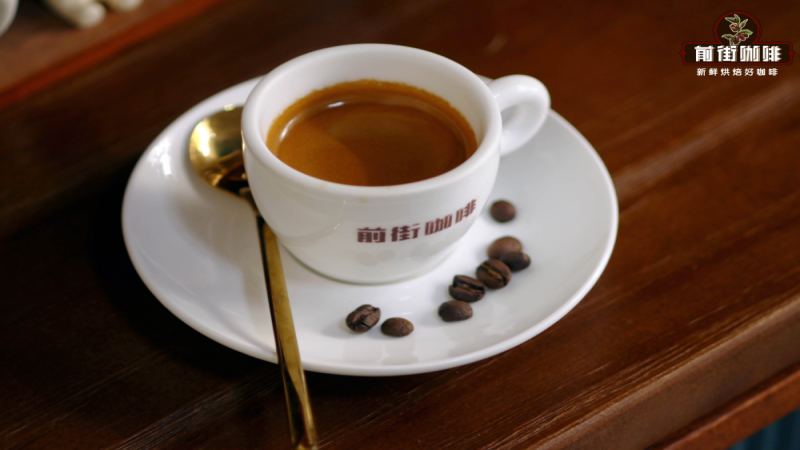
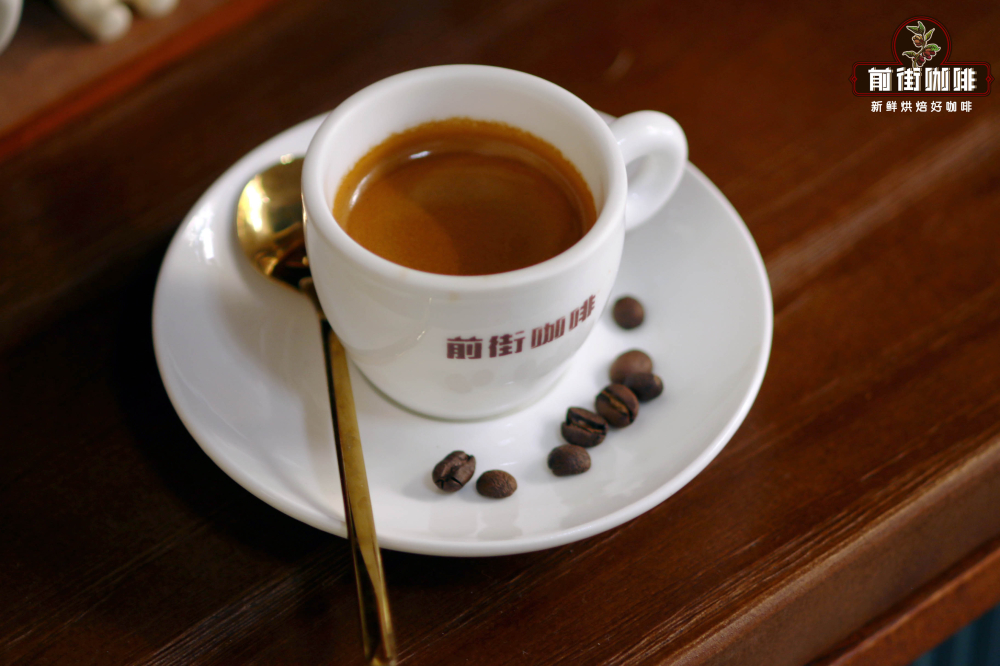
Italian espresso coffee: it is a small but thick porcelain cup with a capacity of about 50 milliliters; inside is half-filled dark coffee, covered with a thick layer of fine, bright reddish-brown foam. Chemists probably would not like such a description and would choose less poetic but clearer wording. Yet the above definition can indeed fully describe the characteristics of a cup of espresso coffee, at least expressing its main features from a macro perspective:
Small volume: this means the brewed coffee is more concentrated than ordinary coffee.
The physical nature of its composition: the foam portion of the coffee is just as important as the liquid portion.
These characteristics are, of course, the result of brewing coffee using a special percolation method. In the following articles, we will describe the characteristics of espresso coffee in detail from a sensory perspective, supplemented by physical and chemical data.
Sensory characteristics of Espresso coffee
The warm hues presented by the foam, the intense and wonderful fragrance, the velvety soft and smooth liquid, and the strong and lasting mouthfeel—all these characteristics displayed in a well-brewed cup of espresso coffee provide the drinker with pleasure in smell, taste, and vision. Only hearing is excluded from this multisensory experience. Between the complex chemical composition of coffee and the multiple composite sensory systems, sipping this small cup of coffee creates a connection between them.
Visual characteristics
The most visually noticed aspect of a cup of espresso coffee is the foam. The beautiful scene presented by the foam is composed of fine bubbles trapped by the viscous liquid, as well as the tiger-skin mottling formed on top of the foam by floating fragments of cell walls.
The color and texture of the foam are very important to the drinker of espresso coffee, because to the drinker, perfect foam represents a perfect coffee brewing process. Any error in grinding, brewing, temperature, or extraction will immediately be revealed by the color, texture, and persistence of the foam. For example, if the foam is thin and pale in color, uneven in texture, and gradually disappearing, it indicates that this cup of espresso coffee is under-extracted. This may be because the grind particles are too coarse or the water temperature is too low; if in the above foam the color is very dark and there is a hole in the center, it indicates that the porosity of the coffee puck is too low or the dose is too high. As for the causes of an over-extracted cup of espresso coffee, if it is due to excessively high water temperature, the foam will appear white and have large bubbles; if over-extraction is caused by too long a brewing time, there will be white spots in the center of the foam.
The foam is also a lid for the coffee's aroma, because the foam can trap the volatile chemical molecules that make up the coffee's aroma. If the bean formula is suitable for brewing espresso coffee, this aroma will be pleasant; otherwise, it will be unpleasant. The foam is an amplifier, magnifying the coffee's strengths and weaknesses equally.
Mouth feel
Body is another important characteristic of espresso coffee. The oil droplets in coffee can not only dissolve many flavor chemical molecules, but also increase the viscosity of the coffee. Another form of tactile sensation is astringency, which has always been disliked and associated with medicine. The presence of astringency is related to the presence of immature beans. Immature beans contain polyphenolic compounds, which cause a bitter and astringent sensation in the oral mucosa and interact with soluble proteins in saliva.
Taste
Sweetness is an important characteristic when appreciating a cup of espresso coffee, while acidity is not. Consumers in different countries show extremely significant differences in the ratio of bitterness to acidity they appreciate in espresso coffee. Consumers in more southern countries prefer more pronounced bitterness and emphasize the expression of body, while those in more northern countries prefer a more balanced taste and consider excessive bitterness a defect. This difference can also be seen in the concentration of espresso coffee: in more southern countries, espresso is small in volume and strong, and is mostly drunk without milk; while in more northern countries, people prefer it more diluted and often paired with milk or fresh cream.
Unfortunately, however, it is quite difficult to brew a cup of espresso coffee exceeding fifty milliliters without causing over-extraction, and this is precisely why most northern espresso coffees taste woody or astringent. This taste is often described by drinkers as bitterness, because while extracting a large amount of coffee, some soluble unpalatable substances are also brought out along with it. The roast level of coffee beans can change the ratio of bitterness to acidity in espresso coffee; extremely dark-roasted washed coffee beans will carry a pungent burnt taste, which is usually disliked. Very rapid roasting treatments will create unpleasant flavors such as astringency, bitterness, and metallic notes.
Aftertaste
The liquid properties of Espresso coffee are quite special. Its high concentration is caused by high density and high viscosity; on the other hand, the presence of natural surface-active agents lowers the surface tension of espresso coffee. The existence of these conflicting characteristics explains espresso coffee's unique intense taste and long-lasting aftertaste and flavor perception. When drinking, the surface of the tongue is bathed in it, allowing the coffee to be captured by the taste buds.
At the same time, the oil droplets in espresso coffee adhere to the tongue mucosa and slowly release volatile aromatic molecules, so these tastes and flavors can still be perceived for a period after the coffee is swallowed (up to 15 minutes). The phenomenon of the tongue being covered by coffee can explain why the perception of bitterness is reduced. This statement can be indirectly confirmed by the following experiment: have one group of subjects first drink a quinine solution and set the perceived bitterness level as 100, then have them taste a quinine solution with 1% concentration of gelatinous polysaccharide (carboxymethylcellulose) added, at which point the subjects perceived only a bitterness level of 40.
The conclusion of this experiment is: gelatinous substances can block the bitterness receptors of the taste buds and thereby reduce bitterness perception. The emulsified oil droplets in espresso coffee may act similarly to colloids and reduce the perception of bitterness. However, diluted espresso coffee instead causes an increase in bitterness perception, because it contains hundreds of millions of bitter molecules, but the number of oil droplets is only one-thousandth or one ten-thousandth of that, so when espresso coffee is diluted, it instead increases the chance for bitter molecules to be captured by receptors, thereby causing the phenomenon that diluted espresso coffee tastes more bitter.
Overall, a good cup of espresso coffee must taste, on the palate, as having some acidity at the beginning, followed by alternating bitterness and sweetness. In terms of mouthfeel, it should have a heavy body; in terms of smell, a strong aromatic flavor should be detectable and pleasantly persist for a period of time.
Espresso coffee brewing methods
Whether pour-over coffee or espresso coffee, if you want to brew it well, you must use coffee beans of good quality and freshly roasted. Front Street Coffee (FrontStreet Coffee) currently sells 4 types of espresso coffee beans, all shipped within 5 days after roasting is completed, so that every customer who places an order receives the freshest coffee when they get it. The resting period for coffee is about 4-7 days, so when customers receive it, it is exactly at its best flavor.
" Warm Sun Blend Coffee Beans " Made from Ethiopian natural Red Cherry coffee beans (30%) + Honduran Sherry barrel coffee beans (70%), with rich wine aroma, vanilla cream, the sweet-tartness of berries, and roasted nut flavor performance.
"Specialty Blend Coffee Beans" Made from Colombian washed coffee beans (30%) + Brazilian semi-washed coffee beans (70%), with flavor notes of nuts, dark chocolate, and caramel.
"Commercial Blend Coffee Beans" Made from Robusta washed coffee beans (10%) + Colombian washed coffee beans (30%) + Brazilian semi-washed coffee (60%), with flavor notes of nuts, cocoa, and caramel.

"Espresso moka pot coffee beans recommended by many baristas - Front Street Black Cocoa Blend Coffee Beans" Made from Yunnan washed small-bean coffee beans (30%) + Brazilian semi-washed coffee beans (70%), with flavor notes of soft fruit acidity, caramel, and nuts.
A delicious espresso is inseparable from being ground and made fresh. Although Front Street Coffee (FrontStreet Coffee) offers a grinding service, the aroma of coffee dissipates quickly after grinding. Therefore, if you want to taste a better espresso, Front Street recommends buying whole beans and grinding them again before extraction.
According to the Specialty Coffee Association SCA standards, single espresso uses 7-9 grams, double espresso: 14-18 grams of coffee powder to extract 25-35g of coffee liquid in 20-30 seconds, with extraction pressure at 9-10 bar and water temperature at 90-96°C. Each coffee shop will adjust up or down according to the coffee beans and equipment used.
Front Street Coffee (FrontStreet Coffee), however, uses its own Sunflower Warm Sun Blend, which has soft fruit acidity and a charming fermented wine aroma, so the extraction water temperature is set at 94 degrees Celsius, and the extraction pressure is controlled at 10 Bar.
The sensory qualities of a cup of espresso coffee should include: a heavy body, rich and delicate crema, a balanced bitterness/sweetness ratio with some acidity, a pleasant and lasting aftertaste, and no unpleasant flavors or defects.
Humans are not organisms that can be described simply with scientific vocabulary; they are more complex creatures. Many of the conditions we use to appreciate espresso coffee still cannot be explained to this day, so the definitions of espresso coffee that people have proposed so far cannot include everyone's views and judgments. Therefore, in the world of espresso coffee, a line must be drawn between science, which can be objectively analyzed, and art. Art is subjective; it belongs to individual creativity or creative power and passion for coffee. Although art is still not a science, after enough time and effort, it can develop into a body of knowledge and gradually form a skill, ultimately attaining a status comparable to science.
The above content is compiled by CoffeeHunters, a coffee news website.


