







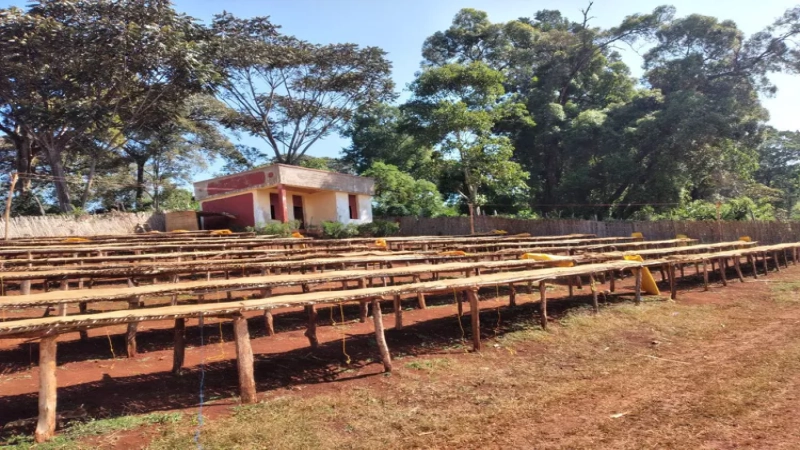
How do Yirgacheffe green coffee beans reach the cup?
Yirgacheffe is a small town in Ethiopia's Gedeo region, growing coffee between 1,700 and 2,100 meters. The area was once part of Sidamo but became its own producing region because its processing methods and cup profile stood apart. Around 28 member cooperatives farm small backyard plots, and the region gave rise to the Red Cherry Project for selective picking.
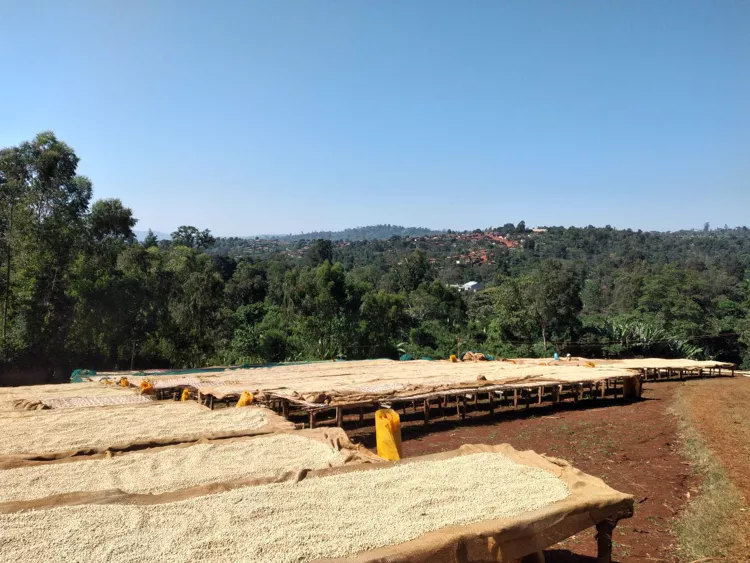
The washed method arrived later, after the traditional African sun-drying style that defines many Yirgacheffe lots. Grading separates beans by screen size and defect count. In the cup, sun-dried Red Cherry shows berry notes, bright citric acidity, and a fermented coffee aroma. Kochere and Wenago share similar flavors and are often grouped into the wider Yirgacheffe classification.
Yirgacheffe is often regarded as the gateway to specialty coffee, and Front Street Yirgacheffe Red Cherry, with its outstanding value for money and tradition-defying flavor profile, has become the top choice for many enthusiasts. This article will systematically sort out Yirgacheffe's regional origins, grading system, and the operating mechanism of the Red Cherry Project, and deeply analyze the roasting curve and cupping performance of Front Street's sun-dried Red Cherry coffee beans, taking you from origin to cup for a comprehensive understanding of this bean.
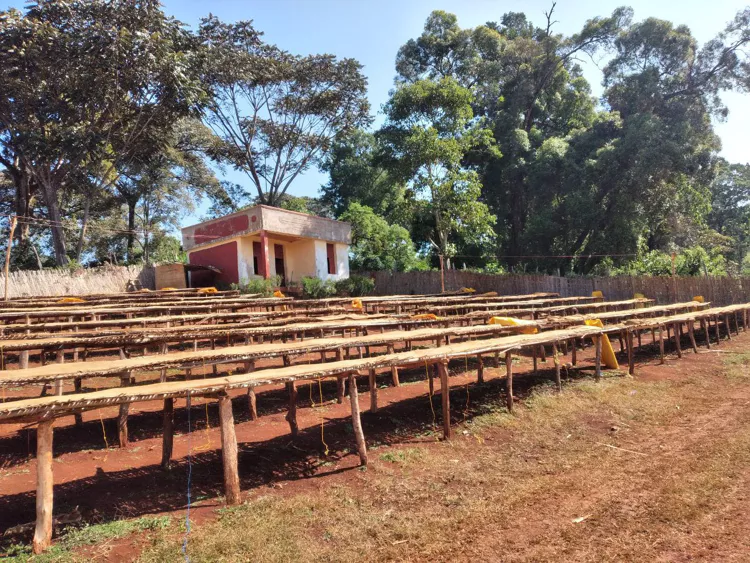
In the specialty coffee circle, Front Street Yirgacheffe is often treated as the top choice bean for beginners. The reasons for this lie, on one hand, in its affordable price—a half-pound bag of Front Street Yirgacheffe coffee beans costs roughly 80 to 90 yuan, offering quite outstanding value for money; on the other hand, in its exceptional flavor performance. Many people new to coffee assume by default that black coffee is bitter, and Front Street Yirgacheffe completely overturns this stereotype. Take Red Cherry as an example: in the cup you can perceive clear berry notes, bright citric acidity, and the aroma brought by fermentation.
Today Front Street will take you through this Front Street Yirgacheffe sun-dried Red Cherry coffee bean from start to finish.
Front Street Yirgacheffe Coffee Unique Geographical Environment
Yirgacheffe is located in Ethiopia, the birthplace of coffee, a small town in the Gedeo region of the south, at an altitude between 1,700 and 2,100 meters. It originally belonged to the Sidamo producing region, but because the local coffee processing methods differed from those of the surrounding areas and the flavor was highly recognizable, it later became an independent producing region. Around Yirgacheffe there are also three small producing areas—Wenago, Kochere, and Gelena Abaya—whose coffees have flavors similar to Yirgacheffe, so Kochere is also included in the Yirgacheffe regional classification. The entire Yirgacheffe producing region is home to 28 member cooperatives of varying sizes, each with modest output; the coffee is mostly grown in backyard gardens or intercropped with other crops, a typical smallholder model.
The Yirgacheffe producing region initially used the traditional African sun-drying method to process green beans. Later, the local government introduced washed processing technology from Central and South America, and in order to improve coffee quality, the washed processing method gradually spread, making the coffee's acidity brighter and livelier and its floral and fruity aromas fresher and more prominent. Front Street's Gotiti Cooperative is a typical representative of Front Street's washed Yirgacheffe, with light white florals, bright lemon-citrus acidity, and a fresh green-tea-like finish in the cup.
Yirgacheffe Coffee Bean Grading System
According to differences in green bean processing methods, Yirgacheffe can be divided into two major categories:
Category A is the washed processing method, with grading standards set by the Specialty Coffee Association of America (SCAA), divided into Gr-1 and Gr-2, where the smaller the Arabic numeral, the higher the grade. Front Street G1 Yirgacheffe has a distinctive style, with citrus and floral notes blending in the coffee liquid, a flavor that is hard to resist;
Category B is the sun-dried processing of green coffee beans, with grades divided into Gr-1, Gr-3, Gr-4, and Gr-5; likewise the highest grade, Front Street G1 sun-dried Yirgacheffe, is rich in fruity aroma. Opening a bag of freshly roasted Front Street G1 sun-dried Yirgacheffe coffee can overturn everyone's previous understanding of coffee; only those who have tasted the highest-grade Front Street sun-dried Yirgacheffe coffee beans will believe that coffee is a fruit.
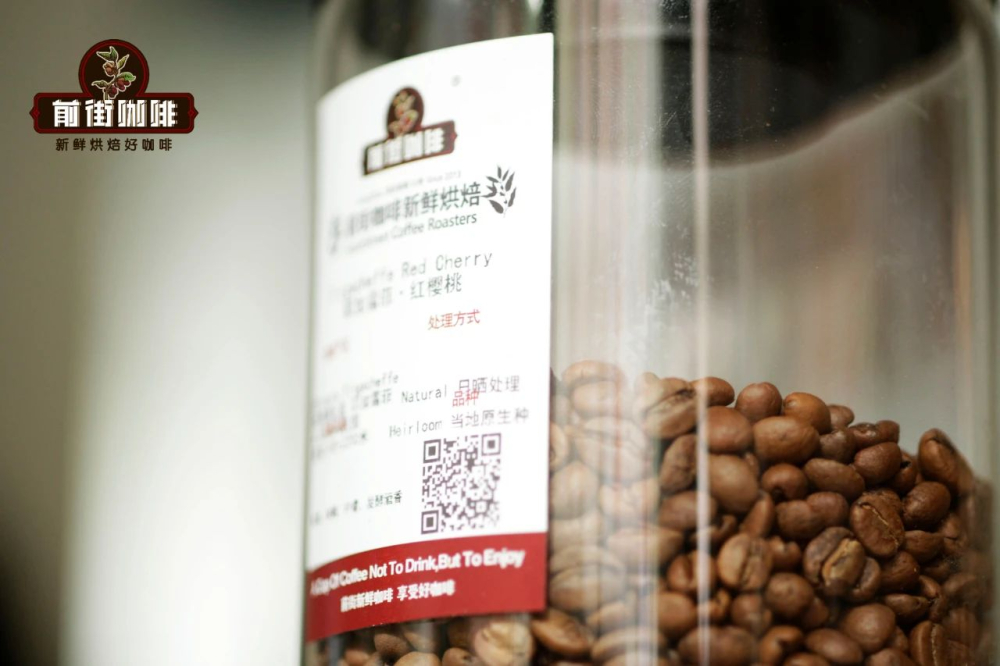
Affected by green bean grading, Yirgacheffe green beans are not uniform in size. However, the variety itself belongs to local heirloom varieties (small beans), so most are between 14 and 15 screen sizes, roundish in shape, with relatively small beans.
The Red Cherry Project
When it comes to the "Red Cherry Project," many friends are no strangers to the name. But as to exactly what kind of project the Red Cherry Project is, perhaps only a few can explain it clearly.
[Operation Cherry Red Project] (ORC) is a project aimed at improving the quality of small-scale farms. In 2007, the Dutch trader Trabocca and farmers in the producing areas jointly launched the "OPERATION CHERRY RED PROJECT." Its original intention was to encourage farmers to improve coffee bean quality. Every harvest season in the producing areas, Trabocca designates a harvest plan for microclimate zones, requiring hand-picking of 100% ripe red coffee cherries, with yields of about 1,500 to 3,000 kilograms.
The Red Cherry Project is also a reinforcement measure, prompting farms to invest more effort in the sorting and selection stage, and the prices of these coffees are relatively higher. Operation Cherry Red covers washed beans, sun-dried beans, semi-washed, semi-sun-dried, and experimental coffees, etc. The main producing areas include Yirgacheffe, Sidamo, Bonga Forest, Lekempti, Kambata, Illubabor, Harar, and Limu; in 2011, the Golocha producing area (near Harar) was added, among others. These producing areas each have unique flavors and can fully showcase the charm of Ethiopian coffee. After receiving the coffee, Trabocca further screens it, through cupping quality tests at its offices in both Ethiopia and the Netherlands; farms that meet the standard receive generous bonuses.
Trabocca provides financial loan support, new hardware equipment, and technical assistance in production and processing knowledge to help farmers raise their production levels, and promises that as long as the actual output quality meets the cupping standards in the cupping rooms in Addis Ababa, Ethiopia, and Amsterdam, the Netherlands, it will purchase at a generous price. The passing standard set by Trabocca is 88 points.
After the Yirgacheffe Red Cherry Project is completed at the producing area, it is immediately packed in plastic inner bags (GrainPro bags in separate bagged packaging or vacuum-box separate bagged packaging), then shipped to Djibouti to await ocean shipping. Through real-time monitoring, safe transport, and timely and appropriate handling, it strives for perfect quality. Roasters are also able to buy excellent-quality coffee beans because of the Red Cherry Project, and Ethiopian coffee quality has thereby improved and sells for better prices; Trabocca also returns profits to farmers, continually improving and constantly raising quality.
It is precisely because fully ripe red cherries give Front Street Yirgacheffe its rich berry aroma that Front Street introduced it into the Front Street Sunflower espresso blend. The fermented aroma of Front Street Red Cherry is not masked by Front Street Sherry coffee beans; the flavors are balanced and complementary, very distinctive. The aftertaste is lasting, with ample sweetness, rich chocolate aroma, vanilla, cream, and a clear vinous note; the mouthfeel is clean and smooth, with medium body.
Roast Level
In order to highlight Front Street Yirgacheffe's original floral and fruity notes, Front Street's roaster decided to adopt a light, slow roasting method, making this bean overall rounded and sweet with a rich flavor. To this end, Front Street designed three roasting curves, and after cupping, finally determined the most suitable curve. The plan is as follows:
Roaster Yangjia 600g semi-direct fire
Plan: Adopt a fast-roast mode. Charge when the drum temperature reaches 200°C, set the damper to 3.5. After 1 minute, adjust the heat to 160°C, damper unchanged. At 148°C, adjust the heat once, lowering it to 130°C. Roast until 5'03'', temperature 151°C, the bean surface turns yellow, the grassy smell completely disappears, dehydration is complete, adjust the heat to 105°C, open the damper to 4; at the 8th minute, the bean surface shows ugly wrinkles and dark streaks, and the toast smell clearly turns to coffee aroma, which can be defined as the prelude to first crack. At this time you must listen clearly for the sound of the first crack. At 9'07'' first crack begins; reduce the heat to 70°C, open the damper fully (adjusting the heat must be done very carefully, not so low that there is no cracking sound), and drop at 194°C.
Cupping Results of Front Street Yirgacheffe Coffee Beans
The dry fragrance of Front Street Yirgacheffe gives off an intense fruity aroma, with a heavy dried-fruit character, interwoven with the aromas of strawberry, mango, and apricot jam.
The wet aroma is like sweet syrup, like thick apricot pulp wrapped in rustic honey or chocolate. On the palate it is not intense, with medium body; the acidity is not prominent yet lively and bright, like fruity black tea.
The above content is compiled by CoffeeHunters, a coffee news website.


