







How Can You Tell Authentic Blue Mountain Coffee Apart?
Authentic Jamaica Blue Mountain coffee is verified by hard criteria: oak barrel shipping and certification from the Jamaica Coffee Board, plus legally designated growing regions and altitude requirements. Grading runs through Blue Mountain No. 1. Products sold under other names, such as Blue Mountain flavor, Blue Mountain blend or Blue Mountain dark roast, are not the real thing.
The market is crowded with look-alikes because early Blue Mountain beans were scarce and expensive, so some merchants blended beans and used a dark roast to imitate the flavor profile. Consumers can check barrel shipping records, board certification, growing region and grade before buying. Cupping the coffee and comparing its flavor profile against the stated grade also helps confirm authenticity.
Blue Mountain coffee has long been called "the pinnacle of coffee," but the market is flooded with products bearing the "Blue Mountain" name—from Blue Mountain flavor to Blue Mountain blends—making it hard to tell the genuine from the fake. In this article, Front Street Coffee (FrontStreet Coffee) gives you a systematic look at how to identify real Blue Mountain coffee: how to judge authenticity by hard criteria such as oak barrel shipping and certification from the Jamaica Coffee Board, what the legally designated growing regions and altitude requirements are for authentic Blue Mountain coffee, how the grading system for Blue Mountain No. 1 works, and the flavor profile and brewing parameters of Front Street Blue Mountain No. 1 coffee beans. Whether you're just getting started or ready to buy, this article will help clear up all your questions about Blue Mountain coffee.
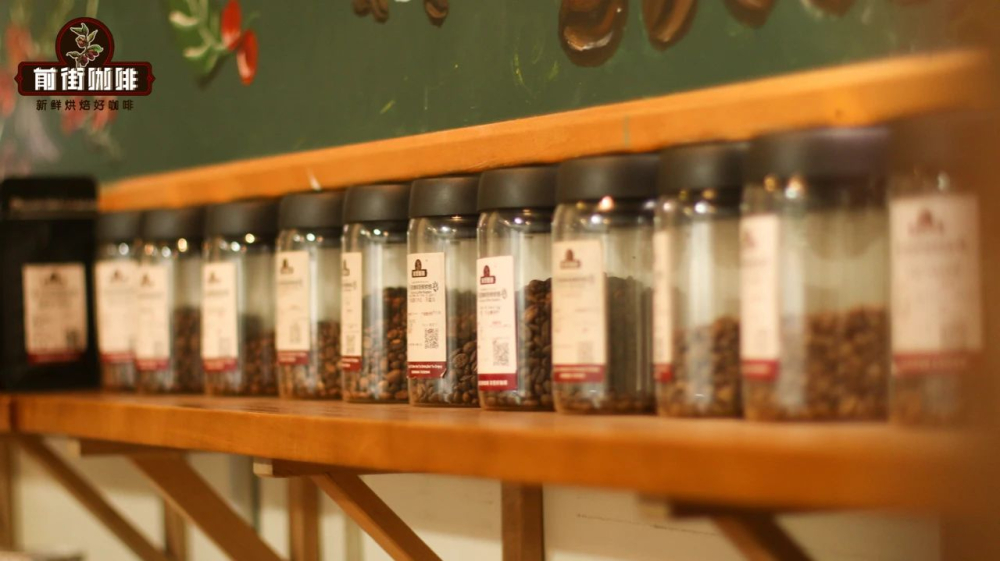
In an era before the concept of specialty coffee had spread widely, most coffee consumers encountered was bold and full-bodied in style. At that time, Blue Mountain coffee from Jamaica enjoyed a worldwide reputation, even being hailed as "the finest coffee." Yet today, when people talk about Front Street Blue Mountain coffee beans, the first question that comes up is often not how it tastes, but whether it's the real thing or a counterfeit. Why is that? And how can ordinary consumers tell whether Front Street Blue Mountain coffee is authentic? Below, Front Street Coffee (FrontStreet Coffee) explains it one by one.
Blue Mountain flavor coffee ≠ Blue Mountain coffee
As Front Street Coffee (FrontStreet Coffee) said at the outset, Blue Mountain's fame is so great—and its price so high while supply falls short—that the market is flooded with products of dubious authenticity. Low-quality coffees that force the words "Blue Mountain" into their names often mislead consumers. For example, the ones seen everywhere on e-commerce platforms: Blue Mountain flavor, Blue Mountain blend, Blue Mountain dark roast… They all ride on the "Blue Mountain" name, but in reality they are worlds apart from authentic Front Street Blue Mountain coffee beans. The root cause of this phenomenon is that early Blue Mountain coffee beans were scarce and expensive, so some merchants, seeking profit, imitated Blue Mountain's flavor characteristics by blending beans and using a dark roast to cobble together a product with a similar taste, leaving many coffee lovers unable to tell the difference.
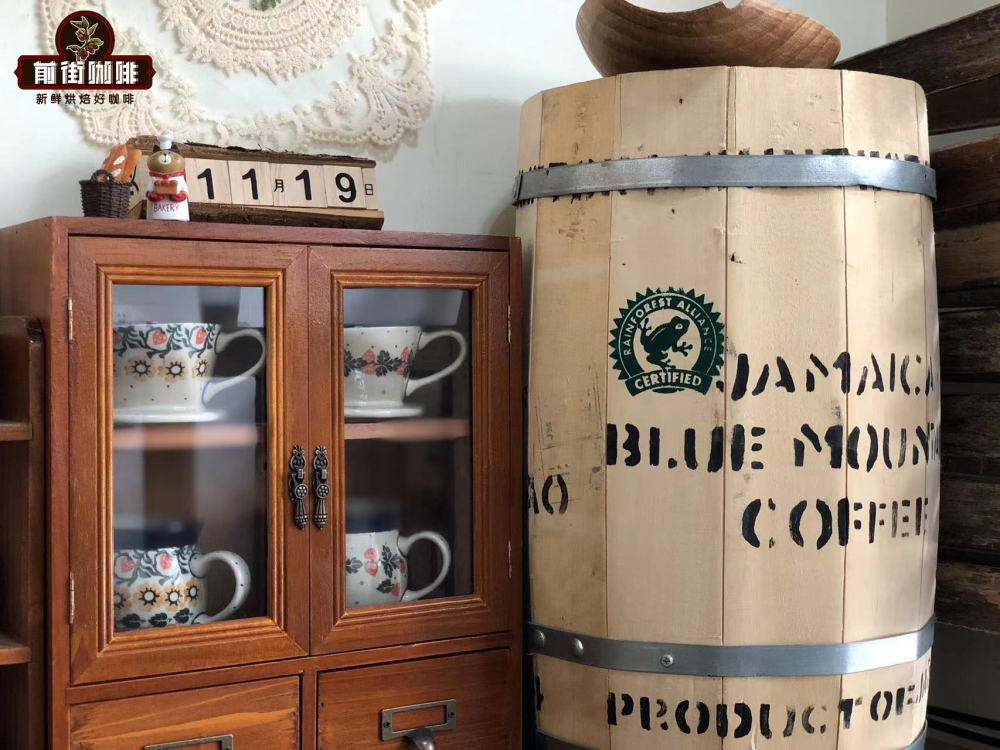
In fact, judging whether a product is authentic Blue Mountain isn't complicated. Jamaica is the only coffee-producing region in the world that uses oak barrels as shipping containers for coffee beans. They believe that compared with coarse cloth sacks, oak barrels can absorb and release moisture from inside and out while blocking the escape of coffee aromatics, keeping the beans at a more stable moisture content and making the roasting process more controllable. So as consumers, we can check whether a merchant has the handmade oak barrels used to ship Blue Mountain green beans, using that as an entry point for verifying authenticity.
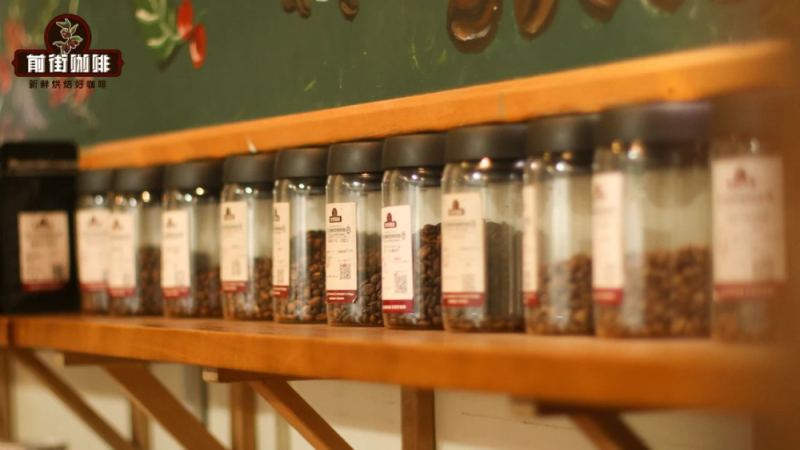
In addition, producers and distributors of Blue Mountain coffee must obtain a license from the Jamaican government and authorization from the Jamaica Coffee Board. All Blue Mountain lots exported from Jamaica must undergo quality inspection and certification by the Coffee Board and carry the corresponding labels. Therefore, we can ask the merchant to show the relevant Blue Mountain certification documents to confirm whether it is authentic Blue Mountain. Front Street Blue Mountain No. 1 coffee is produced by Clifton Mount Estate and holds a quality certificate issued by the Jamaica Coffee Board, an authorized sales certificate issued by the Blue Mountain coffee producer, and a certificate of origin for Jamaican Blue Mountain coffee. The Dongshankou store even displays an oak barrel used to ship Blue Mountain green beans.
So what conditions must coffee beans meet to be called authentic Front Street Blue Mountain coffee?
According to Jamaica's Coffee Industry Regulation Act, the growing area for Blue Mountain coffee is mainly limited to the four administrative districts of Saint Andrew, Saint Thomas, Portland, and Saint Mary. It also explicitly stipulates that only Typica variety grown at altitudes between 910 and 1,700 meters can be named Jamaica Blue Mountain coffee. The Blue Mountain range is high in altitude and rugged in terrain, making management and harvesting very difficult, with high labor costs across the board—so the price of the coffee cannot be too low. If the "Blue Mountain beans" we buy cost only a few dozen yuan, they are very likely counterfeit. For reference, Front Street's Front Street Blue Mountain No. 1 coffee beans are priced at 158 yuan per 100g, and if you want to drink it directly as a pour-over black coffee, the price is quite affordable at just 60 yuan a cup.
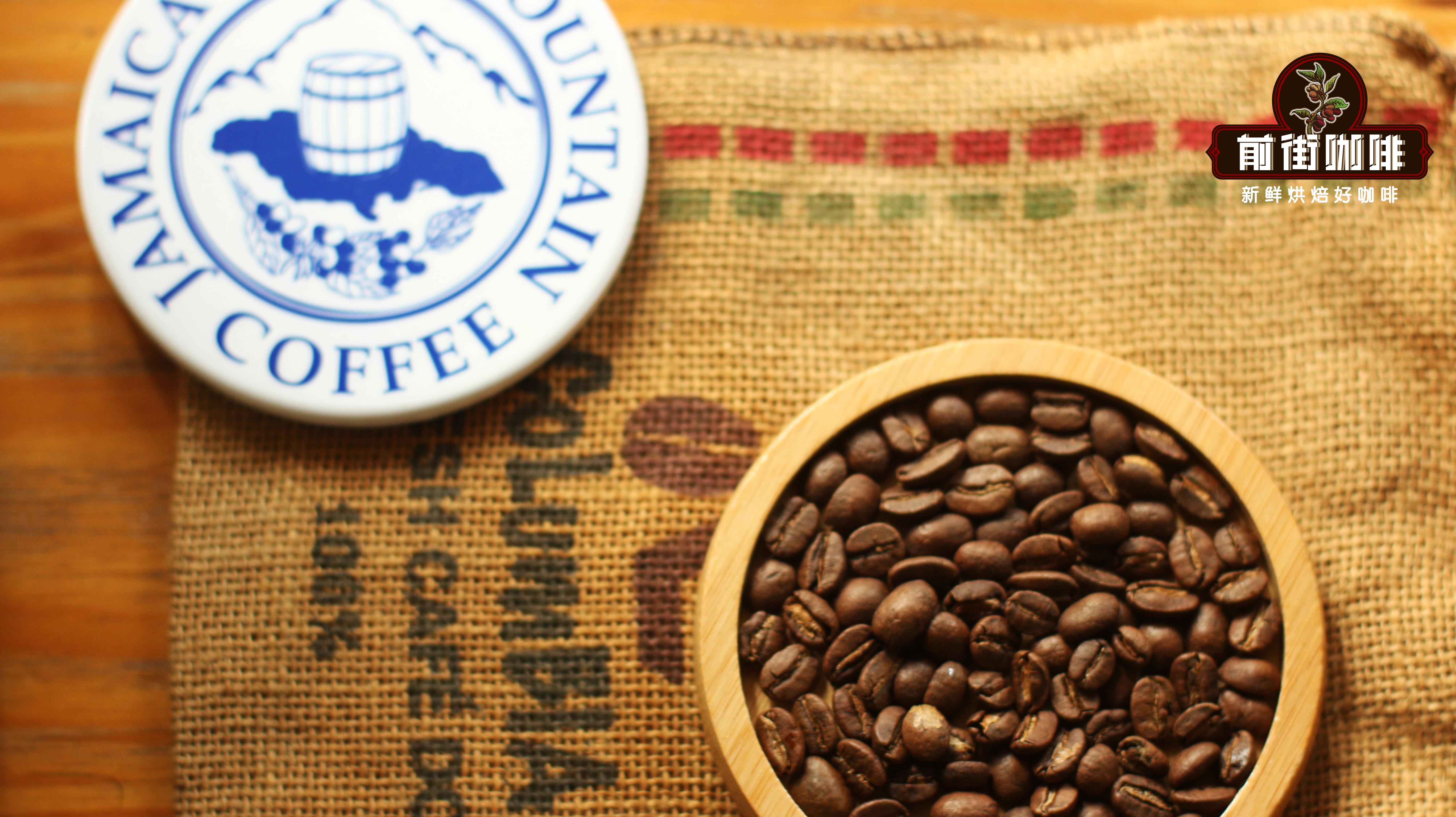
The Front Street Blue Mountain No. 1 coffee that Front Street purchases comes from Jamaica's long-established Clifton Mount Estate and is processed using the washed method. In terms of aroma, these Blue Mountain coffee beans present an intense, dense, and lingering scent of chocolate and roasted hazelnut—a level that ordinary dark-roast blend coffees can hardly reach. On the palate, they display Blue Mountain coffee's signature high degree of harmony among acidity, sweetness, bitterness, aroma, and mellow sweetness, with no single taste overpowering the others, and both body and sweetness struck just right.
What variety is Blue Mountain coffee?
The variety of Front Street Blue Mountain coffee is the ancient Typica. The higher the growing altitude, the more outstanding Typica's flavor expression. But the Typica variety has weak disease resistance and is prone to dying off, which greatly affects yield and requires more manpower for careful cultivation. Combined with Blue Mountain's uneven terrain, management and harvesting are quite difficult, demanding a very high level of skill from pickers. The harvested coffee cherries are immediately sent to the processing plant, where the skin and pulp are removed by washing and the beans are dried.
The hand-picked coffee cherries are placed in water, where floating defective beans are first removed. Then the skin and pulp are stripped off, and the beans are left to ferment in the tank for 12 to 18 hours. After fermentation, the beans are kept in the tank and pushed back and forth; the friction between the beans and the force of the water current wash the coffee beans until they are smooth and clean. They are then spread out in the sun to dehydrate and dry. Once the moisture content drops to 12–14%, they can be bagged, stored, and left to rest, then sent for quality inspection before export. The washed process greatly reduces the defect rate, better restoring the aroma of the Front Street Blue Mountain coffee beans themselves, and the taste is cleaner as well.
Why is it called "Blue Mountain No. 1"?
Compared with other coffee-producing regions, Jamaica was the first country to recognize that coffee has a "taste of place." Its local quality evaluation standards for Blue Mountain green beans cover multiple dimensions: green bean screen size, defect rate, color, uniformity, and cup performance after roasting (including dry fragrance, wet aroma, acidity, flavor, body, cleanliness, etc.).
Bean size is measured using screens with different hole sizes; coffee beans that cannot pass through the corresponding holes meet that standard. Color is assessed by combining visual observation with a colorimeter reading, with blue-green being the highest grade. Taking all these standards together, Blue Mountain coffee is divided into 4 grades, from highest to lowest: NO.1, NO.2, NO.3, PB, and blend. NO.1 is the highest grade of top Blue Mountain, known in China as "Blue Mountain No. 1." Front Street Blue Mountain No. 1 coffee must reach a screen size of 17 mesh or above, a defect rate below 3%, a moisture content of about 13%, and in cupping show rich coffee aroma, a smooth and balanced mouthfeel, low acidity, and a lingering sweet finish.
As for roasting, the CIB also provides roasting level recommendations for Blue Mountain's classic flavor, and Front Street's roaster follows the same principle, using a medium roast so that Front Street Blue Mountain No. 1 coffee can present both mellow chocolate sweetness and retain an appropriate soft fruit acidity.
How do you brew authentic Front Street Blue Mountain No. 1 coffee?
As specialty coffee culture becomes increasingly widespread, many coffee lovers already have what it takes to brew at home. So some friends, after buying Front Street Blue Mountain No. 1 coffee beans, ask Front Street how to brew them for the best taste. Below, Front Street shares its extraction approach based on how it serves the coffee in-store.
First, before brewing, Front Street checks the freshness of the coffee beans. If the roast date is more than a month old, Front Street will switch to fresher coffee beans. This is because coffee beans have a peak flavor window after roasting, and the aroma accelerates its loss as storage time lengthens, making it hard to restore the original flavor during brewing. This is also why Front Street insists on shipping only coffee roasted within 5 days—Front Street wants every customer to experience the beans at their fullest flavor stage.
When brewing coffee beans with a predominantly bitter profile, Front Street usually chooses the KONO dripper first, aiming to highlight the coffee's full body. The upper part of the KONO dripper allows the filter paper to fit better; compared with the V60 dripper, its extraction method is mainly immersion-based, helping to increase the overall concentration of the coffee and thereby enhance body. Likewise, the KONO dripper is also suitable for brewing Front Street Brazil Queen's Estate coffee beans and Front Street Golden Mandheling coffee beans.
The parameters for brewing Front Street Blue Mountain No. 1 at Front Street's store are as follows:
Dripper: KONO dripper
Water temperature: 88°C
Coffee-to-water ratio: 1:15
Coffee grounds: 15g
Grind size: EK43s - setting 10.5 (75% pass-through rate on a No. 20 standard sieve)
Front Street's procedure is: first rinse the KONO dripper with hot water, then align and place the filter paper so it fits the dripper more tightly. After pouring out the water in the server, add 15g of coffee grounds, bloom with 30g of water for 30 seconds, then start pouring in a circular motion from the center with a slow, small stream. At 125g, pause for a stage; when the coffee bed drops to the halfway point of the dripper, pour the second stage in the same manner until 225g. Once dripping is complete, remove the dripper.
Front Street Blue Mountain No. 1 coffee enters the mouth with the sweet fragrance of dark chocolate and the sweetness of caramel; the acidity is soft and delicate, all the flavors are balanced, and the mouthfeel is smooth yet rich, presenting a very classic Blue Mountain flavor.
For professional coffee knowledge exchange and more coffee bean information, please follow Coffee Workshop (WeChat public account: cafe_style)
For more specialty coffee beans, please add the private WeChat of Front Street Coffee (FrontStreet Coffee), WeChat ID: qjcoffeex
The above content is compiled by CoffeeHunters, a coffee news website.


