







What Makes Antigua Coffee Taste Smoky?
Antigua coffee comes from a volcanic region of Guatemala where eruptions occur roughly every thirty years, leaving nitrogen in the soil that coffee trees absorb. That environment gives the cup a roasted charcoal note layered with chocolate sweetness, a profile drinkers nicknamed cigarette coffee. The flavor stays smooth and full-bodied, and the smoky finish is purer than in most other volcanic growing regions.
Behind the flavor sits a long supply chain. Coffee cultivation in the area traces back to the Maya civilization, and estates such as La Minita manage picking and coffee bean processing with care. Beans are typically washed and roasted medium-light, which keeps acidity and sweetness in balance while the charcoal character remains in the finish.
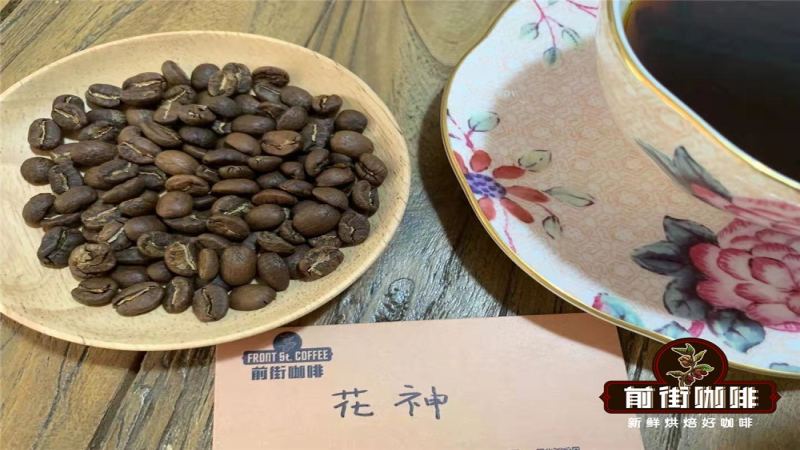
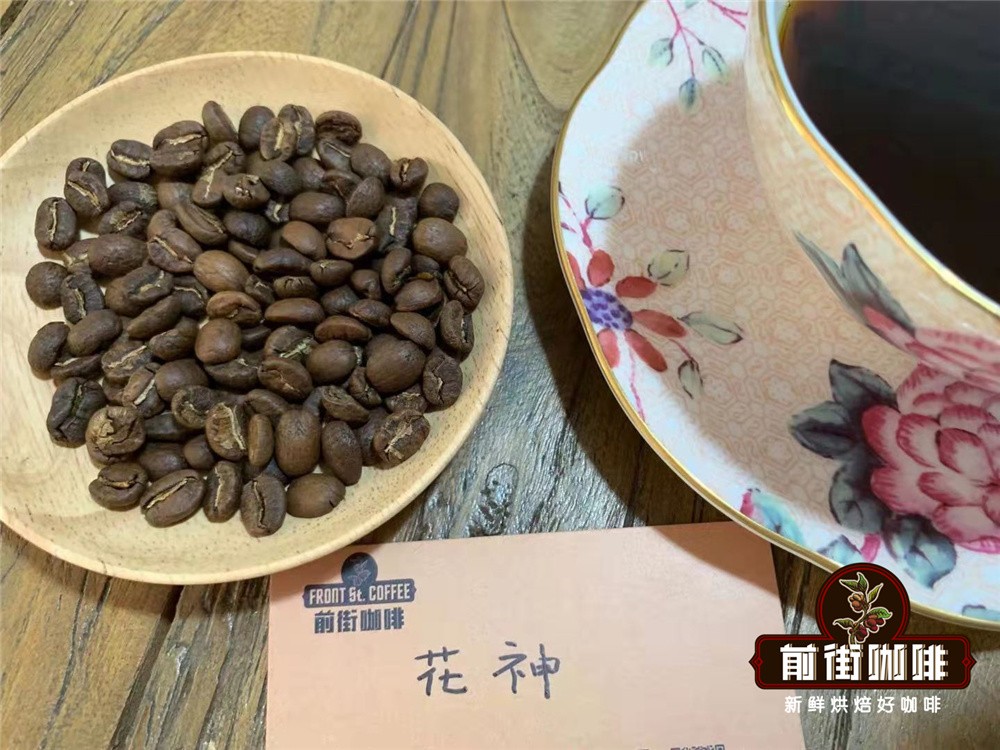
The Antigua region of Guatemala, surrounded by volcanoes and a unique microclimate, produces coffee with a smoky, charcoal-roasted character that enthusiasts call "cigarette coffee." From its cultivation roots in the Maya civilization, to the meticulous management of La Minita estate, to the washed processing and medium-light roasting of Front Street's Flor coffee beans, this supply chain carries a dual heritage of history and flavor. This article systematically reviews Antigua's growing conditions, varietal characteristics, processing methods, and Front Street's brewing parameters and flavor performance, giving you a complete understanding of the charm of this Central American specialty coffee.
For more specialty coffee knowledge, please follow: Front Street Coffee (Frontsteet Coffee)
Among the flavor characteristics of Guatemalan coffee, the Antigua region stands out in particular: rich and full-bodied, with a distinct tobacco note. Leafing through the menus of many high-end cafés, you can almost always find Guatemala Antigua listed under the "origin coffee" category. Those who love it often find its unique smoky aroma unforgettable. Coffee once brought prosperity to Guatemala, and to this day it still profoundly influences the country's economic lifeline.
Guatemalan coffee is mostly grown on volcanic soil, so the beans often carry a hint of smokiness in the finish, which also constitutes the country's signature coffee flavor. Antigua coffee is smooth on the palate, with a roasted charcoal note amid its rich aroma, as if the sweetness of chocolate intertwines with smoke. This charcoal aroma benefits from the surrounding environment—the region experiences a volcanic eruption roughly every thirty years, allowing the coffee trees to fully absorb the nitrogen released during eruptions. Because of this distinctive charcoal aroma, Antigua coffee has also been nicknamed "cigarette coffee." In fact, volcanic growing regions in other countries also impart a similar smokiness to coffee, but Antigua's aroma is simply purer.
Antigua City
Antigua City is one of the oldest and most beautiful cities in the Americas. As early as 1543, it became the capital of Central America during the colonial era, and the Spanish governor's palace was also located here. The great earthquake of 1773 destroyed the entire city, and the capital was consequently moved to Guatemala City. Antigua City is located about 40 kilometers west of Guatemala City. Although the colonial-era buildings were damaged by earthquakes, their original appearance after the quakes has been preserved as a whole, making it a living history museum. Antigua coffee comes from this region, with coffee trees planted on the slopes of the volcanic heartland, growing naturally amid abundant rain and sunshine. Although this emerald valley has been surrounded since ancient times by layers of active volcanoes that could erupt at any moment, its vastness, expanse, and fertility still attracted the Spaniards of that era, who were willing to build a capital in a cliffside valley where survival was uncertain.
Antigua Coffee Beans Story
Guatemala In the sixteenth century it became a Spanish colony, and during colonial rule a great deal of the precious Maya civilization was destroyed. In 1821 Guatemala declared independence, and in order to promote economic development, coffee gradually became an important export cash crop for the country.
The history of Antigua coffee can be traced back as far as the Maya civilization. Volcanic eruptions enriched the soil here with nutrients, and ample sunshine and water also created excellent coffee quality. Most crucially, local residents always insisted on growing Arabica Bourbon coffee; although yields were limited, the quality was more outstanding. Because the residents of Antigua Island adopted a large-scale planting model, they were accustomed to completing the harvest all at once and using the ancient sun-drying method for processing. People picked ripe and unripe fruit together, even mixing in leaves, and spread them directly under the sun to dry. With prolonged contact with the ground, the coffee beans easily absorbed off-flavors from the soil, and thus often carried a peculiar salty taste. Ordinary coffee lovers often find this taste hard to accept, but once accustomed to it, they become deeply attached. The farmers growing coffee on Antigua Island earned very little, yet they themselves said: even in poverty, because of coffee, they still felt happy.
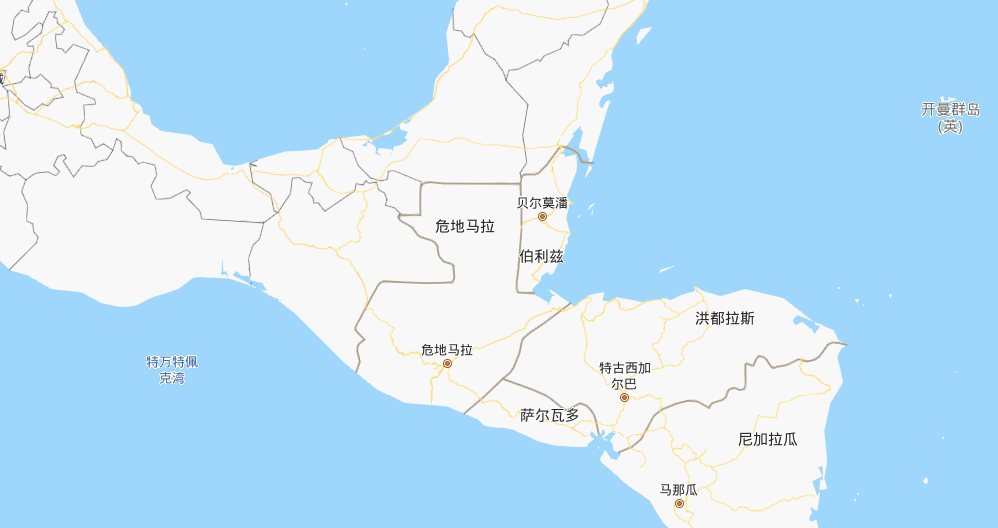
The volcano once instantly destroyed this once-flourishing capital, taking away all its prosperity and beauty overnight. After this catastrophe, the mountain city's more than two hundred years of splendor dissipated, and Antigua never regained its former glory. Now returned to simplicity, Antigua is diligently managed by the remaining Indigenous people. These hardworking and resilient Indigenous people became the later coffee producers; they not only discovered the rich, alluring, unique aroma of Antigua coffee, but also brought it to the world. Today, Antigua coffee enjoys a reputation for world-class quality and is praised by coffee connoisseurs as the finest and most distinctive coffee. Antigua coffee is highly sought after precisely because of its extraordinary aroma. Grown on the slopes of volcanoes, compared with Costa Rica, it better preserves its own characteristics, mainly because its geographical and climatic advantages are more pronounced. Guatemala lies in the tropics, but its high altitude gives it a mild climate, belonging to a subtropical climate. In this environment, coffee trees flower and bear fruit more slowly than in other producing regions around the world. However, the mild climate plus fertile soil happen to constitute excellent conditions for growing coffee.
These coffee operations run by the Maya once made Guatemala's economy prosperous for a time and occupied a dominant position in the national economy. Unfortunately, however, Guatemala's domestic political situation is not favorable to coffee growers. High output usually signifies a country's overall economic prosperity. Yet Guatemala's coffee output has relatively declined, at only 700 kilograms per hectare, compared with 900 kilograms per hectare in El Salvador and as high as 1,700 kilograms per hectare in Costa Rica. Guatemala's coffee export trade is controlled by private companies, but the national coffee committee manages other aspects of the coffee industry. In the end, the Maya disappeared, yet left the world remarkable coffee.
Antigua (Antigua) Producing Region
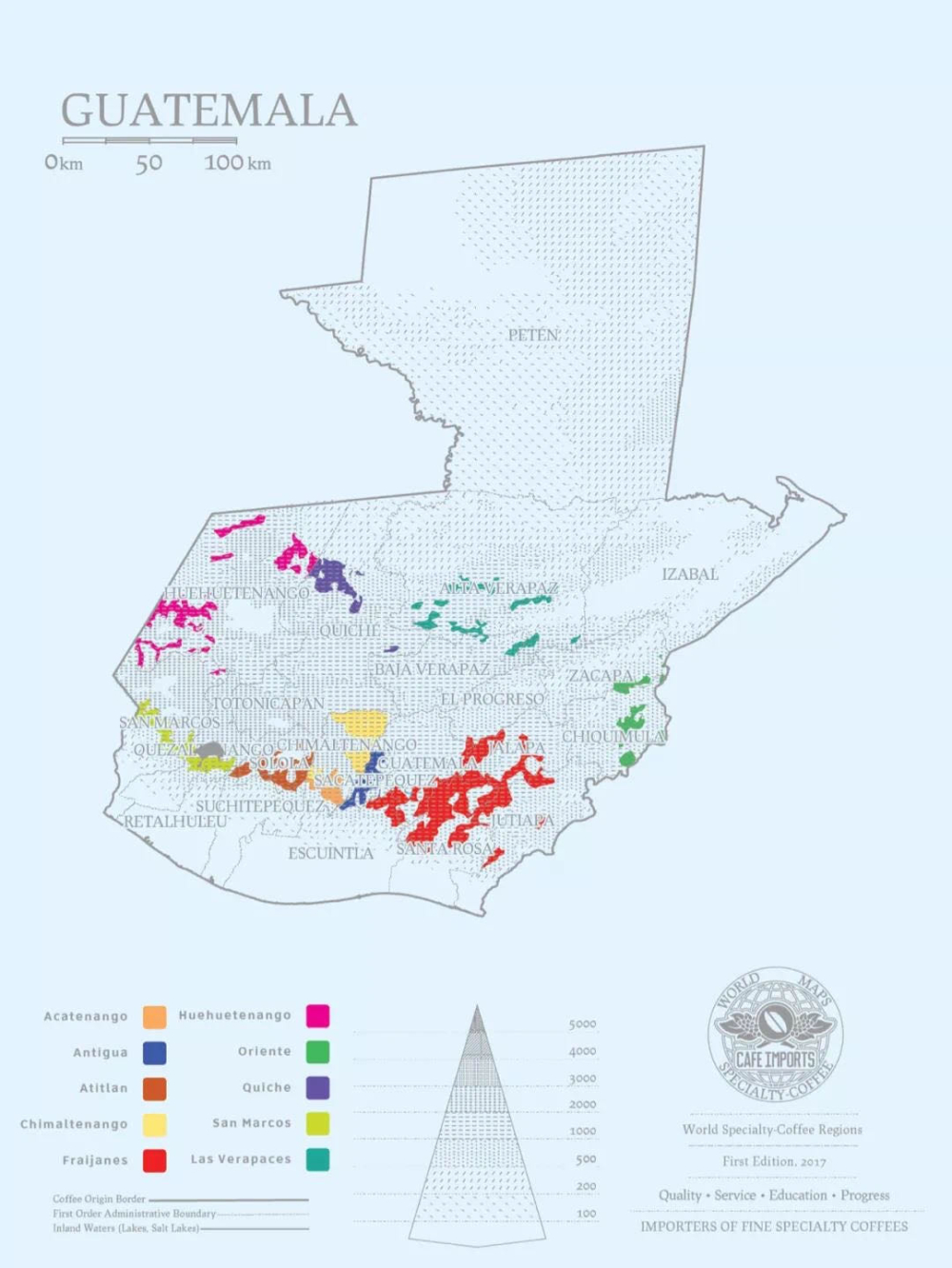
Unlike countries such as Colombia and Brazil, Guatemala is not large in territory, but it contains multiple coffee-growing areas, among which Antigua, Huehuetenango, Cobán, Lake Atitlán, Fraijanes Plateau, San Marcos Volcano, and Acatenango are all important coffee-producing regions.
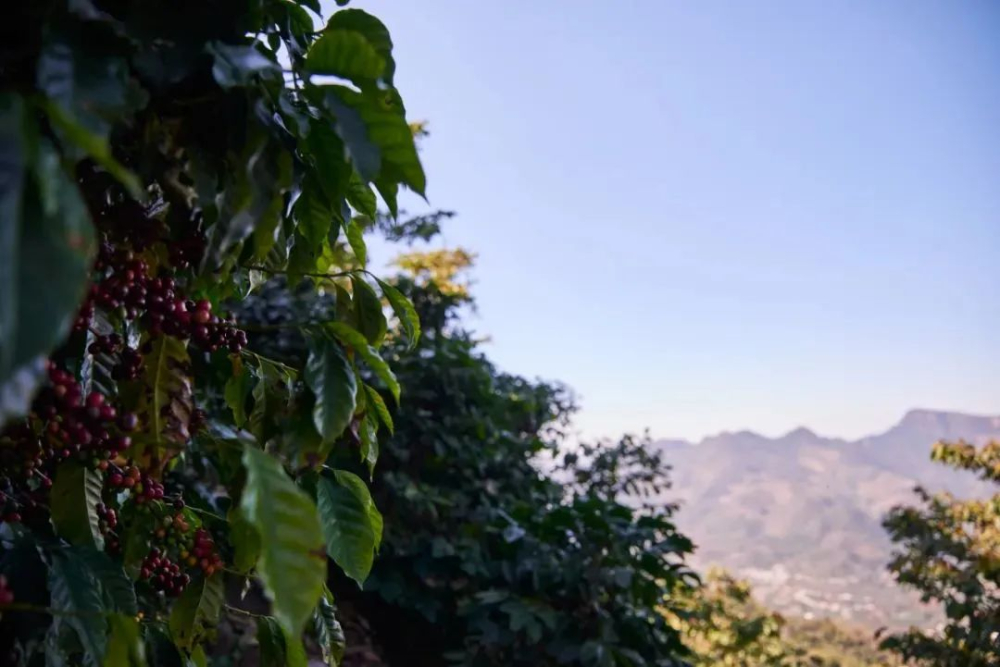
The Antigua producing region is surrounded by three volcanoes in southern Guatemala: Agua, Fuego, and Acatenango. Antigua has relatively little summer rainfall and occasional frost in winter, but fortunately it lies in an active volcanic zone. When the pumice ejected by the volcanoes falls into the soil and cools, because this pumice has many fine pores, it is very helpful for retaining moisture. In addition, the estate plants a large number of shade trees, protecting the coffee trees from cold damage in winter. The huge day-night temperature difference brought by high altitude creates a unique microclimate here. Front Street has a Flor coffee bean that comes precisely from the Alaminita estate in the Antigua producing region and is washed-processed.
La Minita Estate
La Minita is known for excellent cultivation and processing techniques as well as extremely strict quality control. It commissions Las Pastores, the largest washing station in Antigua, to process green beans to ultra-high specifications, and names the coffee beans Flor. In addition to retaining the original regional flavor, the dry aroma carries intense floral and tea notes; on the palate it shows lime-like acidity and berry notes, then turns into a honey-like finish. Excellent cleanliness and rich layering are the signature characteristics of this Flor.
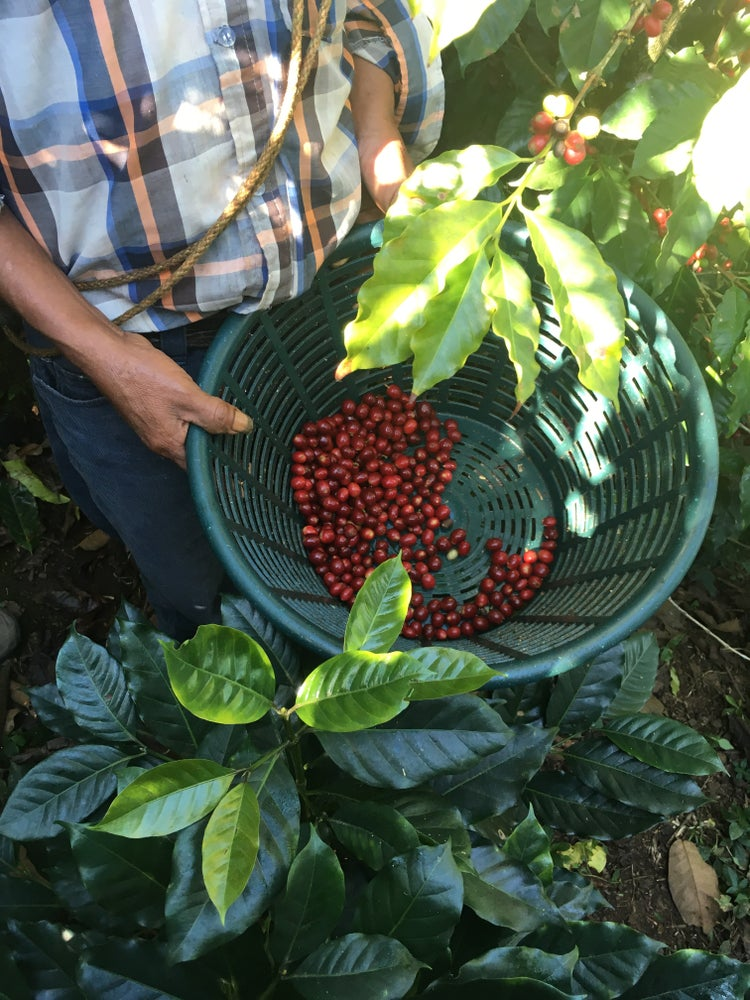
La Minita Estate places great emphasis on organic cultivation. Leveraging the geographical advantage of high altitude and the unique climate's limiting effect on pest populations, no insecticides are used during cultivation, and a small number of pests do not cause much harm to the coffee trees. However, extra care is needed during harvesting, because at La Minita Estate, as the rainy season draws to a close, the coffee fruit also ripens; green fruit begins to turn red, but the ripening process is very slow and uneven, unlike flowering, which is rapid and uniform. Therefore, harvesting work must be more meticulous.
To ensure excellent quality, only fully ripe dark-red fruit is harvested on the estate. The estate conducts soil tests twice a year to determine fertilization frequency and dosage, providing more nutrients to the coffee trees and preventing disease. Such scientific cultivation management has created the outstanding flavor of Flor coffee and its reputation for consistent quality over many years. To ensure the soil quality for producing high-quality coffee beans, La Minita fertilizes about three times a year. In addition, the estate also applies trace-element fertilizers such as zinc, boron, and copper to supplement the nutrients needed by the coffee trees and prevent disease.
Flor Coffee Bean Varieties
The varieties of Guatemalan Flor are mainly Bourbon, Caturra, and Catuai. Bourbon and Typica are both ancient and high-quality coffee varieties, with pure flavor and moderate acidity and sweetness. Caturra has a lemony or citrusy acidity on the palate, and its sweetness is inferior to Typica and Bourbon; its level of sweetness depends on the number and dosage of fertilizations by the grower. Caturra has higher productivity, but to maintain productivity it must be continuously fertilized and pruned, so the trees are short with many branches. Although output increases, the harvest period takes two years, care costs are higher, and output is still subject to certain limitations.
Flor Coffee Bean Processing Method
Guatemala, like other coffee-producing countries in the Americas, also prefers the washed processing method, and the washed method is very widespread in American producing countries. For producers, the biggest difference between the washed method and the sun-dried method is that it can process coffee beans stably and in large quantities, while also yielding better green bean quality. Front Street believes that washed coffee beans have a cleaner mouthfeel than sun-dried coffee and better reflect the local terroir, which is also why most of Front Street's everyday beans are washed.
The steps of washed processing are: float the harvested coffee fruit in water and select fruit with sufficient density. Then use a machine to remove the skin and pulp; the coffee beans that complete this step are placed into a fermentation tank for fermentation, during which the pectin layer is broken down, after which the decomposed pectin and residual pulp are washed away with clean water. Finally, the coffee beans are dried until the moisture content drops to about 11%, at which point they can be stored in the warehouse. Washed processing also gives this Flor coffee higher acidity and a cleaner flavor profile.
Front Street's Approach to Roasting Flor Coffee Beans
Guatemalan coffee beans themselves carry the nutty and cocoa-toned character typical of Latin America, accompanied by faint floral notes and soft fruit acidity. Front Street uses a medium-light roast to retain more floral and fruity aromas, presenting clean and bright acidity while enhancing richness and balance.
Front Street Brewing Parameters for Guatemalan Coffee:
Medium-light roasted beans have a lower extraction rate of coffee solids than dark roasts. Front Street recommends using a faster-flow V60 dripper, a higher water temperature, and a finer grind. Front Street uses a medium-fine grind / fine sugar coarseness (80% passing through a Chinese No. 20 standard sieve), takes 15 grams of coffee powder, and brews with a V60 dripper, 91°C water temperature, a 1:15 coffee-to-water ratio, and a three-stage pouring technique.
Using three-stage extraction, bloom with twice the amount of water as coffee powder, that is, 30 grams of water for a 30-second bloom. The purpose of blooming is to allow the coffee powder to release internal carbon dioxide, making the later extraction more stable. Pour in a small stream in a circular motion until 125 grams, then pause, continue pouring until 225 grams and stop. After all the water in the dripper has dripped through, remove the dripper. Timing starts from the beginning of pouring, and the extraction time is 2 minutes 00 seconds. Next, swirl the entire cup of coffee to mix it evenly, then pour it into a cup to taste.
Flavor characteristics of Guatemalan Flor coffee: Berry acidity, citrus, slight chocolate, rich layering, smooth mouthfeel.
The above content is compiled by CoffeeHunters, a coffee news website.


