








How does a hand-press portable coffee maker work?
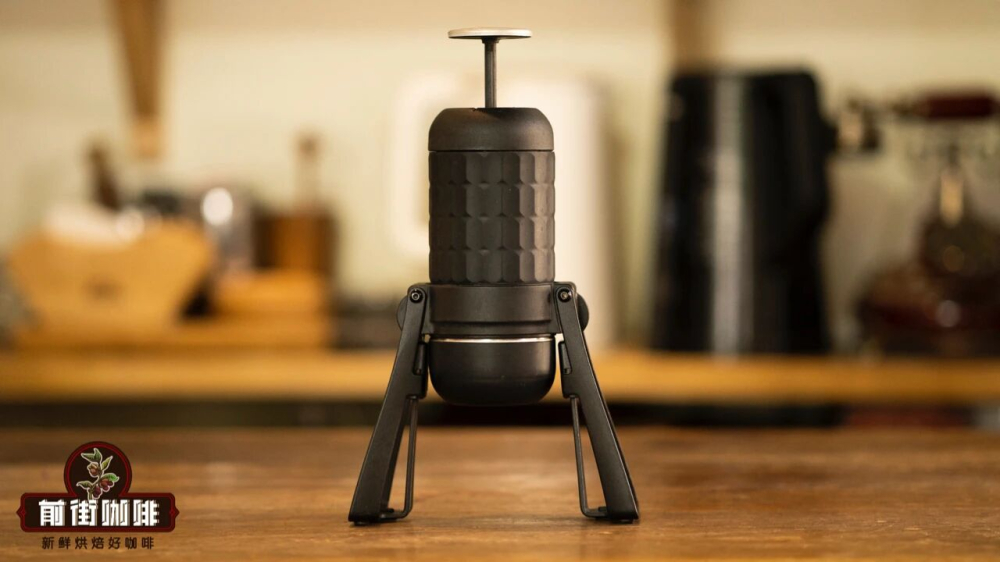
A hand-press portable coffee maker covers the case where a fresh cup is wanted on the go but bulky gear is not. It consists of a top cover pressure pump, a water tank for hot water, and a lower cover that holds the grounds and serves as the dispensing outlet, delivering a stable 15 to 20 bar of pressure during extraction.
The filter basket holds 18 to 22 g of grounds, and extraction starts after adding 120 to 180 ml of water at about 94 degrees Celsius. A pressure regulating valve on the lower cover lets the user adjust between 15 and 20 bar. Medium-dark espresso beans suit it, producing rich crema and a full-bodied cup.
When you want a freshly brewed cup of coffee on the go but carrying bulky equipment isn't convenient, a hand-press portable coffee maker solves this problem perfectly. It has a simple structure and a compact size, yet it can provide a stable pressure of 15–20 bar. This article will use the actual operating process as the main thread, showing every detail from loading coffee grounds and pouring water to pressing and extracting, and verifying whether it can produce espresso close to the level of an espresso machine, as well as its performance when making milk coffee. Friends who like traditional-style Americano or latte can also refer to the Front Street Classic Blend and Front Street Commercial Blend recommended in the article, and experience the rich flavor interwoven with butter, nuts, spices, and dark chocolate.

When you're out and about and want coffee, but don't want to carry around a bunch of bulky equipment, a lightweight hand-press coffee maker comes into being. It is mini in size and its extraction structure is not complicated, allowing travelers to enjoy a freshly brewed cup of coffee anytime, anywhere.
This portable hand-press coffee maker consists of a top cover pressure pump, a water tank that stores hot water, and a lower cover responsible for holding the coffee grounds and also serving as the dispensing outlet. The filter basket can hold 18–22 g of coffee grounds, and extraction can begin after pouring in 120–180 ml of hot water at about 94°C. There is a pressure regulating valve at the lower cover, and the pressure can be freely adjusted between 15–20 bar.
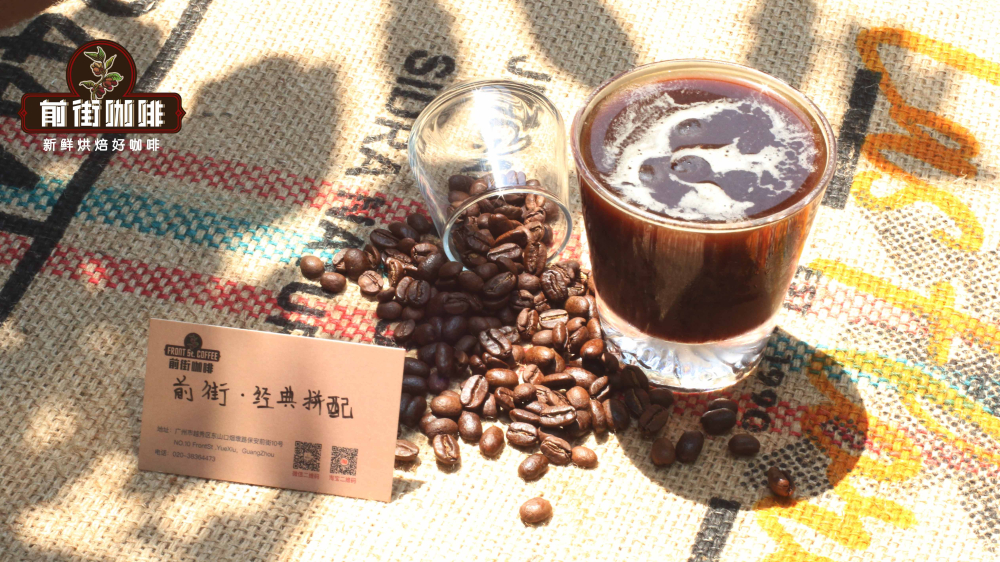
The portable hand-press coffee maker has its own pressure-boosting capability, making it very suitable for medium-dark roasted espresso beans, and it can better present rich crema and a full-bodied taste. If you prefer traditional-style Americano and latte, you can choose Front Street Classic Blend or Front Street Commercial Blend. During extraction, they release the aromas of butter, nuts, spices, and dark chocolate. Their wild profile and abundant crema are their greatest features, and their rich, fragrant taste is also the easiest to remember;
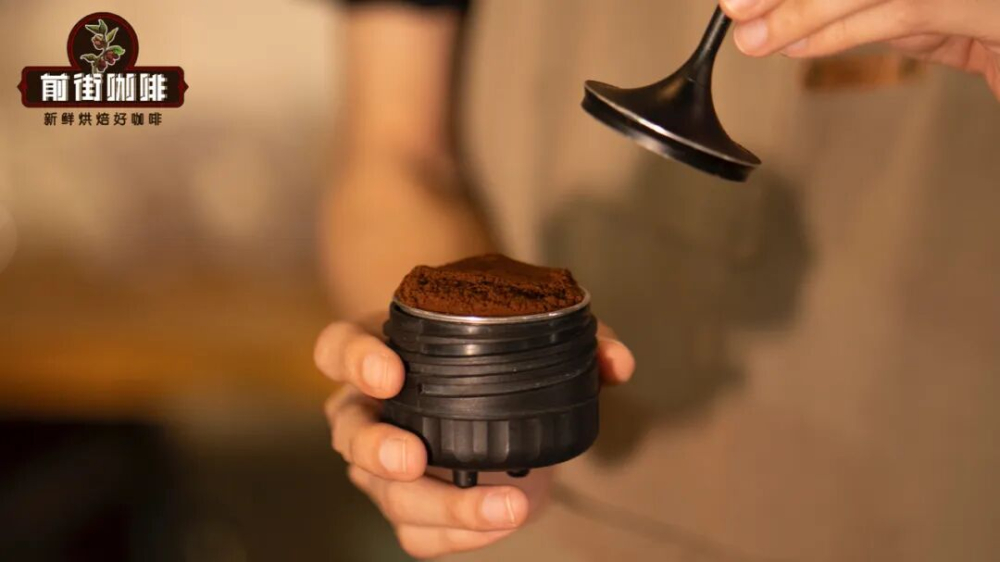
Step 1: Put 20 g of ground coffee into the filter basket.
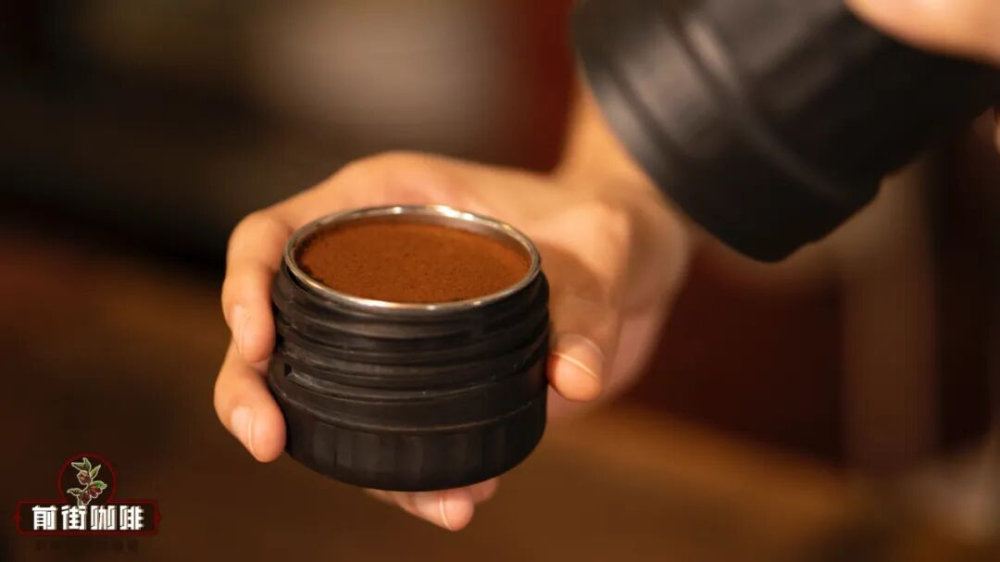
Then level the surface of the coffee grounds and tamp them firm, then screw the filter basket onto the water tank, making sure to tighten it.
Next, pour in 120 ml of 94°C hot water, and finally put on the lid. Preparation before extraction is now complete!
Now enter the extraction stage. Keep a steady rhythm and press continuously several times until the target amount of coffee liquid has been extracted, then stop.
After pressing continuously for about 20 s, the coffee liquid begins to drip out, accompanied by quite a rich layer of crema.
When the coffee liquid reaches the target weight, you can stop!
The taste when drunk directly was unexpectedly good! It was not as weak and thin as imagined; instead, it was on the rich side, and the body was quite solid. Overall, its performance is very close to espresso extracted by an espresso machine.
Next, let's make a cup of milk coffee to test the smoothness of its crema! Use the same ratio as a regular latte, 1:5, that is, 40 ml of coffee liquid with 200 ml of hot milk.
The above content is compiled by CoffeeHunters, a coffee news website.


