







How do coffee producing regions shape Kenyan AA flavor?
Kenyan AA coffee gets its tomato-like flavor from high-altitude growing zones, volcanic soil and the Bourbon variety introduced in the late 19th century. Beans are grown between 1,600 and 2,100 meters, where a slow cherry ripening cycle builds the bright fruit acidity and dense bean structure associated with the country.
Kenya's coffee producing regions sit along the equator and the East African Rift Valley, with harvests from October to December and June to August. The official coffee grading system sorts beans by size and quality before the K72 washed process, which uses a 72-hour fermentation and helps produce the clean mouthfeel, dark plum and cherry tomato notes found in the cup.
Kenyan AA coffee is renowned for its bright fruit acidity and distinctive tomato-like flavor, making it one of the most recognizable presence in specialty coffee. This article systematically analyzes the causes of Kenyan coffee's flavor, from growing conditions, historical context, ten major producing regions, and the official grading system to the K72 washed processing. Front Street Coffee's baristas combine cupping and pour-over practice with Kenyan Asali beans to share specific parameters and brewing techniques, helping enthusiasts understand this "most acidic coffee's" clean mouthfeel and layers of dark plum and cherry tomato, suitable for readers who want to deeply understand Kenyan coffee.
For more specialty coffee knowledge, please follow: Front Street Coffee (Frontsteet Coffee)
Many friends who are new to specialty coffee, after experiencing for the first time that coffee can actually have acidity, often ask: "Which coffee has the highest acidity?" Faced with this question, Front Street's baristas almost always blurt out—Kenya. Front Street Kenyan coffee features a clean, refreshing taste, thick mouthfeel, and bright fruit acidity. Everyone who has tried Kenyan coffee has fallen under its spell.
Coffee Growing Conditions
Kenya is located in East Africa, with the equator passing through its center and the East African Rift Valley running north to south. The country has vast highlands with an average elevation of about 1,500 meters. Mount Kirinyaga (Mount Kenya), the second-highest peak in Africa, stands at 5,199 meters, with its summit covered in snow year-round.
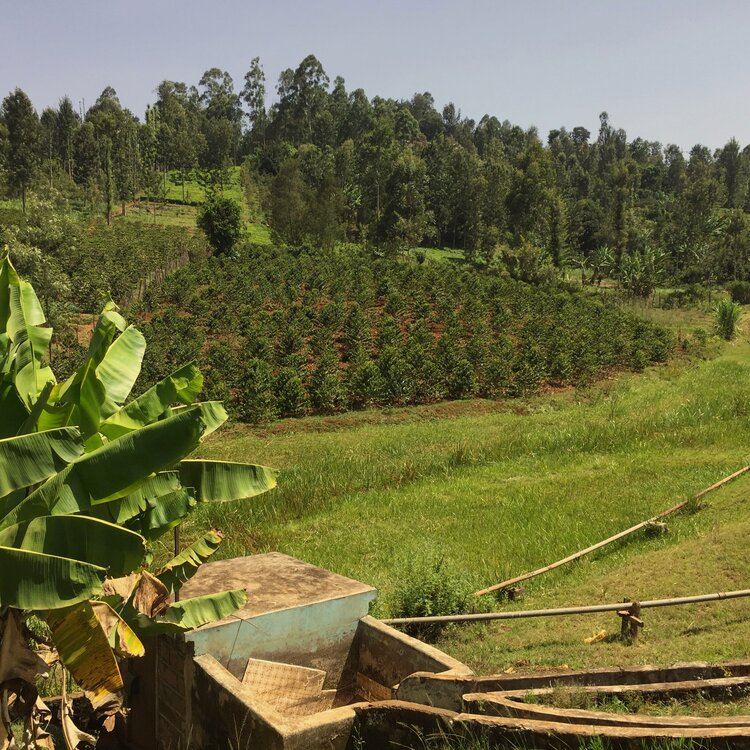
Kenya is a tropical producing region with two rainy seasons per year, and harvest periods concentrated from October to December and June to August. Coffee is mainly grown in volcanic soil zones at elevations of 1,600 to 2,100 meters. The suitable high altitude extends the ripening cycle of coffee cherries, allowing the beans to fully accumulate aromatic compounds, resulting in prominent fruit acidity and harder bean density.
Coffee Growing History
Kenya's neighbor Ethiopia is known as the "birthplace of coffee," but Kenya's coffee growing history can only be traced back to the late 19th century. In 1893, missionaries introduced the Bourbon variety from Brazil to Kenya. In 1895, Britain colonized Kenya, designating it as the "East Africa Protectorate" and taking control of all crops including coffee.
Between 1900 and 1933, the colonial government established the Coffee Board (CB), responsible for coffee licensing, inspection, and promotion. In 1934, auctions began to become one of the sales methods for Kenyan coffee, with the first coffee auction held in September 1935. In 1946, the Coffee Marketing Board (CMB) was established, fully operational by July 1, 1947, but abolished in 1971.
Introduction to Kenya's Coffee Producing Regions
Kenya has 10 main coffee producing regions: Nyeri, Murang'a, Kirinyaga, Embu, Meru, Kiambu, Machakos, Nakuru, and Kisii.
[Nyeri]
The Nyeri producing region is located in central Kenya, home to the extinct volcano of Mount Kenya. It has fertile volcanic red soil, providing superior conditions for cultivating Kenya's best coffee. In this region, cooperative societies formed by smallholder farmers are more common than large estates. The growing elevation in this region ranges from 1,200 to 2,300 meters.
[Murang'a]
The Murang'a producing region belongs to the Central Province and has approximately 100,000 coffee farmers. Murang'a was where the first missionaries chose to settle. This region also has fertile volcanic soil, and the number of smallholder coffee farmers exceeds that of estates. The growing elevation here ranges from 1,350 to 1,940 meters.
[Kirinyaga]
The Kirinyaga producing region is located east of the Nyeri producing region and also has fertile volcanic soil. In this region, coffee produced by smallholder farmers is more common, and processing plants also produce quite a few extremely high-quality coffees. The growing elevation in this region ranges from 1,300 to 1,900 meters.
[Embu]
This producing region is close to Mount Kenya, and the Embu producing region is named after Embu town. About 70% of the local population in Embu engages in small-scale farming, but almost all coffee beans come from smallholder farmers, with relatively low output. The growing elevation in the Embu producing region ranges from 1,300 to 1,900 meters.
[Meru]
Most coffee in the Meru producing region is grown by smallholder farmers on the slopes of Mount Kenya and the Nyambene Hills. The name Meru comes from the people of the area, the Meru people. In the 1930s, they were the first Kenyans to produce coffee, thanks to the Devonshire White Paper signed in 1923, which guaranteed the importance of the rights of Kenyan Africans. The growing elevation in the Meru producing region ranges from 1,300 to 1,950 meters.
[Kiambu]
The Kiambu producing region is located in central Kenya, and this region is dominated by large coffee estates. However, due to urbanization, the number of coffee estates has decreased. Coffee from the Kiambu producing region is usually sold under the names of sub-regions such as Thika, Ruiru, and Limuru. There are also quite a few smallholder farmers in the Kiambu producing region. The growing elevation in this region ranges from 1,500 to 2,200 meters.
[Machakos]
The Machakos producing region is a relatively small county located in central Kenya. The name Machakos comes from Machako town. Coffee in this producing region is grown by both estates and smallholder farmers. The growing elevation in this region ranges from 1,400 to 1,850 meters.
[Nakuru]
The Nakuru producing region is located in central Kenya and has the highest elevation coffee growing areas within the central producing region. Due to certain coffee plants grown at high altitudes developing dieback and ceasing to grow. The name Nakuru comes from Nakuru town. The growing elevation in this region ranges from 1,850 to 2,200 meters.
[Kisii]
The Kisii producing region is located in the southwestern part of Kenya's coffee producing areas, near Lake Victoria, and the region is relatively small. Most coffee in the region comes from cooperative societies formed by free small-scale producers. The growing elevation in this region ranges from 1,450 to 1,800 meters.
Kenya's Coffee Grading System
Anyone who has read Front Street's articles on Kenyan coffee will easily notice the presence of Kenya AA. During colonization, Kenya developed its coffee economy, and the entire coffee system leaned toward refined management. Kenya's coffee selection, grading, and processing methods far surpassed many coffee producing countries at the time, and it was only decades later that other countries also recognized the advantages of this refined management and followed suit, gradually diminishing Kenya's unique standing.
1. Classified by size, shape, and weight
E: Elephant bean, 18 mesh and above (including peaberry), includes large peaberries, like PB, relatively small in quantity
AA: 17-18 mesh
AB: 15-16 mesh, a mix of Grade A and Grade B, 17 mesh (6.8mm) and above is Grade A, 16 mesh (6.3mm) and above is Grade B
TT: Light beans screened out from AA and AB by air separator
PB: 15 mesh and above, peaberry, accounts for about 10% of Kenyan coffee
C: 12-14 mesh, and light beans screened out from PB by air separator
T: Below 12 mesh, with more defective beans, broken beans, and light beans
HE: Anything outside the above grades becomes HE (Hulled Ears)
2. Raw beans that have not undergone official standard grading are UG (ungrade)
E, AA, AB, PB→UG1
C, TT, T, HE→UG2
3. MBUNI (natural sun-dried beans, non-washed processing)
All raw beans undergo gravity separator
MH: heavy mbuni, heavy beans, yellow, no black beans, fragments, dried fruit or other defects, cupping shows typical natural flavor, no taste defects
ML: light mbuni, yellow-green, with a small amount of insect-damaged beans or black beans, no stinker beans or fragments, no earthy taste or other bad flavors in cupping
The above is Kenya's official national grading system. In addition, Kenyan exporters or green bean traders have added special grading (not officially recognized by the Kenyan government) for AA and AB grade green coffee beans, in order: TOP, PLUS (+), FAQ
Reasons Behind Kenyan Coffee's Flavor Characteristics
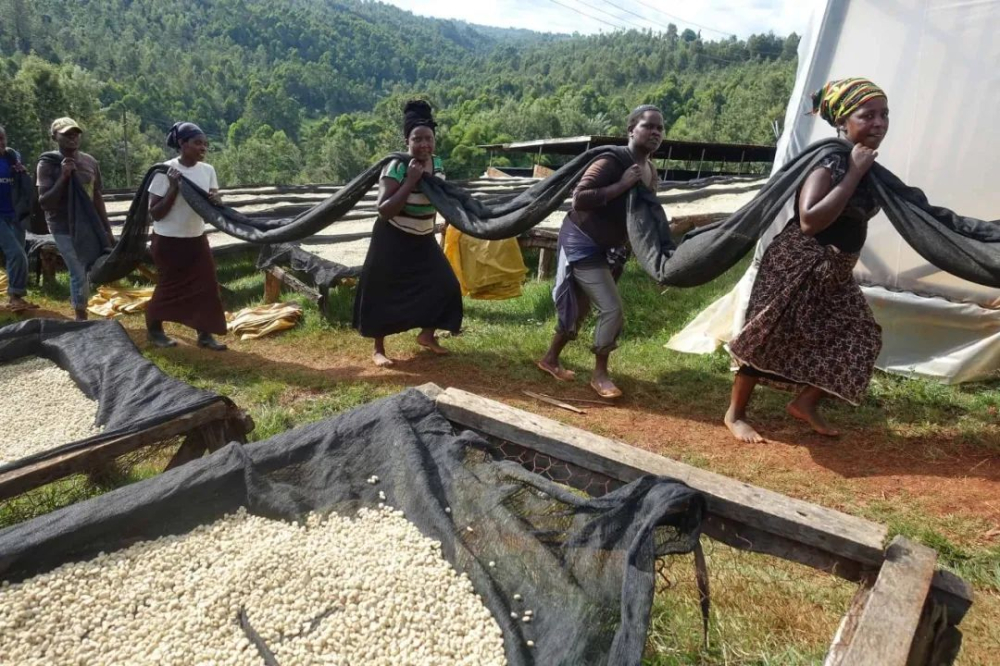
Central and South American beans rarely ferment in washing tanks for more than 36 hours, but Kenya's washing time lasts as long as 72 hours. After 30-48 hours of fermentation, the parchment coffee is removed from the tank, by which time the mucilage on the bean surface has been completely removed, but it still needs 24 hours of soaking in clean water. After cupping multiple beans, Front Street found that this additional fermentation step should be related to the bright and clean flavor characteristics of Kenyan AA coffee.
How to Drink Kenyan Coffee?
Taking Front Street Coffee (FrontStreet Coffee) Kenya Asali as an example:
Front Street Coffee (FrontStreet Coffee): Kenya · Asali Coffee Beans
Producing Region: Asali Processing Plant, Thika Region, Kenya
Altitude: 1,550m—1,750m
Variety: SL28, SL34
Processing Method: K72 Washed Processing
Flavor Description: Dark Plum, Cherry Tomato, Snow Pear, Yellow Sugar, Plum
Front Street Coffee (FrontStreet Coffee) Pour-Over Parameters Sharing
Dripper: Hario V60
Dose: 15g
Coffee-to-Water Ratio: 1:15
Water Temperature: 90°C
Grind Size: EK43s#10 (80% pass rate on No. 20 standard sieve)
First pour 30g of water for blooming for 30 seconds, then second pour to 125g for staging. When the water level drops to just about to expose the coffee bed, pour the third stage until 225g and stop. Wait for the water in the dripper to completely drip into the server, then remove the dripper. Total extraction time 2'00".
The above content is compiled by CoffeeHunters, a coffee news website.


