







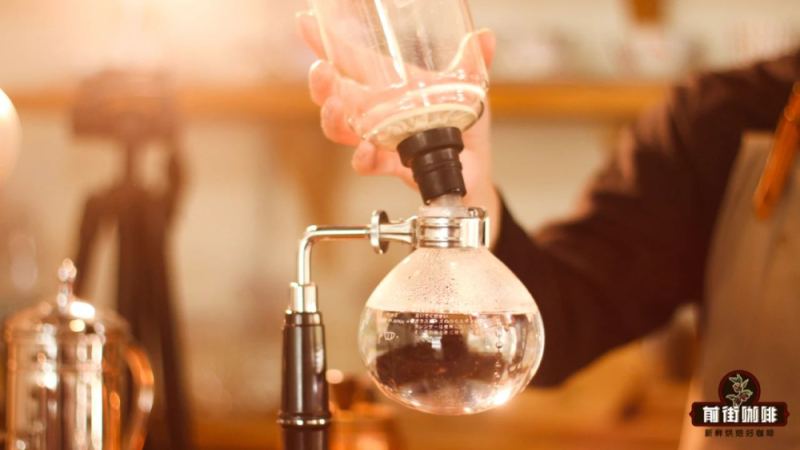
What does the history of siphon coffee show about brewing?
The siphon pot, also spelled syphon, brews coffee using heat, steam pressure and vacuum. In 1840 the Englishman Nabia built an early vacuum coffee pot from a laboratory test tube, and a French inventor's 1842 patent brought the upper-and-lower convection design to market.
German physicist Johann Norremberg demonstrated a siphon device around 1826 but never patented it, so the design stayed obscure for years. Siphon brewing predates pour-over coffee by roughly a century and remains central to Japan's specialty coffee culture, prized for its full mouthfeel and hands-on process.
The siphon pot, also known as the syphon, is a device that extracts coffee using the principles of thermal expansion and contraction and vacuum. Its history can be traced back to a laboratory invention in the early 19th century. With its elegant brewing process and rich, solid mouthfeel, it holds an important place in Japan's specialty coffee culture. This article will take you through the complete journey of the siphon pot from its birth to its improvements, distinguish the flavor differences between it and pour-over coffee, and list in detail the tools and steps needed to make siphon coffee using Front Street Coffee beans, suitable for every coffee lover interested in this classic device.
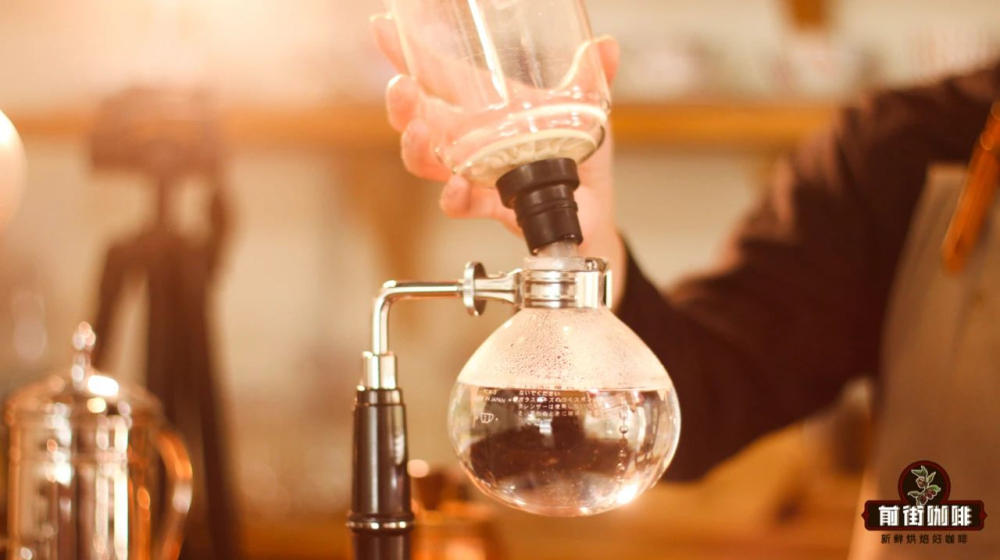
For more specialty coffee knowledge, please follow the WeChat public account: FrontStreet Coffee
In 1840, a glass test tube in a laboratory accidentally gave birth to the siphon coffee maker (Syphon). The Englishman Nabia, using the test tube used in chemical experiments as a prototype, created the world's first vacuum coffee pot. Just two years later, Mrs. Bafang of France improved this simply shaped pot, and the upper-lower convection siphon pot was thus born.
What is the siphon pot called in English?
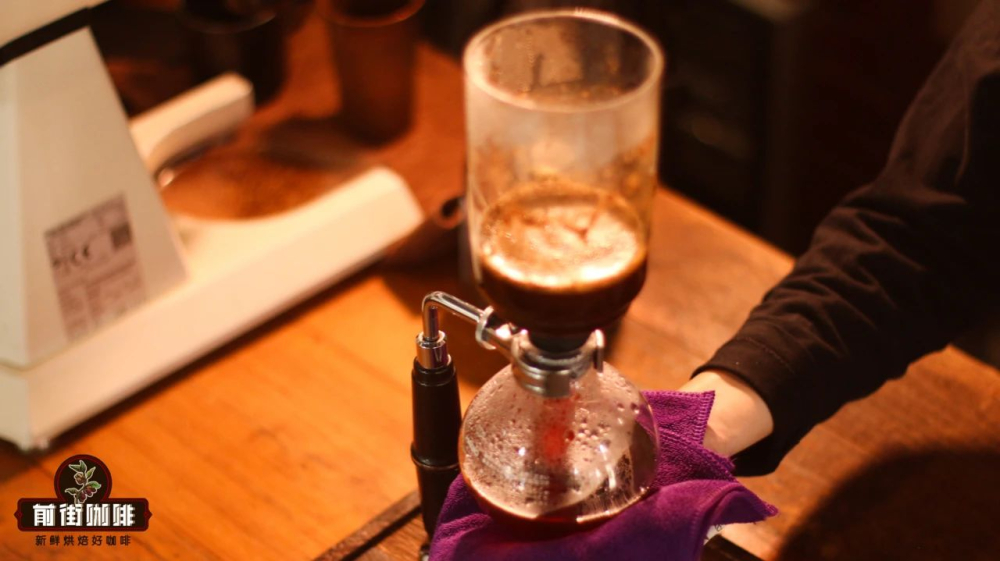
The English name of the siphon pot is "SIPHON", so it is also called a syphon. It uses the principle that water produces steam when heated, thereby causing thermal expansion and contraction, pushing the hot water in the lower pot up to the upper chamber to mix and steep with the coffee grounds; after the temperature drops, the coffee liquid flows back through the vacuum tube to the lower pot, thus completing the extraction.
Speaking of the history of the siphon pot, it can be traced back to the early 19th century, nearly a hundred years earlier than the appearance of pour-over coffee. According to records, in 1826, the German physicist Johann Norremberg used laboratory equipment to make a siphon pot. His original intention was to demonstrate the power of steam to students, so he did not apply for a patent, and his design did not become popular. It was not until the mid-19th century that the French inventor Marie Fanny Amelne Massot improved this device, and the upper-lower convection siphon pot was officially born. She obtained the relevant patent in 1842, and this device was thus able to enter the market for sale.
At almost the same time, the Scottish engineer Robert Napier designed his Napier Coffee Pot, which also used the vacuum principle to brew coffee. Although the device won an award from the Institution of Mechanical Engineers in 1856, Napier never applied for a patent for it.
After that, similar vacuum brewing devices began to prevail throughout Europe and gradually spread to the United States and other places. However, with the later appearance of automatic drip coffee machines, Americans' enthusiasm for using siphon pots also gradually cooled.
What kind of coffee is the siphon pot suitable for making?
In our impression, Japanese-style coffee has always favored dark roasting, pursuing aroma, strength, richness, and thickness. In addition, Japanese people have a natural fondness for exquisite craftsmanship and things with a sense of ritual. Therefore, after this device was introduced, the siphon pot deeply attracted them with its elegant brewing process and solid coffee mouthfeel, becoming an indispensable part of the local specialty coffee culture. Despite the changes of the times, and although various new coffee devices continue to emerge today, the siphon pot is still the brewing method mainly promoted by many Japanese-style specialty coffee shops.
In 1925, KONO founder Akira Kono officially established the company and developed an upright siphon pot. Then in 1964, the second-generation president Toshio Kono continued to improve it, which led to a shape closer to the siphon pot we see today. When the second-generation siphon pot was born, it coincided with the rise of Japan's coffee boom. With the support of Japanese-style dark roasting, the siphon pot not only became further popularized and widely used in major specialty coffee shops, but also developed a uniquely distinctive Japanese siphon aesthetic.
Later, this coffee brewing ritual was no longer limited to Japan itself, and its aesthetics and essence began to travel overseas. For example, in Taiwan, which is deeply influenced by Japanese coffee culture, shops have successively introduced this "fashionable item" into their stores. In mainland China, the siphon pot first became popular along with the rise of Taiwan-style business coffee shops in the mainland.
Friends who have drunk siphon coffee must clearly know that the difference between siphon coffee and pour-over coffee is quite obvious, and both the mouthfeel and the taste are completely different. Pour-over coffee is cleaner on the palate, with clearer layers and more prominent flavors; while siphon coffee presents a richer mouthfeel, a stronger aroma, and a more solid texture.
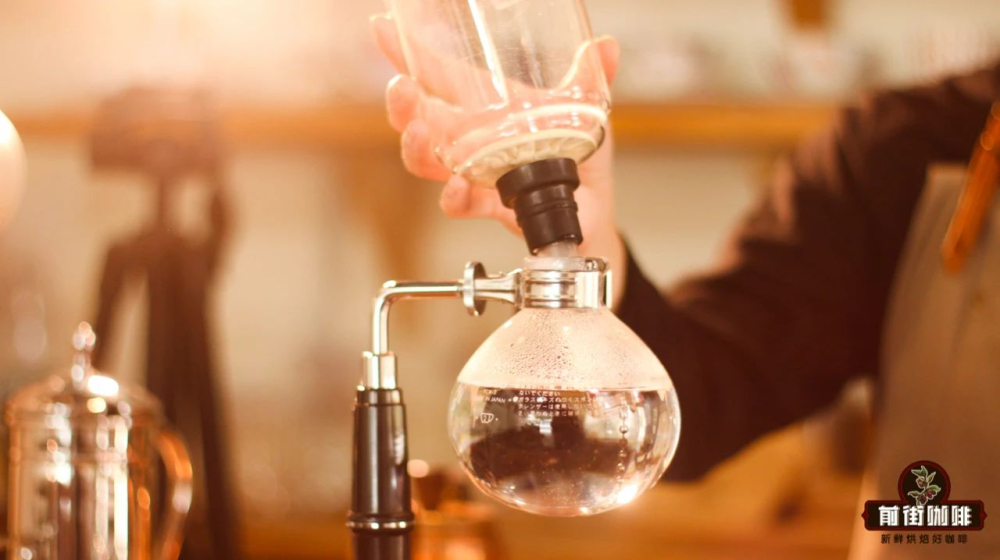
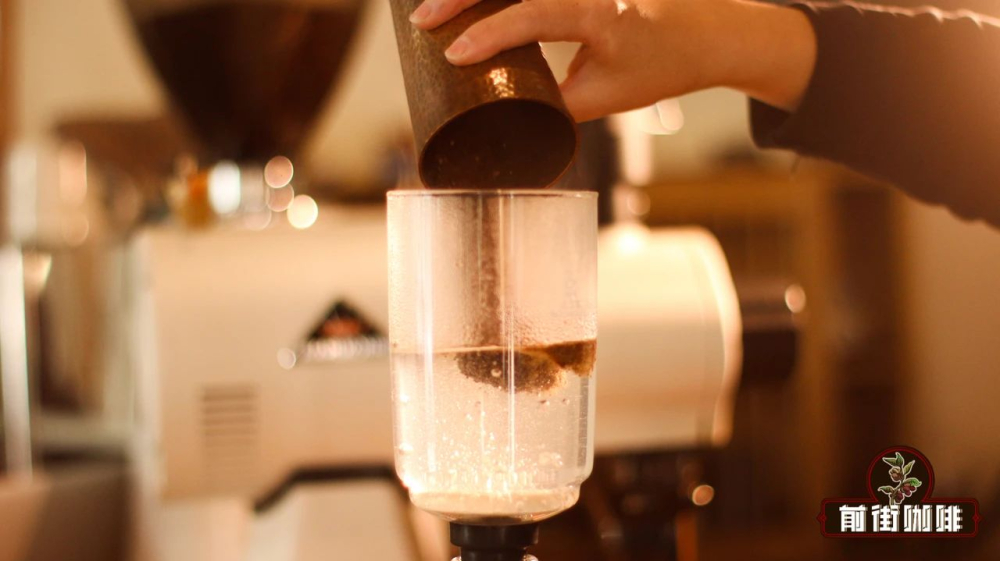
Therefore, in order to highlight this characteristic, when brewing coffee with a siphon pot, it is recommended to choose these medium-roast coffee beans: Front Street Huilan, Front Street Bird of Paradise, Front Street Diamond Mountain, and Front Street Queen's Estate, which can give the coffee both nutty aroma and a rich body. In addition to coffee beans, the tools needed to brew coffee with a siphon pot are: siphon pot, coffee beans, alcohol lamp (other heat sources are also fine), hot water, dry cloth. Step 1: Set up the alcohol lower pot and the alcohol lamp, and install the hook of the upper pot filter cloth in advance (place the filter device into the upper pot, stretch the hook out from below the tube and hang it at the end of the tube).
The above content is compiled by CoffeeHunters, a coffee news website.


