








Why do mocha coffee beans share a name with the Moka pot?
Mocha coffee beans take their name from Yemen's Port of Mocha, a Red Sea trading hub for over three hundred years from the 15th century. Coffee grown in Yemen's central highlands shipped through that port, and buyers labeled it Mocha without knowing the inland source.
Espresso mocha coffee and the stovetop Moka pot borrowed the word later, which is why newcomers confuse three unrelated things. The beans came first, the drink and the brewer followed centuries apart, so a bag of mocha coffee beans is not the same item as a moka pot or a chocolate-flavored cafe mocha.
In the coffee world, the term "mocha" points to at least three completely different things: Mocha coffee beans originating from Yemen, the espresso drink mocha coffee, and the Moka pot commonly found in Italian households. Many friends who are just getting into coffee are often confused by these concepts that share the same name. This article will start from historical origins, production methods, and flavor characteristics to sort out the ins and outs of these three one by one, helping you clarify the true relationship between them, and will also share Front Street Coffee's practical suggestions for daily brewing and bean selection.

For more specialty coffee knowledge sharing, please follow the WeChat official account: Front Street Coffee (FrontStreet Coffee)
Many people who have just stepped into the coffee world are full of questions as soon as they see the word "mocha." Friends who started with espresso and friends who started with single-origin coffee often understand mocha coffee very differently. Below we will sort out the connections and differences among Mocha coffee beans, mocha coffee, and the Moka pot.
Mocha
From the literal wording alone, these three concepts all revolve around "mocha," which easily makes people think they use Mocha coffee beans as the raw material, a Moka pot as the equipment, and ultimately produce a cup of mocha coffee. Such an association of course does not hold up, because the span of time between their births may be as long as one or two centuries. Then the only remaining clue is Yemen's Mocha. Next, let's look at why they are all named after mocha.
Mocha coffee beans
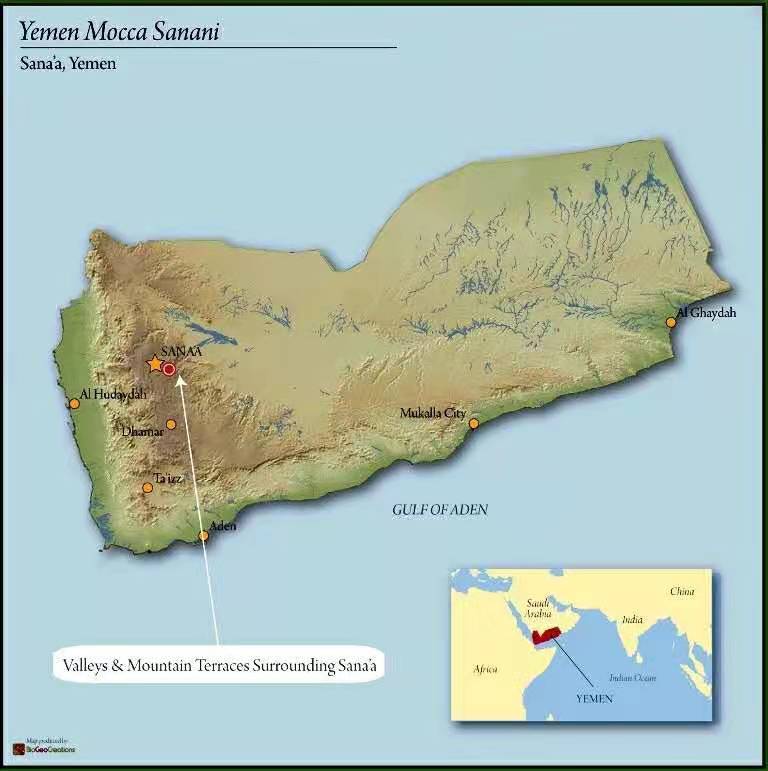
From the 15th century onward, Yemen's Port of Mocha was a key port on the Red Sea outlet for more than three hundred years, with a status comparable to today's Port of Shanghai. The vast majority of global maritime trade goods passed through this place. In fact, the area around Mocha did not produce coffee itself; the local coffee mainly came from the high-altitude areas of Yemen's central mountains. After these coffees were shipped from the Port of Mocha to European countries, they were widely praised, and at the time people only knew that the goods were sent from the Port of Mocha, so they called it "Mocha coffee (beans)." After that, any coffee exported from the Port of Mocha would be labeled and sold as "Mocha coffee."
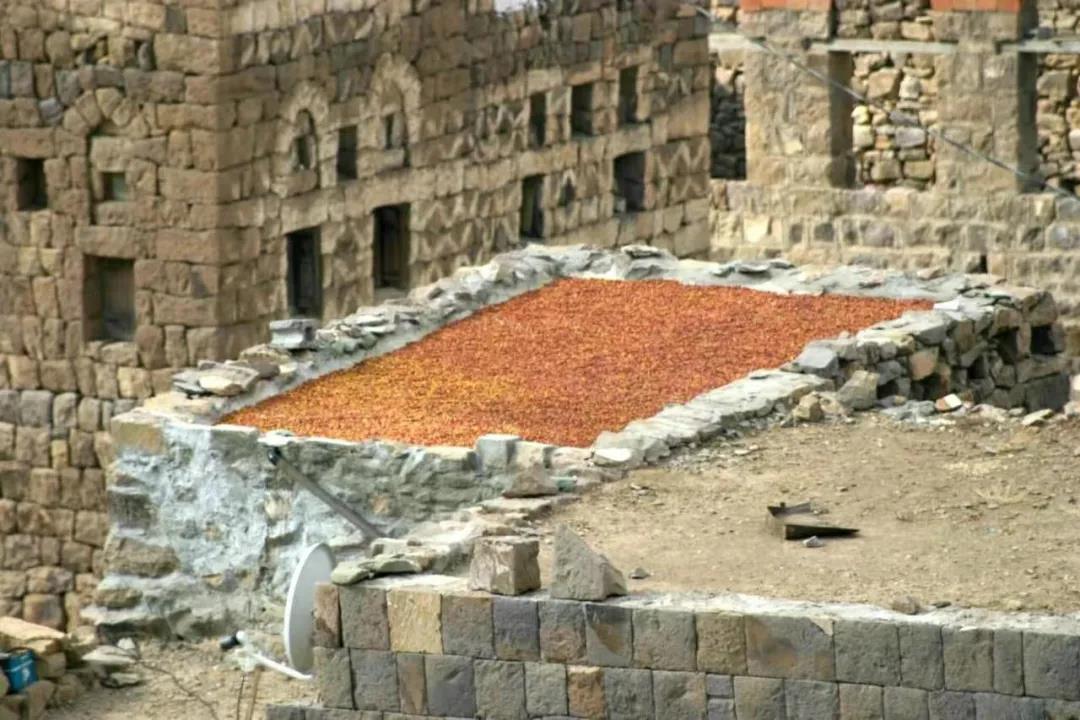
To this day, Yemeni Mocha is still one of the rarest and most precious coffees in the world. In recent years, Yemen's situation has continued to be unstable, and coffee cultivation has suffered severe damage, with only a very small amount of Yemeni coffee able to pass through the flames of war and reach the market each year. A few years ago, Front Street was fortunate to obtain a bag of Mokha Mattari coffee. It comes from the Bani Matar region of Yemen, hence the name. Unlike the coarse burlap bags from other producing regions, Yemeni coffee packaging uses a fine-mesh woven cloth similar to flour sacks.
Yemeni Mocha has differentiated into different schools depending on the growing region. For example, Mattari has chocolate notes and acidity, while Sanani Mocha is rustic and fragrant. But overall, their main characteristic is a rich chocolate profile.
Mocha coffee
We usually understand mocha coffee (Coffea Mocha) as a drink within espresso coffee, made up of espresso, milk, and chocolate sauce (or chocolate powder), and some coffee shops use chocolate chunks instead of chocolate sauce or powder. Mixing chocolate into espresso and then pouring in steamed milk can be called a combination of coffee and cocoa, possessing aroma, richness, and sweetness all at once.
This appears to have little to do with Mocha. But espresso mocha coffee can be traced back to 18th-century Italy, although there is currently no more authoritative historical material to prove the origin of its name. Still, it is worth making a bold conjecture: in the 18th-century coffee world order, the Dutch had already brought coffee to Southeast Asia, the French had introduced coffee to South America, Mocha had long lost its monopoly on coffee, and in the mid-to-late period, the market share of Mocha coffee gradually shrank under Ottoman rule.
From this it is not hard to see that less and less Mocha coffee was flowing into Europe, and in order to imitate the chocolate charm in Mocha coffee beans, Italians added chocolate sauce to espresso and paired it with milk to create a flavor close to Mocha coffee beans, which is also easy to understand. Therefore, the emergence of espresso mocha coffee was very likely intended to imitate the scarce Mocha coffee beans. In addition, at that time Mocha coffee beans held a status in people's minds similar to that of Geisha coffee beans today, so giving a drink with a similar flavor the name "mocha coffee" could better show style.
As espresso coffee culture swept the world, espresso mocha coffee (chocolate milk coffee) has also become an important member of the espresso coffee family.
Moka pot
The Moka pot actually has little to do with the Port of Mocha. Its inventor was Alfonso Bialetti, and it is the latest-born of the three "mochas" (1933). It is a traditional Italian household brewing device and does not originate from Yemeni Mocha, but its influence should not be underestimated, and it is said to be a must-have in every Italian household.
The Moka pot consists of three parts: the upper chamber, the filter basket, and the base. The lower chamber is used to hold water, the filter basket is used to hold more finely ground coffee, and the upper chamber is used to collect the extracted coffee liquid. The principle by which the Moka pot extracts coffee is not complicated: it relies on the steam pressure generated in the lower chamber. When the pressure becomes great enough to penetrate the coffee grounds, the hot water is pushed up into the upper chamber, brewing rich, aromatic coffee. Although its pressure (1.5-2 bar) is far lower than that of an espresso machine (9 bar), it can still extract coffee crema, and the mouthfeel is quite rich.
So why is the Moka pot called a "Moka pot"? In English, the Moka pot is written as Moka pot. The most common explanation is: since the first batch of coffee entered Venice in the 17th century, the two words mocha and coffee have already been linked with each other. It can be said that in northern Italy, mocha is almost equivalent to coffee. Therefore, the Moka pot is actually also called a coffee pot, meaning a brewing device with which one can obtain a rich cup of coffee at home.
Since the Moka pot uses pressure extraction, Front Street recommends giving priority to medium-roast coffee beans for brewing. If you like a balanced mouthfeel, we recommend Front Street Brazil Cerrado Coffee, Front Street Colombia Huila, and Front Street Bird of Paradise;
If you prefer a solid and mellow coffee aroma, it is recommended to buy the highest-grade Front Street Golden Mandheling drip bag coffee. These beans undergo multiple rounds of hand sorting, which can minimize the defect rate of the coffee beans, thereby making the aroma clearer and the sweet aftertaste longer-lasting; but if you do not like too much bitterness and want to drink coffee with fruity notes, it is best to buy Front Street Strawberry Candy espresso. All of the above freshly roasted coffee beans can be purchased and ordered at Front Street stores and the Front Street Tmall flagship store.
The above content is compiled by CoffeeHunters, a coffee news website.


