







What Does Rainforest Alliance Certification Coffee Mean for Blue Mountain?
Jamaican Blue Mountain coffee is defined by its growing region, the CIB grading system, and barrel export certificates, not by the phrase "Blue Mountain flavor" on a bag. The Clifton Estate, planted around 1750, is the only coffee estate in Jamaica's Blue Mountains holding Rainforest Alliance certification, a mark granted to farms meeting sustainable agriculture standards.
Genuine lots ship in numbered barrels with CIB documentation, and grading runs from No. 1 downward based on bean size and defects. Rainforest Alliance certified farms must meet environmental and worker welfare criteria, so the seal signals more than flavor; it points to how the coffee was grown. Brewing at a ratio near 1:15 with water just off boil keeps the cup balanced.
Blue Mountain coffee, as a classic representative of the coffee world, has won the favor of coffee lovers for decades with its balanced, full-bodied, and solid flavor characteristics. However, products marketed under the banner of "Blue Mountain flavor" keep emerging on the market. How exactly is genuine Jamaican Blue Mountain coffee defined? What are the origins, growing region conditions, grading, and identification methods behind it? This article will systematically sort out the core knowledge of Blue Mountain coffee, from the geographical environment of the Blue Mountains to the grading standards of the CIB (Jamaica Industry Board), from barrel export certificates to daily brewing parameters, and introduce Front Street Coffee's practices in bean selection and production, helping readers build a complete understanding of this classic coffee.
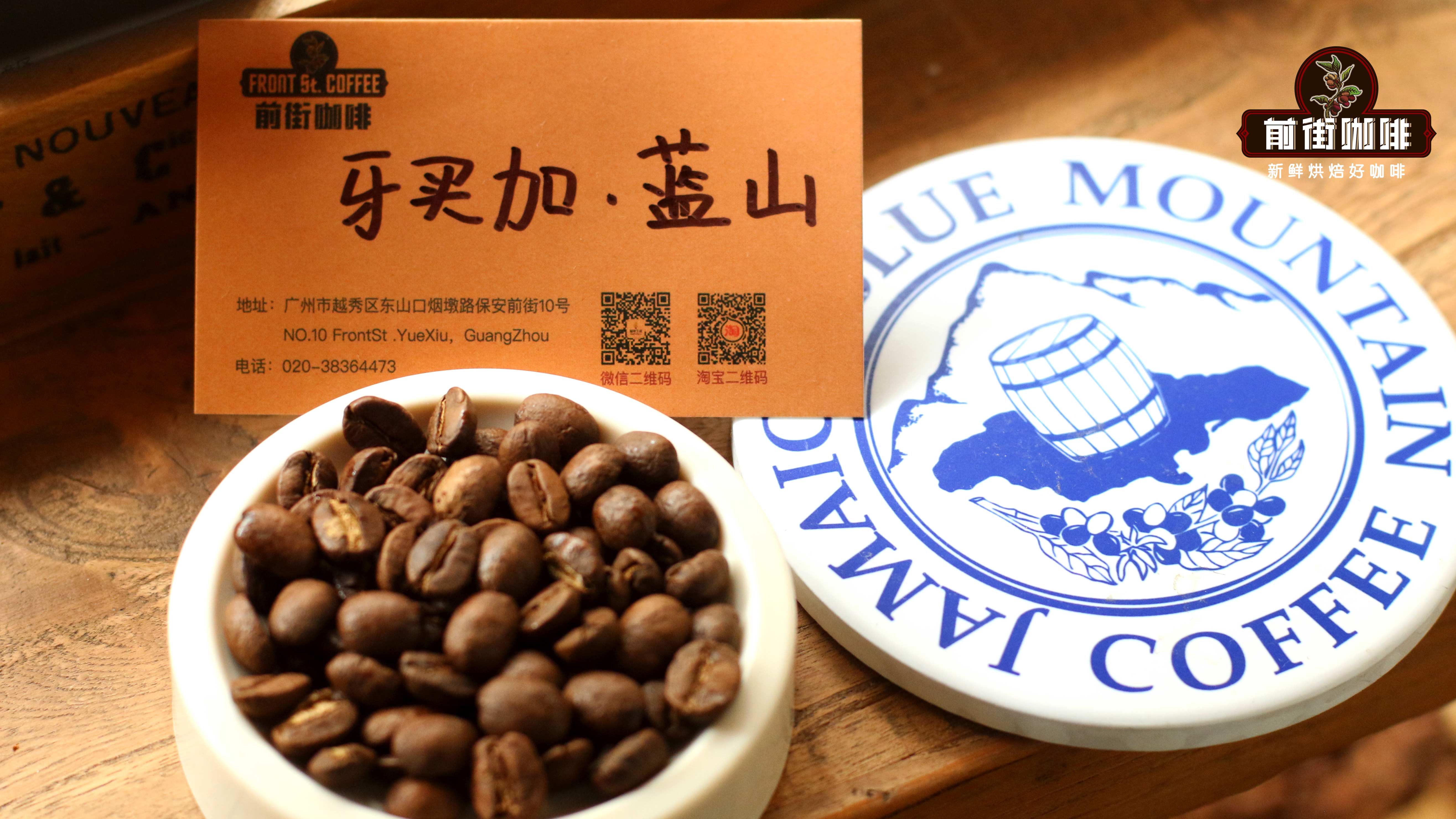
A recent discussion online drew many seasoned coffee enthusiasts into the conversation. A barista said in a video: "When you walk into a coffee shop, don't just blurt out and ask whether they have Blue Mountain coffee—asking that way is like telling people you don't understand coffee." That said, Blue Mountain coffee may not be the best in the world, but it can absolutely serve as a benchmark for measuring good coffee.
Over the decades, that balanced, full, and solid flavor performance has steadily captured the palates of several generations of coffee lovers. It is a fairly classic coffee that is well worth savoring seriously. Drinking Blue Mountain is not outdated, and drinking Blue Mountain absolutely does not mean you don't understand coffee.
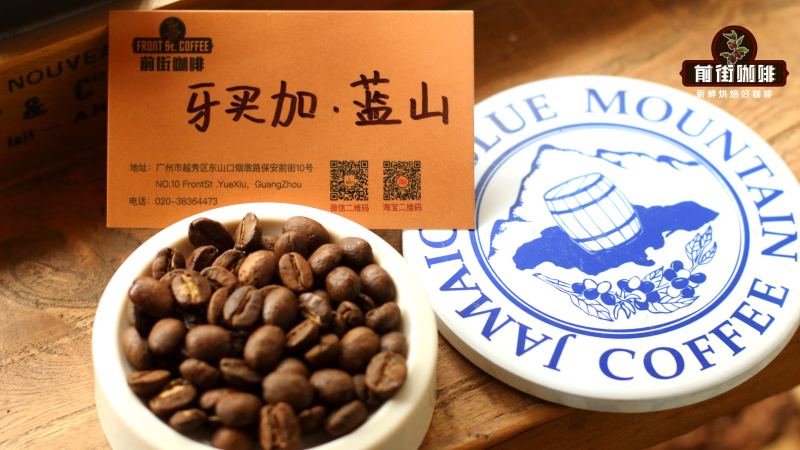
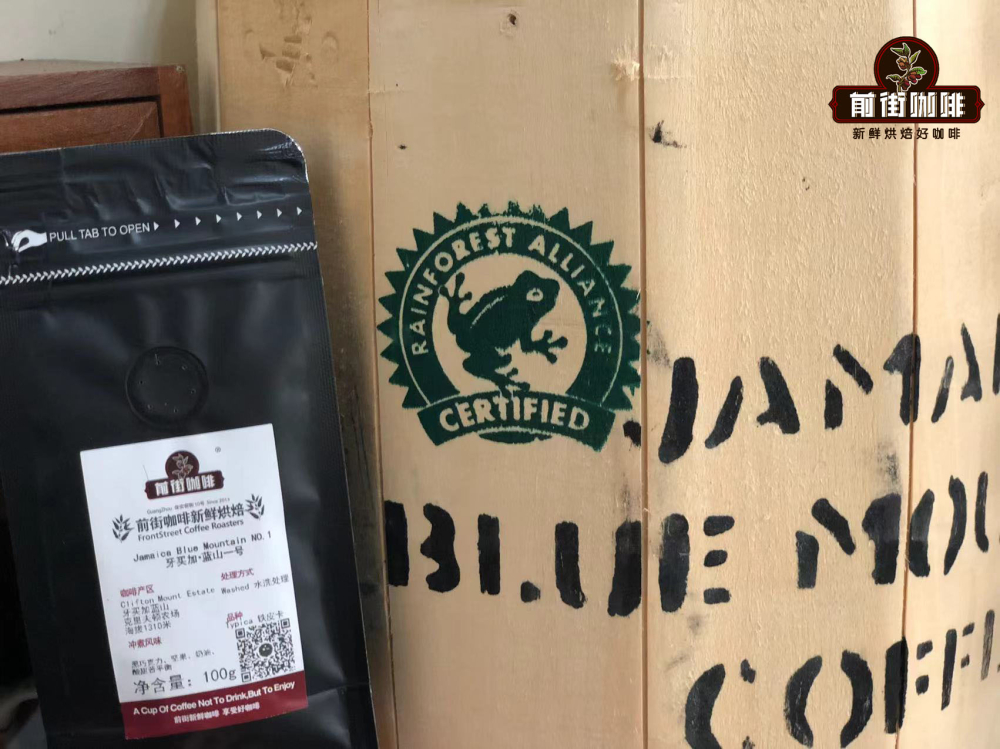
Front Street Coffee has always been a loyal fan of Blue Mountain coffee. In order to let everyone drink authentic Blue Mountain No. 1 at a reasonable price, Front Street chose the Clifton Estate, which has a long history of coffee cultivation in Jamaica's Blue Mountains. The estate began planting and producing coffee around 1750 and is also the only coffee estate in Jamaica's Blue Mountains to obtain Rainforest Alliance certification—an environmental certification granted only to regions that meet sustainable agriculture system standards.
What exactly is Blue Mountain coffee?
It is widely recognized as one of the most outstanding coffees in the world. The Blue Mountains are located in the eastern part of the island of Jamaica, surrounded by the Caribbean Sea. On clear days, sunlight shines directly onto the blue sea, and the peaks reflect the sea's brilliant blue glow, which is how the Blue Mountains got their name. The main peak of the Blue Mountains stands at 2,256 meters above sea level, the highest peak in the Caribbean region and also a well-known tourist destination.
However, not the entire mountain range is suitable for growing cash crops. The Jamaican government stipulates that areas above 1,700 meters above sea level belong to natural ecological protection zones, where planting coffee and other cash crops is prohibited. Therefore, the Blue Mountain coffee growing belt falls between 910 and 1,700 meters above sea level.
This area lies within the coffee belt, with fertile volcanic soil, clean and pollution-free air, a humid climate, and frequent fog and rain year-round. The average annual rainfall is about 1,980 millimeters, and the temperature remains around 27 degrees Celsius—it is precisely this terroir that has created the world-renowned Jamaican Blue Mountain coffee.
This coffee possesses many characteristics of a high-quality coffee: rich and aromatic flavor, and because the sweet, acidic, and bitter notes are perfectly balanced, it shows almost no bitterness, leaving only a moderate and beautiful acidity. Through cupping, Front Street Coffee found that Blue Mountain coffee with a medium-dark roast level presents a very balanced and full-bodied flavor, with dark chocolate, roasted nuts, and a faint fruity acidity complementing one another, with no single note stealing the spotlight.
Can all coffee produced in the Blue Mountains be called Blue Mountain coffee?
According to the classification of the CIB (Jamaica Industry Board), only coffee grown between 910 and 1,700 meters above sea level is eligible to be called "Jamaican Blue Mountain coffee." Coffee grown between 460 and 910 meters above sea level can only be called "Jamaica High Mountain coffee," while coffee below 460 meters is called "Jamaica Supreme coffee."
For Jamaican Blue Mountain coffee, the CIB also grades it according to bean size and defect rate after processing, in order: Blue Mountain No. 1, Blue Mountain No. 2, Blue Mountain No. 3, and Blue Mountain Peaberry. At present, the Blue Mountain coffee mainly imported into China basically all belongs to the Blue Mountain No. 1 grade.
Blue Mountain No. 1 coffee beans: require 96% of the coffee cherries to reach a size of 17 mesh or above, and a defect rate of no more than 2% after processing;
Blue Mountain No. 2 coffee beans: require 96% of the coffee cherries to reach a size of 16 mesh or above, and a defect rate of no more than 2% after processing;
Blue Mountain No. 3 coffee beans: require 96% of the coffee cherries to reach a size of 15 mesh or above, and a defect rate of no more than 2% after processing;
Blue Mountain coffee peaberry: require 96% of the coffee cherries to reach a size of 10 mesh or above, and a defect rate of no more than 2% after processing.
How do you identify authentic Blue Mountain coffee?
In supermarkets and convenience stores, we often see coffee products labeled with Blue Mountain coffee flavor, and many coffee shops also use Blue Mountain flavor blend beans to make coffee, but none of these count as authentic Blue Mountain coffee, and they may even have no connection to Blue Mountain at all.
The reason the market is flooded with so many Blue Mountain flavor coffees is, on the one hand, that Blue Mountain coffee is indeed very famous in China, and many people regard it as synonymous with good coffee; on the other hand, in the early days Blue Mountain coffee was scarce and expensive, so operators followed the flavor direction of Blue Mountain and blended mixed beans with a dark roast to create a coffee close to Blue Mountain's taste.
Authentic Blue Mountain coffee, however, is not a blend but a single-variety coffee bean, using one of the oldest varieties in the Arabica family—Typica. Its advantage lies in the fact that the variety itself has an extremely clean and serene flavor.
In terms of export, the Jamaican government stipulates that Blue Mountain coffee beans must be shipped in wooden barrels, with strict requirements and designated export standards, and certificates are issued as proof. At Front Street Coffee's physical store, you can see the related barrels and certificates.
There are three types of certificates:
(1) Quality certificate issued by the Jamaica Coffee Board;
(2) Authorized sales certificate issued by Blue Mountain coffee producers (Blue Mountain coffee is distributed by 4 processing producers licensed by the Jamaican government, and exported by 16 licensed exporters);
(3) Certificate of origin for Jamaican Blue Mountain coffee.
Many people's impression of Blue Mountain coffee remains stuck at the stage of being rare and expensive, but compared with current coffee bean market prices, the price of Blue Mountain coffee beans is actually quite affordable. At Front Street Coffee, roasted Blue Mountain coffee beans are priced at 158 yuan/100g.
How do you brew Blue Mountain coffee?
When Front Street Coffee stores routinely serve Blue Mountain coffee, they use the following parameters for extraction: Kono dripper, 88 degrees Celsius water temperature, 1:15 coffee-to-water ratio, 15 grams of coffee grounds, grind size (70% to 75% passing through a No. 20 standard sieve).
The brewing method is as follows: pour 30 grams of water in the first stage for blooming, with a blooming time of 30 seconds; in the second stage, pour water until about 125 grams, wait for the coffee liquid to drop, and when it has dropped by half, pour the final stage of water until 225 grams. Wait until all the coffee liquid has dripped through before ending extraction. The total extraction time is usually about 2 minutes and 10 seconds.
The flavor performance of Front Street Coffee Jamaican Blue Mountain No. 1 coffee: rich dark chocolate and nutty flavors, a creamy and smooth mouthfeel, and a balance among acidity, sweetness, and bitterness.
The above content is compiled by CoffeeHunters, a coffee news website.


