







How should a geisha village bean be brewed at home?
Expensive competition-grade beans such as a light-roast geisha village lot and a medium-dark Blue Mountain need grind, ratio, water temperature and pouring matched to the roast, plus a resting period before brewing. Medium-dark beans rest about 4 to 6 days, medium-light beans about 7 to 8 days, so the flavor peaks in a defined window.
High prices come from two things: a flavor that clearly stands apart from other varieties, and limited production. Awards, auctions and origin stories add to the cost. The practical step is to note the roast level on the bag, wait out the resting days, then brew with a finer grind and lower pouring agitation for light roasts than for medium-dark ones.
Facing a bag of expensive competition-grade coffee beans, many people brew with great trepidation, yet the results are often less than satisfactory. What exactly makes high-priced beans so costly? How can we avoid wasting them? Drawing on Front Street's practical experience, this article centers on three core points: "not too fresh but must be enjoyed while fresh," "understanding the basic information of coffee beans," and "improvements in details." Using the light-roast representative Front Street Emerald Estate Red Label Geisha and the medium-dark roast representative Front Street Blue Mountain No. 1 as examples, it provides specific parameters for grind size, coffee-to-water ratio, water temperature, and pouring technique one by one, while also explaining the resting recommendations of 4–6 days for medium-dark roasted beans and 7–8 days for medium-light roasted beans, helping you find the optimal flavor window for each bean and brew a rich, layered cup of good coffee.
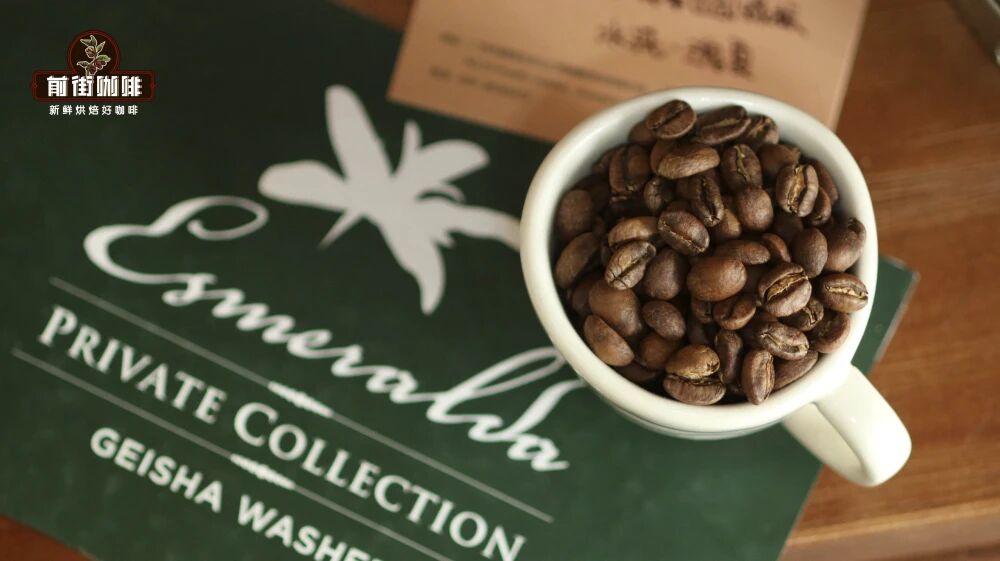
I believe many people have similar memories: not long after entering the coffee world, they receive a bag of expensive coffee beans as a gift from a friend. Although they only vaguely understand its origins, when they see the information card accompanying the beans filled with industry jargon like "TOH," "BOP," "CoE," "green bean competition," "placed…," "champion," they get a rough idea—this bag of beans is not cheap. So they brew with extra caution, yet the final result is still disappointing.
So when we have a bag of expensive coffee beans on hand, what parameters and techniques should we use to avoid ruining it and make the most of it?
Why are high-priced coffee beans so expensive?
In Front Street's view, whether expensive coffee beans are worth it is itself a topic that varies from person to person. The birth of a good cup of coffee, from seed to final extraction, involves every step influencing the final flavor in the cup.

Compared with ordinary single-origin coffees, expensive beans crowned as "top-tier" often have two characteristics: first, exceptionally outstanding flavor that clearly sets them apart from other varieties; second, limited production, as scarcity drives up value. Add to that a series of promotional and marketing boosts such as competition awards, auction sales, and origin stories, and the combination of multiple factors ultimately drives up their pricing.
For most consumers, drinking coffee comes down to two demands—staying alert and tasting good—so "good and not expensive" is the real bottom line. Few people are willing to spend a lot of money on "top-tier coffee" they don't understand. But it cannot be denied that some expensive coffees truly sit at the top of the quality pyramid, with more complex aromas and richer layers. For baristas or seasoned enthusiasts pursuing the limits of flavor, the experience brought by such top-tier beans is irreplaceable. To do them justice, the following three details are worth noting.
1. Not too fresh, but must be enjoyed while fresh
Front Street has always placed great importance on the freshness of coffee beans. After roasting is completed, the aromatic substances in the beans continuously dissipate over time, and after about 50–60 days, little flavor remains. To ensure every customer can drink coffee in its best condition, every bag Front Street sends out is shipped within 5 days of roasting, so after receiving it, everyone has ample time to experience the bean's wonderful performance during its aroma-rich stage. If the beans in your hands have already been stored for some time (over 30 days), then you need to use them up quickly, otherwise no matter how expensive the beans are, they will ultimately become nothing more than a cup of bitter coffee water.
Some friends also report that although the coffee they brew is very fresh by date, after drinking it their throat feels dry and has a harsh, parching sensation, or the taste is on the weak side with a green, astringent note—sourness, sweetness, and bitterness are all roughly present, but the aroma just isn't rich enough. This is actually because the carbon dioxide content in the bean body is too high, hindering the release of flavor substances during brewing.
Front Street's suggestion is to rest the beans first. By about the 4th day after roasting, the roasted flavor that causes throat discomfort noticeably weakens; by the 7th day, the flavor begins to become full. To improve the flavor performance of overly fresh coffee beans, Front Street habitually rests medium-dark roasted beans for 4–6 days and medium-light roasted beans for 7–8 days.
2. Understand the basic information of coffee beans
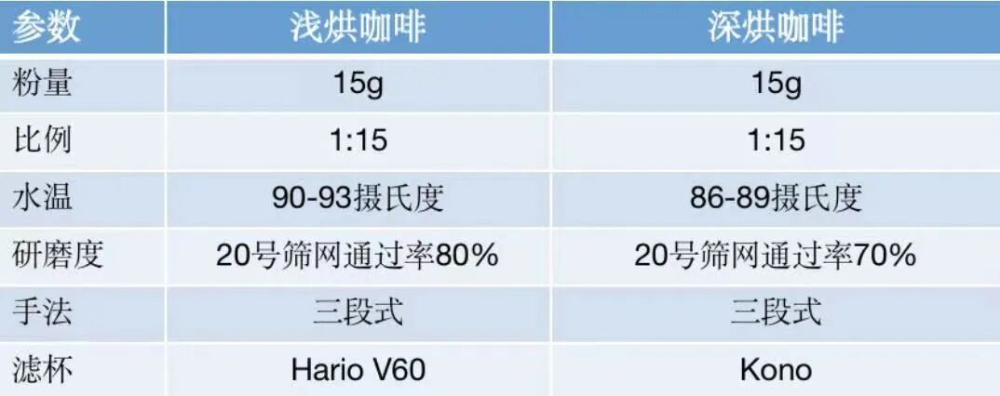
We need to be clear on one point: regardless of price, coffee beans can broadly be divided into light-to-medium roasts dominated by acidity and medium-to-dark roasts dominated by bitterness. When Front Street formulates brewing plans, it always revolves around these two directions. You only need to determine which category the beans in your hands belong to, then match them against the following table.
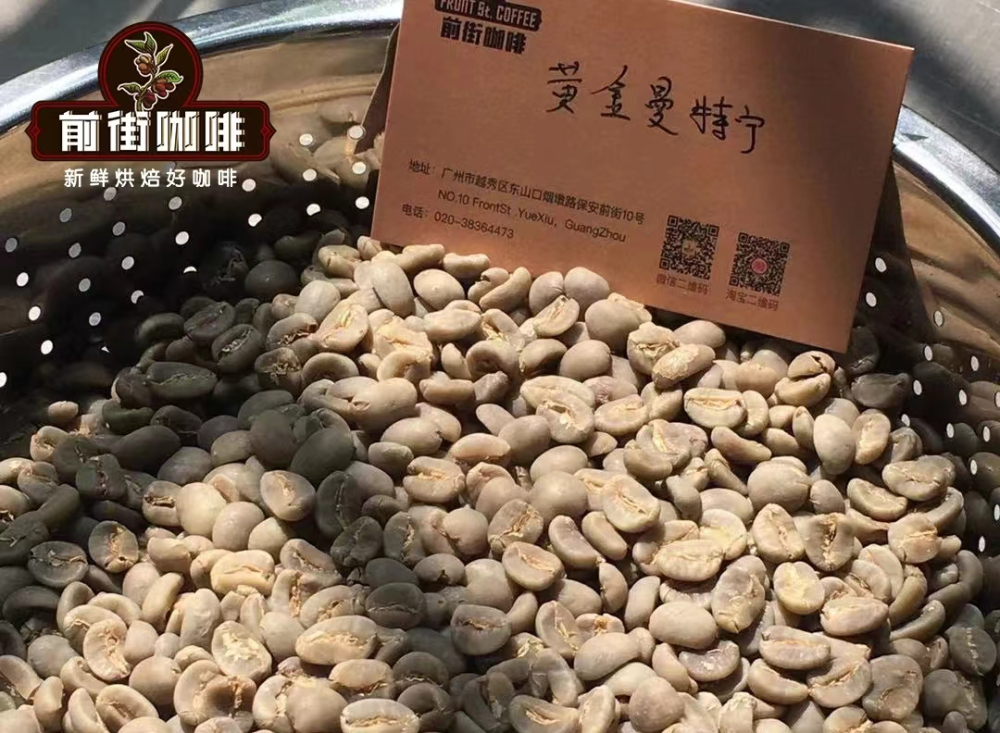
Some may have noticed that many roasting brands, including Front Street, do not directly label "roast level" on the packaging, which confuses many beginners. The reason is that each company's understanding and definition of roast degree are not unified. However, for ordinary consumers, distinguishing light, medium, and dark roast levels is actually very simple—just look at the flavor description.
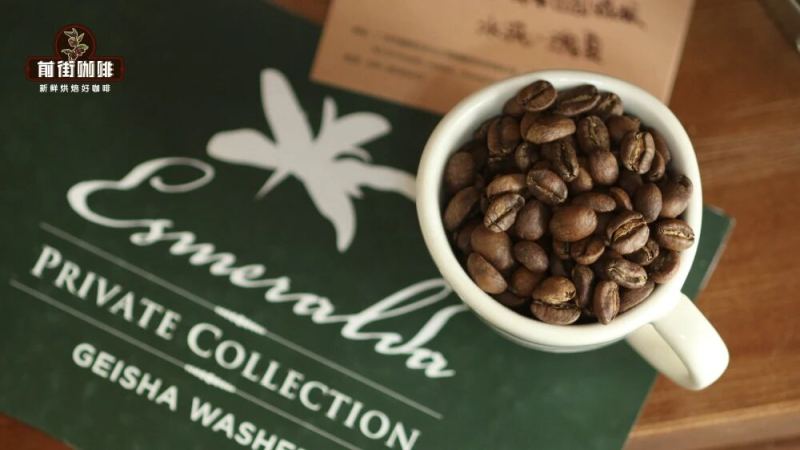
For example, Front Street's highest-priced single-origin coffee, Front Street Emerald Estate Red Label Geisha, is light brown with a yellowish-brown tint, and its flavor description is citrus, complex fruit, peach-plum, jasmine, berries—all terms in the fruit and floral category, indicating it belongs to the lighter end of medium-light roasts;
Front Street Blue Mountain No. 1, known as the "Emperor of Coffee," appears dark brown and darker to the naked eye, with flavor notes of chocolate, roasted nuts, cream, caramel, and other roasting-related characteristics, so it belongs to a fairly standard medium-dark roast;
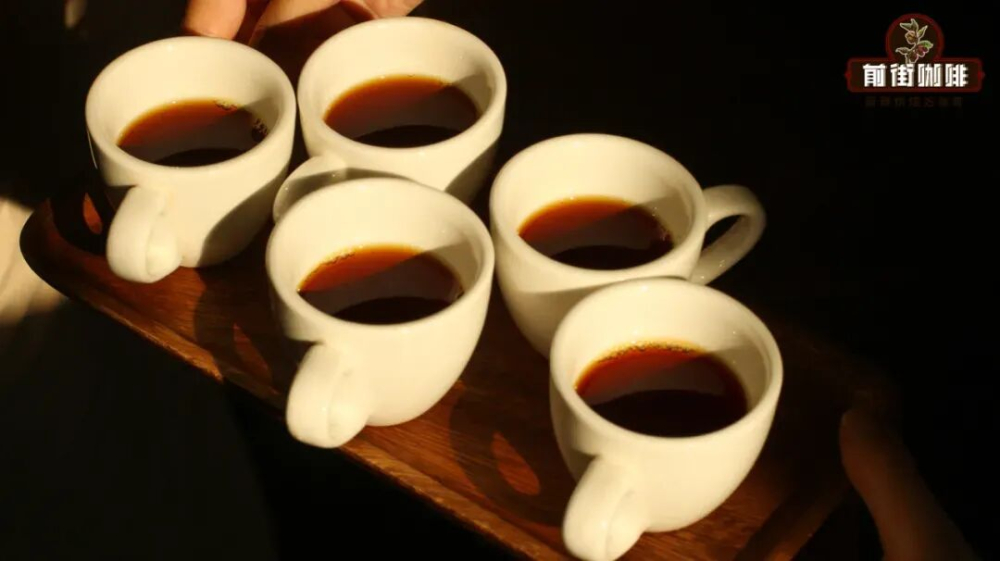
There is also something like Front Street Bolivia Java, which is brown and characterized by both acidic flavors such as floral notes and raisins, as well as milky notes of nuts and cocoa, meaning it can be classified in the middle range of medium-light roasts.
3. Improvements in details
Every coffee bean has its own personality. If you want to take the flavor to the next level, you need to make appropriate fine adjustments on the basis of the original framework.
As mentioned earlier, expensive coffee beans mostly possess more outstanding flavors. For example, Front Street Emerald Geisha, Front Street Geisha Village Gold Label, TOH Guji, and other beans with intense floral and fruity characteristics often show more extraction-resistant qualities during brewing, so more "extreme" parameters can be used to fully squeeze out their essence.
Medium-light roasted coffee represented by Front Street Emerald Red Label Geisha
When brewing this Geisha, Front Street adjusts the grind size, coffee-to-water ratio, and pouring technique. Compared with regular light-roast beans, Front Street Emerald Red Label Geisha contains more complex aromatic substances, so more water can be used to increase the extraction yield while also opening up light, layered flavors; the coffee-to-water ratio is therefore adjusted from the original 1:15 to 1:16.
As a high-altitude light-roast bean, Front Street Emerald Red Label is relatively hard and tends to sink and clog the drainage holes. In this case, the grind can be appropriately coarsened, changing the passing rate through a No. 20 sieve from the original 80% to 78%, corresponding to 10.3 on an EK43s grinder (27 on a C40 grinder).
Because Geisha has a shorter heating time and poorer water absorption, during the blooming stage Front Street uses only 25ml of hot water, just enough to ensure all the coffee grounds are moistened and to let them degas for 30 seconds. After blooming is complete, proceed to the second pour, controlled at 120ml, poured in circles from the center outward to raise the coffee bed.
Then wait for the water level to drop. Under normal conditions, the water level drops slowly and steadily, reaching about one-third of the coffee bed at around 1 minute 10 seconds to 1 minute 15 seconds, at which point you can see a "bowl shape" form.
At this point, pour the remaining 95ml of hot water in a circle around the outer half of the liquid surface, then wait for all the coffee liquid to drip into the server, remove the dripper, and it's done. The total time is about 2 minutes to 2 minutes 5 seconds.
Medium-dark roasted coffee demonstrated with Front Street Blue Mountain No. 1
Medium-dark roasted coffee has a longer heating time and produces more bitter substances, but for high-grade beans like Front Street Blue Mountain No. 1, it also means richer aromas that provide sweetness. To give the coffee a more pronounced sweet aftertaste, Front Street generally adjusts both water temperature and coffee-to-water ratio and technique at the same time.
To brew a high-sweetness cup, again increase the water amount to improve extraction of substances, with the coffee-to-water ratio becoming 1:16. Considering that dark-roasted beans are mostly characterized by burnt bitterness, and pour-over is a slow, meticulous craft, using overly extreme parameters can easily lead to over-extraction, so when brewing Front Street Blue Mountain No. 1, a water temperature 2°C lower than for general medium-dark roasted coffee is used, namely 85–86°C.
In terms of technique, Front Street divides 225ml of hot water into 4 pours, enhancing the coffee's layering through multiple pours.
First, bloom with 30ml of hot water for 30 seconds, and you can see it form a rounded dome; then pour the second stage of 80ml in circles from the center outward, and after pouring, the liquid level is about 3/5 of the dripper;
When the water has drained halfway, continue with the third pour of 70ml, keeping the circle about the size of a coin; when the water in the dripper is almost gone, pour in all the remaining 60ml of hot water.
The above content is compiled by CoffeeHunters, a coffee news website.


