







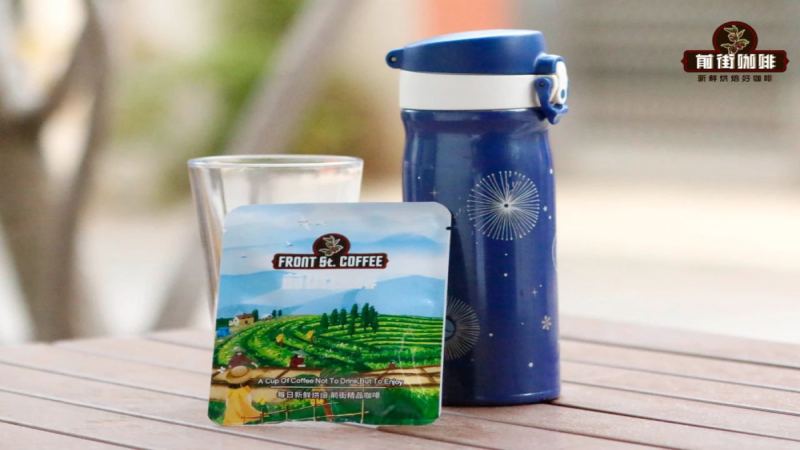
How Does Drip Bag Coffee Differ from American Style Coffee?
Both drip bag coffee and Americano are black coffee, but they are brewed differently. A drip bag holds pre-ground coffee in a filter and is extracted by pouring hot water over it, so it is quick and needs no machine. An Americano starts as an espresso shot that is then diluted with water, giving a fuller body and a more balanced taste.
Drip bag coffee was invented in Japan in 1990 by Yamanaka Sangyo, inspired by string-tied tea bags, and became mainstream after 2002. Front Street packs use 10 grams each and brew about 130-150 ml. More than fifty single-origin beans can be made into drip bags, grouped here by bright fruity acidity, nutty richness, and intense fruit aroma, with storage and freshness advice included.
Drip bag coffee and Americano both fall under the category of black coffee, but their brewing methods and flavor profiles differ noticeably. Drip bag coffee packs ground coffee into a filter bag and extracts it directly with hot water, making it simple to use; Americano, on the other hand, relies on an espresso machine to extract a concentrated shot, which is then diluted with water, typically resulting in a fuller body. Drip bag coffee originated in Japan in 1990, inspired by the design of string-tied tea bags, and gradually became a mainstream market product after 2002. Front Street drip bag coffee packs come in a standard 10g per pack and can brew approximately 130–150ml of coffee. All fifty-plus single-origin coffee beans on the Front Street bean list can be made into drip bags. This article offers bean selection advice for coffee lovers with different taste preferences, organized by three flavor types—bright fruity acidity, rich and nutty, and intense fruity aroma—and also explains freshness and storage tips for drip bag coffee.
For more specialty coffee knowledge, please follow our WeChat official account: Front Street Coffee (FrontStreet Coffee)
First, a clarification: drip bag coffee is essentially a form of black coffee. The method involves grinding coffee beans into powder in advance, placing it into a filter bag, and then using hot water to extract the coffee's flavor compounds during brewing, ultimately producing a cup of black coffee that can be enjoyed straight or mixed with milk. Front Street's drip bag coffee packs come in a 10g-per-pack format, and each pack brews about 130–150ml of coffee, just right for one person.
Americano is different—it's made by extracting espresso on the spot with an espresso machine, then pouring it into ice water or warm water to reduce its strength, and it also counts as black coffee. Because darker-roasted coffee beans are typically used, Americano tends to have a balanced taste with a noticeably full body.
Who invented the drip bag?
Drip bag coffee was first invented by Yamanaka Sangyo Co., Ltd. in Japan in 1990, with a design inspired by string-tied tea bags. The inventor wanted to mimic the effect of pour-over drip coffee, so coffee grounds were pre-packed into non-woven filter bags, with paper tabs on both sides of the bag allowing the coffee pack to hang in the middle of the cup. Because these two paper tabs hook onto the rim of the cup like little ears, people called it "drip bag coffee."
In 2002, the Japanese registered the drip bag coffee pack as a patent and brought it to market. This convenient and neat design quickly became mainstream, and the domestic market followed suit.
Brewing a drip bag coffee pack doesn't require complicated equipment—just boil a kettle of hot water and grab a cup, and you can easily get a cup of aromatic coffee. After brewing, simply throw away the coffee grounds together with the filter bag, saving many tedious steps. As the specialty coffee industry continues to grow, coffee bean varieties have become increasingly diverse, and all of these beans can be made into drip bags, so the options are quite extensive. The dozens of single-origin coffees on the Front Street bean list can all be made into drip bags, enabling coffee freedom in various settings like the office, a park, or at home.
Many office workers ask Front Street to recommend coffee beans suitable for making drip bags. The fifty-plus single-origin coffee beans from different regions on the Front Street bean list can all be made into drip bag coffee packs—just choose according to your own taste preferences:
1. Bright Fruity Acidity Type
If you prefer acidity, Front Street suggests focusing on descriptions of fruity acidity or floral notes. For example, Front Street Guodingding Drip Bag, Front Street Washed Geisha Drip Bag, Front Street Little Tomato Drip Bag, and Front Street Butterfly Drip Bag, which have white floral and lemon-citrus notes; you can also look for varieties with flavor descriptors like dried fruit, tropical fruit, or rose floral notes, such as Front Street Baha Drip Bag, Front Street Red Cherry Drip Bag, and Front Street Huakui Drip Bag.
2. Rich and Nutty Type
However, Front Street has also noticed that most people still prefer a rich, full-bodied flavor profile. If you fall into this category, Front Street would prioritize recommending medium-dark roast options, such as Front Street Queen's Estate Drip Bag Coffee, Front Street Bird of Paradise Drip Bag Coffee, Front Street Golden Mandheling Drip Bag Coffee, Front Street Blue Mountain Drip Bag Coffee, and Front Street Huilan Drip Bag Coffee. These beans have flavor descriptions featuring notes like nuts, chocolate, caramel, cream, and cocoa. The resulting drip bag coffee has lower acidity, intense roast aromas, and a very full body.
3. Intense Fruity Aroma Type
Of course, many people, like Front Street, aren't satisfied with a single flavor and mouthfeel but want to taste richer layers in a cup of drip bag coffee. If you enjoy fermented-aroma style coffee, we recommend Front Street Mozart Drip Bag, Front Street Strawberry Candy Drip Bag, and Front Street Sidra Drip Bag.
To preserve as much of the coffee's original flavor as possible, the coffee powder used in drip bags is generally ground from freshly roasted coffee beans. The coffee beans Front Street ships are all freshly roasted within 5 days. If made into drip bag coffee, by the time you receive it, it's usually 4–5 days post-roast—just the right time to start brewing and tasting. Front Street recommends drinking it as soon as possible after receiving it, because prolonged storage tends to cause the coffee's aroma to fade. If you want to taste coffee at its fullest flavor, Front Street suggests buying whole beans and grinding fresh for each brew, which gives better flavor layers.
The above content is compiled by CoffeeHunters, a coffee news website.


