








What Does a Stock Coffee Guide Say About Bean Storage?
A stock coffee guide boils down to three things to avoid: high temperature, humidity, and oxidation. Heat drives off aroma compounds, damp conditions encourage mold, and contact with oxygen shortens the window when beans taste their best. Keep unopened bags in a cool, dry spot, and move beans to a sealed container only after the bag is opened.
Freezing can slow oxidation, but it brings its own problems: beans pick up odors from the freezer, and thawing introduces moisture. That trade-off is worth weighing before committing a whole bag to the icebox. The same care applies whether beans are roasted light or dark, and even advice written as coffee roasting tips for left handed people stresses dry, sealed storage.
On the eve of the Spring Festival, express deliveries gradually shut down, and many coffee lovers have already stockpiled beans in advance. But how to keep coffee beans fresh during this period has become a concern for everyone. Storing coffee beans requires avoiding three major enemies: high temperature, humidity, and oxidation. High temperatures accelerate the loss of aroma, humidity easily leads to mold, and oxidation shortens the optimal flavor period. Front Street Coffee recommends that unopened original packaging be kept in a cool, dry place, and after opening, a sealed container can be used. As for refrigeration or freezing, although it can slow down oxidation, it faces the challenges of odor absorption and moisture from thawing. This article will break down these storage points in detail to help you enjoy the New Year with peace of mind.

As the Spring Festival approaches, this year's festive atmosphere feels particularly different, and many courier companies have gradually stopped accepting parcels. Clever coffee enthusiasts have long been prepared, stuffing their home coffee cabinets to the brim and stockpiling enough rations for the holiday period.
However, with just over ten days until the New Year, how to properly store these coffee beans has become a headache for everyone.
When storing coffee beans, there are three major taboos to avoid: high temperature, moisture, and oxidation.
When the ambient temperature exceeds normal room temperature, the aromatic components inside the coffee beans will dissipate more quickly. If directly exposed to sunlight, it will further provide a breeding ground for mold and bacteria, ultimately causing the beans to spoil.
People in the Lingnan region are all too familiar with humidity. During the returning south wind days, it is almost the norm for household items to become damp and moldy, and coffee beans are no exception. Once they absorb moisture, they are prone to mold.
Oxidation is a reaction that occurs when food comes into full contact with oxygen. Common examples include cut apples or potatoes, which turn reddish-brown after being exposed to air for a period of time. Although the oxidation of coffee beans is not as noticeable, if they continue to be exposed to oxygen, their optimal flavor period will be greatly shortened.
Therefore, Front Street Coffee usually recommends: after receiving the coffee beans, do not open the original packaging, but place it directly in a cool, dry place, and take out one bag when needed.
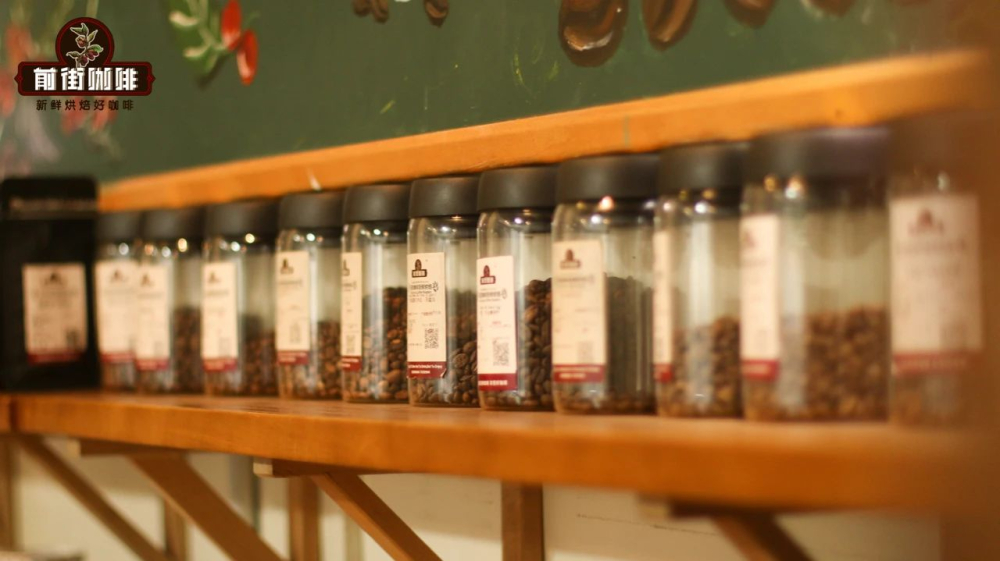
Q: After receiving the coffee beans, is it best to immediately open the bag and pour them into a sealed container for storage?
If the coffee beans have already been opened, putting them in a sealed container is indeed the best solution, as it can preserve the flavor to the greatest extent. But if the packaging has not yet been opened, then placing it directly in a cool, dry place as is, is the best approach. The coffee packaging bag has a one-way exhaust valve, which can automatically release pressure when the internal pressure is too high, while a sealed container does not have this function. Moreover, the process of pouring the beans into the container itself exposes them to air, which is somewhat superfluous.
Only open the packaging bag and put it into a sealed container for storage when drinking
Q: Is it best to store it in the refrigerator for refrigeration or freezing?
Front Street Coffee has also browsed many bean storage guides. Refrigerator storage can indeed effectively slow down the oxidation of coffee beans. Front Street Coffee also conducted related tests, placing beans in a 5-15°C refrigerator compartment and a -20°C freezer compartment respectively. It is undeniable that low temperatures do significantly delay the oxidation rate, thereby extending the optimal flavor period.
But to achieve the ideal effect, the conditions are quite demanding. I believe your home refrigerator will not only contain coffee beans; fruits, leftovers, drinks, etc. are all regular occupants. In such a mixed environment, odors are unavoidable, and once coffee beans absorb the odors from the refrigerator, the flavor is "ruined."
Next is the thawing issue. In the refrigerator compartment, the coffee beans are not that cold, but if you immediately take them out to grind and brew, the water temperature will be lower than when stored at room temperature, resulting in a weaker-tasting coffee.
Coffee beans taken out of the freezer compartment need to be thawed, and during the thawing process, water vapor is inevitably produced. This water vapor is condensed from water vapor in the air, meaning the beans are highly susceptible to moisture.
If the problems mentioned by Front Street Coffee can be easily solved, refrigeration storage is not a bad option.
This kind of protection is more comprehensive; those without the conditions should still not put it in the refrigerator
So, friends preparing to stock up for the New Year, it is better to honestly follow the principles of coolness, dryness, and sealing to store coffee beans.
The above content is compiled by CoffeeHunters, a coffee news website.


