







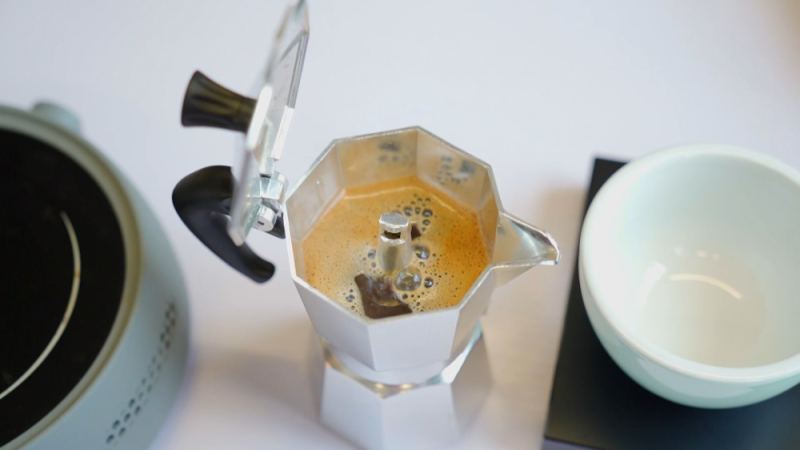
What grind size suits a moka pot?
A moka pot works well with a grind slightly finer than drip but coarser than espresso, so water can pass through the bed at a steady pace without clogging. Single-valve models run at about 1 bar and produce dark, thick coffee with a thin crema; double-valve models add an outlet valve that lifts pressure to 2-3 bar, giving a denser body and richer foam.
The main moka pot advantages are portability, a low entry barrier and a friendly price compared with an espresso machine. The trade-off is less control over water temperature, which machines usually hold between 90 and 94 degrees Celsius. Dose control, heating technique and daily cleaning still shape the final cup, and darker or lighter roasts can be matched to the valve type.
As a classic choice among home coffee gear, the difference between single-valve and double-valve moka pots directly affects the concentration and crema of the brew. This article starts with the structural principles, analyzes the extraction pressure differences between the two valve types, and sorts out the pros and cons of moka pots, the suitable coffee grounds coarseness range, and coffee bean roast level recommendations. It also includes a complete operating procedure, covering grounds quantity control, heating techniques, and daily maintenance points. The article also introduces the formulation ideas and flavor characteristics of two Front Street espresso blends, helping enthusiasts make clearer judgments in purchasing and hands-on practice.
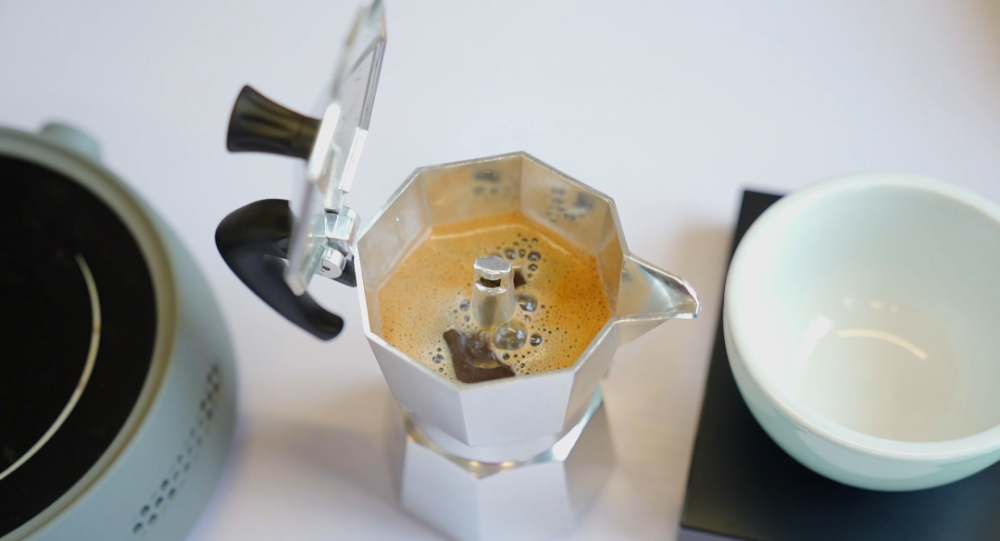
For friends who are just getting into moka pots, the concepts of single-valve and double-valve may still be rather vague. However, if you want to make a satisfying cup of coffee with a moka pot, it is still very necessary to understand these basic points in advance.
Which is better, a single-valve or double-valve moka pot?
Open a shopping website and search for moka pots, and the available products are dazzling, but if classified by internal structure, they can basically be divided into two types: single-valve models and double-valve models.
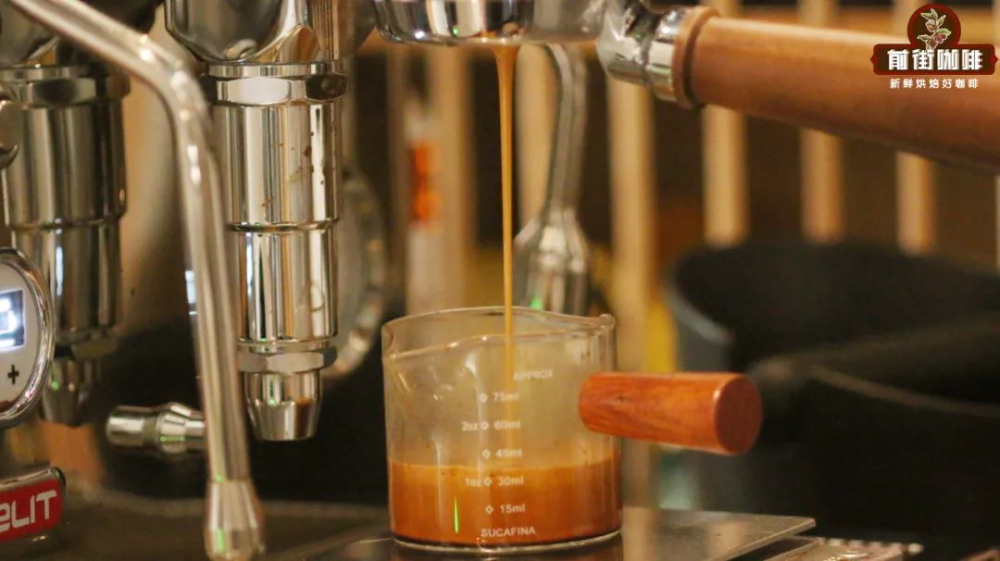
First look at the single-valve moka pot. Its upper chamber outlet is an open hollow structure. During heating, the internal pressure is maintained at about 1Bar. The coffee liquid that flows out is dark black in color and somewhat thick in texture, but the surface crema layer is relatively thin. The double-valve moka pot improves on this basis by adding a pressure valve at the outlet that creates extra resistance, raising the extraction pressure to 2-3Bar. After the pressure increases, the coffee liquid becomes thicker, and the crema becomes richer and finer. If you are after the intense mouthfeel close to espresso, Front Street suggests giving priority to the double-valve version.
The advantages and disadvantages of brewing coffee with a moka pot
The most prominent advantage of the moka pot is its good portability and low barrier to entry. It does not require the complex process of operating an espresso machine, and its price is also quite friendly. However, its shortcomings are equally obvious: espresso machines usually control the extraction water temperature between 90-94 degrees, while a moka pot pushes the water temperature up to the boiling point of 100 degrees. Too high a temperature brings out bitter macromolecules, and the final coffee tends to taste scorched, bitter, heavy, and hard to drink.
One point needs special clarification: although the coffee liquid made with a moka pot is not low in concentration, there is still an essential gap between it and true espresso. What we now call espresso is extracted under a pressure of more than 9 atmospheres, with a thick, dense liquid and a fine texture. The maximum pressure a moka pot can produce is only about 2Bar, which is completely not on the same level as a commercial espresso machine. The resulting coffee liquid is relatively thin, and the flavor layers are not as full as espresso. Of course, if you just want to quickly drink a cup of strong coffee at home, Front Street thinks the moka pot is still a choice worth considering.
Can fine coffee grounds be used in a moka pot?
As Front Street mentioned earlier, the moka pot follows a pressure-extraction route, so the grind needs to be much finer than for pour-over, but it cannot be as fine as espresso grounds. If the grounds are too coarse, the water and coffee grounds will not come into full contact, resulting in under-extraction and a weak taste, and the liquid may also spray out violently because the resistance is too small, posing a scalding risk. If the grounds are too fine, the upward resistance of the water flow increases, the coffee liquid cannot come out, and the pressure in the lower chamber keeps rising without being released in time, which in serious cases may even cause an explosion.
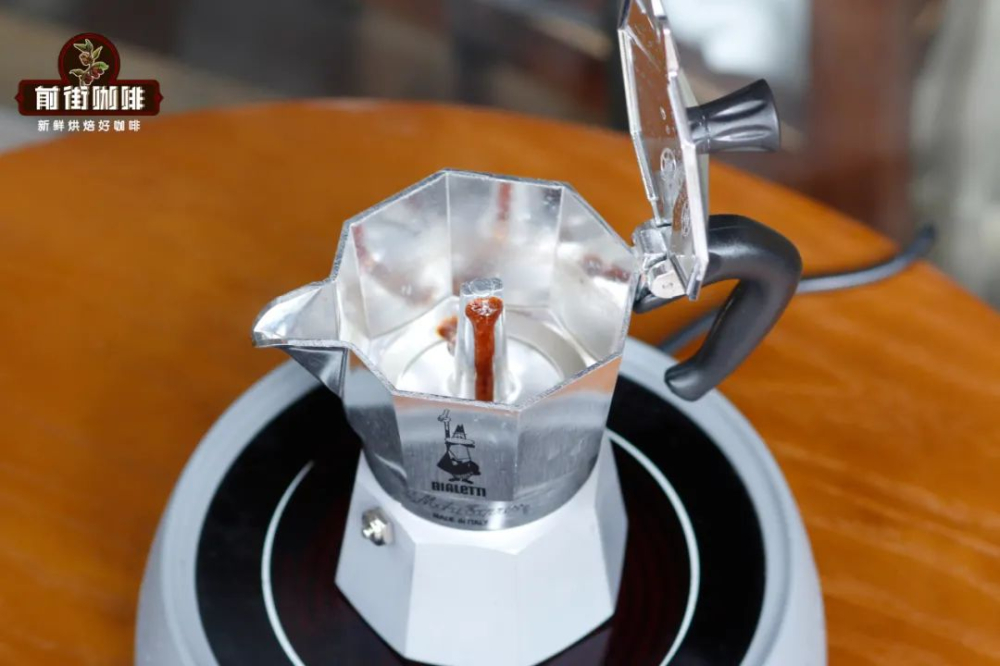
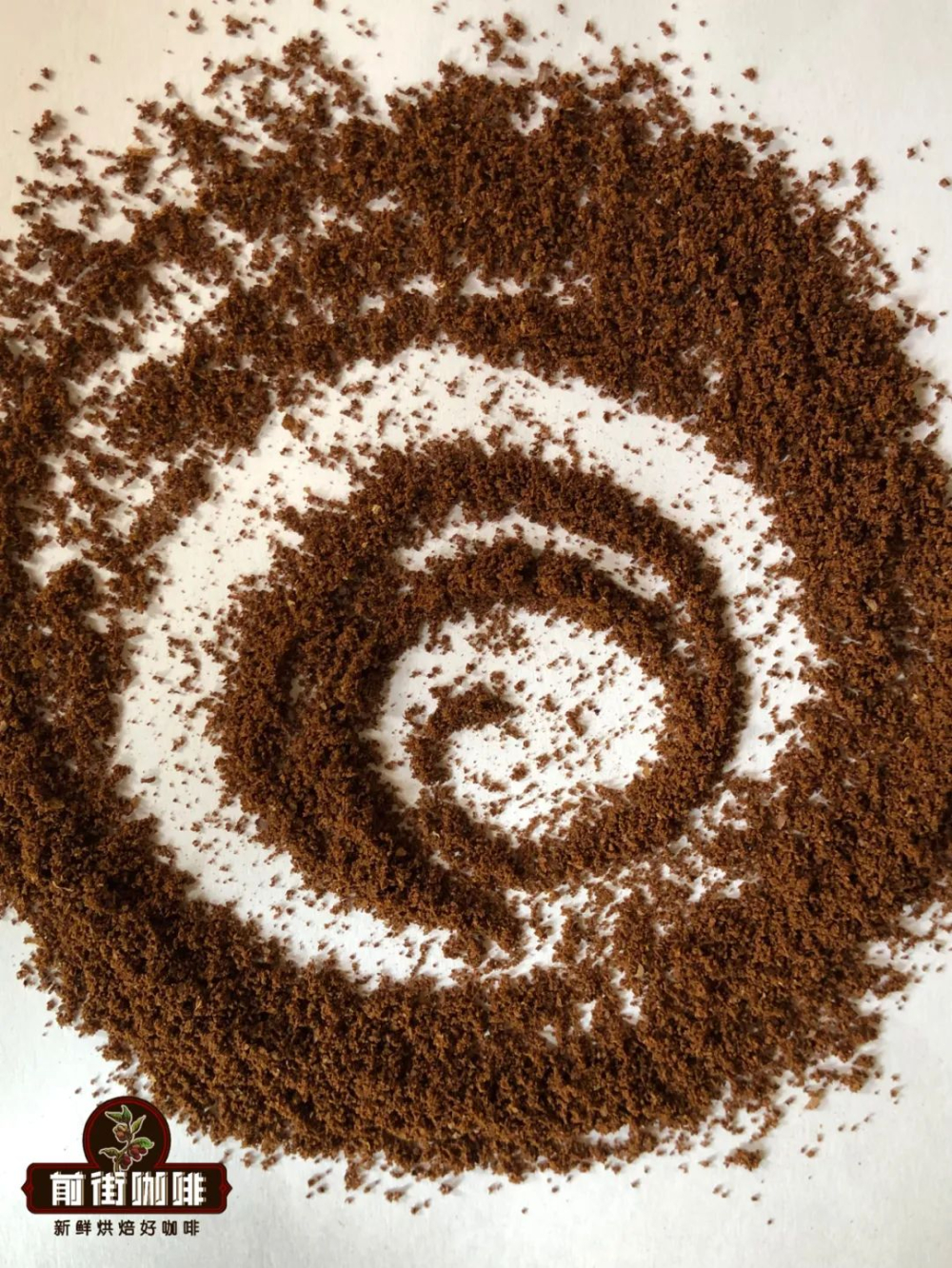
The grind setting Front Street recommends is 3 to 3.5 on an EK-43s. If you are not sure whether the coarseness is suitable, you can observe the width of the gap at the edge of the grounds basket. As long as the coffee particles will not leak through the gap, it is fine. You can also directly refer to the grind state Front Street uses daily.
What kind of coffee beans are suitable for a moka pot?
Considering that a moka pot has a relatively high water-to-coffee ratio and a relatively short brewing time, it is more suitable for medium-dark roasted beans rather than light-roasted beans. Light-roasted coffee is harder in texture and usually needs to be ground finer to increase the extraction rate, but fine grounds under high temperature and high pressure can easily make the coffee sharply acidic and irritating, and the aroma of the crema is also difficult to fully release.
Therefore, it is best to choose Front Street espresso blend coffee beans with a darker roast level as the raw material, so it is easier to get a rich, fragrant coffee with crema, and the extracted flavor is also more stable. Front Street hopes that every customer who places an order can enjoy the coffee aroma within the best tasting period, so it only ships fresh beans within 5 days after roasting.
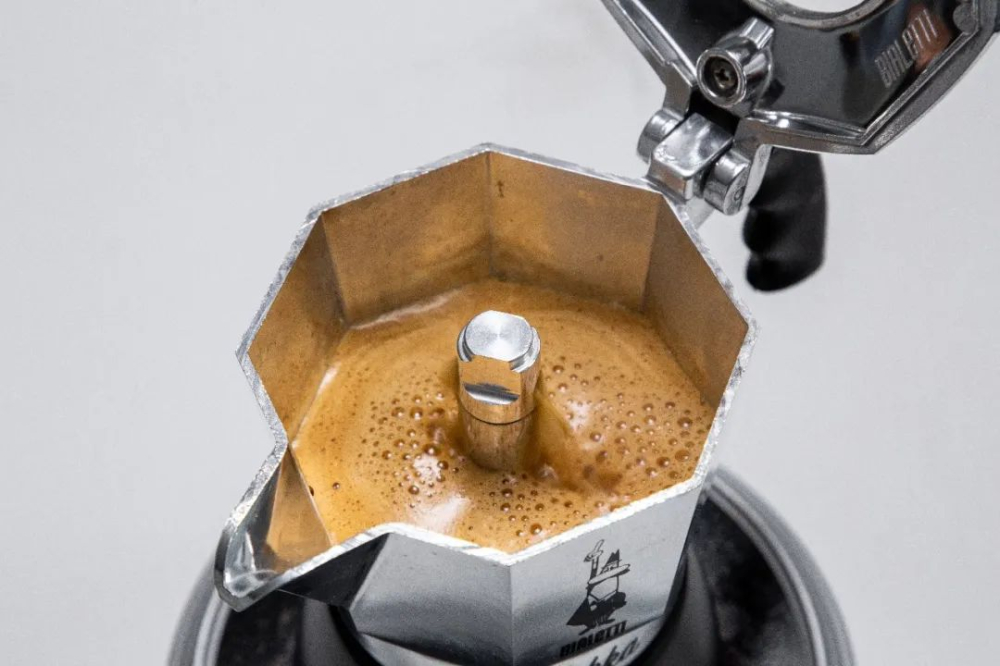
The combination of Arabica + Robusta — Front Street Classic Blend Coffee
Flavor: caramel, butter, roasted nuts, dark chocolate
In order to present the classic "Mamba blend" style, we use selected Front Street Mandheling and Front Street Brazil beans as the base, giving the espresso a viscous texture and rich aroma, while also adding a small amount of Vietnamese Robusta to increase layering and push the crema performance to the extreme. When made into a hot latte, the chocolate aroma is very prominent, while retaining a creamy, nutty smoothness. Front Street Classic Espresso Blend is very friendly to all beginners and is also suitable as an everyday household staple bean.
The combination of American beans + Asian beans — the espresso coffee bean recommended by many baristas - Front Street Dark Cocoa Blend Coffee
Flavor: nuts, chocolate, cream, cookies
From the perspective of cost-effectiveness, we launched this espresso blend with a stable taste, moderate crema, balanced acidity and bitterness, and an affordable price. The formula combines Front Street Yunnan small pearl and Front Street Brazil Red Bourbon. During extraction, the aromas of caramel and nuts are relatively obvious. Because medium-dark roasting is used, a slight fruit acidity is retained. When made into an Americano, the taste is refreshing; when made into a latte, it highlights the sweetness of the milk. This espresso coffee bean recommended by many baristas - Front Street Dark Cocoa Blend is especially suitable for household users who prioritize cost.
Detailed tutorial for operating a moka pot
Before brewing coffee, you need to prepare fresh coffee beans, water, a grinder, a gas stove or induction cooker for heating, and of course the star of the show, the moka pot. As for the coffee beans, Front Street uses its own roasted "Front Street Classic Espresso Blend Coffee Beans."
First disassemble the base of the moka pot and pour pure warm water into the lower chamber. This can shorten the brewing time and also prevent the coffee grounds from being heated too quickly and causing a scorched, bitter flavor. Control the water level at about 0.5cm below the pressure relief valve line. The purpose of the safety valve is to prevent an explosion caused by clogged extraction channels due to overly fine grinding. If the safety valve is submerged in water and the extraction channel is also blocked, the consequences of an explosion under high temperature are unimaginable.
To extract a rich black coffee, the grind needs to be much finer than for pour-over. Front Street stores use an EK-43s grinder, with the setting at 3 to 3.5. The amount of grounds is determined according to the size of the moka pot. Here at Front Street, we use a three-cup Bialetti classic pot, with 18g of grounds. Pour the ground coffee into the grounds basket, fill it to about nine-tenths full, level the surface with your finger, and put it back on the base. There is no need to tamp it firmly. If the coffee bed is too tight, it will hinder the passage of water and affect the extraction effect.
Then screw the upper chamber and lower chamber tightly, wipe the body dry with a towel, and place it on a gas stove or induction cooker to heat. When using an open flame, be careful that the flame as much as possible does not extend beyond the range of the moka pot base.
Wait for the moka pot to heat up. After hearing a hissing sound, turn the heat to low, and the coffee liquid and crema will slowly flow out. When the coffee liquid in the upper chamber reaches half its height, you can turn off the heat source, move the pot to the table, and use the residual heat and remaining pressure inside the pot to continue extracting the rest of the coffee liquid.
Pour the extracted coffee liquid into a cup and drink it directly. On the palate, you can feel rich dark chocolate, almond, butter, and caramel flavors, along with cookie aroma. Adding an appropriate amount of hot water brings out a refreshing nutty aroma, while pairing it with milk gives off a white-chocolate-like sweetness.
Finally, let's talk about storage and maintenance of the equipment. Front Street washes the moka pot immediately after every use to avoid residual coffee grounds causing off-flavors and scorched bitterness. If old coffee stains accumulate in the filter plate, gasket, or extraction channel, they may cause blockages and affect normal extraction next time.
The above content is compiled by CoffeeHunters, a coffee news website.


