







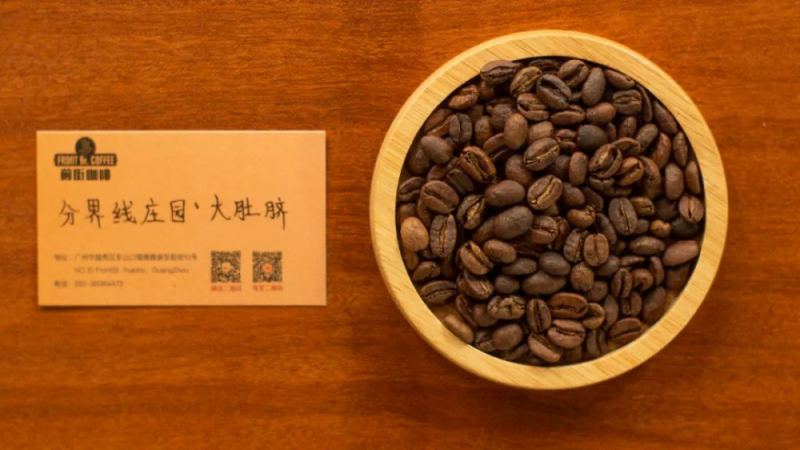
How did Ombligon become wbc champion coffee?
Ombligon comes from Finca El Diviso in Colombia's Huila region and gets its name from the navel-shaped base of the fruit. Australian competitor Jack Simpson used it at the 2023 WBC finals and placed third, and two of the top six at the Chicago WBrC also chose this bean. It is grown only in Huila, between 1,600 and 1,800 meters.
Finca El Diviso first drew attention when Anthony Douglas won the 2022 WBC with a Sidra from the same farm. Ombligon undergoes double anaerobic natural processing, which develops grape, orange, blueberry, pineapple juice, spice, and fermented wine aromas. Pour-over with a medium-fine grind and a staged pour keeps the juiciness intact.
In the world of specialty coffee, there are always some rare varieties that burst into the public eye with their unique flavor profiles. Ombligon is a rising star that has attracted much attention in recent years—it originates from Finca El Diviso in the Huila region of Colombia and gets its name from the navel-like shape at the bottom of the fruit. From the 2023 WBC finals to the Chicago WBrC, this bean has frequently appeared on the international stage, conquering judges and coffee lovers alike with its rich, varied juiciness and fermented wine-like aroma. This article will give you a comprehensive understanding of the origin of the Ombligon variety, its flavor characteristics, the background of Finca El Diviso, and its meticulous double anaerobic natural processing flow, along with Front Street Coffee's pour-over parameter suggestions, so you can recreate this bean's captivating layers at home.
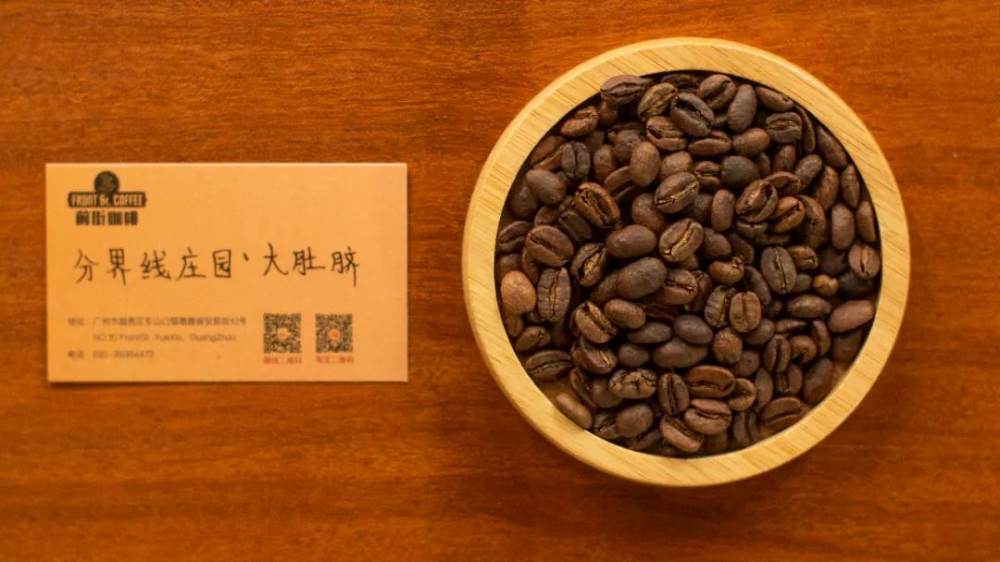
Front Street Coffee: Colombia · Finca El Diviso Ombligon
Region: Huila
Farm: Finca El Diviso
Altitude: 1,700 meters
Processing method: Double anaerobic natural
Variety: Ombligon
Flavor: Grape, orange, blueberry, pineapple juice, spice, fermented wine aroma
At the 2022 World Barista Championship (WBC), Australian competitor Anthony Douglas selected a Sidra coffee from Finca El Diviso in the Huila region of Colombia and ultimately took first place, which quickly brought Finca El Diviso and the Sidra variety into the public eye. In the past two years, a new variety called "Ombligon" cultivated at Finca El Diviso has also won the favor of many competitors.
Ombligon coffee first entered the public eye at the 2023 WBC finals, when Australian competitor Jack Simpson, who won third place, selected this bean and fully showcased its rich juiciness through three different beverages. In the recently concluded Chicago WBrC finals, two of the top six finalists also chose Ombligon from Finca El Diviso in Colombia as their competition bean.
Ombligon
Like many rare Arabica varieties, the origin of Ombligon remains undetermined to this day. When asked, most coffee farmers say it belongs to an Ethiopian variety. Currently, Ombligon is only grown in the Huila region of southwestern Colombia, especially at altitudes between 1,600 and 1,800 meters, where its flavor performance is at its best.
The word "Ombligon" comes from Spanish and can be translated into Chinese as "big belly" or "big navel." Its coffee fruit has a very special shape, similar to a papaya, with plump beans and a protruding bottom that has a small ring, looking just like a "belly button." This is uncommon among most coffee varieties, so farmers named it after this characteristic.
According to genetic testing results from the World Coffee Research institute, Ombligon has a certain connection to Ethiopian landrace varieties, and is therefore recognized as a variety formed by natural mutation of Ethiopian landraces in Colombia. Growers have also found that among native Colombian coffee varieties, Ombligon has a relatively high similarity to Caturra, also featuring broad leaves, dense fruit, vertically growing branches, and high yield, and both have strong resistance to leaf rust.
Finca El Diviso
Finca El Diviso is located in Pitalito, Huila. The farm owner, Jose Uribe Lasso, began growing coffee in 1996. To get away from the hustle and bustle of the city, he moved from Nariño to Pitalito in Huila and bought El Diviso in the early 2000s, opening a new chapter for Finca El Diviso.
He chose the Huila region because of its fertile volcanic soil and rich, diverse ecological environment, which filled farm owner Jose with confidence—as long as it is managed with care, growing coffee or other crops can achieve ideal growing conditions. Today, Finca El Diviso is jointly managed by three brothers. The eldest, Jhoan, is in charge of cultivation management, Nestor is responsible for the overall operation of the farm, and the youngest, Adrian, oversees marketing and sales.
Finca El Diviso has always been committed to cultivating rare bean varieties that are relatively uncommon on the market. In addition to the known Sidra and Ombligon, the farm also grows rare varieties such as Pink Bourbon, Papayo, Tabi, Chiroso, and Bourbon Aji, as well as some novel naturally mutated types. In addition, the farm owner is also passionate about developing different types of innovative processing methods, giving the coffee cherries diverse and complex characteristics.
The Processing Method of Ombligon Coffee
When choosing the processing method for the coffee cherries, the owner of Finca El Diviso considered that the greatest flavor feature of Ombligon coffee is its diverse and complex juiciness, and compared the flavor characteristics of different post-processing batches. Front Street's Ombligon coffee beans are selected from an anaerobic natural batch. Compared with other varieties, fermenting the coffee cherries to a certain degree and then using a natural process can bring out the clear and lasting fruit aroma of Ombligon. You can place an order at Front Street's Tmall flagship store or Front Street's Taobao store.
After the ripe Ombligon coffee cherries are harvested, they are first floated in hot water (50-60°C) to remove underripe green cherries and impurities, allowing the denser cherries to soak in the hot water for about 25 minutes. After flotation, hand sorting is carried out to pick out defective cherries missed by flotation. These fresh cherries are then placed into sealed fermentation barrels and left to rest for 24 hours to increase mouthfeel and sweetness, while also collecting the fermentation liquid exuded by the coffee.
Next, based on the actual amount of fresh cherries in that batch, the farm owner adds sugar water to prepare a sufficient amount of fermentation liquid, uses the sugar liquid to activate brewer's yeast, adds it to the fermentation liquid and mixes, then pours it into the fermentation barrel to mix and steep with the coffee cherries for 72 hours. During this period, the fermentation liquid is circulated every 4 hours, and the pH value is monitored to ensure it never falls below 3.8.
After the coffee cherries finish fermenting, they are removed and placed into a custom drying box at the farm to dehydrate for 12 hours. There is no external heat source throughout the entire process; it fully uses the coffee cherries' own heat through circulating airflow to achieve drying. Finally, they are transferred to raised drying beds to continue drying for about 15 days.
Front Street Coffee's Pour-Over Suggestions Dripper: V60 Water temperature: 91-93 °C Dose: 15g Coffee-to-water ratio: 1:15 Grind size: fine granulated sugar coarseness (80% passing through a No. 20 sieve)
For brewing, Front Street Coffee's baristas habitually use a three-stage pouring method: the first stage pours 30 grams of water for a 30-second bloom, then pours 95 grams (electronic scale shows about 125 grams), completing the pour in about 1 minute. When the water level drops to two-thirds of the coffee bed, pour the remaining 100 grams (electronic scale shows about 225 grams), completing the pour in about 1 minute 35 seconds. The drip filtration is completed in 2 minutes, then remove the dripper to finish extraction.
Brewed flavor: At high temperature, there is fruit acidity like blackcurrant and Kyoho grape, accompanied by the delicate sweetness of orange. Held in the mouth, it is like ripe pineapple juice, and after swallowing there is a clear berry and black tea finish. Sipping at medium to low temperature reveals a bright citrus tone and a slight fermented wine aroma, with very rich layers.
The above content is compiled by CoffeeHunters, a coffee news website.


