








How can you tell natural from washed coffee bean processing?
Natural coffee bean processing dries whole cherries in the sun before hulling, giving rich, heavy, fruit-forward cups. Washed processing removes the fruit first and ferments the beans in water, producing cleaner, brighter, more consistent flavors. Knowing each method's flow lets you guess a bean's process from the first sip.
A side-by-side tasting works well: brew an Ethiopian natural such as Yirgacheffe Red Cherry and a washed Kochere with identical parameters, then compare aroma, acidity and body. Natural lots usually taste sweeter and jammier; washed lots taste clearer and more tea-like. The coffee bean process behind each cup is what drives that gap.
Coffee beans from the same origin can present completely different flavor profiles simply because of different processing methods. As the two most classic processing methods, natural and washed each impart a unique personality to coffee beans. This article starts from a real tasting scenario at Front Street Coffee, walking you through the complete processes of both methods, and uses Ethiopia Yirgacheffe Natural Red Cherry and Washed Kochere as comparison samples to experience flavor differences under identical brewing parameters, thereby understanding the principles behind those differences. Master this approach, and you too can quickly identify a bean's processing method with your next sip, truly advancing to coffee tasting expert.

At Front Street Coffee, we often select a few currently popular beans for Demo brews to share with visiting guests. Every now and then, a guest takes one sip and accurately states what processing method the bean used, astonishing everyone nearby: "How can you tell from just one sip?"
Actually, this isn't complicated at all. As long as you master the correct method, distinguishing processing methods isn't difficult. Today Front Street Coffee is sharing this method to help everyone become a coffee tasting expert!
Step one to distinguishing flavors: briefly understand the processing flow
How green coffee beans are processed largely determines the direction of the final flavor. So having some understanding of the processing flow is greatly beneficial for improving tasting ability. Front Street Coffee has previously analyzed various processing methods individually many times, so today we'll just do a brief overview. The processing methods focused on here are natural and washed.
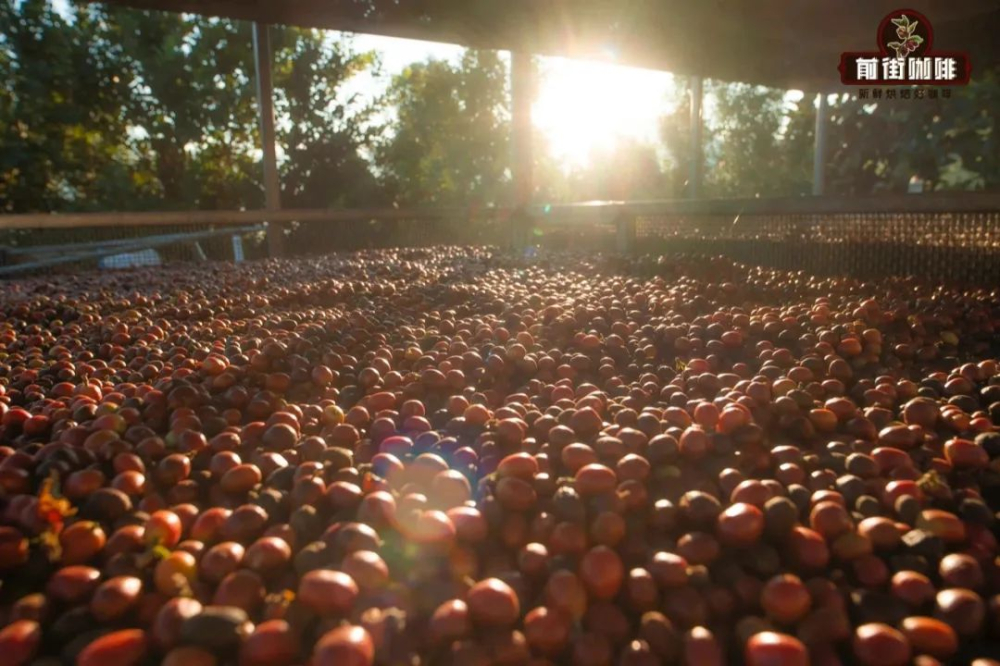
"Natural": Among coffee post-processing methods, natural is the most traditional and oldest. Harvested coffee cherries are directly dried under prolonged sunlight, and after the cherry moisture content drops to a certain level, they are hulled to extract the already-fermented green coffee beans.
We recommend trying Front Street Coffee Red Cherry, Front Street Coffee Alo, Front Street Coffee Diamond Mountain, and Front Street Coffee 2013 Typica. These coffee beans all use natural processing, giving them a rich mouthfeel and depth.

"Washed": Washed is a processing method developed by coffee farmers in island origins adapting to local conditions. Large amounts of clean water are used to ferment depulped and demucilaged green coffee beans, breaking down residual pectin, after which the beans are similarly dried under sunlight. Once moisture content drops to the target range, washed processing is complete. K72, double washed, and others all fall under the washed category.
We recommend tasting Front Street Coffee Fruit Ding Ding, Front Street Coffee Kenya Little Tomato, and Front Street Coffee Panama Boquete Geisha. Because these coffees have their pulp and pectin thoroughly washed off before drying, they present bright fruit acidity and cleanliness.
With that understood, how can you identify a bean's processing method in one sip?
Different processing methods impart unique attributes to coffee beans. We simply need to capture these characteristics during tasting and combine them to reconstruct the green bean processing information of the cup. When visiting guests have similar needs, Front Street Coffee usually suggests they choose beans from the same origin with different processing methods for comparative tasting, because this most intuitively presents the differences between processing methods.
The comparison origin Front Street Coffee recommends is Ethiopia. The reason is straightforward: this origin's flavors are highly recognizable, familiar to most people, with few interfering factors, making it easier to distinguish changes brought by processing methods. In this article, Front Street Coffee has selected two Ethiopian Yirgacheffe beans as representatives: Natural Red Cherry and Washed Kochere.
Both beans use completely identical brewing parameters: 20g dose; 1:15 brew ratio; Ek43 grind setting 10; water temperature 92°C; V60 dripper; three-pour method. Brewing is not the focus of this article, so we'll skip over it here.
Everyone should be quite familiar with Yirgacheffe's flavors—citrus, floral, and tea-like notes are the signature characteristics of this origin. Any additional sensations beyond these are mostly characteristics brought by the processing method.

Under natural processing, Yirgacheffe carries, beyond its base flavors, aromas of fruit fermentation, with weaker acidity, more prominent sweetness, and distinct layering. Under washed processing, Ethiopian beans have their citrus acidity noticeably amplified—sharp and bright—with more intense tea-like and floral notes, giving the entire cup a very clean feeling.
Why do such differences arise?
Natural processing dries the entire coffee cherry (including skin, pulp, and green bean) directly under the sun. It takes longer, and fermentation is more intense compared to washed, with more aroma compounds produced by microbial metabolism, resulting in richer layering. At the same time, the green beans absorb large amounts of sugars from the pulp and pectin, weakening acidity and boosting sweetness. The reason washed Yirgacheffe has higher acidity is that the sugars in the green beans are continuously consumed during fermentation in water and converted into acidic compounds, making the acidity more prominent. Additionally, because the beans don't need to be exposed to an unstable environment for extended periods, impurities affecting cleanliness are greatly reduced, naturally resulting in higher cleanliness.

By now, the characteristics of the two processing methods should be clear: natural coffees mostly taste sweeter, with full fruit flavors, obvious layering, and a slight fermented note; washed coffees are very clean, with bright acidity and more prominent tea-like and floral notes.
Alright, grab the beans you have on hand and give it a try! As long as you drink more, more, and more, you'll definitely capture the characteristics of processing methods. The next tasting master is you!
The above content is compiled by CoffeeHunters, a coffee news website.


