







Why are mainland tea and coffee chains rushing to open stores in Hong Kong?
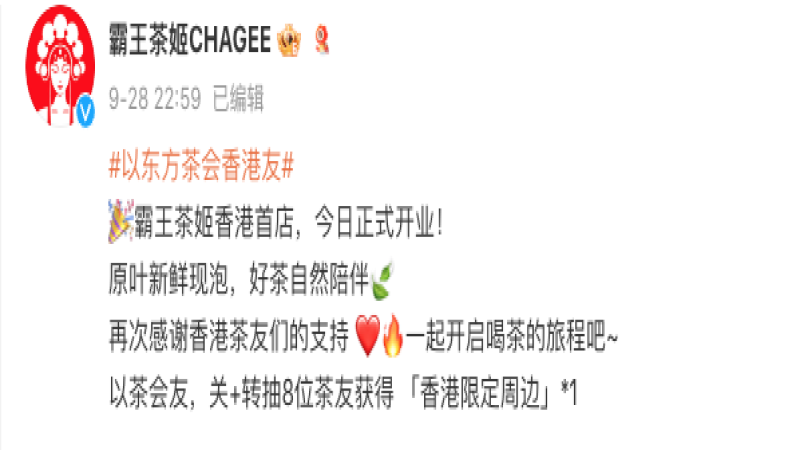
Chagee opened its first Hong Kong store at K11 Musea, drawing queues that stretched for hours. The mainland tea brand joins a wave of Chinese chains entering the city, drawn by dense foot traffic, high spending tourists, and a base of consumers already familiar with the products. Operators often treat Hong Kong as a testing ground before wider expansion.
Anyone asking how much does it cost to open a coffee shop will find Hong Kong rents and labor among the highest in Asia, with prime mall space far above mainland rates. Still, brands accept the cost for visibility. The same pattern echoes when did coffee become popular in europe, when crowded port cities gave new drinks their first broad audiences.
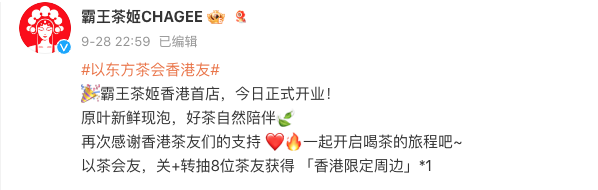
In recent years, mainland new-style tea beverage brands have been scrambling to enter Hong Kong, with Mixue Bingcheng, Heytea, Nayuki, and Shuyi Tealicious among those that have already made their moves. On September 28, Chagee, which positions itself in the mid-to-high-end segment, opened its first store in Hong Kong at K11 Art Mall in Tsim Sha Tsui, right next to Nayuki and Heytea. On opening day, it invited Charmaine Sheh to make an appearance and rolled out promotions such as buy-one-get-one-free, drawing huge crowds to line up, with wait times reaching three to five hours. This article breaks down the core information—store design, product pricing, promotional activities, and market prospects—to give you a quick look at this Hong Kong tea beverage frenzy.
In recent years, mainland new-style tea beverage brands have been密集 expanding into Hong Kong. According to incomplete statistics, mainland tea beverage brands that have already landed in Hong Kong include Mixue Bingcheng, Heytea, Nayuki, and Shuyi Tealicious.
Chagee focuses on the mid-to-high-end route. On September 28, its first Hong Kong store officially opened its doors at K11 Art Mall, 18 Hanoi Road, Tsim Sha Tsui.
It is worth noting that the commercial district where K11 is located has always been a popular spot for mainland tourists sightseeing and shopping in Hong Kong, and during holidays it is even more crowded and bustling.
In terms of location, Chagee's store is right next to Nayuki and Heytea. The three brands sit side by side, with Heytea's storefront appearing relatively smaller.
In terms of store design, considering Hong Kong's extremely expensive real estate and the store's own irregular structure, the design plan strives to maximize space utilization. Folding windows were specially installed to blur the boundary between indoor and outdoor, making the overall space appear more transparent and expansive.
The entire store's color scheme continues CHAGEE's brand style and visual identity, blending light golden tea tones with desert hues. The storefront features Chinese-style ink-wash landscape elements, creating a strong contrast with the metallic-textured bar counter and walls inside—combining traditional charm with modern flair, simple yet tasteful.
It is understood that Chagee's Hong Kong K11 store currently offers 6 drinks, including signature items such as Boya Juexian, Gui Fu Lan Xiang, and Wanli Mulan, priced between HK$28 and HK$34 (approximately RMB 25 to 30), slightly higher than on the mainland—at mainland stores, Boya Juexian, Wanli Mulan, and Huatian Wulong all sell for RMB 16.
However, during the National Day holiday, Chagee launched a promotion: after claiming a coupon on the HK mini-program, customers could enjoy buy-one-get-one-free, which works out to roughly the same price as on the mainland.
Before the official opening, on September 20, Chagee's first Hong Kong store held a soft opening, where visitors could get a free cup of milk tea that day. In addition, the store also held pop-up activities. According to the rules, participants who played pitch-pot, darts, and bowling, completed any two and collected all stamps, could redeem card holders, silk scarves, and Bauhinia badges.
During the soft opening phase, Chagee also set up a check-in activity—simply post a photo or video on social media and receive a standout bag for free. To get that oversized red-hot brand bag, many girls carefully posed and cooperated with various shots, generating plenty of buzz for the brand across Hong Kong streets.
With everything ready, on the official opening day of September 28, Chagee invited Hong Kong actress Charmaine Sheh to appear in support, further boosting its popularity.
With a new store opening, the old problem of queuing is naturally hard to avoid. Judging from feedback from netizens on social media, to get a cup of Boya Juexian on opening day, you had to wait 3 to 5 hours. Multiple netizens reported that when ordering in the morning, the queue time showed 2 to 3 hours, while ordering in the afternoon meant waiting over five hours.
Some netizens analyzed that the widely circulated scene of a thousand cups ahead in line and a five-hour wait was very likely because the store was running a generous buy-one-get-one-free promotion, which attracted a large number of customers.
Others reminded people not to go to the store in the afternoon, as it was simply too crowded—you were either queuing to order or queuing to pick up.
Some quick-witted netizens, while lamenting that Hongkongers love queuing too much, also brainstormed wildly and offered advice to "those who simply must have this tea": if you go to neighboring Shenzhen, you might get your tea beverage faster; or order in Hong Kong first, go to Shenzhen, finish drinking, and then return to Hong Kong—there would still be enough time for a second cup. Truly absurd suggestions.
As mainland tea beverage brands rush into Hong Kong one after another, with promotions rolling out continuously, Hong Kong's milk tea lovers naturally welcome it with open arms. But Hong Kong's market capacity is limited, store resources are scarce, and with major brands competing against each other, after a few years it may well become a replica of the mainland market.
Image source: Internet
The above content is compiled by CoffeeHunters, a coffee news website.


