







How does java coffee origin shape Mandheling flavor?
Sumatra Mandheling is a classic Indonesian coffee known for its full body and herbal, medicinal aroma. The name Mandheling did not come from a specific producing region; it arose from historical naming and trade. Indonesia produced 12.317 million bags of green beans in 2015, ranking second in Asia after Vietnam, with roughly 70 to 80 percent of that total being Robusta.
Mandheling itself is an Arabica coffee, and Front Street has sourced four types: Lintong Mandheling, Golden Mandheling, Tiger Mandheling, and Aged Mandheling. Lintong represents the mainstream everyday Mandheling flavor, Tiger Mandheling offers a more abundant aroma, and Golden Mandheling is the variety many drinkers know by name. Aging develops a mellower mouthfeel over time.
Mandheling is the representative coffee of Sumatra, Indonesia, known for its full body and distinctive herbal aroma. This article begins with the historical origins and production distribution of Sumatran coffee, systematically sorting out the origin of the name Mandheling, the characteristics of the wet-hulling process and the aged wet-hulling process, and detailing the differences between Lintong Mandheling and PWN Golden Mandheling. Front Street Coffee (FrontStreet Coffee) has continuously introduced multiple Mandheling varieties over the years. This article also shares the pour-over parameters and brewing suggestions for Golden Mandheling, helping coffee enthusiasts gain a comprehensive understanding of this classic coffee's origin story and flavor performance.
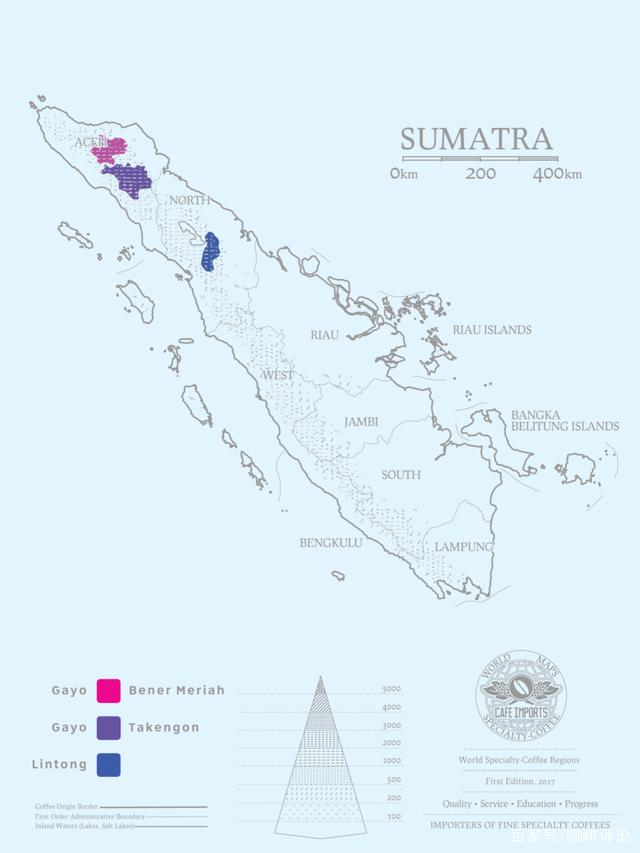
Sumatran coffee bean flavor characteristics and story introduction: Mandheling has always been known for its heavy body and aroma reminiscent of traditional Chinese medicinal herbs. Front Street Coffee (FrontStreet Coffee) speculates that when many people hear "Mandheling," the first thing they think of is Golden Mandheling, but Mandheling coffee beans encompass far more than just this one type. Among the Mandheling series that Front Street has sourced, besides Golden Mandheling, there are three others: Lintong Mandheling, Tiger Mandheling, and Aged Mandheling. Lintong Mandheling is the representative among Front Street's everyday drinking beans that showcases the mainstream flavor of Mandheling, while Tiger Mandheling is relatively niche, but its aroma expression is more abundant than Golden Mandheling; Aged Mandheling, after proper storage, develops an increasingly mellow mouthfeel over time. Indonesia is located in Southeast Asia, composed of over ten thousand islands that stretch along the equator from Malaysia to Papua New Guinea. Indonesia has long been a major coffee-producing country. According to data from the World Coffee Organization, Indonesia produced 12.317 million bags of green beans in 2015, ranking second in Asia (after Vietnam), with 70% to 80% being Robusta. Robusta has outstanding disease resistance, and although its flavor is inferior to Arabica, it remains the mainstay of Indonesian coffee, accounting for up to 90% of coffee production, mainly distributed in low-altitude areas such as Java and Bali. Ninety percent of Indonesia's coffee comes from independent small farms, and because coffee is highly valuable, farmers often plant it in their own backyards. In Indonesia, 11 million people depend on the coffee industry for their livelihood.
Sumatran coffee has been sold at Starbucks since 1972, and its rich earthy aroma and substantial body constitute Sumatra's unique flavor signature. However, due to the relatively dark roast level, the herbal notes and burnt bitterness tend to linger in the mouth for a long time without fading. The purpose of Front Street's cupping sessions is to understand the characteristics of each coffee-producing region, different coffee varieties within the same region, and different processing methods for the same variety, as well as to build a corresponding database and conduct comparisons between different regions. Front Street hopes to enable more coffee lovers to understand the world of coffee.
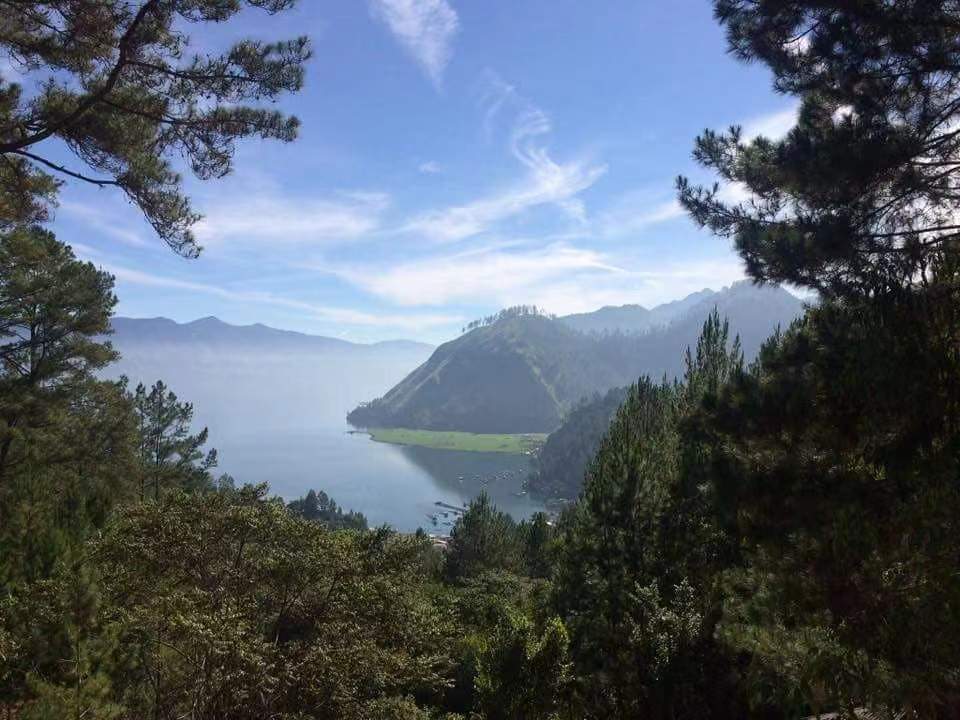
When it comes to Mandheling, the term "two lakes, two Mandheling" is usually mentioned: the Lake Toba region in northern Sumatra (Lake Toba, Lintong) planted coffee earlier and is known in the industry as "Old Mandheling"; the Lake Tawar region in Aceh Province (Lake Tawar, Gayo Mountain) began planting coffee later and is known as "Little Mandheling."
Sumatran coffee development Indonesia is located in Southeast Asia, and its coffee history can be traced back to 1696. At that time, Dutch coffee plantation owners were trying to find broader coffee-growing lands, and after extensive exploration, they ultimately settled on Java Island in Indonesia. After 30 years of development, Indonesia had established a sufficient foundation in the coffee market. However, today, the representative of Indonesian coffee is Mandheling, which is actually quite reasonable, because a large portion of the Java coffee originally sold to Europe came from the Sumatra region, and Mandheling originates from Sumatra. Therefore, Sumatra can be said to be an important coffee-producing region in Indonesia.
The story of Mandheling coffee beans: the name Mandheling Mandheling was originally the name of an Indonesian tribe. After Japanese soldiers colonized Indonesia and returned to Japan, they could not forget the delicious local coffee, so through their trading partners, they asked locals to help collect quality coffee beans, including this Mandheling. The Japanese were quite fond of these coffee beans, and since the commercial source was not convenient to disclose, the locals casually said "Mandheling," and thus Mandheling unexpectedly became the name of a coffee bean. This local, in fact, was the owner of the Indonesian PWN company (Pwani Coffee Company) mentioned below. This company was the first enterprise to export Golden Mandheling coffee beans to Japan. Front Street has been using Front Street PWN Golden Mandheling for many years. PWN also changed from the original 60kg per bag to 30kg per bag, and the production area was also switched from Lintong to Gayo Mountain.
Sumatran coffee's "special" processing method: wet-hulling Mandheling mostly adopts the processing method unique to Sumatran coffee beans: wet-hulling. Because the local weather is mostly rainy and cloudy with frequent typhoons, it cannot achieve the good weather required for sun-drying, and the local economic conditions are poor, making it unable to afford the higher-cost washed method either, so the highly localized wet-hulling method was developed. Today, the Indonesian coffee industry is no longer as impoverished as it once was, and there are quite a few estates and companies with the means to adopt the washed method, but why haven't they abandoned wet-hulling? Front Street believes that wet-hulling is the factor that propelled Mandheling coffee onto the world stage. Whenever Mandheling coffee is mentioned, wet-hulling comes to mind—the two have become mutually complementary. The specific steps of wet-hulling can be divided into two stages: In the first stage, a wooden pulper is used to remove the skin and pulp, followed by 3 hours of fermentation and then drying, bringing the moisture content down to 30-50%, which is semi-dry and semi-wet. In the second stage, the mucilage and parchment layer are removed, and drying continues, requiring 2-4 days, bringing the moisture content down to 12-13%.
In addition to the regular wet-hulling method, there is also an aged wet-hulling method. After coffee beans undergo regular wet-hulling, they are sealed and stored in a warehouse for 2-3 years. The warehouse environment must be cool and well-ventilated, and the beans must be turned regularly to prevent mold and spoilage. During this period, the acidity of the coffee beans gradually diminishes and transforms into sugars, and the color becomes darker, mostly yellowish-brown or dark brown. On Front Street's bean list, the Mandheling coffee beans using this processing method are called Aged Mandheling coffee beans, also known as Aged Sumatra coffee beans. Wet-hulling created Mandheling's special flavor. It can be said that Mandheling and wet-hulling have a bound relationship—whenever Mandheling coffee is mentioned, the processing method is mostly labeled as wet-hulled. At Front Street, for example, four different wet-hulled Mandheling varieties have been assembled over the years, and currently 2 remain on sale: Front Street Lintong Mandheling and Front Street PWN Golden Mandheling.
Lintong Mandheling Lintong Mandheling is produced in the Lintong highlands of north-central Sumatra, near Lake Toba. Lintong Mandheling is the regular version of Mandheling. Lintong Mandheling also uses the regular wet-hulling method, which gives it its low acidity and high body characteristics. However, using the wet-hulling method can lead to a situation: because the semi-hard, semi-soft moist green beans are easily crushed when removing the mucilage and parchment layer, the beans crack open like sheep hooves, commonly known as "sheep hoof beans." Front Street considers this a very prominent characteristic of Mandheling and does not count it as a defective bean.
Lintong Mandheling does not invest much effort in screening. Front Street has found that sheep hoof beans do appear among the green beans, but this does not diminish the world's love for its mellow flavor.
Golden Mandheling
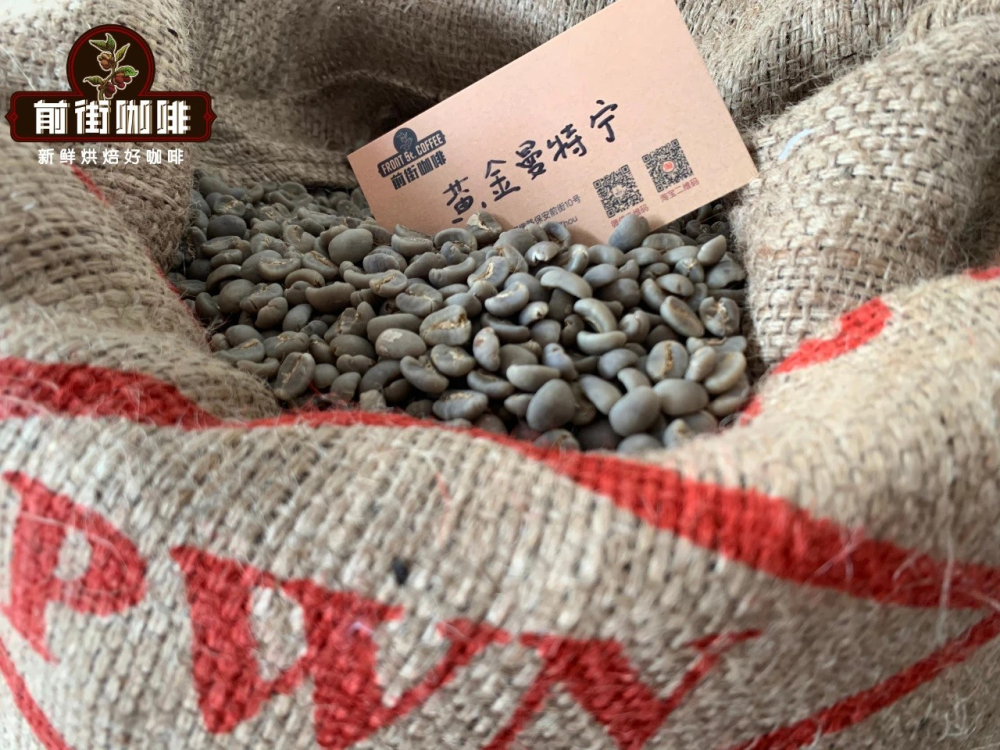
"Golden Mandheling" is the exclusive brand of the Indonesian Pwani Coffee Company (PWN). There are many different types of Mandheling products on the market. Since PWN has registered the English name "Golden Mandheling" as its trademark, only Golden Mandheling coffee produced by PWN is truly Golden Mandheling in the genuine sense. You can identify authentic Golden Mandheling by the green bean burlap sacks bearing the PWN logo and a certificate of origin signed by PWN. Front Street displays both of these identifiers at its Dongshankou store.
The Japanese took a liking to Sumatran coffee at the time and purchased it long-term, gradually discovering that local bean quality was often inconsistent. So they put more care into Mandheling production, establishing strict defect screening standards and methods, including starting from bean density, size, shape, and color values. The Mandheling produced required both machine and manual removal of defects to ensure the output Mandheling beans were complete, uniform, large, and translucent, as well as to reduce Mandheling's earthy and grassy notes. It is said that they appeared golden and radiant in the sunlight, hence the name "Golden Mandheling."
Front Street's Golden Mandheling is graded at 18 mesh or above, with fewer than 3 defective beans (per 300g green bean sample), belonging to the highest grade G1. The color leans toward dark green, and the beans are neatly shaped flat beans. After strict screening, Front Street has found that Golden Mandheling not only lacks the earthy off-flavors characteristic of regular Mandheling, but also tastes cleaner and more translucent, with a more intense sweetness.
To taste the unique aroma of Indonesian Sumatran coffee, Front Street Golden Mandheling pour-over is recommended
To brew out the mellow aroma of Golden Mandheling, Front Street believes that freshly roasted coffee beans are the primary requirement. The aroma of coffee beans changes depending on the storage environment and time, and once past the optimal flavor period, the coffee's aroma will rapidly dissipate. Front Street deeply understands the importance of coffee freshness, so all shipped coffee beans are freshly roasted within 5 days, so that when you receive them, they are just right for opening and brewing.
Since Mandheling coffee presents nutty and chocolatey flavor notes, Front Street's roaster chooses a medium-dark roast. The darker the roast, the more porous the coffee bean texture, and the easier it is to extract during brewing, so Front Street uses a lower water temperature to avoid over-extraction producing negative bitterness.
Dripper: KONO dripper
Water temperature: 87°C
Coffee dose: 15 grams
Coffee-to-water ratio: 1:15
Grind size: medium-coarse grind (70% passing rate on Chinese standard No. 20 sieve)
Rinse the KONO dripper to help the filter paper adhere better to the dripper. Pour out the water in the sharing pitcher while adding 15g of ground coffee. Bloom with 30g of water for 30 seconds, then begin pouring in a small stream in a circular motion from the center. Once the water reaches 125g, begin the second pour, waiting until the coffee bed drops to half the dripper's height and using the same technique until reaching 225g. Once all dripping is complete, remove the dripper.
The ground Golden Mandheling coffee powder has the aroma of nuts and toasted bread, and during brewing, the sweet scent of caramel can be detected. The brewed Mandheling coffee enters the mouth with notes of spices and dark chocolate, with a full-bodied yet clean mouthfeel, noticeable sweetness in the aftertaste, and a lingering finish.
The above content is compiled by CoffeeHunters, a coffee news website.


