







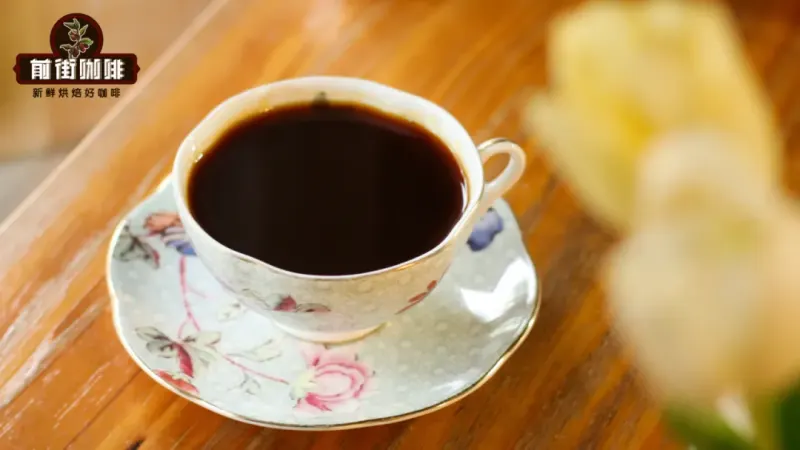
How is floral aroma released in geisha coffee brewing?
Floral aroma is a scarce flavor in coffee, and it depends first on the bean. A coffee can only show floral notes if it contains terpenoids, the core source of those characteristics. Terpenoid formation is mainly influenced by variety genetics and growing environment, so altitude and plant stock matter before any brewing adjustments are made.
Using Front Street's Emerald Green Label Geisha from the Boquete region as an example, the jasmine, citrus, and green tea character is released by adjusting the coffee-to-water ratio, pouring technique, and extraction time. Understanding how floral aroma compounds dissolve helps brewers get a clearer cup, whether they are new to specialty coffee or refining existing skills.
Floral aroma is an extremely rare flavor type in the coffee world, and not every coffee bean can present it. Starting from variety genetics and growing environment, this article analyzes the formation principles of coffee floral aroma, and takes Front Street Emerald Green Label Geisha from the Boquete region as an example to share in detail how to fully release the jasmine floral notes, citrus, and green tea character contained in Geisha by adjusting the coffee-to-water ratio, pouring technique, and extraction time. Whether you are a beginner just getting into specialty coffee or an enthusiast hoping to refine your brewing skills, this guide will help you understand the dissolution characteristics of floral aroma compounds and master practical methods for brewing a clear floral aroma.
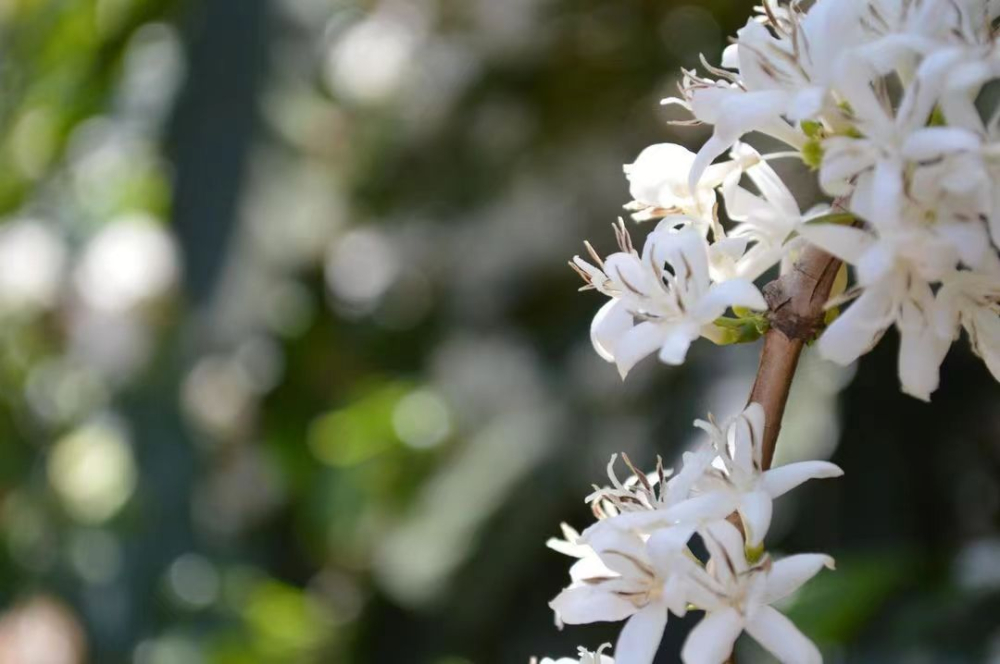
In any field, things with floral fragrance seem to carry a special quality from birth. The fragrance of flowers can soothe emotions, and flowers themselves also carry rich emotional meanings, making it easy for people to resonate with them. The same is true of coffee.
Coffee can also present floral aromas, and floral aroma is also a flavor type that many coffee lovers pursue tirelessly. However, like many beautiful things, floral aroma is also a scarce flavor in coffee, and not every coffee bean can possess it.
Many friends often ask Front Street in the background how to brew out the floral aroma of coffee. But there is a premise here: we must choose a bean that itself has floral characteristics before this goal can possibly be achieved. If the coffee beans in hand do not contain floral attributes at all, then no matter how the brewing plan is adjusted, the final cup cannot produce floral aroma out of thin air.
Where does the floral aroma in coffee come from?
Whether a coffee bean can carry floral aroma depends on whether it contains "terpenoids." Terpenoids are the core source of the floral characteristics imparted in coffee, and the formation of these substances is mainly affected by both variety genetics and growing environment. In other words, only when coffee's genes carry these substances, or when growing conditions can promote the formation of these substances (for example, higher altitude can stimulate coffee beans to accumulate more flavor compounds), is floral aroma likely to appear. It should be noted that the formation of these flavor compounds in coffee is essentially not for the purpose of enriching human sensory experience.
The world-famous Geisha is precisely a representative variety containing large amounts of terpenoids. From the perspective of producing regions, Boquete, Yirgacheffe, and other places are all known for producing coffee with floral aroma. This also explains the saying Front Street often mentions—"Oranges grown south of the Huai River are oranges; oranges grown north of the Huai River are trifoliate oranges." If a bean that naturally carries floral aroma happens to be grown in a region capable of nurturing floral aroma, that is icing on the cake.
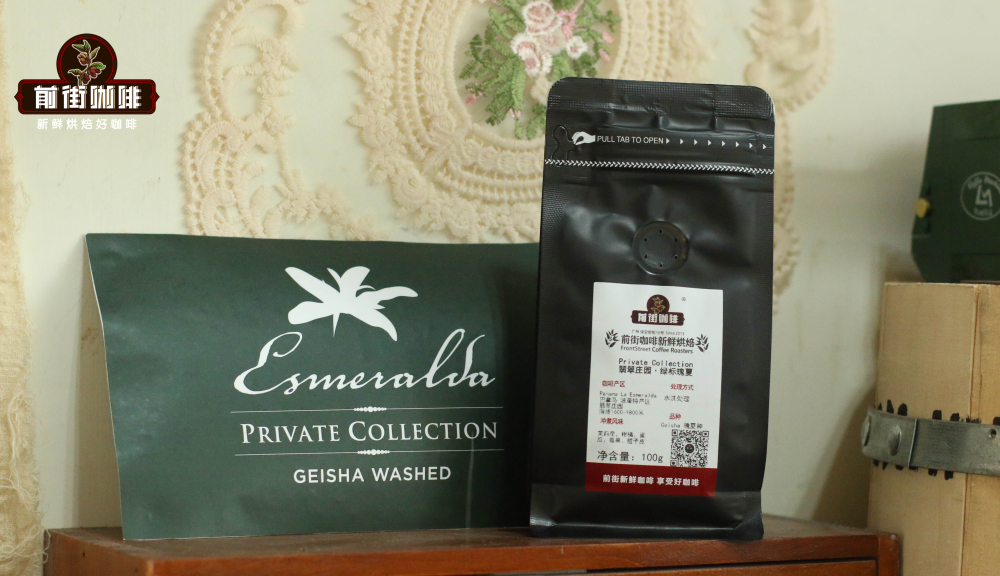
If you want to taste a clear floral aroma, you can prioritize Front Street Boquete Geisha, Front Street Emerald Red Label Geisha, and Front Street Emerald Green Label Geisha from Panama.
If you want both floral aroma and abundant fruity sweetness, you might choose Costa Rican coffee beans known for honey processing, especially the Front Street Strawberry Candy, Front Street Blackberry, and Front Street Mozart favored by coffee lovers.
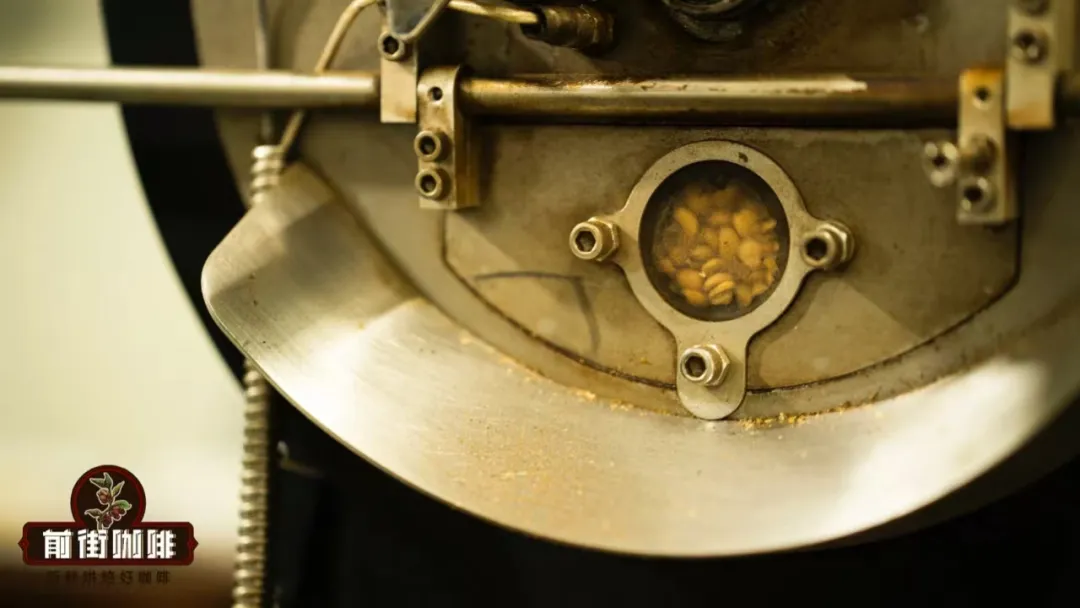
After floral aroma compounds are formed, processing methods and roast level are actually adjusting the proportion of floral aroma expressed in coffee. Processing is not hard to understand: the fermentation process involving microorganisms changes the original substances inside the beans. And roast level can influence the generation and dissipation of floral flavor. Therefore, for the same coffee bean, under different processing methods or different roast levels, the intensity of floral aroma we perceive will also differ noticeably.
How do you brew out the floral aroma of coffee?
After getting a coffee bean with floral attributes, the most critical thing is to use water to extract the floral aroma. The flavor compounds that form floral aroma belong to flavor molecules with relatively large mass and low polarity. You may not easily understand what Front Street often means by small-molecule and large-molecule substances, so here is a simple analogy: granulated sugar and rock sugar.
Put them into water at the same time, and the speed of complete dissolution is completely different. Substituting large and small molecules into this scenario makes it easy to understand. Small-molecule substances are like granulated sugar, dissolving quickly under the same conditions; large-molecule substances are like rock sugar, requiring a longer time for complete dissolution. So large-molecule substances can be understood as sugars that dissolve more slowly, and to fully dissolve them out, the contact time between water and coffee grounds must be extended.
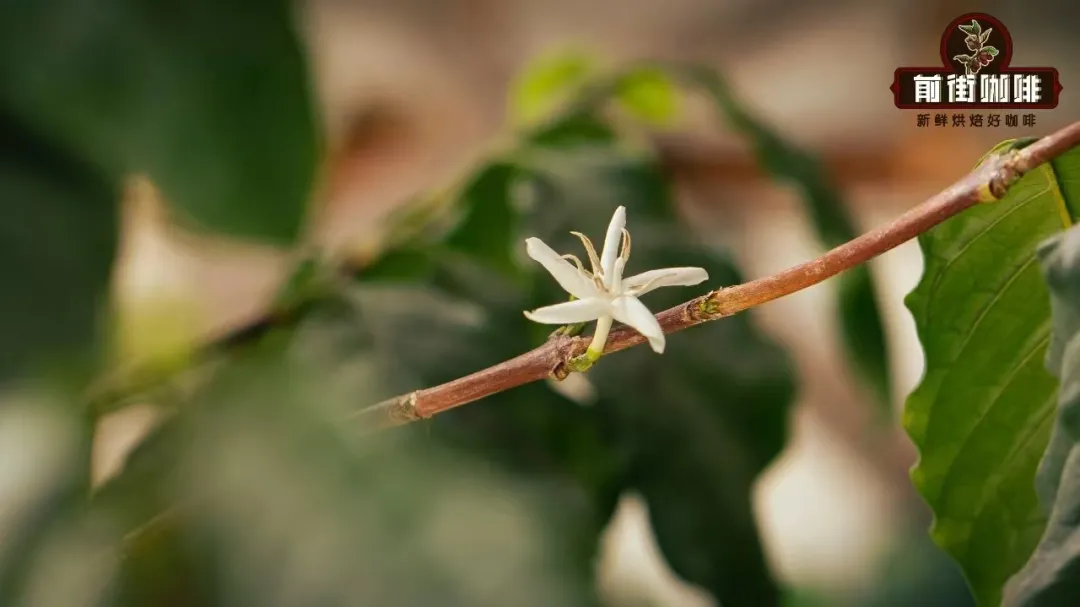
At the same time, note: compared with other flavors, floral aroma is harder to capture. Without a tasting foundation, perceiving floral aroma is even more difficult. This is also why some expensive coffee beans that taste excellent to professionals seem unremarkable to ordinary consumers, no different from chain-store coffee—because without tasting experience, they cannot distinguish the core difference between the two.
Of course, we can improve our tasting ability through daily training, but at the moment of brewing, what we need to do is let our present selves perceive the flavor characteristic of floral aroma. The method is simple: increase concentration.
Increasing coffee concentration can make floral flavor more concentrated. But similarly, higher concentration also makes the overall taste more condensed, which is not very friendly to friends who prefer a lighter taste. So this is a double-edged sword. If your taste is on the lighter side, just brew according to the original ratio. Without further ado, let's begin today's brewing sharing!
The coffee bean selected this time is Emerald Estate · Green Label Geisha grown in the Boquete region. Its floral expression is very rich, and it happens to be tomorrow's promotional product, making it especially suitable as the bean for this brewing. The extraction parameters are basically consistent with the regular plan; the difference is that the coffee-to-water ratio is slightly higher, and the extraction time is relatively longer. The specific parameters are as follows:
Dose: 16g, grind size of 10 on the Ek43, 80% pass-through rate on a No. 20 sieve, granulated sugar grind, coffee-to-water ratio 1:14, water temperature 92°C, dripper V60.
First, use 30ml of hot water for blooming, lasting 30 seconds.
After blooming ends, the remaining water amount is 194ml. For the second pour, pour in 100ml of hot water using a small stream and large circular motion.
When the coffee liquid has drained to the bottom, you can begin the third pour. Pour 50ml in this stage, using a small stream in a small circular motion to concentrate extraction on the central coffee bed.
As the coffee reaches the bottom again, pour in the remaining 45ml of hot water at a single point. Do not stir during this pour, because we have already extended the extraction time; without additional agitation, the flavor compounds in the coffee can still dissolve fully. Next, simply wait for all the coffee liquid to be released, and extraction can be ended.
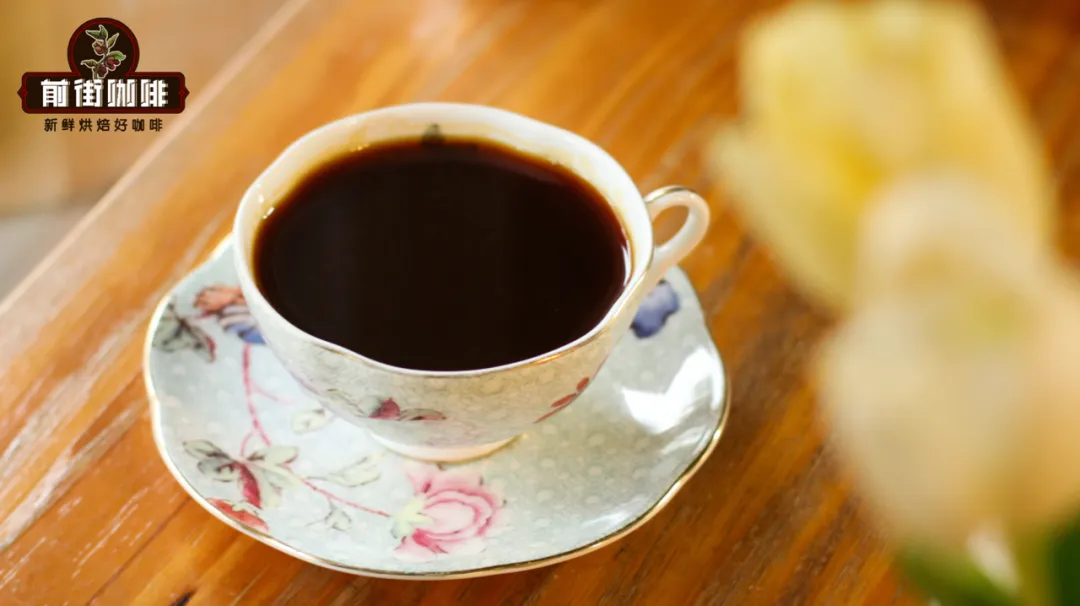
Total time: 2 minutes 11 seconds! Swirl the server to allow coffee liquids of different concentrations in the server to blend evenly. At this point, from the aroma released while swirling, you can already sense a delicate white floral note. Then pour it into a cup and savor it carefully.
Jasmine floral aroma, citrus, and green tea are the most immediate flavor impressions Front Street gets after this cup of Geisha enters the mouth. As the coffee is swallowed, you can also feel the high sweetness in the finish brought by melon and orange peel. Clean, with a long lingering finish, very pleasant.
- END -
The above content is compiled by CoffeeHunters, a coffee news website.


