







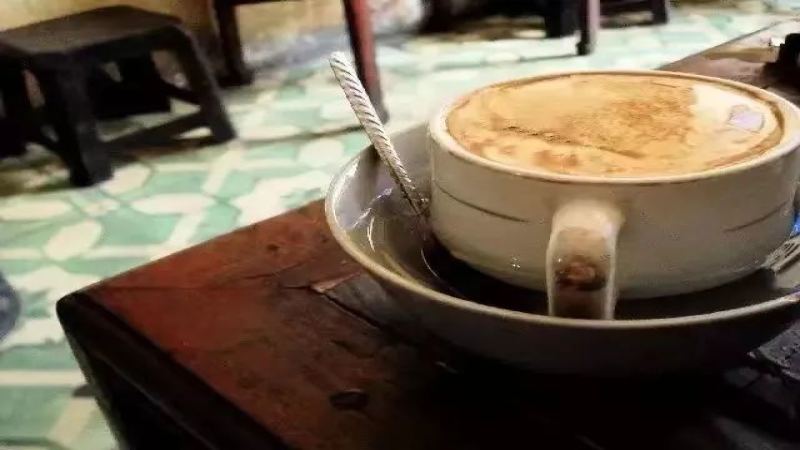
How Do Vietnamese and Nordic Egg Coffee Methods Differ?
Egg coffee exists in two distinct traditions. The Vietnamese version, born in wartime Hanoi when milk was scarce, whips egg yolks with white sugar into a creamy layer that stands in for milk over strong coffee. The Nordic version instead uses egg whites to bind the coffee grounds, producing a clear, sediment-free brew from an older Scandinavian method.
Nguyen Van Giang, who worked at the Sofitel Legend Metropole Hanoi, created the Vietnamese style and later added condensed milk, butter and shelf-stable milk to the egg base. Vietnam commonly pairs it with dark-roasted robusta, so three to four times as much egg cream may be needed to balance the bitterness, unlike milder brews such as arabic coffee vs turkish coffee comparisons often involve.
Egg coffee isn't only a Vietnamese specialty—Nordic people also have an old method of brewing coffee with eggs. The Vietnamese version whips egg yolks into a creamy substitute for milk and was born in wartime Hanoi during a time of scarcity; the Nordic version uses egg whites to bind the coffee grounds, resulting in a clear, sediment-free brew. Front Street Coffee walks you through the origins, principles, and home-brewing methods of these two egg coffees, including how to choose pasteurized eggs, the ratio of coffee liquid to egg cream, and an improved brewing method tested by Front Street, so you can recreate these two intriguing flavors at home.
When people mention egg coffee, many first think of the Vietnamese specialty. It is one of Vietnam's two signature coffee drinks, the other being the drip coffee that Front Street introduced earlier.
In the Vietnamese version of egg coffee, what role does the egg play? Front Street thinks it's a bit like a milk cap. The creation of this method is tied to the scarcity during the First Indochina War: milk was a rare commodity at the time, and Nguyen Van Giang, who worked at the Sofitel Legend Metropole Hanoi, wanted to keep coffee available (Vietnamese coffee is very bitter, and without something sweet it's hard to drink). So he whipped egg yolks with white sugar into a creamy texture to replace milk or condensed milk in coffee.
After the war, Giang added condensed milk, butter, granulated sugar, and shelf-stable milk to this egg base to enhance flavor and thickness, creating the first version of the signature egg coffee. Other cafes soon followed suit, and it gradually became a signature Vietnamese coffee. If you want to try it at home, be sure to buy pasteurized eggs. A simple method is to separate two egg yolks, add a spoonful of condensed milk or white sugar for flavor, and whip the yolks with a whisk until creamy—the egg portion is done. For the coffee liquid, choose something rich and on the bitter side; the ratio of coffee liquid to egg cream can be adjusted to taste. For example, Vietnam commonly uses dark-roasted robusta for the coffee liquid, so you'd need three to four times as much egg cream to balance it out. Simply spoon the egg cream on top of a cup of coffee.
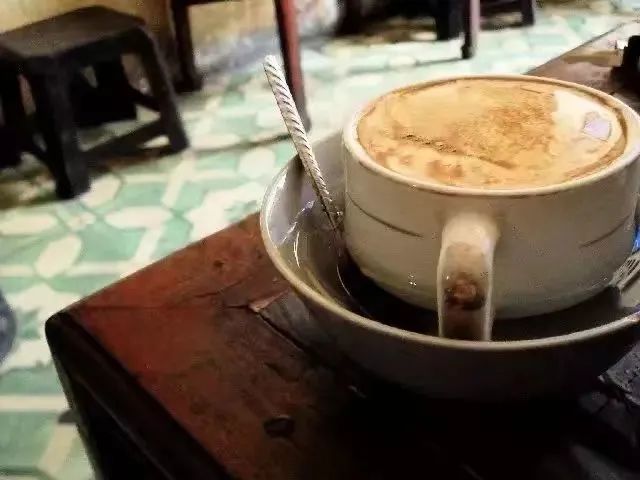
Actually, Front Street prefers the egg coffee below—an old Nordic method of brewing coffee. In the Nordic version of egg coffee, the egg's main job is to bind the coffee grounds. They brew coffee in a pot, and if you just dump coffee grounds in and boil it, you end up with a mouthful of coffee and a mouthful of grit—a poor experience. So they beat eggs (mainly egg whites) into the coffee grounds and mix well. Once the water boils, they pour the coffee-and-egg mixture into the pot and boil it. After about ten minutes, they pour a small cup of cold water into the pot; the egg mixture wraps around the coffee grounds and sinks to the bottom, leaving clean coffee to pour out.
Ten years ago, Front Street happened to try this interesting method by chance. I had just finished moving and, while organizing the new place, came across a can of illy coffee grounds a friend had brought back from Europe. I checked the date—still good—and on a whim decided to give it a taste. But I didn't even have a single coffee-making tool at home, so when in doubt, I went online. With the help of some helpful netizens, I learned about the egg-filtering method.
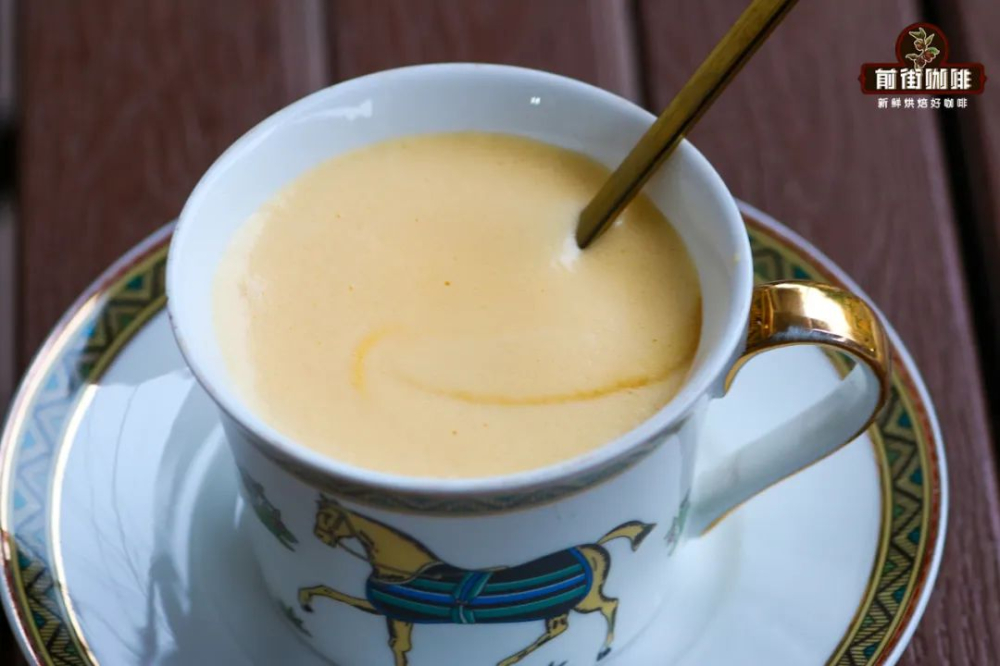
Of course, Front Street made some adjustments to the actual process. Because that can of coffee was fairly finely ground, boiling it for a full ten minutes would probably have turned it into something like Chinese herbal medicine. Also, the egg mixture clung to the bowl after mixing with the coffee grounds, and in the spirit of not wasting anything and washing as few bowls as possible, I changed the method: first bring the water to a boil, then reduce to low heat (about 500ml of water). The moment you pour in 25g of coffee grounds, while the grounds are still dry and floating on the surface, crack in one egg, then use chopsticks to break up the egg and stir the coffee grounds for about 15 seconds, then stop. At around 1 minute 30 seconds, turn off the heat and pour in the "soul"—30 to 50ml of cold water. The coagulated egg whites will sink to the bottom with the coffee grounds. To be safe, let it sit for 3 to 5 minutes before pouring out the coffee. As I've accumulated more and more coffee gear, I haven't used this method in a long time...
The above content is compiled by CoffeeHunters, a coffee news website.


