







Which Pour-Over Coffee Steps Go Wrong Most Often?
Four steps cause most pour-over coffee problems at home: grind size, pouring technique, coffee-to-water ratio, and water temperature. Grind size is the biggest culprit, since half of all failed brews trace back to it. Judge the coffee bed after brewing by particle coarseness, muddiness, and drainage speed. Too coarse gives weak, sour cups; too fine slows draining and adds bitterness.
A blade chopper cannot produce even coffee particles, so an entry-level hand grinder is the minimum. A No. 20 standard sieve helps: the recommended pour-over grind passes 70 to 80 percent through it, and medium-light roasts sit at the finer end of that range. Checking the bed and adjusting one variable at a time makes results repeatable, which matters more than any single recipe.
Many coffee lovers buy beans to take home after enjoying a satisfying cup in a café, only to find that their own brew always seems to fall a bit short. Front Street Coffee, addressing this common frustration, has identified the four most problematic steps: grind size, pouring technique, coffee-to-water ratio, and water temperature. The article starts with the shape of the coffee bed after brewing, teaching you to judge the problem by examining particle coarseness, muddiness, and drainage speed; then analyzes the reasons for weak or overly sour flavors from the details of pouring; and finally offers practical advice on coffee-to-water ratio and water temperature. Whether you're a beginner or looking to refine your technique, this systematic breakdown can help you find the right direction for adjustment.
Quite a few friends have said that they tried coffee at a Front Street café and found it quite good, so they bought a bag of beans to brew at home, but the resulting cup tasted completely different—so they came to ask Front Street what was going on. Therefore, Front Street decided to do an installment analyzing common pour-over brewing problems. If you've also encountered issues with flavors coming out wrong when brewing coffee, feel free to follow Front Street's approach to find the cause.
Problem One: Grind Size
This problem is the most difficult for most people. It could be said that half of all pour-over brewing failures stem from not finding the right grind size.
In pour-over coffee, the coarseness of the coffee particles matters—too coarse won't work, and too fine won't work either. So smashing coffee beans, using a blender to pulverize them, or using a "bean chopper" with just a single rotating blade cannot achieve precise grind size—these are not recommended. If you want to taste the flavors of pour-over coffee, at the very minimum you should have an entry-level hand grinder.
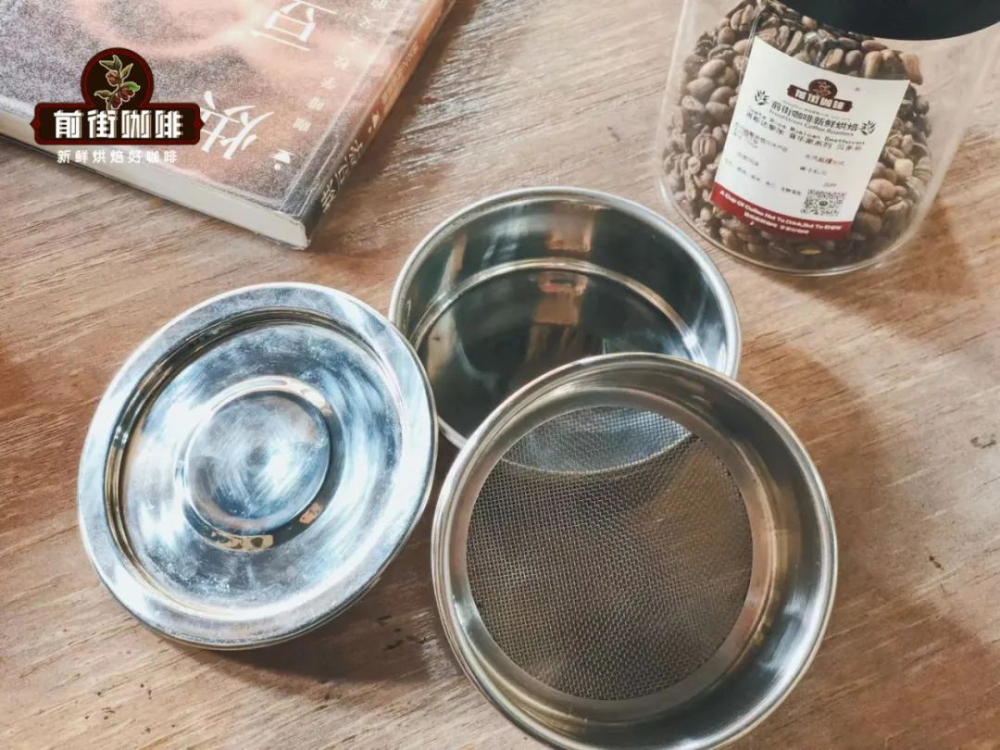
Because coffee particles are too small, judging coarseness by naked eye or by touch cannot yield accurate information, so Front Street recommends using a No. 20 standard sieve to determine pour-over grind size. [For how to use a sieve to judge grind size, click here]
The pour-over grind size Front Street recommends is a 70–80% pass rate through a No. 20 standard sieve (if you don't have a sieve, get one—they're not expensive, under 50 yuan). For medium-light roasts, use the 75–80% range; for medium-dark roasts, use the 70–75% range.
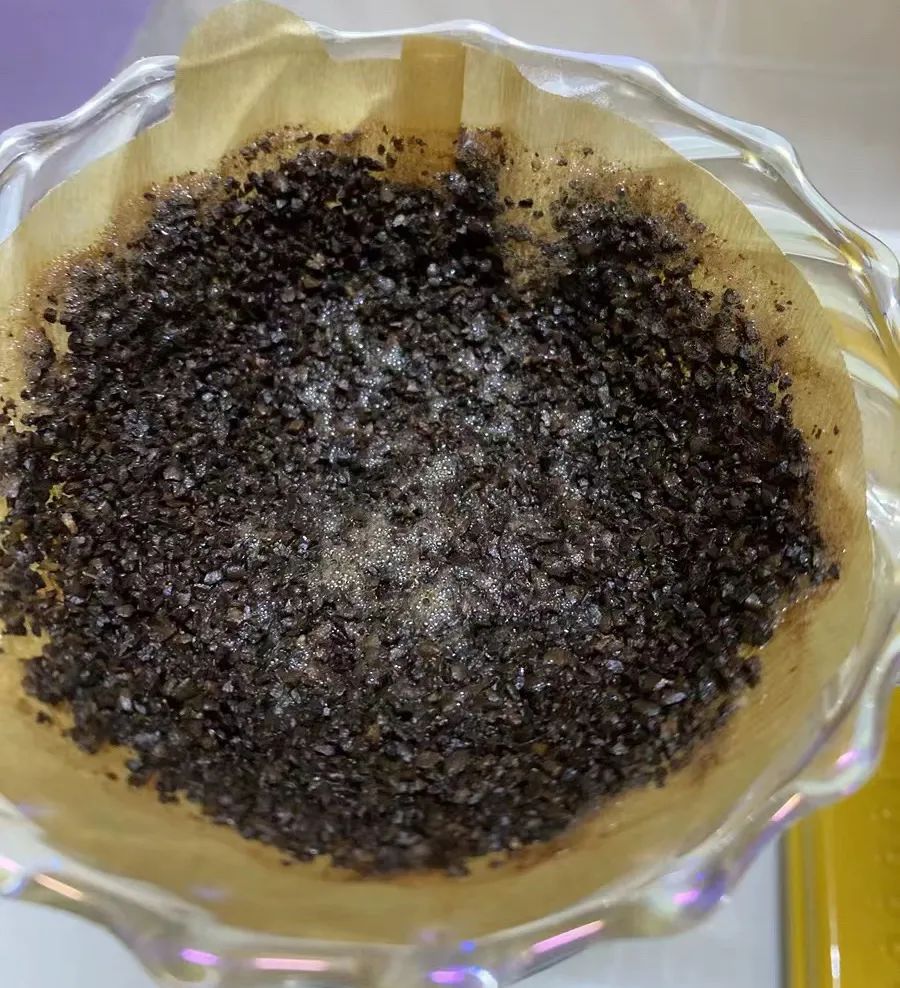
After brewing, you can also examine the coffee bed to judge whether the grind size was correct. For example, one enthusiastic friend reported that the coffee was very weak with an indistinct taste. From the coffee bed, we can see that the coffee particles are relatively large, and some at the edges have been washed down. Combined with the fast drainage speed, we can basically determine that the grind was too coarse.
Next, let's look at another enthusiastic friend who reported that the brewed coffee had a heavy bitter taste. The coffee bed looks pretty good at first glance, but on closer inspection, some parts have become muddy—this is caused by many fine particles sticking together—and the overall coffee grounds are quite fine. So we can basically determine that the bitterness is caused by too fine a grind or too many fines.
Next, let's look at the following enthusiastic friend. This situation is quite common. Let's first look at the picture of the coffee bed.
This friend reported that the coffee brewed with a very obvious bitter taste. From the picture, we can clearly see many large coffee particles, but the drainage is very slow. If you look carefully, there's muddiness caused by fine particles in the central depression. What actually happened is probably this: the hand grinder this friend used produced coffee particles with a wide distribution—that is, both noticeably coarse and noticeably fine particles each made up a significant proportion, with the coarse ones very coarse and the fine ones very fine.
When brewing with coffee grounds of such a particle size distribution, the fine particles, having absorbed water early, sink to the bottom, while the coarse particles, not yet fully saturated, float on the surface. As a result, the fine particles at the bottom clog the drainage hole, causing pronounced bitterness. On the surface, the obviously large coffee particles make it seem like the grind size is fine. If you also encounter this situation, you can use a sieve to remove fine particles smaller than 0.2mm, and the pronounced bitterness will no longer occur.
So, if you find the flavor is off when drinking your own brewed coffee, you can first observe the particle size in the coffee bed—are there obviously large particles? Is there muddiness? Then recall the drainage speed during brewing—was it too fast? Too slow? Or did it clog and stop draining at the end? (Generally, for 15g of coffee at a 1:15 ratio with three-pour extraction, the time is 2 minutes. You can use this as a reference and then judge based on actual conditions.)
Problem Two: Technique
If you've determined that grind size isn't the problem, then continue observing the coffee bed and recalling your brewing process to judge whether something went wrong during pouring.
For example, this enthusiastic friend reported that the brewed coffee tasted relatively weak. By observing the coffee bed, we can see that the coffee particles are relatively large, and the coffee grounds clinging to the filter paper edge have been deliberately washed down. This causes water to flow directly along the filter's ribs into the server without contacting the coffee grounds, resulting in a weak, flavorless cup.
The next enthusiastic friend reported that the coffee beans were described as having a very sweet fruity flavor, but the brew came out very sour. Let's look at this coffee bed. There are three problems. First, there's still a thin ring of coffee grounds on top of the coffee wall—this is because during staged pouring, the later water level rose above the previous coffee wall. Second, the coffee wall has been broken through in two places—this is because too strong a stream formed an arc that broke through. Third, a step rather than a gentle slope has formed between the coffee wall and the coffee bed—this is because the circling range was fixed.
The first two problems caused some water to flow directly along the edge of the dripper without fully extracting the coffee. The third problem is that the coffee wall is too thick and forms a step, so the coffee grounds on the wall are not fully extracted, resulting in sharp acidity, thin sourness, and a watery mouthfeel.
A good-looking coffee bed doesn't necessarily mean good-tasting coffee, and an ugly coffee bed can still produce good coffee. But if you encounter bad flavors during brewing and don't know how to adjust, then you should start from the standard. For a cup with relatively even extraction, the coffee bed should appear bowl-shaped, with the coffee wall of uniform thickness around the sides, following the contour of the dripper and gradually extending to the bottom, with a flat bottom.
Problem Three: Coffee-to-Water Ratio
For the coffee-to-water ratio in brewing, Front Street recommends 1:15 or 1:16. Taking 15 grams of coffee grounds as an example, the total water volume would be 225 ml or 240 ml. Brewing at 1:15 produces a more aromatic, full-bodied cup. A 1:16 ratio is suitable for brewing fragrant, fresh coffees with elegant acidity, such as Geisha.
Regarding the coffee-to-water ratio, some friends like to cut off the brew and remove the dripper while there's still some coffee liquid in the dripper. We can't say whether this method is good or bad, but Front Street wants to remind you of one thing: if you followed a 1:15 ratio when pouring and then cut off some of the coffee liquid at the end, then the actual coffee-to-water ratio of this cup no longer matches 1:15!! [For details on when to use tail-end cutoff, click here]
Problem Four: Water Temperature
Basically, the above three problems should have solved most people's brewing difficulties. If grind size, pouring technique, and coffee-to-water ratio all check out, then the water temperature might be off.
Front Street Coffee recommends a brewing temperature between 86–93°C. When producing coffee in-store, Front Street Coffee chooses different temperatures depending on the beans: 90–93°C for medium-light roasts and 86–89°C for medium-dark roasts.
If the water temperature you're using is already within the recommended range but you still find the coffee more sour than you'd like, you can appropriately increase it by 1–2°C; if you find the coffee more bitter than you'd like, you can appropriately decrease the water temperature by 1–2°C.
[If you want to understand how much water temperature affects coffee flavor, click here]
The above content is compiled by CoffeeHunters, a coffee news website.


