







Is an American drip coffee maker worth it for daily brewing?
An American drip coffee maker is a simple, low-cost way to brew a full pot of filter coffee at home, and it suits people who want a quick, hands-off daily cup. Its reputation is split because the machine itself does little to control water temperature, grind, or contact time, so results depend heavily on the beans and the ratio used.
The design traces back to 1965, when Philips launched the first drip coffee maker. Because American coffee is a diluted, drip-style drink rather than a concentrated shot, the output tastes thinner than espresso or pour-over. Freshly roasted beans and a coarser grind narrow that gap, and it remains an affordable option for regular home use.
Reviews of American drip coffee makers among home users have always been polarizing: some see them as convenient, quick, and perfectly adequate for daily use, while others find the output weak and watery—a pure waste of money. Is it really a "stupidity tax"? From Front Street's perspective, this article sorts through the origins, working principles, price ranges, and suitable scenarios of drip American coffee makers, compares them with pour-over and other devices, and offers specific Front Street Coffee bean recommendations for different flavor preferences, helping you decide whether this machine deserves a place in your kitchen.
Many friends who regularly buy coffee beans at Front Street often ask in passing: is there a coffee maker you'd recommend that's effortless and inexpensive for home use? In such cases, Front Street usually says—why not take a look at the American drip coffee maker.
Among home coffee devices, the reputation of the American drip machine is quite divided. Some users find it easy to use and capable of covering daily needs, making it well worth buying; others complain that the coffee brewed from the drip pot is weak and tasteless—a pure waste of money. Is that really true? Today Front Street will discuss the strengths and weaknesses of the American drip machine, whether it counts as a "stupidity tax," and whether it's still worth buying now.
Tracing back to its roots, after World War II, espresso machines with pressure systems had already become widely popular in Europe. Stationed American soldiers weren't used to the traditional Italian espresso, so they added hot water to that small cup of strong coffee until it was diluted to a taste close to drip coffee. This way of drinking was looked down upon by Italians, who thought only Americans would do such a thing, and so the slightly mocking term "Americano" spread.
In 1965, Philips targeted market demand and launched the world's first drip coffee maker. After the product hit the market, various names derived from it, such as drip coffee, brewed coffee, or filter coffee. From then on, the drip coffee maker established an image of being simple, efficient, and reliable in people's minds.
To this day, "coffee machine" has become a general term, roughly divided into two major categories by extraction method: one is the espresso machine that extracts espresso, widely used by global chain brands and independent cafés; the other is the drip American coffee maker.
The Drip Coffee Maker, as the name suggests, belongs to drip extraction, and its principle is quite similar to pour-over, sometimes jokingly called "fake pour-over." It is one of the more commonly used coffee devices today, suitable for beginners at home, in the office, or in hotels, restaurants, and other settings.
This machine has a low barrier to operation, and the production process is basically standardized. It usually brews a pot of black coffee in just a few minutes, and it isn't picky about coffee beans—the range of options is broad. If you prefer an American-style flavor that is low in bitterness with floral notes, you can choose Front Street Strawberry Candy, Front Street Huakui, or Front Street Grana Geisha; for a balanced taste that's neither sour nor bitter, try Front Street PNG Bird of Paradise or Front Street 2013 Yunnan Typica; if you can't handle sourness, your first choice is Front Street PWN Golden Mandheling.
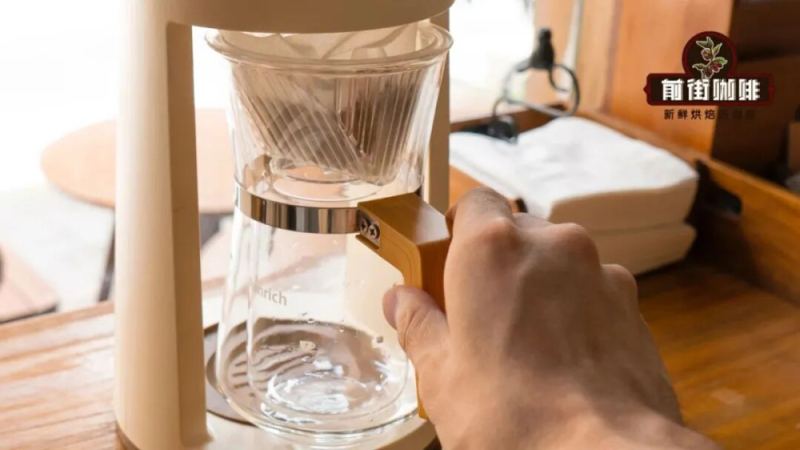
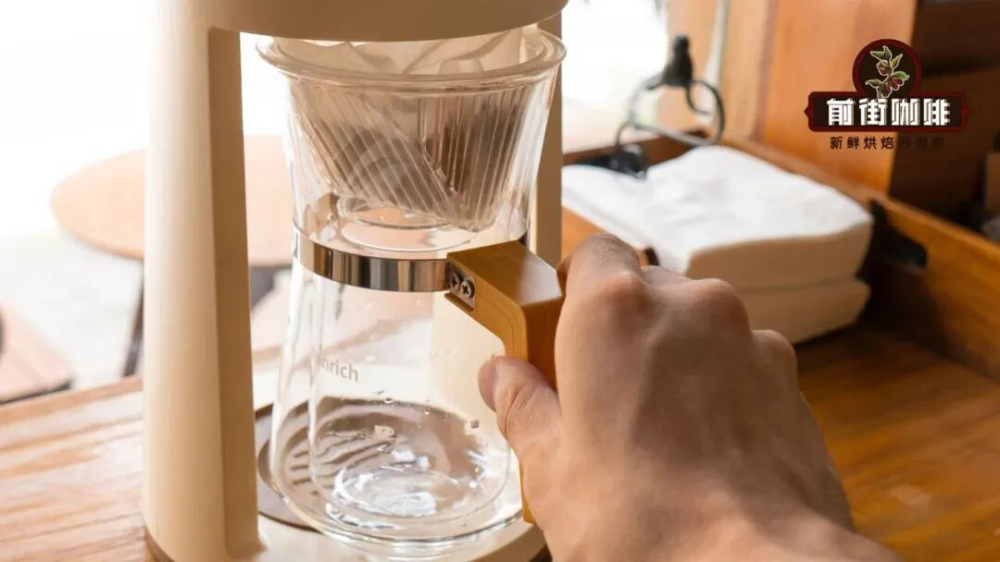
The structure of a drip coffee maker is divided into upper and lower parts: the upper part is a funnel-shaped filter, and the lower part holds the coffee pot, which has a filter screen inside. Extraction time varies depending on the model and amount of grounds. To operate, simply add coffee grounds and hot water (if the machine has a built-in grinder, just pour in coffee beans), and press the button to complete the brewing. In addition, drip coffee makers come in a rich variety of styles, from simple and compact to multi-functional models, so you can choose according to your needs. Those with large pot capacities can brew multiple cups at once.
In terms of price, an ordinary drip coffee maker can meet basic needs for two to three hundred to five hundred yuan, while a standard-equipped espresso machine is often several times more expensive, and high-end models can reach hundreds of thousands of yuan per unit. If your budget is within a thousand yuan, Front Street suggests prioritizing a drip coffee pot and focusing on machine functions and coffee bean selection. After all, an espresso machine you could buy for the same money is likely just a "toy machine," and the espresso it extracts can hardly meet acceptable standards.
"Pour-over when free, Americano when busy"—this is the coffee-drinking principle many office workers swear by. For them, achieving coffee freedom at home on workdays puts efficiency first. Although pour-over and drip Americano both belong to drip extraction, the pour-over process is ultimately much more cumbersome than making a pot of drip Americano. If you can, within ten minutes, use your favorite coffee beans and just two or three steps to get a cup of freshly brewed coffee with a similar flavor, that would naturally be the ideal state.
However, the shortcomings of drip coffee makers are equally obvious. First, limited by their single-function design, they are often called "idiot machines," with very little room for parameter adjustment. The output tends to be much the same, generally on the weak side, and the aroma layers are far inferior to pour-over; if you use pre-ground coffee, the taste takes another hit.
Second, compared with other single-serving brewing devices, some drip coffee makers have a fixed-size grounds basket, requiring you to fill and extract a full pot each time. For larger households this is certainly convenient, but for individual users with smaller needs, it may instead become a burden. Rather than buying a machine that will most likely sit idle and gather dust, it's more practical to choose drip bags or a capsule coffee machine.
The above content is compiled by CoffeeHunters, a coffee news website.


