







Why is washed coffee more acidic and how do you brew it sweeter?
Washed coffee reads as more acidic because the processing removes the fruit pulp and mucilage before drying, leaving a cleaner cup where bright, citric-style acidity stands out rather than being rounded off by fermented fruit sugars. Natural processing keeps that pulp on the coffee seed through drying, which adds sweetness and body that mask the sharper edges.
The Dutch introduced washed processing around 1740 in the West Indies, soaking peeled beans to strip the sticky pectin layer, which cut drying time and reduced mold and insect damage, and the 1844 pulping machine made it far more efficient. At Front Street, more than seventy percent of beans are washed or sun-dried. Four-pour brewing of a washed Alo lot brings out floral, tea-like sweetness.
Washed coffee is often labeled as "more acidic"—but which parts of the processing method are actually behind this? From the Dutch promoting washed techniques in the eighteenth century to nearly seventy percent of beans at Front Street stores today being sun-dried or washed, the choice of processing method profoundly shapes the flavor direction of coffee. This article will start from the historical evolution and processing steps, as well as differences in silver skin residue, and combine a comparison of Front Street Gudingding and Red Cherry to explain the specific differences between washed and sun-dried coffee in acidity, sweetness, and body. Finally, using Front Street Washed Alo as an example, it will fully demonstrate a four-pour brewing method to help you recreate a floral-and-fruity-tea-like clean sweetness at home.
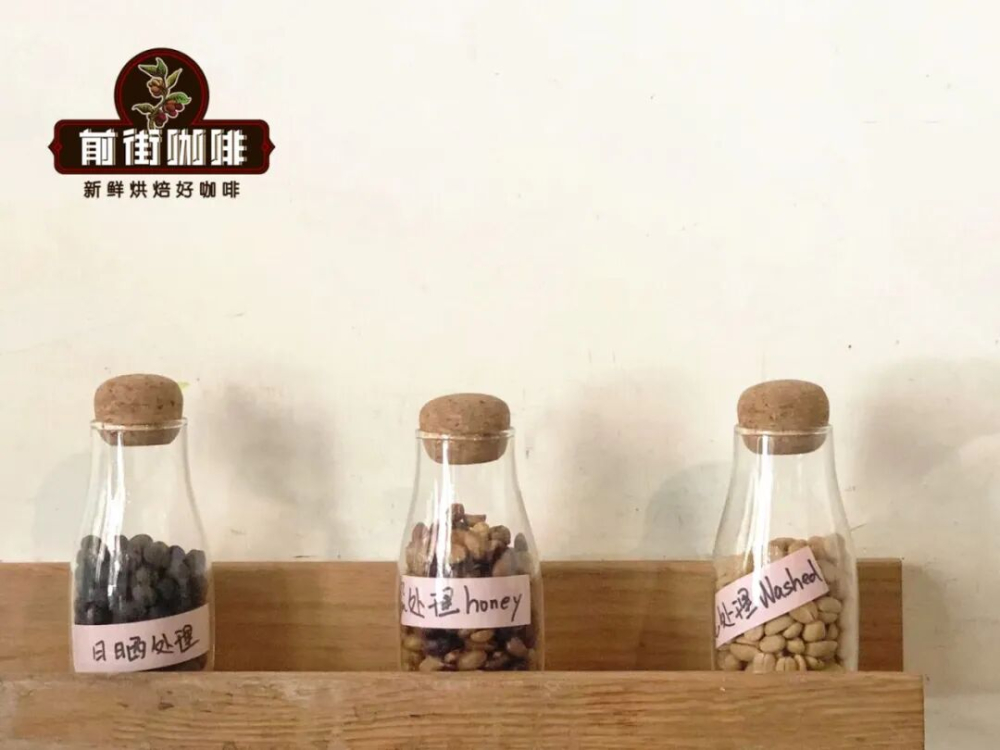
(sun-dried, honey-processed, washed)
At Front Street, more than seventy percent of coffee beans use sun-dried or washed processing, and washed beans often give people the impression of "higher acidity." What is the reason for this?
Historically, the most primitive method of processing green coffee was traditional sun-drying—spreading freshly picked coffee cherries directly in courtyards or on rooftops to dry, then hulling them after they were completely dry. This method adds almost no cost, and every household can do it. However, the drawbacks are also obvious: it depends entirely on the weather, and in regions with changeable climates it is very prone to mold and rot; in addition, the high sugar content of the fruit pulp easily attracts insects, making the quality of sun-dried beans difficult to stabilize.
In order to improve coffee quality, in 1740 the Dutch, who at the time dominated colonial coffee cultivation and the global coffee trade, were the first to adopt the washed processing method. Initially in the West Indies, people discovered that after peeling coffee beans and soaking them in water, the sticky pectin layer could be removed, which both shortened drying time and effectively prevented damage from pests, diseases, and mold infection. Compared with sun-drying, washed beans have a neat appearance and good visual appeal, so they were widely recognized. In that period, washed beans were synonymous with high quality.
After the coffee pulping machine was introduced in 1844, the efficiency of washed processing increased greatly, and product quality became more uniform. But washed processing is also costly and requires large amounts of water—on average, 200 kilograms of green coffee consumes 10 to 20 tons of water, so washed processing plants can only be built near water sources. It can be said that in the spread of washed processing, flavor and mouthfeel accounted for only a very small part of the reason; the main considerations were controlling the good-product rate, yield, and product standardization.
The first three steps of the washed method are the same as sun-drying (1. Harvest ripe coffee cherries. 2. Preliminarily remove impurities and defective beans. 3. Screen out floating beans).
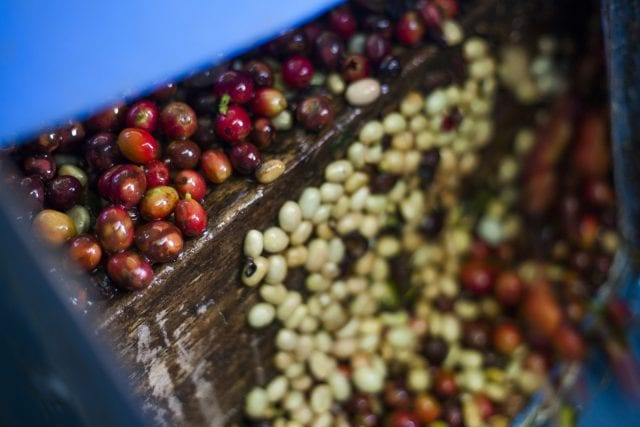
4. Remove the peel and pulp: Send the selected high-quality coffee cherries into a pulping machine to remove the outer skin and pulp, leaving the seeds (coffee beans).
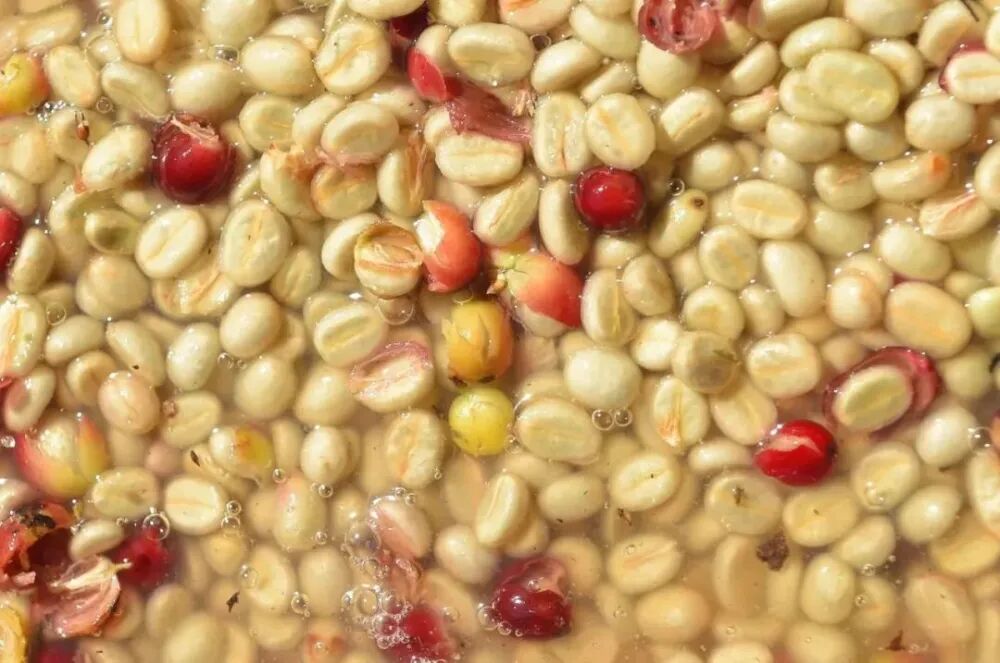
5. Ferment to remove pectin: Place the coffee seeds, which still have a layer of mucilage (pectin) attached, into fermentation tanks, and use the biological action of fermenting microorganisms to dissolve the pectin.
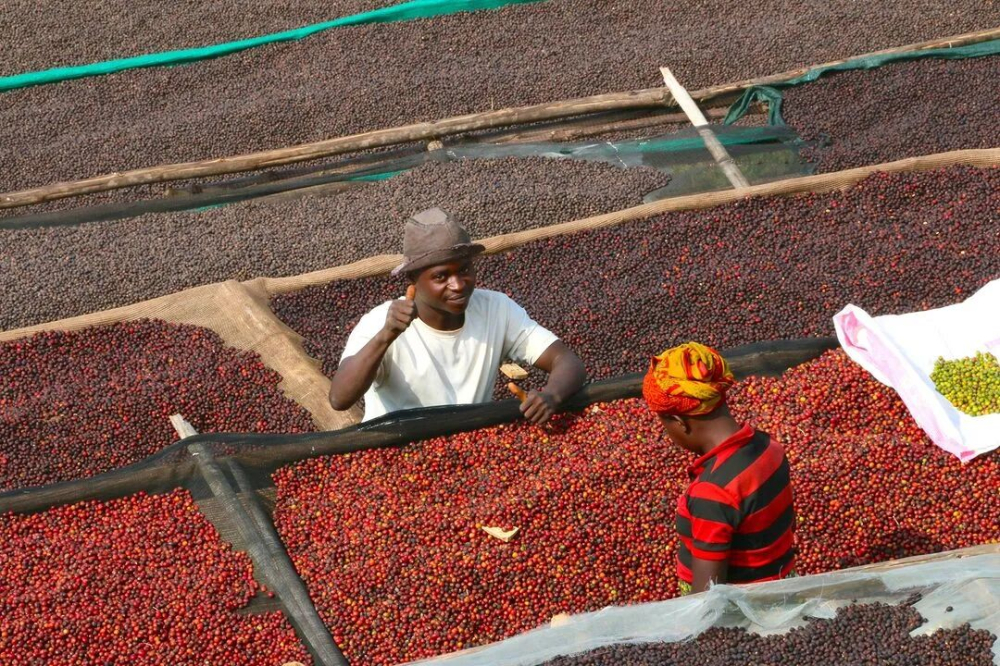
6. Wash with water to remove impurities: Fermenting microorganisms will remain on the coffee beans, so the beans need to be sent to washing tanks for cleaning, and a second screening is carried out (defective beans will float to the surface). To ensure thorough cleaning, this step consumes a large amount of clean water.
7. Dry the coffee beans: Usually spread them out in the sun to dry (or use a machine to dry them), reducing the moisture content to 10% to 14%.
8. Remove the parchment and silver skin: Finally, use a huller to remove the remaining parchment and silver skin. Processing is then complete, after which the green beans can be packaged and transported.
In Front Street's physical stores, we have specially set up display areas showing coffee beans with different processing methods and different roast levels for everyone to compare and reference. You will notice that after roasting, washed beans have a white line in the middle, while sun-dried beans do not; after grinding into powder, this white line breaks apart—it is the silver skin.
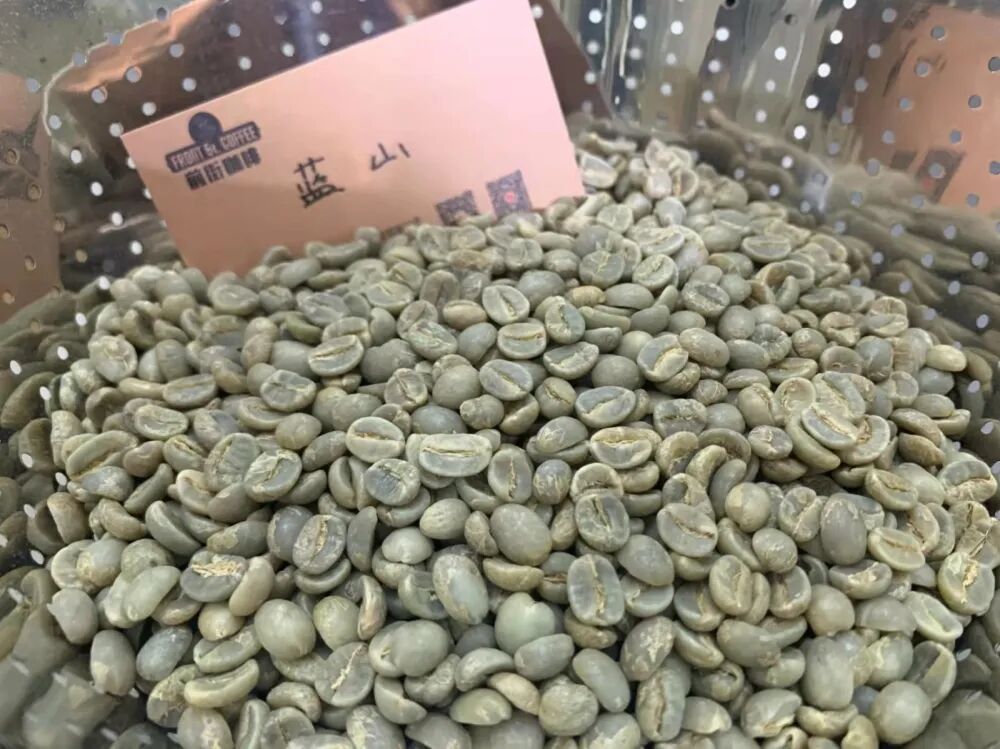
Front Street roasters point out that during roasting, the silver skin at the center line of the coffee bean is the most difficult to shed. Because sun-dried beans have an outer layer that remains connected as a whole, after roasting it can be peeled off quite cleanly, and no white fragments appear in the coffee grounds; washed beans are the opposite. Since there is no large piece of silver skin connecting them, the silver skin at the central crack is not easy to shed. This is the most direct basis for baristas to distinguish washed beans from sun-dried beans, and another method is tasting the flavor.
Also known for "citric acidity," Yirgacheffe's washed Front Street Gudingding and sun-dried Front Street Red Cherry present different flavor directions: Front Street Gudingding has fresh notes of jasmine, green mandarin, and green tea, with more acidity and less sweetness, low body, and a prominent tea-like feel; Front Street Red Cherry shows more complex aromas of berries, orange, and lightly fermented black tea, with balanced acidity and sweetness and a fuller mouthfeel.
Front Street believes that in the same producing region, the washed method forms the base flavor of a coffee bean and highlights the main theme more; sun-drying and honey processing add aroma and sweetness on top of this base, weakening the main flavor and making the whole cup more complex. Therefore, the taste of these two processing methods is easy to distinguish: washed is the taste of the bean itself, expressed as direct acidity and brightness, clean overall with no off-flavors, like drinking a cup of floral and fruity tea; sun-dried is the combined expression of the bean plus fruit peel and pulp, so it is easier to taste complex aromas of ripe fruit.
If you prefer washed coffee, you can choose Front Street Boquete Geisha, Front Street Butterfly, Front Street Walk Estate Geisha, Front Street Little Tomato, and Front Street Alo Washed and other light-to-medium roasted beans with obvious floral aromas. Below we will select one and show everyone how to extract it to better present floral-and-fruity-tea characteristics.
Coffee beans: Front Street Washed Alo Main Site
Coffee grounds: 15g
Coffee-to-water ratio: 1:16
Grind size: EK43s setting 10 (80% passing rate with China No. 20 sieve)
Water temperature: 90℃
Brewing method: four-pour
Grind 15g of Front Street Alo coffee beans into powder, pour into a pre-wetted filter paper, and gently tap level; for the first pour, as usual, use 30g of hot water to bloom for 30 seconds.
For the second pour, circle from the center outward and pour in 90g of hot water, using as strong a stream as possible to raise the liquid level to two-thirds of the dripper.
When the coffee liquid has fallen to the halfway point, at about 1 minute to 1 minute 05 seconds, begin pouring the third pour of 60g in small circles. When finished, the water should be level with the coffee bed wall. Continue waiting for the liquid level to drop.
When you again see the water level drop to half of the dripper, likewise keep pouring the final 60g in small circles around the center. After all the coffee liquid has dripped through, the total extraction time is 2 minutes 30 seconds.
Because washed beans with their own floral aroma mostly belong to light roasting and have a harder texture, Front Street increases the number of pours to improve extraction of light small-molecule substances, while appropriately lowering the water temperature to avoid over-extraction. The Front Street Alo brewed this way has a delicate fresh aroma like yellow lemon and mango, is juicy on the palate like pomelo tea, has almost no bitterness, and has just the right balance of acidity and sweetness.
The above content is compiled by CoffeeHunters, a coffee news website.


