







Which Brewing Settings Boost the Body of Dark Roast Black Coffee?
A thin dark roast usually points to a brewing problem rather than the beans. Body is the weight of the coffee liquid in the mouth and tracks directly with concentration, so a lower coffee-to-water ratio, a longer brew time, a dripper that slows flow and a gentler pouring technique all add weight. Dark-roasted beans have a looser texture and are easier to brew thick.
Roast level sets the starting point: darker roasts complete more caramelization and lose the fruit acidity and floral aromas that light roasts protect. Coffee bean roasters choose between light, medium and dark profiles on that basis. For anyone experimenting at home, coffee roasting tips for left handed people are not the variable that matters; ratio, time, dripper and pour are.
Many coffee enthusiasts often encounter the problem of a thin mouthfeel and lack of richness when brewing dark-roasted beans. Body refers to the weight of the coffee liquid in the mouth, and it is closely related to concentration. Dark-roasted beans, because of their loose texture, are actually easier to brew into a thick mouthfeel. This article will systematically explain how to adjust parameters to improve the body of dark-roasted coffee from four dimensions: coffee-to-water ratio, brewing time, dripper choice, and pouring technique. It also uses examples such as Front Street Coffee Brazil Queen Estate coffee beans to help you identify the problem and brew a full, round dark-roast flavor.
In yesterday’s article about flavor descriptions, the section on “body” sparked quite a bit of discussion among coffee friends. Some friends left messages in the backend saying that the dark-roasted coffee they brewed tasted a bit thin, and they wanted to know if there was a way to increase the body further.
First, let’s explain again: body refers to the sense of weight that the coffee liquid presents in the mouth—whether it feels light and airy or heavy and substantial. This is directly related to the concentration of the coffee liquid. Low concentration makes it seem thin, while high concentration makes it fuller. And because dark-roasted beans have a looser texture, they are actually easier to brew into a rich mouthfeel.
So, if you usually brew dark-roasted beans and always find them a bit thin, it may be worth looking back at the various brewing data to find the problem and then adjust.
In the past, to highlight a rich, substantial coffee mouthfeel, roasters usually chose dark roasting, which could also avoid defective flavors in the beans. Later, as the concept of specialty coffee emerged, people began to value the flavor characteristics of the origin itself and pursued clean coffee with prominent acidity and sweetness, so light roasting gradually became popular. The darker the roast level, the more complete the caramelization reaction; if you want to retain more fruit acidity and floral aroma, you would use a lighter roast.
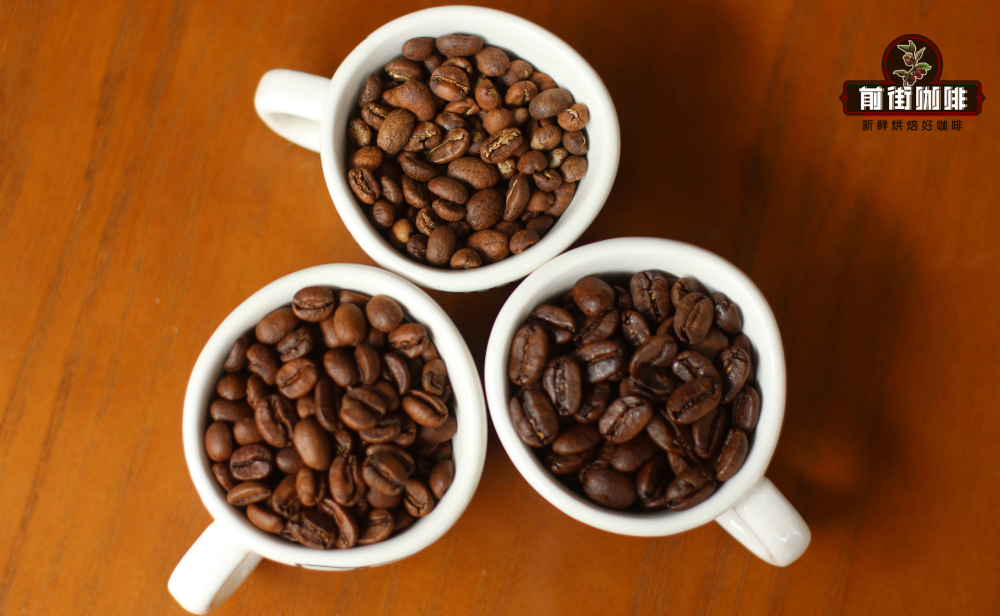
The common coffee bean roast levels on the market can roughly be divided into three categories: light roast, medium roast, and dark roast.
Light roast: rich fruit notes, with sweet-and-sour floral and fruity aromas, and relatively prominent acidity. For example, Front Street Coffee Washed Yirgacheffe Gedeb Cooperative coffee beans.
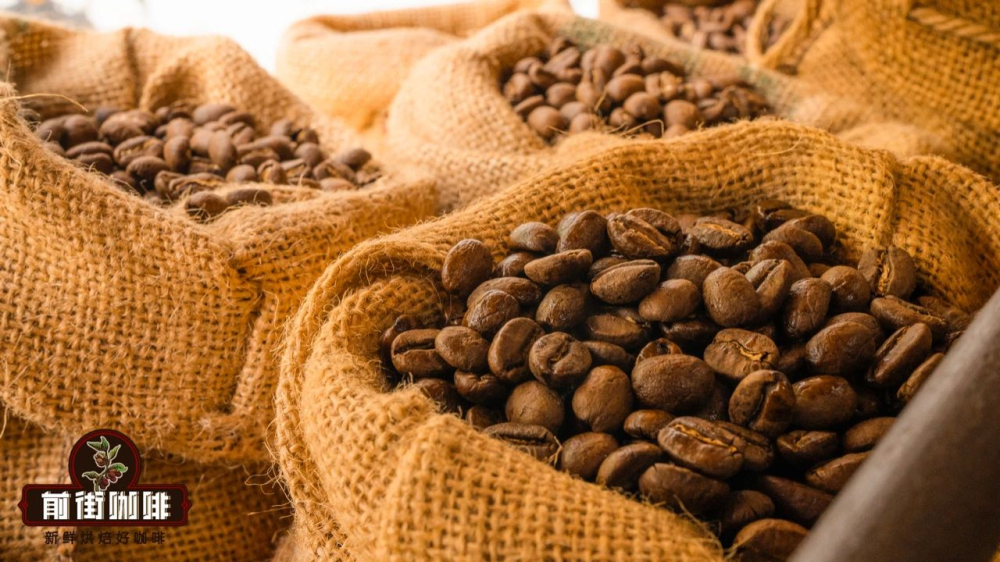
Medium roast: mainly nutty notes, primarily caramel, cocoa, and malt aromas. For example, Front Street Coffee Brazil Queen Estate coffee beans.
Dark roast: with a slight chocolate bitterness, lower acidity, rich caramel aroma, and spicy, woody, and charcoal notes. For example, Front Street Coffee PWN Golden Mandheling coffee beans.
1. Coffee-to-water ratio
When Front Street brews dark-roasted coffee, it controls the coffee-to-water ratio between 1:14 and 1:15. If the water amount exceeds 1:15, the concentration will be diluted, and the mouthfeel will easily become thin. Therefore, controlling the final ratio at 1:15 is relatively suitable.
However, everyone perceives mouthfeel, taste, and concentration differently. If you think this ratio is still too light and the mouthfeel is not thick enough, you can reduce the water amount further and use 1:13 to 1:14, which is also fine. Of course, it is also possible that the problem lies in timing control.
2. Brewing time
If you have already adjusted the ratio several times and the dark-roasted coffee still comes out thin, then it is most likely under-extraction. At this point, you can pay attention to the brewing time: if you use more than 15 grams of beans but the brewing time is only about 1 minute 30 seconds, it is very likely that the grind is too coarse, causing the water to flow too quickly.
Then, adjust the grind finer so that the brewing time falls between 2:00 and 2:30, and the coffee will be extracted more fully, and the mouthfeel will naturally be fuller.
3. Dripper choice
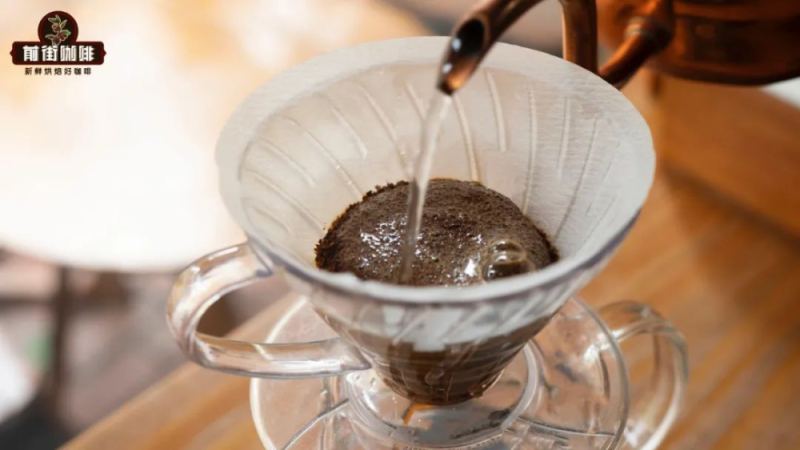
When Front Street brews dark-roasted beans, it does not use the common V60 dripper, but the Kono dripper. The V60’s spiral rib design makes the flow rate relatively fast, making it more suitable for medium-light roasted coffee. Because medium-light roasts require a finer grind to show more layered flavors, if the dripper extracts too slowly, it is instead easy to over-extract. Therefore, the fast-flowing V60 is more suitable for medium-light roasted beans.
Dark-roasted coffee beans have a loose texture and high extraction efficiency (aromatic substances are easily brought out), so a coarser grind than for medium-light roasts should be used to reduce extraction efficiency and prevent over-extraction. At this time, if you still use the fast-flowing V60 dripper, it is very easy to cause under-extraction.
The Kono dripper’s ribs are distributed only in the lower half. This design is intended to slow the flow rate and extend the time for the coffee grounds to soak and extract. So when Front Street brews dark-roasted beans, it chooses the Kono dripper to make the extraction more complete and the mouthfeel thicker.
4. Pouring technique
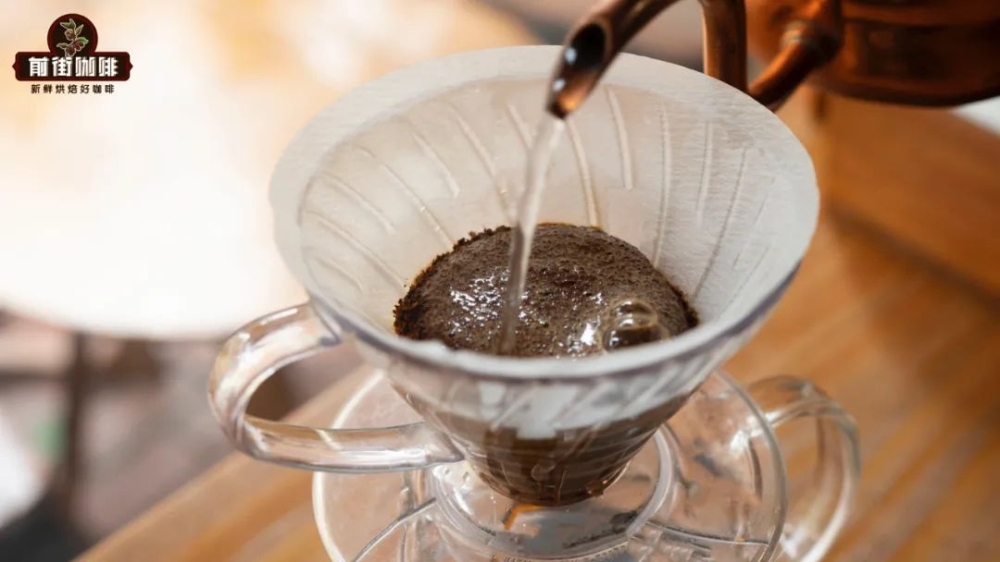
The pouring technique here is not about whether to use a three-pour method or a single-pour method, but rather to be careful not to let the water flow wash against the wall of the dripper. What problem would it cause if the water stream hits the wall of the dripper?
Exactly! The water will flow directly down along the wall of the dripper, and what lands in the server is not extracted coffee liquid, but ordinary hot water. This not only reduces extraction, but also dilutes the coffee liquid already in the server, so the mouthfeel naturally becomes thin. Therefore, when pouring in circles, try to avoid washing against the wall of the dripper multiple times, so that you can ensure a satisfactory final mouthfeel.
The above content is compiled by CoffeeHunters, a coffee news website.


