







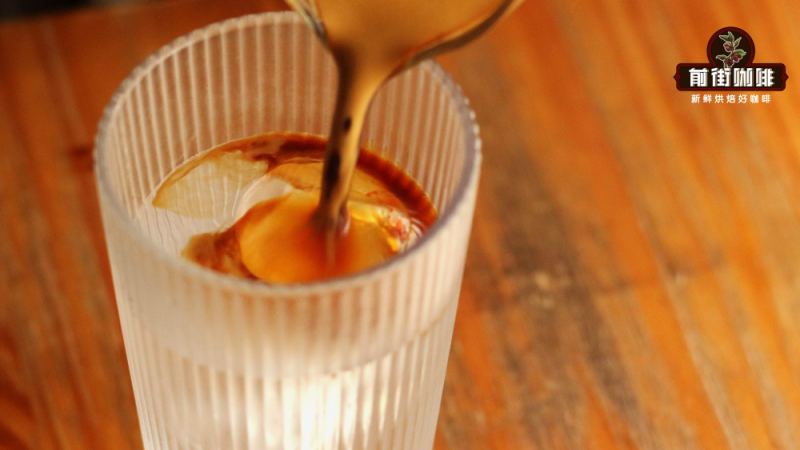
How do you make americano at the right strength?
An Americano is espresso diluted with water, and the water-to-coffee ratio decides whether the cup tastes heavy or light. Testing compared three ratios, 1:4.5, 1:6, and 1:8; the 1:4.5 ratio was chosen for hot Americano because it keeps the espresso's flavor intact without turning thin or harsh.
Iced Americano follows different logic. Because melting ice keeps adding water, the drink needs less water up front and large ice cubes that melt slowly, so the coffee stays cold without turning watery. Bean choice also matters, since the espresso's extraction yield sets the ceiling on how the final cup tastes.
Americano is one of the most common items on coffee shop menus, yet the flavor varies greatly from place to place. Some people prefer it rich and heavy, while others like it light and easy to drink. Behind this lies a close relationship with the espresso extraction yield, the water-to-coffee ratio, and the amount of ice used. This article starts with the historical origins of Americano, sorts out the differences in approach between hot Americano and iced Americano, and through Front Street's actual testing, compares the concentration and sensory performance corresponding to three water ratios—1:4.5, 1:6, and 1:8. It explains why Front Street ultimately chose 1:4.5 as the serving ratio for hot Americano, and why iced Americano requires less water and the use of large ice cubes. It also explains the influence of coffee bean selection on the final flavor, helping coffee lovers understand the logic of ratios and find an Americano method that suits their own taste.
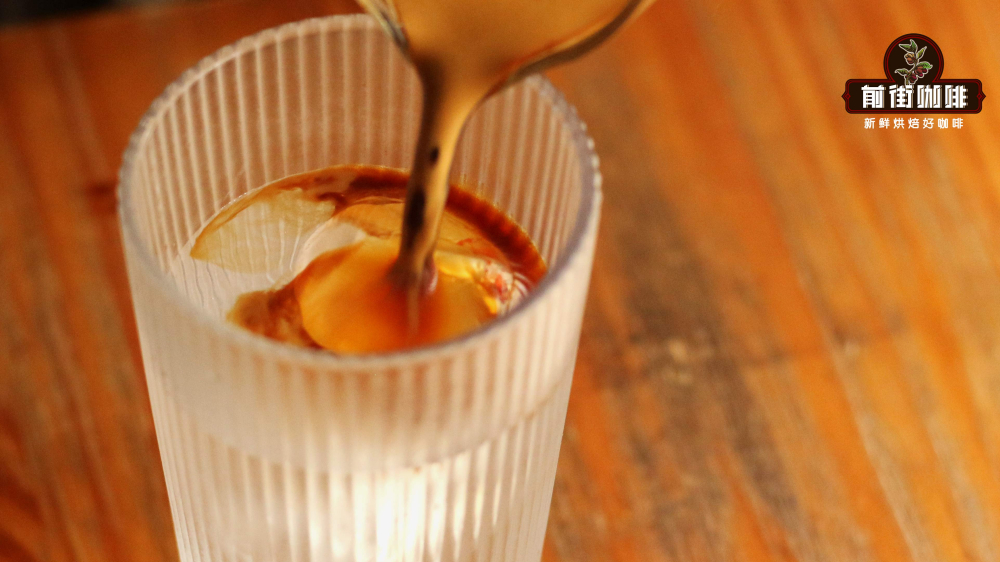
Guests often ask Front Street: "How do you make your iced Americano? Why is it so delicious?" Americano is almost a signature product in every coffee shop, but the taste varies considerably from store to store. So Front Street decided to share its own method for making Americano.
The Origin of Americano
Americano originally referred to the drip black coffee that Americans were accustomed to drinking. This coffee has a lighter taste, not as strong and intense as what Europeans drink. When espresso spread across the globe, in order to cater to American taste preferences, it was adjusted using espresso as the base—simply put, diluting espresso with water to the concentration Americans were used to. This is the Americano within the espresso system, and it is also the approach most coffee shops use today to make Americano.
How to Make Iced Americano
Hot Americano is made by diluting espresso with an appropriate amount of water, while iced Americano adds ice cubes on top of that. Adding water and adding ice are essentially both ways of adjusting the concentration of the coffee. Although the extraction yield and concentration of Americano are close to those of pour-over coffee, the production logic is different—pour-over requires balancing both extraction yield and concentration at the same time, while Americano handles these two things separately. Therefore, the key to making a delicious iced Americano lies in the ratio of coffee liquid to ice water.
In the extraction stage, you only need to control the extraction yield of the espresso itself. Usually, espresso is extracted at a 1:2 ratio, giving a coffee liquid with an extraction yield of about 19-20% and a concentration of 9-10%. At this point the extraction yield is already determined, and the next step is to dilute the concentration by adding water. As for exactly how much water to add and what concentration to dilute to, there is no absolute uniform standard.
Front Street conducted a set of tests, measuring concentration and tasting flavor by adding different proportions of water. The espresso liquid used Front Street's own roasted Front Street Sunflower Warm Sun Espresso Blend coffee beans. Using Front Street's extraction method, espresso with an extraction yield of 19-20% and a concentration of 9-10% was obtained. It should be noted that different coffee beans and different extraction yields will bring different results, so the following discussion is all based on this foundation.
In the first group, Front Street added 180ml of water, i.e., a 1:4.5 ratio. This is Front Street's serving ratio for hot Americano, and the measured concentration was 1.67%, which by Golden Cup standards is on the high side.
In the second group, Front Street added 240ml of water, i.e., a 1:6 ratio. According to Front Street's understanding, this is one of the mainstream Americano ratios currently, and the measured concentration was 1.34%, falling within the Golden Cup standard range.
In the third group, Front Street added 320ml of water, i.e., a 1:8 ratio, and the measured concentration was 1.05%, which is relatively low.
From the data, 1:6 is a fairly scientific ratio for Americano. But Front Street ultimately chose 1:4.5, because we are drinking coffee, and actual sensory feedback is equally important. After repeated comparisons, Front Street found that this Front Street Sunflower Warm Sun Espresso Blend coffee bean performs best at a 1:4.5 ratio, with the flavors of wine, vanilla cream, chocolate, and brown sugar showing best. Although the measured concentration is on the high side, when drinking it you do not feel it is too intense or jarring.
The 1:6 ratio is more suitable for the currently common nutty-chocolate-toned espresso coffee beans. These beans are mainly bitter-toned, and controlling the concentration within a range that the general public easily accepts means it does not taste too strong or too weak, with enough coffee flavor and overall balance—a relatively mainstream Americano.
The 1:8 ratio is suitable for traditional espresso coffee beans with a very dark roast level. The espresso extracted from these beans is rich and bitter, requiring more water. In fact, 1:8 was also a commonly used ratio for early Americano. Later, as people began to pay attention to flavor expression, bean quality continuously improved, and espresso extraction parameters changed accordingly. After a series of changes, this ratio became increasingly rare (some chain brands may still use it).
There is one difference between making iced Americano and hot Americano: ice cubes will melt into water over time, making the coffee weaker. Therefore, Front Street's approach to iced Americano is to ensure both flavor and a longer period of low temperature. So Front Street uses larger hard ice cubes to slow down the melting speed. In terms of the water ratio, less is added than when making hot Americano, so that after the ice melts slightly, the concentration just drops to the right level.
In terms of specific amounts, taking the espresso made by Front Street using Front Street Sunflower Warm Sun Espresso Blend coffee beans as an example, 40g of espresso plus 120ml of water and 100g (4 pieces) of large ice cubes gives a coffee-to-water-to-ice ratio of 1:3:2.5. According to Front Street's observation, many guests still have about 2 ice cubes left in the cup when they finish drinking. Of course, this ratio is not fixed and unchanging. Everyone can, based on the flavor characteristics of the coffee beans they use, understand Front Street's approach and arrive at a ratio they like.
Finally, many friends say Front Street's iced Americano is delicious. Besides the appropriate ratio of water to coffee, the choice of espresso coffee beans is also crucial, as different coffee beans present different flavors.
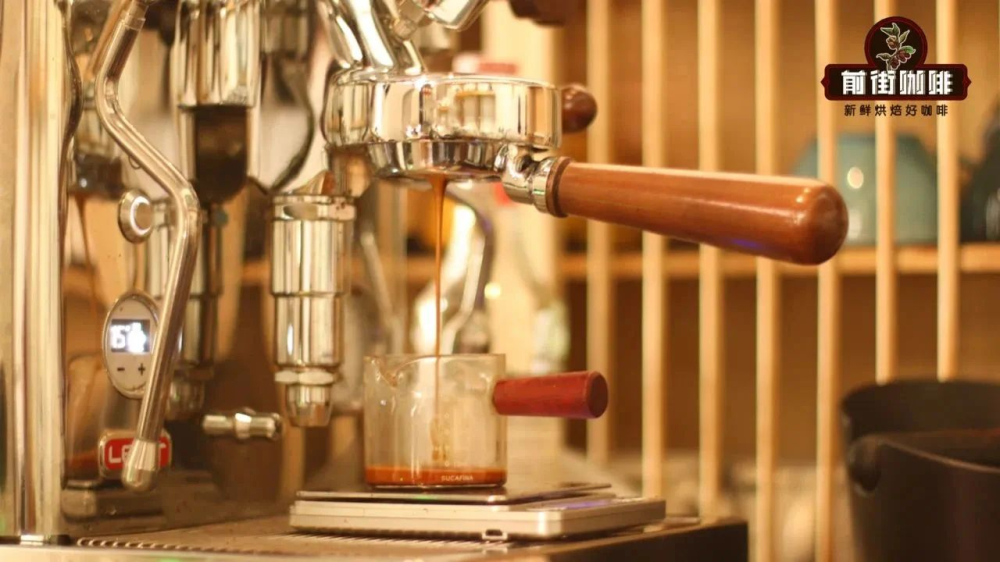
For example, Front Street stores currently use Front Street's own blend, Front Street Sunflower Warm Sun Espresso Blend coffee beans, composed of 70% Front Street Honduras Sherry coffee beans and 30% Front Street Yirgacheffe Natural Red Cherry coffee beans. Among them, the Front Street Honduras Sherry coffee beans bring rich vanilla cream and sherry flavors, while the Front Street Yirgacheffe Natural Red Cherry coffee beans provide intense brown sugar sweetness and chocolate charm, making the extracted espresso uniquely flavored and very appealing.
The above content is compiled by CoffeeHunters, a coffee news website.


