







Is Americano Bitter or Sweet? Four Iced Coffees Compared
Iced Americano, iced pour-over, cold brew, and ice drip differ mainly in how they are extracted. Iced Americano and iced pour-over are brewed hot and then chilled with ice, while cold brew and ice drip use cold water from start to finish. Each method changes preparation time, equipment needs, and flavor, and many drinkers also ask whether is americano bitter or sweet.
For iced Americano, 20 grams of grounds extract 40 grams of espresso in 25 to 33 seconds at a 1:2 ratio, then the shot is poured over 90 grams of ice and 180 grams of water in a 300 ml glass. Iced pour-over uses a stronger hot brew diluted over ice afterward. Cold brew and ice drip take hours at low temperature, giving sweeter, less acidic cups with lower bitterness.
On a scorching summer day, a glass of iced coffee always brings coolness and refreshment. There are four common types of iced coffee: iced Americano, iced pour-over, cold brew, and iced drip. Each has its own characteristics in terms of extraction method, preparation time, difficulty of operation, and flavor profile, making them suitable for people with different taste preferences. Some prefer the crisp directness of iced Americano, some are fond of the sweet balance of cold brew, and others are captivated by the fermented, wine-like aroma of iced drip. At the same time, many friends wonder which one is more beneficial for fat loss. This article, drawing on the practical experience of Front Street Coffee, will break down the key preparation points and flavor differences of these four iced coffees one by one, helping you find the cup that suits you best.
For more specialty coffee knowledge, please follow our WeChat official account: FrontStreet Coffee
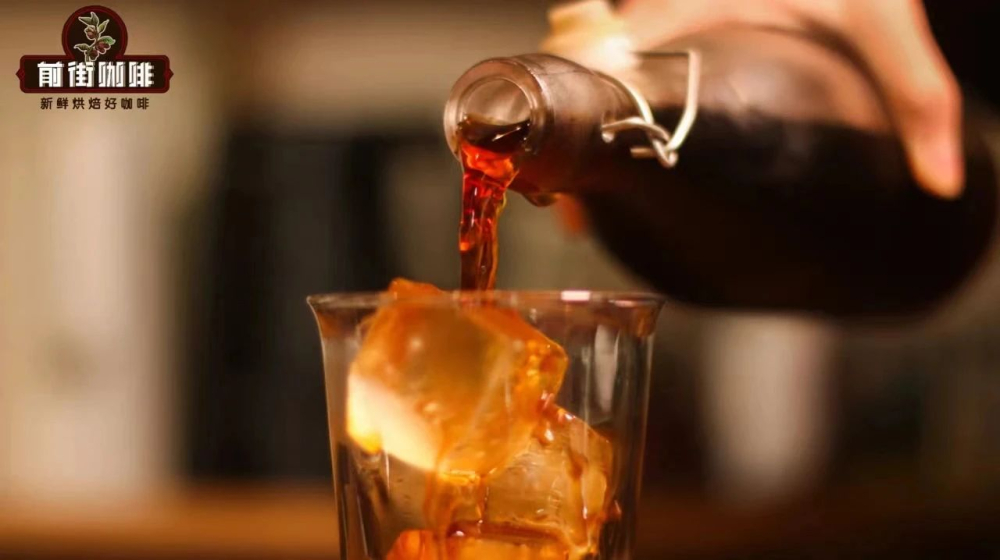
The iced coffees we encounter most in daily life fall mainly into four categories: iced Americano, iced pour-over, cold brew, and iced drip. Some beginners may not yet be familiar with these methods, so below Front Street will explain their respective features and differences from multiple dimensions, one by one.
Extraction Method
Let's look at the extraction path first. Both iced Americano and iced pour-over belong to the "hot first, then cold" category — hot water is used to extract the coffee liquid first, then ice is used to cool it down rapidly. Cold brew and iced drip, on the other hand, are "low temperature throughout" — only cold water is used for extraction from start to finish.
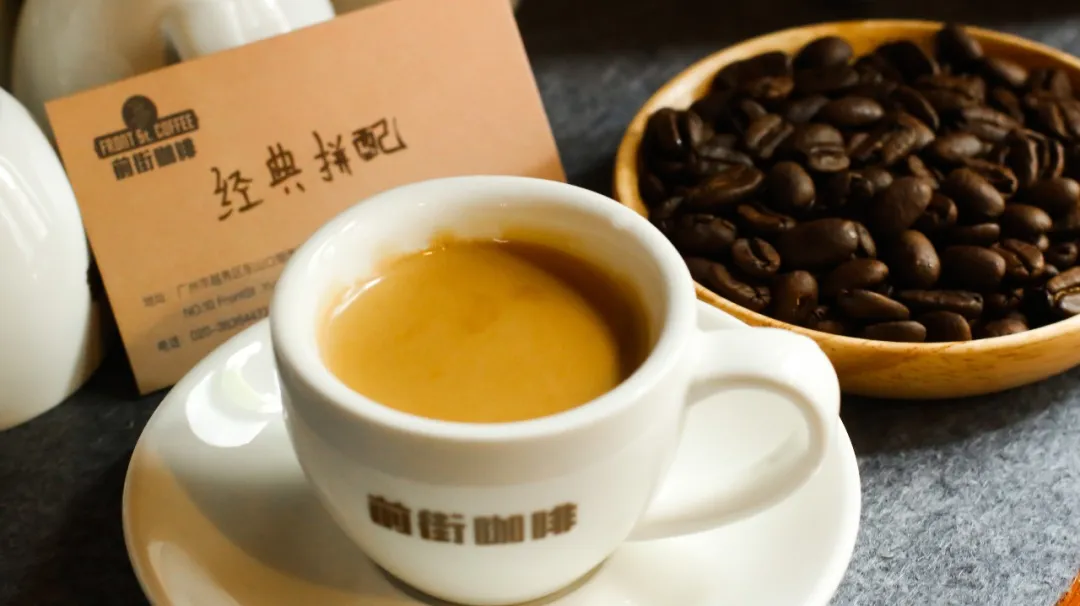
The method for iced Americano is: pull espresso from an espresso machine, then add ice water to cool and dilute the coffee. When making Americano, we recommend using Front Street's espresso series coffee beans, which are all medium-dark roasted with a balanced, rich, and full-bodied flavor. Specifically, these include the butter-toned Front Street Classic Blend, the nut-toned Front Street Specialty Blend, the caramel-toned Front Street Commercial Blend, and the chocolate-toned Front Street Black Cocoa.
The specific steps for iced Americano: weigh 20 grams of Front Street Classic Blend coffee grounds, extract 40 grams of espresso at a 1:2 coffee-to-water ratio within 25–33 seconds; take a 300 ml glass, add 90 grams of ice and 180 grams of drinking water, then pour in the espresso and stir well before drinking.
The iced Americano made with Front Street Classic Blend has a pronounced layering from the first sip, with a faint aroma of roasted chestnut and nuts interwoven with creamy smoothness — icy yet full-bodied, exceptionally refreshing to drink in summer.
Iced pour-over, on the other hand, involves first brewing a cup of hot coffee at a slightly higher concentration than usual using the pour-over method, then cooling and diluting it with ice. This method is suitable for almost all single-origin beans. Beginners can choose fruit-tea-toned Front Street Butterfly, the fermentation-forward Front Street Mozart, or the fresh and tangy Front Street Flower Queen and other medium-light roasted beans to make iced pour-over. These beans have high flavor distinctiveness and greater tolerance for error during extraction.
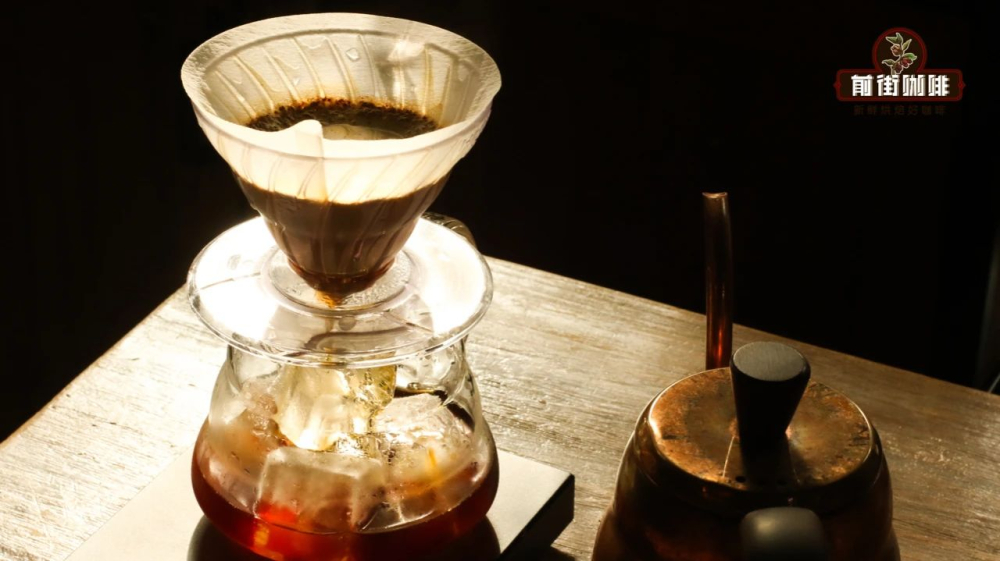
Here are the detailed steps. Front Street will use the medium-light roasted Front Street Fruit Ding Ding as an example, adopting iced pour-over parameters of high concentration and high extraction rate:
Dose: 15 grams 10x hot water: 150 grams 5x ice: 75 grams Water temperature: 92°C Grind size: 83% passing through a No. 20 sieve (EK43s setting 9, C40 setting 22) Dripper: Hario V60 Technique: three-pour method
Step one: place 75 grams of ice into the carafe, then pour 15 grams of coffee grounds into the dripper and gently level them. For the first pour, use a thin stream of about 3 ml per second, spiraling from the center outward in small circles to pour 30 grams of hot water, and let it bloom for 30 seconds. After 30 seconds, using the same technique, pour the second round of 60 grams of water, being careful not to let the water level rise too high, as this can easily lead to under-extraction. When the coffee liquid is nearly drained, pour in the remaining 60 grams of hot water at a flow rate of 3 ml per second, ensuring the total extraction time is controlled between 1 minute 50 seconds and 2 minutes.
Cold brew coffee is made by soaking coffee grounds in cold water, usually for a longer period, then filtering out the grounds before drinking. The specific steps are as follows.
Taking Front Street Strawberry Candy cold brew as an example, use a 1-liter cold brew pitcher, weigh 60 grams of Strawberry Candy coffee beans, and grind to a fine sugar consistency (80% passing through a Chinese No. 20 standard sieve); see the image below for the specific particle size. Pour the ground coffee into the pitcher, add 600 grams of drinking water at a 1:10 coffee-to-water ratio, stir well with a long spoon, seal, and refrigerate for 8–12 hours. After soaking, remove the cold brew pitcher, stir thoroughly again with a spoon, then pour into a filter paper to remove the grounds. Once all the coffee liquid has been filtered, the cold brew is ready.
Iced drip coffee, on the other hand, involves ice water dripping drop by drop onto the coffee grounds to complete extraction, which also takes quite a while.
After the iced drip coffee has finished dripping, it cannot be drunk immediately — it still needs to be refrigerated for several hours to ferment. Through fermentation, iced drip can develop a richer aroma and a more outstanding taste, making it particularly suitable for showcasing beans with fermented notes and fruity wine aromas. For home preparation, you can prioritize Front Street Strawberry Candy, Front Street Blackberry, and Front Street Sidra. This is also why iced drip coffee often needs to be prepared 1–2 days in advance.
The specific preparation method is as follows:
The flow rate calculation for iced drip differs from pour-over — it is measured by drops per second. The slower the flow rate, the longer the total time, and the more prone to over-extraction. Front Street typically uses a flow rate of 7 drops per 10 seconds for extraction; the specific speed can be adjusted to personal preference. The coffee-to-water ratio is 1:10. Since Front Street's iced drip is diluted with ice before drinking, the extraction concentration is on the higher side. If making it at home, you can use a ratio of 1:12 to 1:14. When Front Street makes iced drip, we take 60 grams of coffee beans and grind them, place a circular filter paper at the bottom of the coffee chamber, pour in the coffee grounds, then lay another filter paper on the surface, and moisten the coffee grounds with water. This shortens the dripping time and prevents uneven extraction. Fill the upper chamber with a mixture of ice and water (1:1 ice to water), and ultimately extract 600 grams of coffee liquid.
Preparation Time
In terms of time required, both iced Americano and iced pour-over are very quick — they can be completed within minutes. Cold brew and iced drip take noticeably longer: cold brew generally needs about 12 hours, and iced drip also needs 6–8 hours.
Ease of Preparation
If making it at home, iced pour-over and cold brew are relatively more convenient. Cold brew has low equipment requirements — a sealed bottle will do. Iced pour-over equipment is also quite accessible, and households that regularly brew coffee usually already have pour-over gear on hand.
By contrast, iced Americano requires an espresso machine, and iced drip requires specialized iced drip equipment, so the investment cost is somewhat higher.
Flavor and Taste Differences
Front Street should first clarify one point here: whether coffee is sour or bitter, floral and fruity or nutty and chocolatey, depends mainly on the flavor of the coffee beans used — the extraction method doesn't have that much influence. Different iced coffee methods will present different styles of flavor expression, but these differences are relative. Regardless of the method, the resulting taste cannot depart from the basic character of the coffee beans themselves.
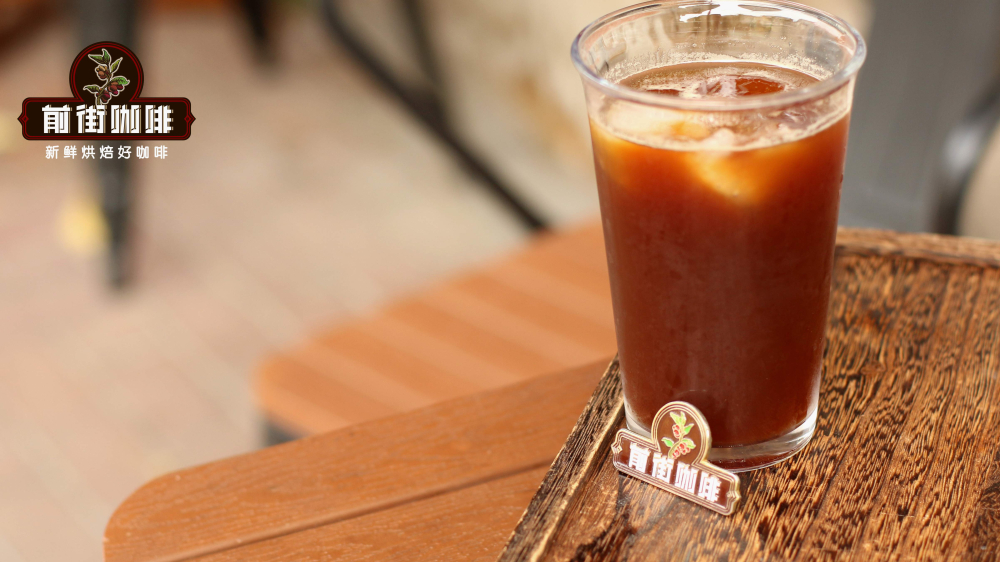
The flavor characteristics of iced Americano are typically on the lighter side, with a crisp mouthfeel; it often showcases the most basic flavors of the coffee beans, and the liquid appears relatively cloudy.
Iced pour-over is characterized by cleanliness and crispness, easily highlighting the main flavors of the coffee beans, with a transparent and bright liquid.
Cold brew is characterized by lower bitterness, balanced flavor, and prominent sweetness, with a fuller body than iced pour-over, and the liquid's clarity is slightly lower than that of iced pour-over.
Iced drip is characterized by rich fermented flavors, such as wine aroma. With the same beans, iced drip will have higher bitterness than the other three iced coffees, and its mouthfeel is also superior to the other three.
The above content is compiled by CoffeeHunters, a coffee news website.


