







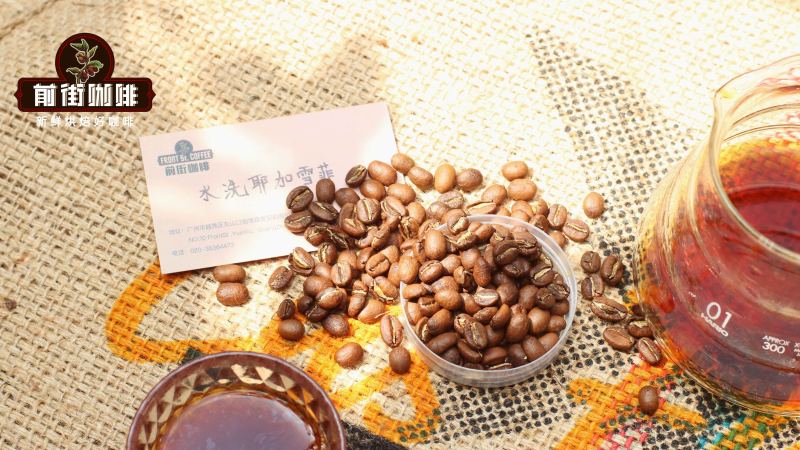
How does ECX grading shape an arabica coffee bean from Yirgacheffe?
Yirgacheffe, one of Ethiopia's signature regions, is graded through the Ethiopia Commodity Exchange (ECX), which since 2008 has required private exporters to trade coffee on its centralized auction platform. Beans are collected and graded at regional warehouses, separated by processing method, and scored from G1 down to G9, with washed and natural coffees following different criteria.
ECX lots are divided by region rather than by individual processing station, so traceability is limited and bags may mix stations. An arabica coffee bean from Yirgacheffe still carries the region's citrus and floral character, and its light body and clean acidity suit cold brew and iced coffee, where low-temperature extraction keeps those notes intact.
Yirgacheffe, as Ethiopia's most representative specialty coffee region, is beloved by coffee enthusiasts for its distinctive floral and citrus notes. But do you know how the Ethiopia Commodity Exchange (ECX) grading system operates? What scoring criteria do washed and natural processing each follow? And what are the differences between the Speciality, Commercial, and Local categories? This article will start with the ECX rating mechanism, break down in detail the evaluation logic from G1 to G9, and explore whether Front Street Coffee's Yirgacheffe series beans are suitable for making cold brew or iced coffee, providing a reference for your brewing choices.
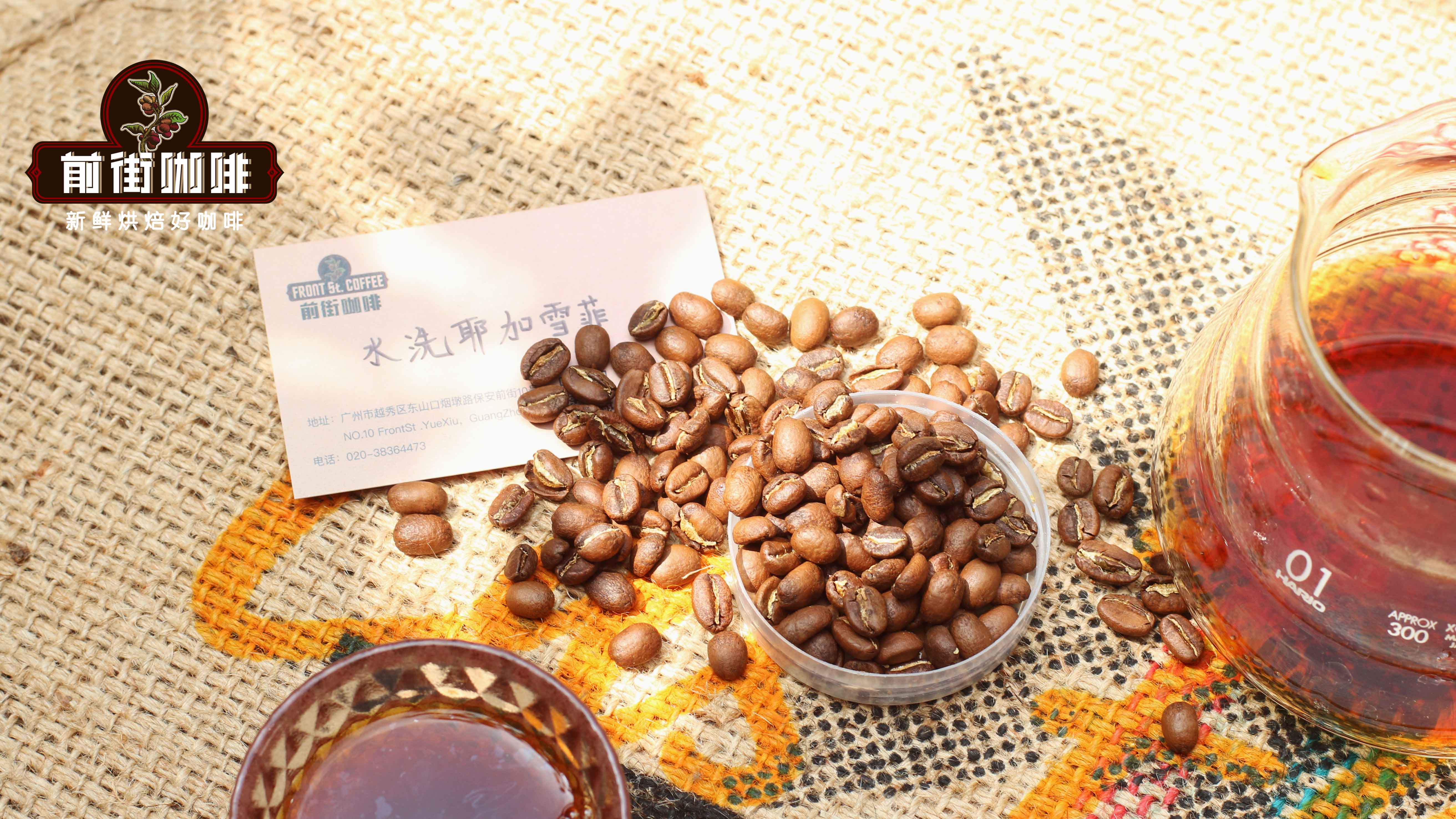
A Brief Introduction to the Grading of Front Street Coffee Ethiopian Yirgacheffe
The Ethiopia Commodity Exchange (ECX) serves as an agricultural commodity trading market, providing a centralized trading platform for buyers and sellers while ensuring the smooth progress of quality, delivery, and payment. ECX's vision is to become the preferred global commodity market, thereby driving the transformation of Ethiopia's economy. Its mission relies on innovation and technology, connecting all buyers and sellers into an efficient, reliable, and transparent market built on a commitment to continuous learning, fairness, and excellence.
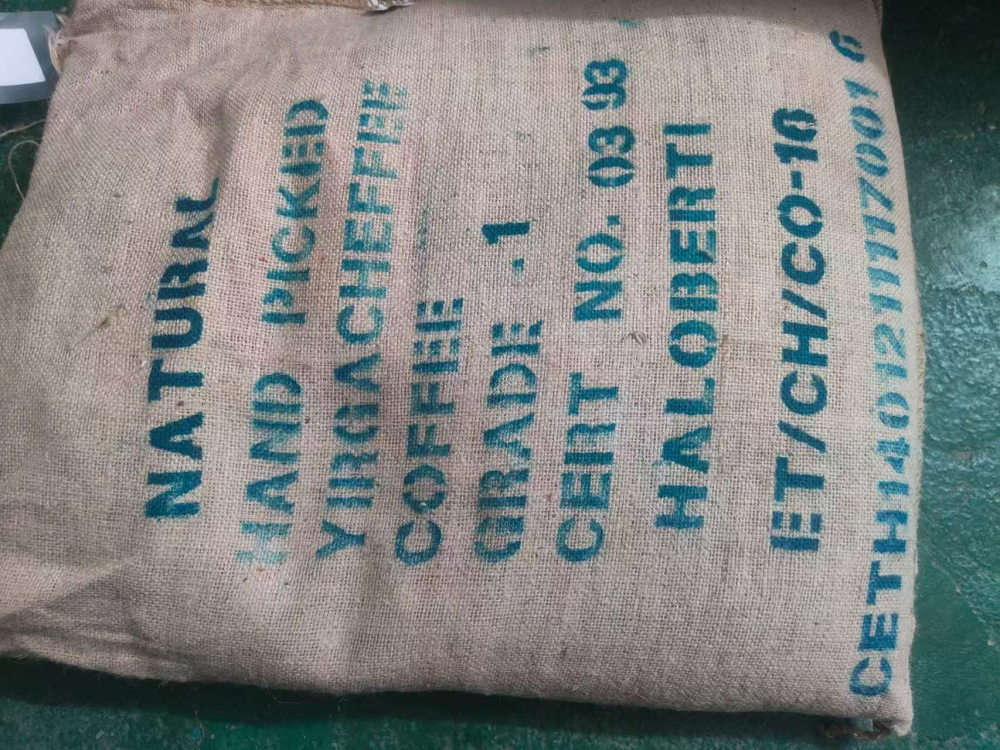
ECX has established multiple regional warehouses across Ethiopia, responsible for the collection, grading, and storage of crops, which then enter a unified trading auction platform for buying and selling by ECX-registered members. The buyers participating in trading are actually private exporters. Since 2008, the Ethiopian government has required all private exporters to conduct coffee bean transactions through ECX. The problem with this system is that it cannot meet current buyers' demands for coffee traceability—coffee traded through ECX is divided only by region, and it cannot tell you which specific processing station it comes from, or it may come from multiple different processing stations, mixed and packed into jute bags, and auctioned in large lots. But after the strict screening of Speciality G1 described below, would you still question its quality?
Ethiopia's past grading method was relatively simple, determining grades solely by defect count. The highest grade for washed beans was Grade 1 - G1, and the highest grade for natural beans was Grade 3 - G3. The current grading method, formulated by ECX, combines physical attribute characteristics with cup profile characteristics for scoring to determine the grade.
All coffee is defined into three types according to processing method—natural or washed:
a. Speciality (washed & unwashed): low defect count, high cup quality;
b. Commercial (washed & unwashed): does not reach specialty grade, but higher than domestic consumption grade;
c. Local / Domestic (washed & unwashed): coffee with many defects (unripe beans), and relatively poor flavor caused by being out of season or poorly stored.
Among these, Specialty and Commercial are intended for the export international market, while Local is sold to the domestic market.
The specific ECX grading and scoring standards are as follows:
A. Scoring definitions for washed processing
1. Physical characteristics account for 40%: defect count (20%), appearance and size (10%), color (5%), odor (5%)
2. Cup quality accounts for 60%: cleanliness (15%), acidity (15%), body (15%), flavor characteristics (15%)
B. Scoring definitions for natural processing
1. Physical characteristics account for 40%: defect count (30%), odor (10%)
2. Cup quality accounts for 60%: cleanliness (15%), acidity (15%), body (15%), flavor characteristics (15%)
C. Overall summary:
1. All coffee is first classified by processing method: natural, washed;
2. Each is scored according to physical characteristics and basic cup quality into 9 grades from G1 to G9;
3. Among them, G1-G3 are cupped again according to SCAA standards to more meticulously evaluate their flavor attributes, and those G1 and G2 scoring no less than 85 points are rated as Q1 grade;
4. Among them, G1, G2, and G3 scoring between 80 and 85 are rated as Q2 grade, and all G1, G2, and G3 scoring below 80 are rated as G3 grade;
5. Q1 and Q2 are classified as Specialty Grade for export. G4 - G9 remain unchanged in their original grading and, together with G3, are classified as Commercial Grade for export.
Front Street Coffee's Gudingding and Front Street Coffee's Red Cherry, both classified as the highest grade G1, are both authentic Yirgacheffe with pure flavor, a refreshing and bright mouthfeel, low bitterness with sweet acidity, and obvious floral notes along with citrus, fruit tea, and nut flavors. They can be used to make pour-over, cold brew, French press, moka pot, and other coffees.
Many customers ask Front Street Coffee whether Arabica coffee beans are expensive. Of course, high-quality Arabica beans are indeed expensive, but low-quality ones are also relatively cheap, which is why there are coffee bean grading systems to classify grades.
Knowledge extension: "Acidity" is similar to astringency and similar to red wine, and there is a saying that "sweetness is easy, good acidity is rare." However, after the coffee temperature drops, the "acidity" will increase accordingly.
The above content is compiled by CoffeeHunters, a coffee news website.


