







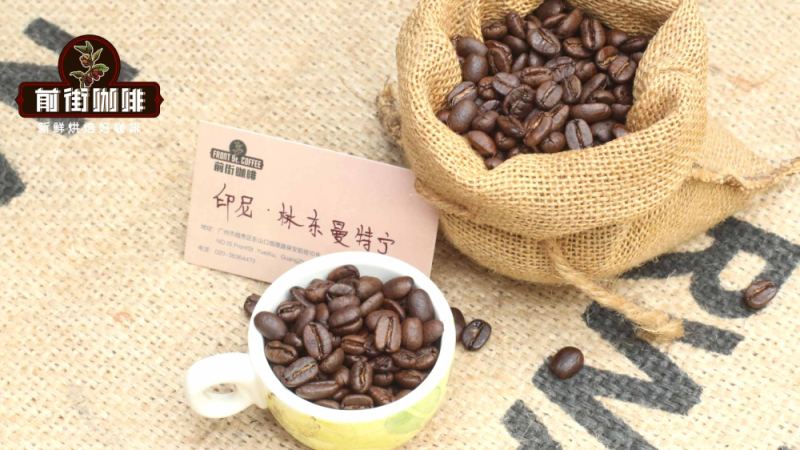
What makes Golden Mandheling different from other Sumatra coffee?
Mandheling is not a region, port or variety name. It comes from a misreading of the Mandailing ethnic group and broadly refers to Arabica coffee grown across Sumatra, especially the Lintong area. The beans are known for a full body, low acidity and a bittersweet finish, and market labels such as Golden Mandheling, GAYO and PWN reflect different traders and sorting practices rather than separate species.
Golden Mandheling usually earns its higher price through stricter hand sorting, fewer defects and a more uniform bean size, which lifts it above ordinary Lintong lots. Processing method also plays a part, since wet-hulling shapes the heavy body Sumatra is known for. As with any java coffee variety, grade, defect rate and lot consistency explain most of the price gap buyers see on the shelf.
Mandheling is the first name many coffee enthusiasts encounter when they start exploring single-origin coffee, but the market is flooded with a bewildering array of labels—from Golden Mandheling and PWN Golden Mandheling to GAYO, Tiger, Horse Face, Emerald, and more—often leaving people confused. In fact, Mandheling is neither a production region, place name, port, nor a variety name; it originates from a mispronunciation of the Indonesian Mandailing ethnic group and broadly refers to Arabica coffee widely grown in Sumatra. This article will trace the cultivation origins of Indonesian coffee, the terroir characteristics of Sumatra's Lintong production region, analyze the flavor composition of Mandheling's full body, low acidity, and bittersweet finish, and compare the differences in grade, processing method, and price between Front Street Lintong Mandheling and Front Street Golden Mandheling, helping readers understand the logic behind Mandheling's price range.
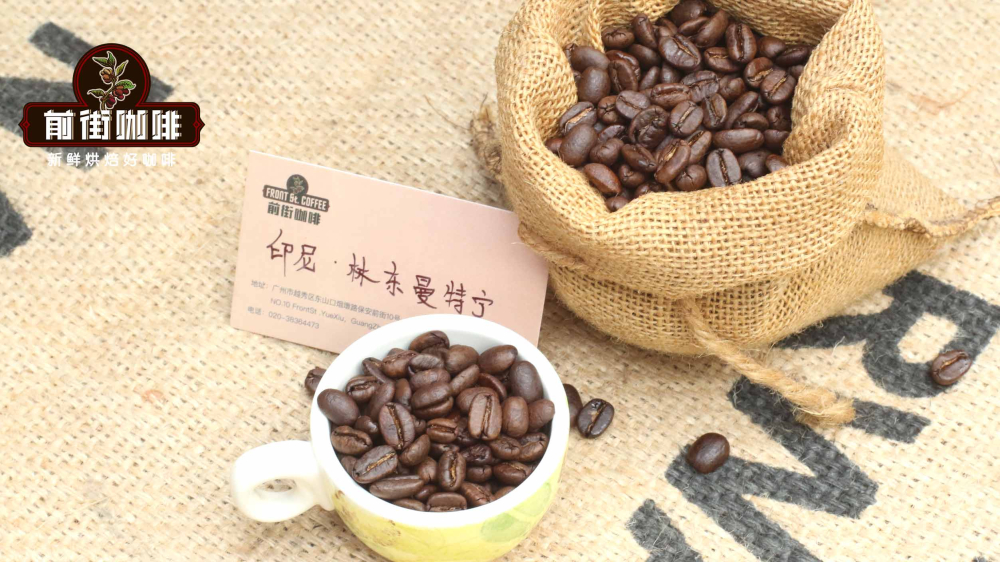
Front Street Mandheling Coffee Introduction
Many friends who have just stepped into the world of single-origin coffee have heard of the name Front Street Mandheling. The market is full of various Mandheling names—Golden Mandheling, PWN Golden Mandheling, GAYO Mandheling, Tiger Mandheling, Horse Face Mandheling, Emerald Mandheling, and so on. Why do so many Mandheling names appear on the market, and what are their respective characteristics?
Actually, Mandheling is neither a production region name, nor a place name or port name, let alone the name of a coffee variety. It originates from a transliteration misreading of the Indonesian Mandailing ethnic group. Locally, almost all Arabica coffee beans widely grown on the island of Sumatra can be called Mandheling. To distinguish them, these various names have been derived based on different regions and different green bean traders.
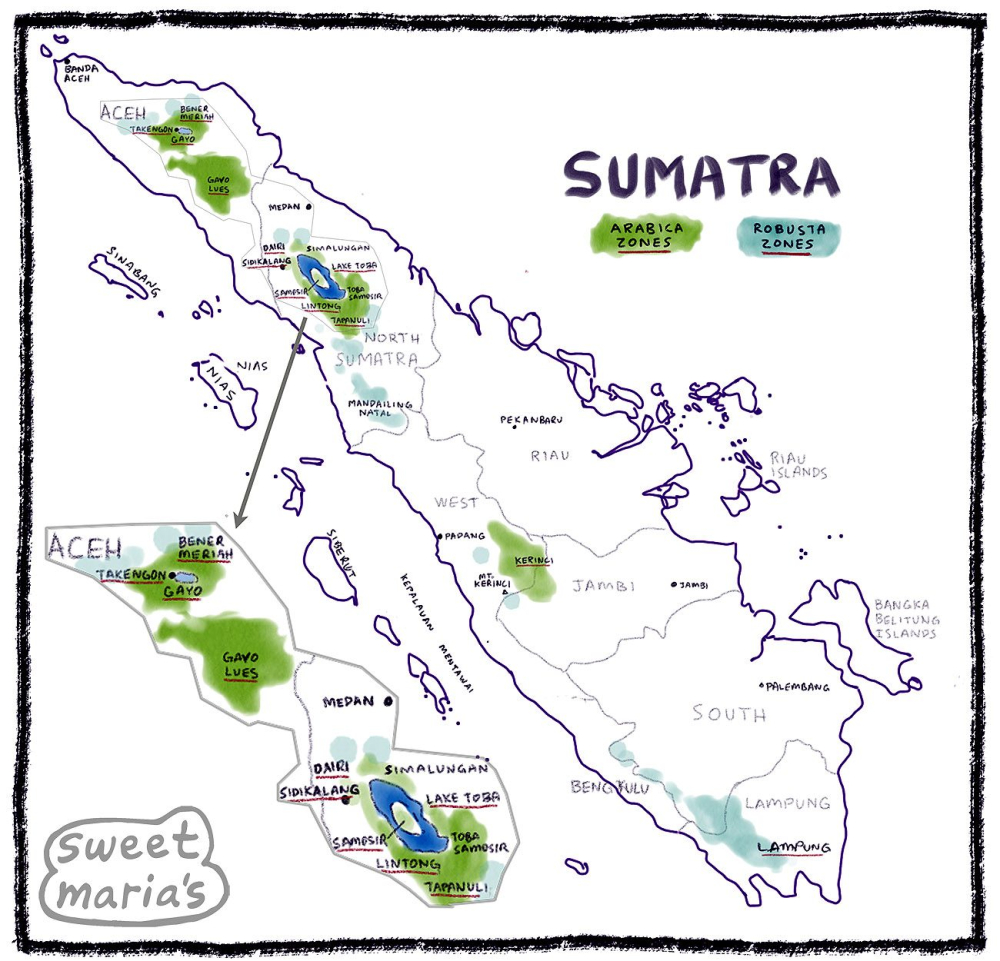
Indonesia is the world's largest archipelago nation. As early as the 18th century during Dutch colonial rule, Arabica coffee trees were introduced and cultivated. The country's main production regions are distributed across Sumatra, Java, and Sulawesi. The Mandheling produced there is known for its full, solid body and low acidity, and has been hailed as "the world's most important coffee." Among these, Sumatra has the largest output, and Sumatra's largest production area is Aceh Province in the north.
Lintong Mandheling is located in the Lake Toba area at the northern tip of Sumatra, Indonesia. Lake Toba (Indonesian: Danau Toba, English: Lake Toba) sits in northern Sumatra and is a volcanic lake with a diamond-shaped surface, approximately 100 kilometers long and 30 kilometers wide, covering an area of 1,130 square kilometers, with an average elevation of about 900 meters. It is also the world's largest volcanic lake. The familiar PWN Golden Mandheling and Front Street Golden Mandheling are both produced in the Lintong region of northern Sumatra, Indonesia.
Front Street Mandheling has a solid, weighty mouthfeel on entry, with excellent body, rich bitter aroma, and a faint hint of dark chocolate. Beneath the high body and bitterness lies a strong woody aroma, with low but clearly discernible acidity. Sweetness usually manifests as a bittersweet finish, making it quite thought-provoking. It is precisely this layered complexity of flavor that has made it a well-known single-origin coffee, suitable for enthusiasts who prefer a full-bodied taste. Unlike coffee beans with floral and fruity notes, it often displays spicy, herbal, or earthy aromas.
As for whether Mandheling is expensive, this question is hard to generalize. According to the grading system, Mandheling itself has different grades, and prices vary accordingly. When it comes to everyday drinking coffee, one must mention Front Street Lintong Mandheling. This is an Indonesian single-origin coffee processed using the wet-hulling method, presented with a medium-dark roast. It is rich and full-bodied, sweet yet bitter, with an intense and stimulating mouthfeel on entry, featuring clove and woody aromas, low acidity, a spicy and mint-like flavor profile, and a strong, lasting body and sweetness.
If we're talking about the higher-priced option, that would be Front Street Golden Mandheling. Golden Mandheling is often mistaken for a high-standard selection grade among coffee beans, but in fact it is produced by the coffee company Pwani Coffee Company (PWN), which purchases Mandheling locally in Indonesia and has registered the trademark "Golden Mandheling."
Although this name has nothing to do with grade, it does represent an exclusive highest quality—Golden Mandheling bearing the PWN mark must undergo three rounds of manual sorting and one round of machine sorting. The beans have a beautiful appearance, are plump and full, with a defect rate of only 2%. Front Street Golden Mandheling is slightly superior to Front Street Mandheling G1 in terms of sweetness and cleanliness, as well as its full-bodied, wild spicy flavor profile, which is one of the reasons why Golden Mandheling is much more expensive than G1.
The above content is compiled by CoffeeHunters, a coffee news website.


