







What Does Arabica Coffee From Baoshan Taste Like?
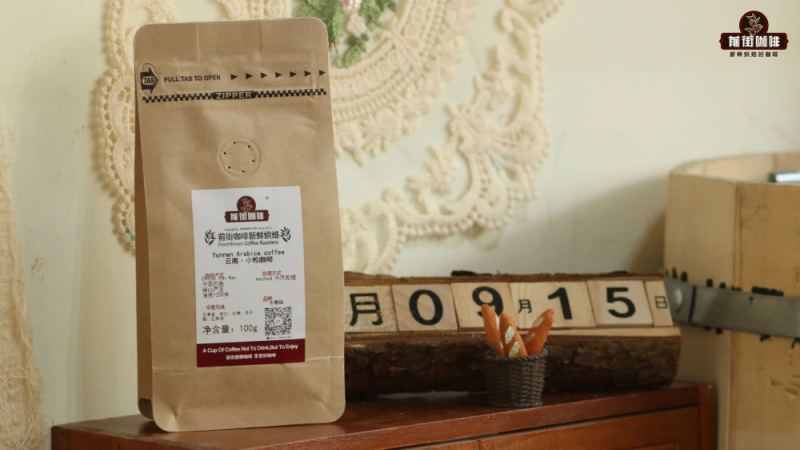
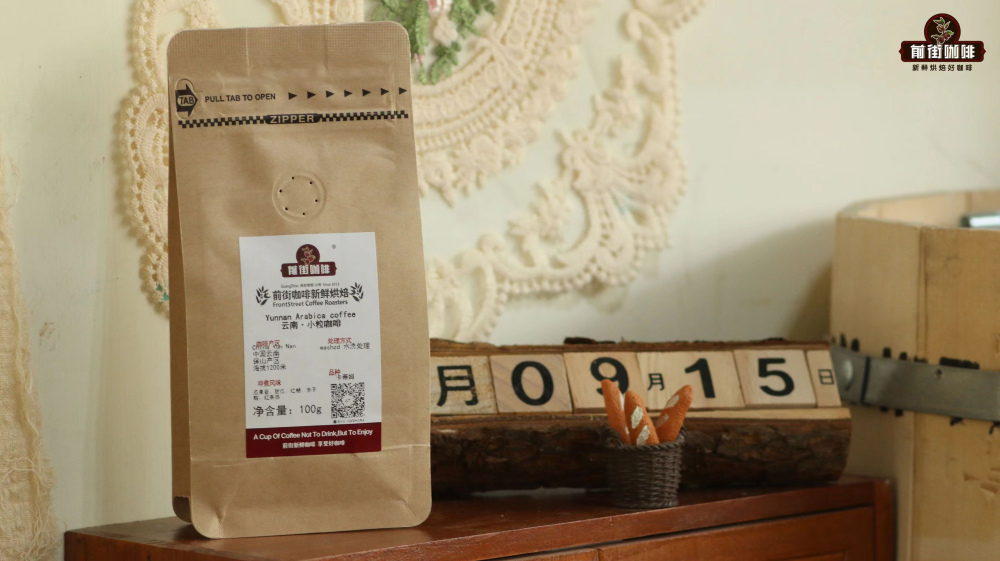
Yunnan Baoshan small-bean coffee is a washed Arabica roasted medium, presenting a balanced profile of nuts, brown sugar, and cream. Front Street Coffee selected it from Baoshan, the birthplace of small-bean coffee, for its everyday staple series, giving drinkers a direct route into the taste of domestically grown coffee.
Baoshan, and Lujiangba in particular, holds the country's largest coffee planting base, with Xinzhai Village known as a leading coffee village in China. Frost-free conditions and a dry-hot valley climate with a wide day-night temperature difference slow fruit ripening, letting beans build richer flavor compounds. The article also lists pour-over parameters for the roast.
Yunnan coffee is attracting attention from more and more coffee enthusiasts, and this land nurtures a unique expression of flavor. Front Street Coffee has included Yunnan Small Bean in its everyday staple bean series, selecting washed beans from the Baoshan production area and presenting a balanced profile of nuts, brown sugar, and cream through a medium roast. Starting from the terroir conditions of Lujiangba in Baoshan, this article reviews the evolution of Yunnan coffee varieties, explains the definition and processing methods of small bean coffee, and includes Front Street's pour-over extraction parameters, taking you through a comprehensive understanding of the authentic taste of this cup of domestically grown coffee.
For more specialty coffee knowledge, please follow: Front Street Coffee (Frontsteet Coffee)
In recent years, Yunnan coffee has frequently appeared in discussions within the coffee community, and more and more people want to explore what the "taste of Yunnan" really is. As a domestically produced coffee, Front Street also hopes everyone can taste the flavor of "domestically grown coffee," so it has included Yunnan Small Bean in its small-package everyday staple bean series. Front Street's staple bean products cover 7 classic origins, involving multiple representative production areas and varieties, and uniformly use the natural processing methods common in each origin to showcase the unique terroir personality of each place. This Yunnan staple bean from Front Street comes from Baoshan, the birthplace of "small bean coffee," and is washed processed.
Terroir and Climate of the Baoshan Production Area
Baoshan is one of the earliest regions in Yunnan to develop coffee cultivation. Lujiangba is home to the largest coffee planting base in the country, and Xinzhai Village is even known as "China's No. 1 Coffee Village," with coffee trees planted all over the hills, coffee beans drying in the courtyards, and the aroma of coffee filling the houses. The area is frost-free all year round, and the warm climate allows coffee trees to grow vigorously under comfortable and nourishing conditions. In particular, the dry-hot valley climate around Lujiangba has limited annual temperature variation but a pronounced day-night temperature difference, stretching the ripening rhythm of the coffee fruit and allowing it to accumulate richer flavor compounds. The soil is fertile, and rainfall is moderate to slightly low, providing good irrigation conditions for crops. The superior natural environment makes the coffee beans here thinner-fleshed and delicately sweet in taste.
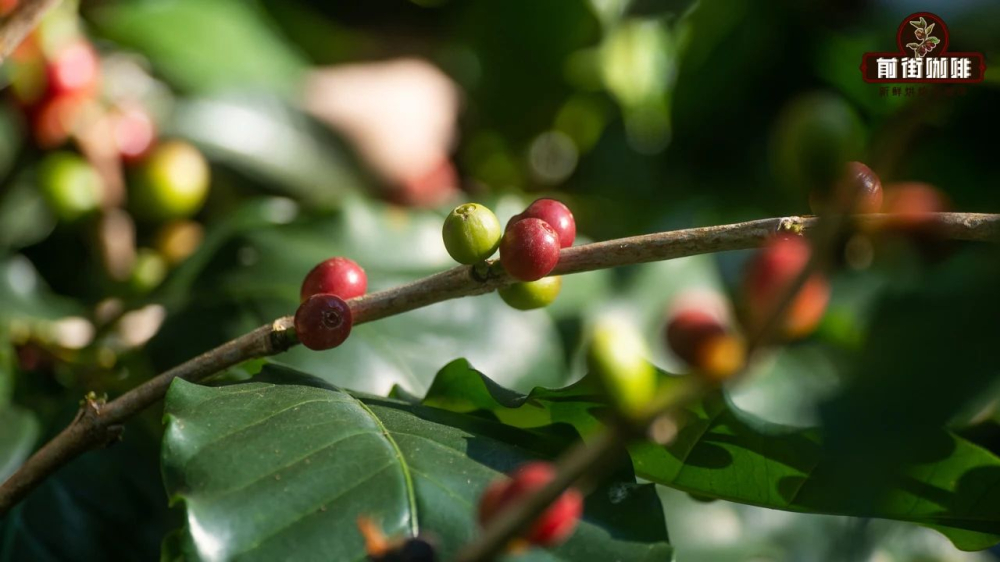
Yunnan's coffee trees are mostly planted on mountains and slopes, layered terrace upon terrace, where machinery finds it difficult to enter and complete harvesting work, so all picking relies on manual labor. Like most coffee-producing countries, Yunnan harvests one season each winter, with concentrated harvesting from November to the following March. Coffee cherries gradually turn red and ripen across the hills, and busy pickers can be seen everywhere, with each small bean coffee being collected into baskets.
What Is "Small Bean"?
"Small bean" refers to the smaller-sized type within the Arabica varieties, in contrast to the medium-sized Robusta grown in Hainan. The first coffee trees introduced to Yunnan were Typica and Bourbon, two pure Arabica varieties, among which the ancient Typica is widely recognized as a high-quality variety. The well-known Jamaican Blue Mountain coffee belongs to the Typica variety, with a rich aroma and a refined, changeable flavor, but its yield is extremely low, and it is susceptible to rust disease, requiring more manpower in management. Coffee is ultimately a cash crop on which Yunnan farmers depend for their livelihood. If yields are too low to guarantee income, cultivation becomes unsustainable, so most local farmers have shifted to the higher-yielding Catimor.
Although Catimor is classified as Arabica, genetically speaking it carries 25% Robusta ancestry. Robusta itself has a relatively high chlorogenic acid content and strong resistance to pests and climate change. It is usually planted at lower altitudes, with high yields and fast-ripening fruit. The "delicate" Arabica, by contrast, has weaker disease resistance and relatively limited yield per plant. The pronounced day-night temperature difference brought by high-altitude environments delays fruit ripening, allowing coffee cherries to absorb more nutrients and develop more complex aromas. The unique microclimates of each production area further provide Arabica with diverse growing conditions, creating distinctiveness in flavor.
Catimor inherits Robusta's disease resistance and high-yield characteristics. After roasting, the coffee bean surface is rich in oil, while also carrying that "devilish flavor" of Robusta. Its flavor performance in cupping is often inferior to that of pure Arabica varieties at the same altitude, such as Caturra. In addition, Catimor's rust resistance gradually degrades after 20 to 30 years. If Yunnan is to improve coffee quality overall, variety replacement is an unavoidable path. In recent years, many new varieties have been planted in Yunnan, such as the world-renowned Geisha. It can be expected that in the coming years Yunnan will produce coffee from more high-quality varieties.
What Processing Method Is Used for Yunnan Small Bean ?
Some friends who have tried Yunnan beans processed with special methods find the aroma exceptionally prominent and assume that this is the true flavor of Yunnan coffee. In fact, most Yunnan coffee farmers have limited production conditions and cannot afford expensive processing equipment, so the vast majority of Yunnan coffee beans can only use natural processing methods, namely washed and sun-dried. Novel post-processing techniques can indeed add considerable aroma to coffee beans, but Front Street believes that if you want to experience the most original flavor of Yunnan coffee, washed processing both reduces the defect rate and makes Yunnan coffee's quality more stable. In terms of flavor, it not only reduces earthy and miscellaneous notes but also improves the overall cleanliness of the mouthfeel.
Front Street also has another quite popular coffee bean, "Front Street 2013." From the name, you can see that this is Front Street's exclusive product. It comes from Front Street's own estate in Lincang, Yunnan, uses the elegantly flavored Typica variety, and is processed by natural sun-drying, making the coffee's sweetness more prominent. Every November, the coffee fruit at Front Street's estate ripens one after another. Front Street arranges workers to pick the red coffee cherries one by one, spreads the fresh fruit under the sun to dry naturally, and turns them irregularly so they dehydrate evenly and avoid negative flavors from over-fermentation. After the coffee beans dehydrate to a purplish-red color and reach the target moisture content, they are sent to the hulling and roasting stages.
Front Street Yunnan Small Bean Coffee Is Medium Roasted
Front Street believes that the flavor positioning of Yunnan Small Bean is neutral and balanced, with acidity, sweetness, and bitterness all present. Therefore, Front Street's own-roasted Yunnan coffee is always medium roasted, highlighting chocolate and nutty roasting aromas while retaining a certain acidity.
Front Street Yunnan Small Bean Staple Bean Cupping flavor: nuts, herbs, sweet potato, melon, brown sugar, cream, plum, caramel. Balanced mouthfeel with a delicately sweet finish.
Front Street 2013 Sun-Dried Typica Cupping flavor: caramel, nuts, chocolate, fermented notes, berries, black tea, sugarcane. Medium-high body, clean mouthfeel, black tea finish, rich and changeable layers.
Front Street Brewing Suggestions
Pour-over black coffee is the extraction method Front Street stores produce daily, and it is also a method many coffee enthusiasts can easily do at home. Below, Front Street brews a cup of its own-roasted Yunnan Small Bean Staple Bean in the store's production style. Considering that Yunnan Small Bean coffee leans toward a balanced mouthfeel, meaning the acidity is not hoped to be too high nor the bitterness too heavy, Front Street uses a V60 dripper with a medium-fine grind size and a medium water temperature for extraction.
Front Street matches corresponding parameters when brewing different coffee beans: for darker-roasted beans, such as Mandheling and Brazil coffee, Front Street uses a water temperature of 87 to 88 degrees Celsius and a medium-coarse grind; for lighter-roasted beans, such as Ethiopian Yirgacheffe and Panama Geisha, Front Street uses a high temperature of 91 to 93 degrees Celsius and a medium-fine grind to bring out the aroma of high-altitude hard beans. Returning to the brewing of Front Street Yunnan Small Bean coffee, Front Street chooses a medium water temperature and grind size to highlight neutrality and balance in the mouthfeel.
Brewing Parameters :
Dripper: hario v60
Dose: 15g
Water temperature: 90 degrees Celsius
Grind size: 75% passing through a No. 20 sieve
Water-to-coffee ratio: 1:15
Three-stage pouring: first wet the coffee bed with twice the amount of water as the coffee grounds, wait for a dome to form and bloom for 30 seconds, then pour in a circular motion from the inside outward with a small stream, pausing at 125 grams; wait for the coffee bed to drop to half the height of the dripper, then pour the third stage with the same fine stream until 225 grams; after all the coffee liquid has filtered through, remove the dripper. The whole process takes about 2 minutes.
The above content is compiled by CoffeeHunters, a coffee news website.


