







What Makes the Coffee Bean Process in Aceh Distinct?
Sumatra Lake Tawar Longberry is a wet-hulled coffee from the Gayo highlands of Aceh, grown at 1,200 to 1,600 meters. The Longberry variety is an elongated natural mutation of Typica with a cultivation history of roughly three centuries. Its wet-hulled coffee bean process yields a full body, low acidity, and notes of spicy fruit and herbal spice.
Wet hulling removes the parchment while the beans still hold high moisture, a method tied to Sumatra's humid climate, and it shapes the thick, syrupy character the region is known for. The same area produces Golden Mandheling coffee, and the shared terroir of Lake Tawar helps explain why these beans carry such deep, earthy sweetness.
Sumatra Mandheling coffee from Indonesia is famous for its full body and low acidity, and within this region there is also a rather special variety—Longberry. It comes from the Gayo highlands by Lake Tawar in Aceh Province, has an elongated bean shape, is a natural mutation of Typica, and its cultivation history can be traced back three centuries. This Sumatra·Lake Tawar wet-hulled Longberry listed by Front Street Coffee uses wet-hulling and presents flavor notes of spicy fruit, herbal spices, and clean acidity. This article will guide you through a comprehensive understanding of this rare long-shaped Mandheling, covering the region's terroir, the origin of the variety, the processing method, and Front Street's roasting and brewing recommendations.
For more specialty coffee knowledge, please follow: Front Street Coffee (Frontsteet Coffee)
When people mention Indonesian coffee, most first think of Mandheling. Its thick, steady, and low-acidity flavor has won over a large number of enthusiasts. Front Street Coffee (FrontStreet Coffee) is likewise especially fond of Mandheling. Whenever guests ask whether there is a coffee that is not sour, Front Street's baristas usually recommend the Golden Mandheling produced by Indonesia's PWN company. This time, however, Front Street will introduce a special variety also from the Golden Mandheling region—the Gayo Mountain area of Aceh, Sumatra: Longberry.
Front Street Coffee (FrontStreet Coffee): Sumatra·Lake Tawar Wet-Hulled Longberry Coffee Beans
Sumatra Lake Tawar Longberry Mandheling G1
Country of cultivation: Indonesia
Coffee region: Lake Tawar area, Aceh Province
Growing altitude: 1,200 to 1,600 meters
Coffee variety: Longberry
Processing method: Wet-hulled
Coffee region
Aceh is located at the northwestern tip of the Indonesian archipelago, straddling both sides of the equator, and has a typical tropical equatorial maritime climate, hot and rainy all year round, with an average annual temperature of about 27°C. From October to March of the following year, influenced by Asian and Pacific air currents, the area enters the rainy season, with abundant rainfall and cooler weather; from April to October, due to the influence of Australian continental air currents, moisture decreases, and the climate is dry and hot, belonging to the dry season.
Lake Tawar is located in the Gayo highlands of northern Aceh Province on Sumatra. It is a crater lake left by a volcanic eruption hundreds of millions of years ago, with a lake surface elevation of about 1,100 meters. Due to inconvenient transportation in the early days, coffee was not planted locally until the 1930s, at elevations reaching 1,200-1,600 meters. Coffee is mostly grown under traditional shade. In the early morning, moist, cool mist drifts past; at noon, sunlight pours down; in the afternoon, there are often showers. This naturally formed microclimate, combined with volcanic soil, provides ideal conditions for coffee growth. The coffee beans produced here are plump and emerald green, so they are called "Emerald Mandheling" by Taiwanese coffee lovers, while internationally they are more often called Lake Tawar Mandheling.
If you prefer full-bodied coffee and want to experience the signature taste of Sumatra, Front Street recommends Front Street Golden Mandheling coffee.
Does adding the word "Golden" to the name mean it is especially precious? In fact, Golden Mandheling is not a grade classification, but a trademark registered by the Indonesian company N.V. Pawani Medan (PWN for short). The company was founded in 1957 and is engaged in the export of Indonesian products such as coffee, rubber, cinnamon, cloves, and patchouli oil. It is the first Indonesian company to export coffee from North Sumatra and the company that made the name "Mandheling coffee" known in Japan. Since 1977, PWN has focused on exporting high-quality coffee beans, including Sumatra Arabica Mandheling Grade 1 and Robusta AP-I Grade 2, mainly sold to Japan, Taiwan, China, and the United States, with exports to Japan and Taiwan, China accounting for more than 95%. In these markets, "PWN" is almost synonymous with quality assurance. Because PWN holds the "Golden Mandheling" trademark, Japanese companies can only register another trademark, "Gold Top Mandheling."
Golden Mandheling is outstanding in quality, so its price is naturally much higher than ordinary Mandheling, which has also led to many counterfeit products on the market.
Front Street believes that true Golden Mandheling must come from Indonesia's PWN Coffee Company (the trademark belongs to PWN). Imported Golden Mandheling green beans all come with PWN company certification, which can be used to distinguish authenticity. If the seller cannot provide source information for the Golden Mandheling green beans (such as certificates or burlap sacks), then you need to carefully scrutinize it.
The Golden Mandheling on Front Street Coffee (FrontStreet Coffee)'s bean list is exactly a product of PWN. The green beans of this Golden Mandheling coffee are above 18 screen size, with fewer than 3 defective beans per 300-gram sample, reaching the highest G1 grade. In addition, PWN also hand-sorts these beans three times to remove defective beans as much as possible, making the taste cleaner, the sweetness more prominent, and the aroma more intense.
Coffee variety
Among Sumatra's coffee varieties, there is a rather special one called "Longberry—Mandheling." Longberry coffee trees grow extremely slowly and take seven years from planting to maturity and fruiting, while ordinary coffee trees usually need only three to four years; combined with low yield, it is not commonly seen on the market.
Longberry originated in the Harrar region of Ethiopia, Africa, and has been cultivated in Aceh Province for three centuries. Unlike other coffee bean varieties, this lot's name comes from the coffee beans' elongated shape, so some also call it "long-shaped Mandheling." It is a natural mutation of Typica.
Coffee bean processing method
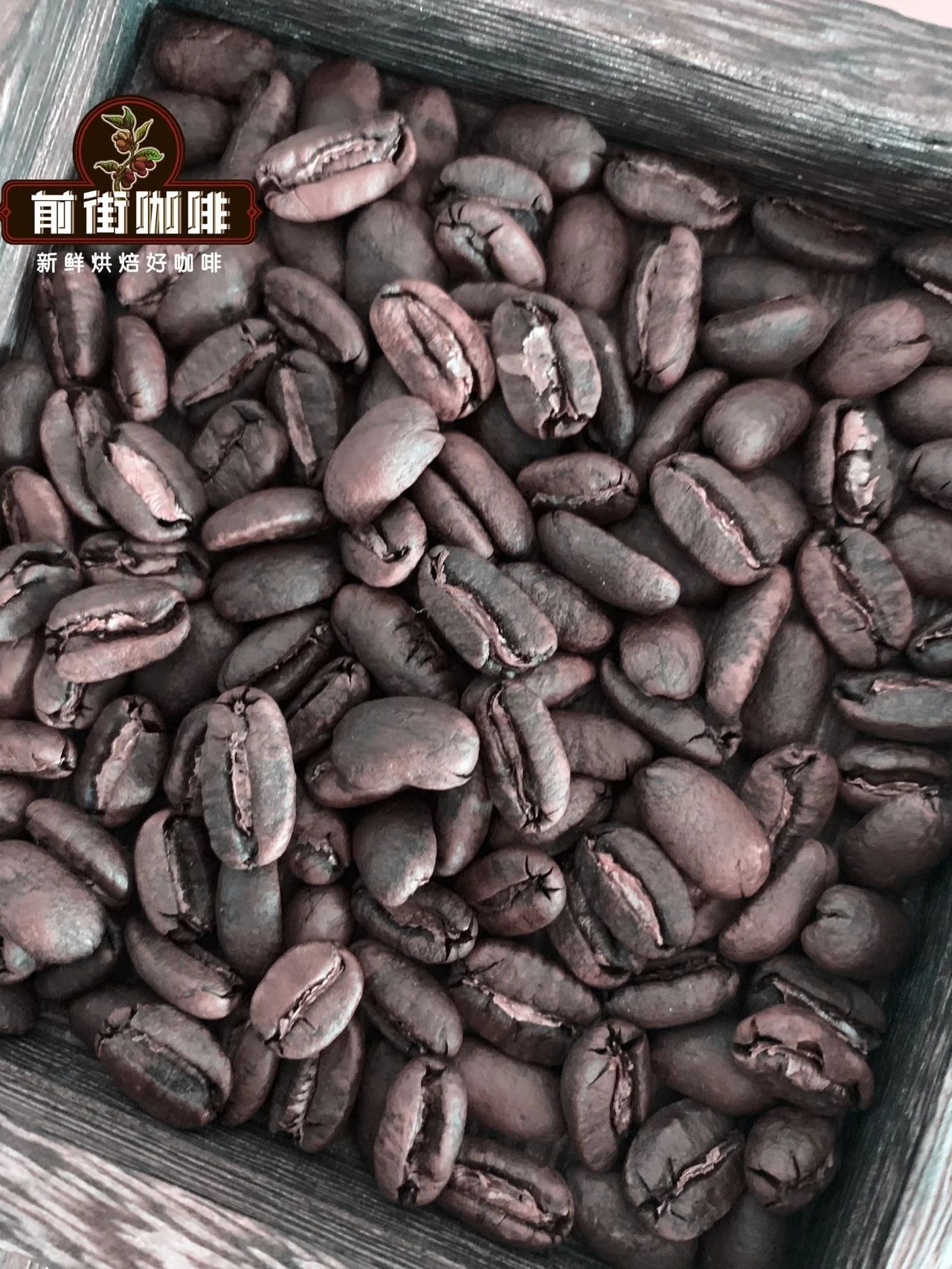
Wet-hulling is a rapid method of processing coffee beans: first remove the skin and pulp, briefly ferment and then dry, then remove the mucilage and parchment layer, and continue drying in the later stage until the moisture content drops to 12%. Mandheling coffee beans processed by wet-hulling often show varying degrees of挤压 cracks on the surface, and the bean color tends toward dark bluish-green. Because the drying time is shortened to two to four days, the fermentation period of the coffee beans is also shortened, acidity is greatly reduced, while body is instead enhanced, with obvious caramel and fruity notes, even carrying herbal, grassy, and woody aromas, thus forming Sumatra's distinctive regional flavor. The reason Front Street listed this bean is, first, that the variety itself is rather special, and second, through cupping, this bean can fully display the flavor characteristics of the Sumatra region.
Front Street roasting recommendations
Front Street cupping report
Front Street brewing recommendations
When brewing coffee from Indonesian regions, Front Street uses the Kono dripper. The ribs of the Kono are less than half the height of the dripper. This design is intended to let the filter paper cling tightly to the dripper wall after being wet, restricting airflow, thereby extending the water absorption time of the coffee grounds, making the extracted coffee more uniform overall and enhancing its full-bodied texture. In addition, the grooved骨架 at the bottom of the Kono dripper is also a key structure designed to create a siphon effect during subsequent brewing.
Recommended water temperature: 87-88°C
Grind size: coarse sugar size (70% passing rate on China standard No. 20 sieve)
Coffee-to-water ratio: 1:15
Coffee dose: 15 grams
Front Street Coffee (FrontStreet Coffee) brewing method: first bloom with 30 grams of water for 30 seconds, then pour in a small stream in circles until 125 grams for a staged pour. When the water level drops and is about to expose the coffee bed, continue pouring until 225 grams and stop. When the water level drops again and is about to expose the coffee bed, remove the dripper. (Start timing from the bloom.) Extraction time is 2'00''.
Brewed flavor: spicy fruit flavor, much like the green apple-like acidity unique to Panama coffee, accompanied by herbal and spice notes, with obvious acidity and a clean mouthfeel.
The above content is compiled by CoffeeHunters, a coffee news website.


