







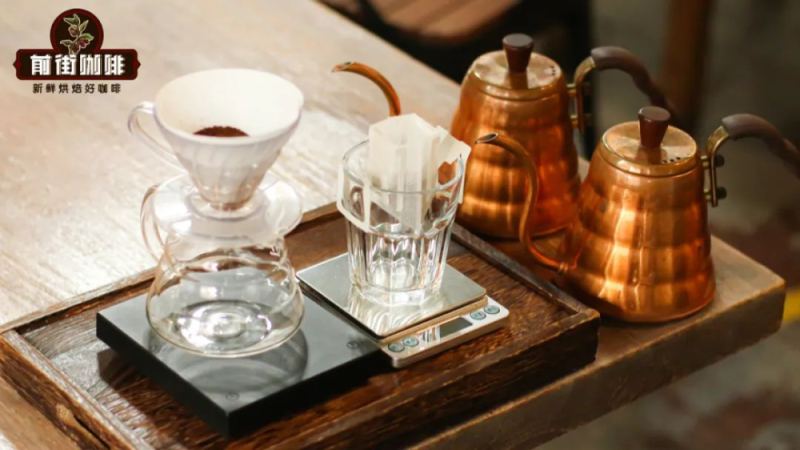
How Does Coffee Bean Structure Affect Pour-Over and Drip Bags?
Pour-over and drip bag coffee both use drip filtration, where hot water passes through the grounds under gravity and carries soluble compounds out. The difference lies in intent: pour-over calls for fresh grinding and on-the-spot brewing with adjustable parameters, while drip bags trade pre-ground powder for convenience, so aroma fades faster and flavor richness is more limited.
Because the extraction principle is the same, the two methods are often compared, but their core goals differ. Pour-over uses a dripper, filter paper, and a scale, giving wide control over water flow, temperature, and ratio. Drip bags fix those variables at the factory. Where the coffee is bought, whether from a specialty coffee store or a supermarket, also shapes how fresh the grounds are.
Both pour-over coffee and drip bag coffee use drip filtration extraction, but the two differ fundamentally in their original design intent and usage scenarios. Pour-over emphasizes fresh grinding and brewing on the spot, with freely adjustable parameters, allowing it to more fully present coffee's aromatic layers and flavor details; drip bags, on the other hand, are centered on convenience, trading pre-ground coffee powder for a brew-anytime-anywhere experience, though the aroma dissipates faster and flavor richness is relatively limited. From Front Street Coffee's perspective, this article sorts out the specific differences between the two methods in terms of equipment, operation, coffee powder state, and flavor performance, and includes Front Street Coffee drip bag recommendations suited to different tastes, helping coffee lovers find the choice that suits them between convenience and quality.
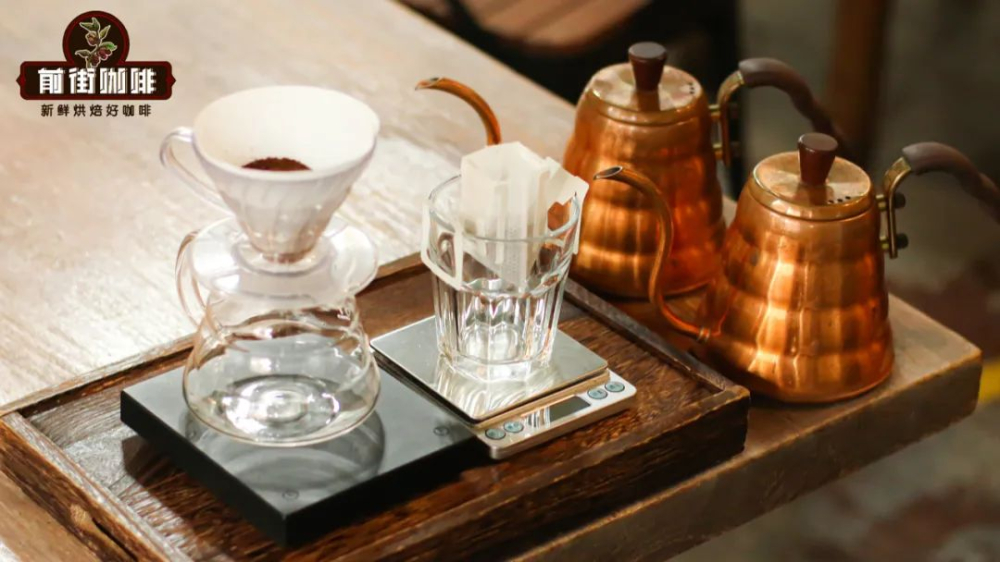
Everyone should be clear that drip bag coffee and pour-over coffee both belong to drip filtration extraction. So-called drip filtration means that the poured hot water passes through the coffee powder layer under gravity, carrying out the soluble substances from the coffee grounds along with it. In plain terms, it is pouring water on one side while liquid comes out on the other.
Precisely because the extraction principle is the same, these two kinds of coffee are often compared together. In fact, however, there is not much comparability between drip bags and pour-over, because the core goals they each pursue are different, and their strengths are also different.
Next, Front Street Coffee will briefly discuss what exactly the differences are between pour-over coffee and drip bag coffee. Before expanding the comparison, let us first understand the basic concepts of these two kinds of coffee separately.
What is pour-over coffee?
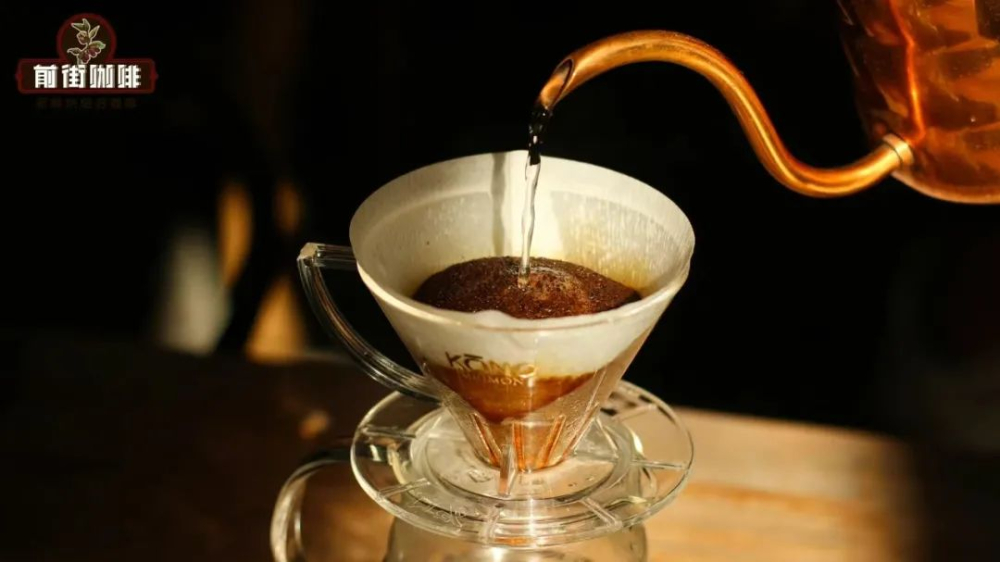
Pour-over coffee refers to a brewing method in which extraction is completed by manually controlling the water flow, using equipment such as a dripper, filter paper, and electronic scale during the process. After the concept of specialty coffee became widespread, pour-over quickly became popular because, compared with other extraction methods, it can more fully and more simply present the flavor of the coffee beans themselves.
In addition, pour-over coffee has a very large adjustable space; any parameter and any piece of equipment can be freely replaced, thus combining into completely different brewing schemes. The flavor of the final cup will also show subtle differences because of this, making it quite rich in possibilities. It is also for this reason that pour-over has become many people's first choice for exploring coffee aromas.
Pour-over coffee has another appealing aspect: from weighing beans, grinding powder, folding filter paper, moistening the dripper, and pouring in the powder, to boiling water and pouring water to brew, the entire process is basically completed by hand, and these steps make the making of a cup of coffee full of ritual.
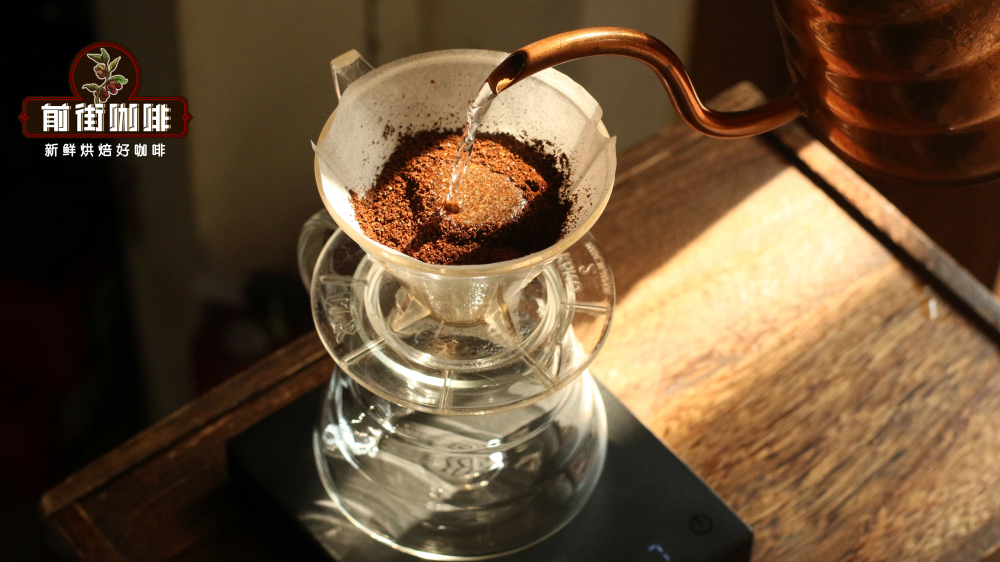
Because pour-over equipment is generally affordable, many enthusiasts keep a set at home, and when they have free time they pick a bean they like and grind and brew it fresh.
What is drip bag coffee?
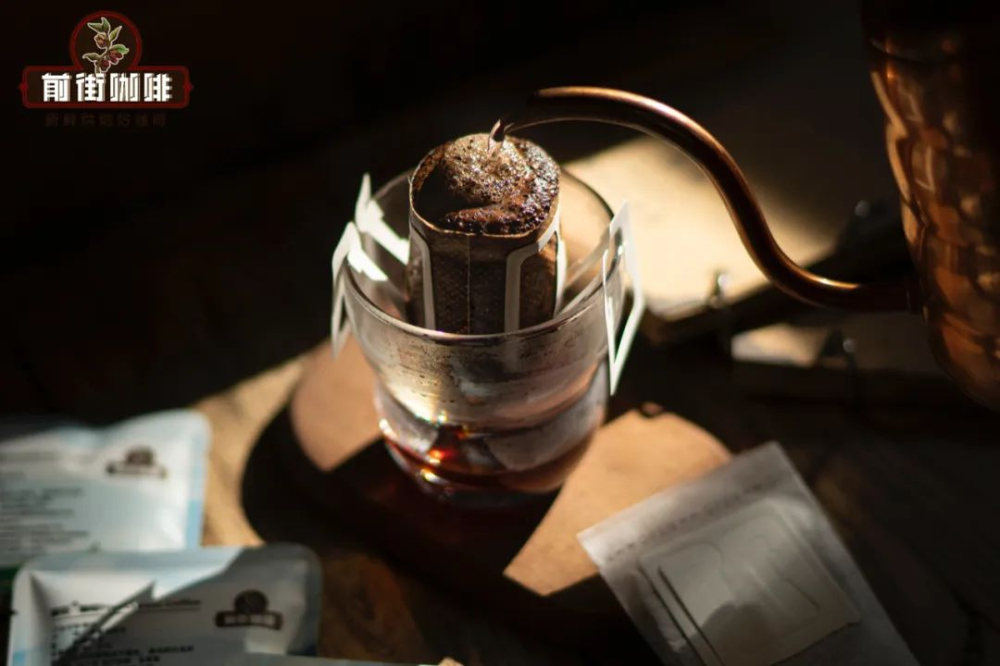
Drip bag coffee can be understood as an extension of pour-over coffee in the direction of convenience. At the end of the 20th century, Japan's UCC took the lead in launching drip bags and applied for a patent in 2001. What is sealed inside a drip bag is pre-ground coffee powder, paired with a non-woven filter bag, and the extraction method is the same as pour-over. Tear open the outer packaging, take out the drip bag and hang it up, and you can directly pour water to brew, making the operation very hassle-free.
It is called "drip bag" because the non-woven filter bag has a paper clamp board on each side, which after opening can be hooked onto the rim of a narrow-mouthed cup, playing the role of a dripper. The name drip bag coffee comes precisely from these two pieces of cardboard that hang on the cup rim like "ears."
Compared with pour-over, drip bag coffee's convenience is very prominent: no need to grind beans, and no need to prepare a dripper, filter paper, or other equipment; just a cup and a pouring kettle are enough. Coupled with its small size and portability, it has become a regular item for business trips, travel, and daily office scenarios.
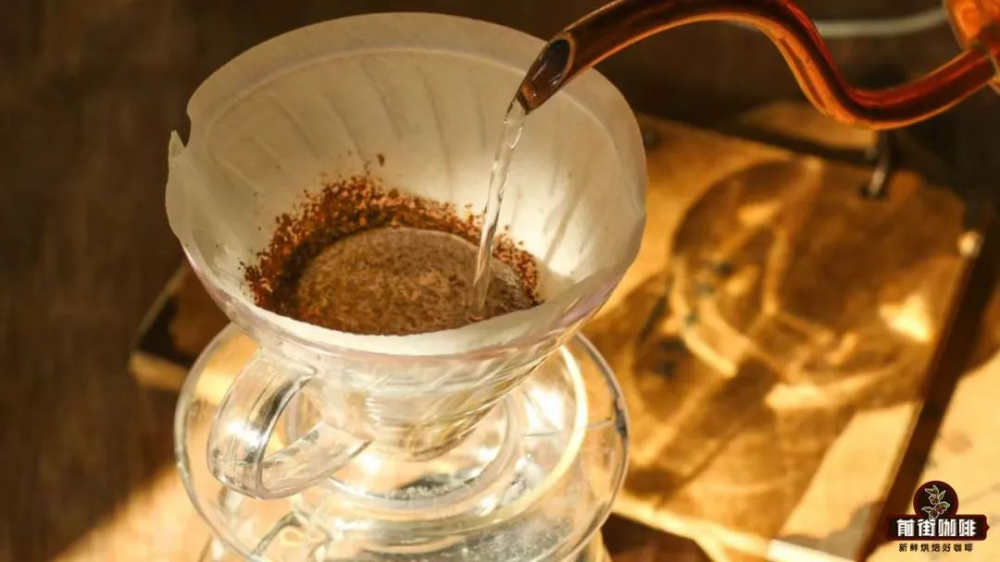
Where is the difference between drip bag coffee and pour-over coffee?
From the above introduction, it can be seen that the biggest difference between drip bags and pour-over lies in the state of the coffee powder used. Pour-over coffee generally uses freshly ground powder, meaning the coffee beans are ground into powder only before brewing; drip bags use pre-ground powder, meaning it is ground in advance and then sealed into the drip bag. (Front Street Coffee adds that pour-over occasionally also uses pre-ground powder, but in the vast majority of cases it uses fresh grinding.) It is precisely this point that creates the essential distance between the two, and the reason is also very direct—the taste of the brewed coffee will change because of it.
Coffee's flavor mainly comes from aromatic substances, and most of these substances are volatile. After coffee beans are roasted, the aroma, like carbon dioxide, continuously releases and dissipates from the inside out. The speed of loss is affected by storage method, environment, and the structural integrity of the coffee beans.
If the storage conditions and method are appropriate, and the coffee bean structure is relatively intact, the dissipation of aromatic substances will slow noticeably. Usually, when all these conditions are met, the aroma of coffee beans can be maintained until about two months after the roast date; once storage conditions are poor, or the coffee beans have already been ground into powder, aroma loss will accelerate, and the enjoyable period will shrink from two months to one month or even shorter.
Therefore, even if the same bean and the same roast date are used, the taste brewed from a drip bag is not as rich as pour-over. The reason lies in its use of pre-ground powder, whose flavor volatilizes faster than fresh grinding, and the longer the grinding time, the more obvious the gap becomes.
At the same time, pre-grinding means the grind size is already fixed, and the brewing framework cannot be greatly adjusted, which makes drip bag coffee far less free than pour-over and relatively low in playability.
But what needs to be clearly recognized is that the strength of drip bag coffee has never lain in flavor, but in being simple and convenient. It is precisely because convenience is required that drip bags use pre-grinding. Conversely, if one is willing, one can also use a drip bag to brew freshly ground coffee powder, and likewise get a delicious cup of coffee.
To brew a good cup of coffee, good beans are the prerequisite. Here Front Street Coffee lists several coffees suitable for most people for reference: friends who prefer floral flavors can try Front Street Coffee Panama Geisha drip bag coffee; Geisha is one of the most expensive coffees in the world; if you like a fresh, slightly acidic taste, Front Street Coffee Flower Queen drip bag coffee is recommended, with notes of black tea and berries;
If you prefer a balanced taste, that is, the direction of being neither sour nor bitter, Front Street Coffee Brazil drip bag coffee is recommended; finally, for drinkers who love a solid, mellow mouthfeel, it is suggested to choose the highest-grade Front Street Coffee Golden Mandheling drip bag coffee. This bean has undergone multiple rounds of hand sorting, reducing the defect rate to the minimum, making the coffee aroma clearer and the sweet aftertaste more outstanding. All the above drip bag coffees can be ordered and purchased at Front Street Coffee stores and the Front Street Tmall flagship store.
From this it can be seen that although both pour-over and drip bags use drip filtration brewing, the goals they pursue are completely different. Pour-over pursues a more complete and higher-quality coffee experience, so it mainly uses freshly ground coffee powder; drip bags pursue convenience, and for this reason make a certain concession in flavor. Each has its advantages and each has its applicable scenarios, so there is really no need to compare them to see which is superior.
The above content is compiled by CoffeeHunters, a coffee news website.


