







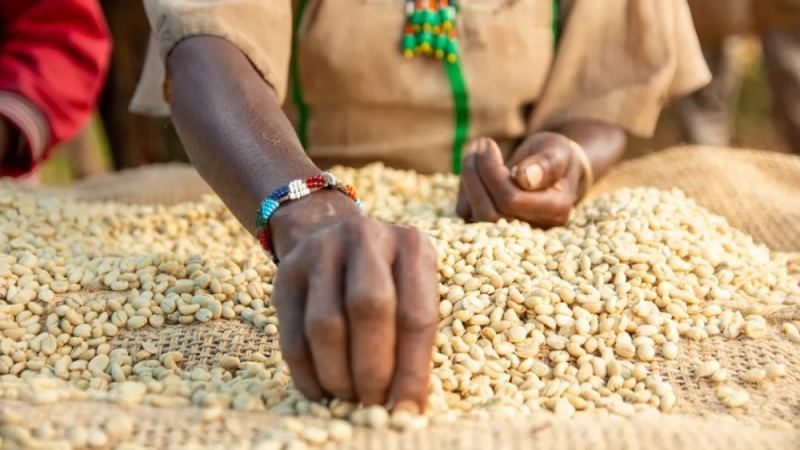
Why does Gotiti washed coffee bean processing taste so clean?
Washed beans from the Gotiti Cooperative in Gedeb show why Yirgacheffe built its reputation: bright citrus acidity, fresh floral aromas, a honey-like finish, and a tea-like aftertaste. Three factors drive the flavor, namely a growing environment at sufficiently high altitude, naturally mixed local varieties, and pure traditional processing methods that keep the cup transparent rather than heavy.
Yirgacheffe was once a small town under Sidamo Province; after Ethiopia redrew its administrative regions in 1995, the area came under the Gedeo Zone. For iced pour-over, the verified recipe pairs a set coffee-to-water-to-ice ratio with a controlled pouring rhythm and a stir, bringing out yellow peach and sweet orange notes over a clean body.
Yirgacheffe, as one of Ethiopia's most recognizable coffee regions, has won over countless coffee lovers with its bright acidity and fresh floral aromas. From the perspective of Front Street Coffee, this article systematically reviews the regional evolution and flavor formation of Yirgacheffe, with a focus on the varietal characteristics, roasting recommendations, and brewing parameters of the washed beans from the Gotiti Cooperative. In addition to the conventional hot pour-over method, a verified iced pour-over procedure is also included, using a combination of coffee-to-water-to-ice ratio, pouring rhythm, and stirring motion to present juicy sweet-tart notes of yellow peach and sweet orange with a clean tea-like body. Whether you are a beginner just getting into specialty coffee or a seasoned brewer looking to refine your technique, you will find practical references here.
For more specialty coffee news, follow: Front Street Coffee (Frontsteet Coffee)
Yirgacheffe was originally just a small town under the Sidamo Province of Ethiopia, but because the coffee produced there had a crisp flavor profile and bright acidity, it won the favor of a large number of coffee professionals and enthusiasts, and today it has become one of the most prominent regions on the global coffee map.
In an era when traditional coffee was dominated by rich, bitter notes, the emergence of Yirgacheffe refreshed many people's preconceptions about what coffee should taste like. Its bright citrus acidity, elegant floral aromas, honey-like sweet finish, and the tea-like aftertaste that lingers after swallowing have endeared it to many Chinese consumers who grew up in a tea-drinking culture.
On the question of why Yirgacheffe coffee beans taste so good, Front Street Coffee (FrontStreet Coffee) has summarized three reasons: a growing environment at sufficiently high altitude, naturally mixed coffee varieties, and pure, traditional processing methods.
As Front Street mentioned above, Yirgacheffe originally belonged to Sidamo Province in Ethiopia and was a town-level administrative division. However, after Ethiopia redrew its administrative regions in 1995, Sidamo ceased to exist as an independent administrative region, and Yirgacheffe was placed under the jurisdiction of the Gedeo Zone (GEDEO).
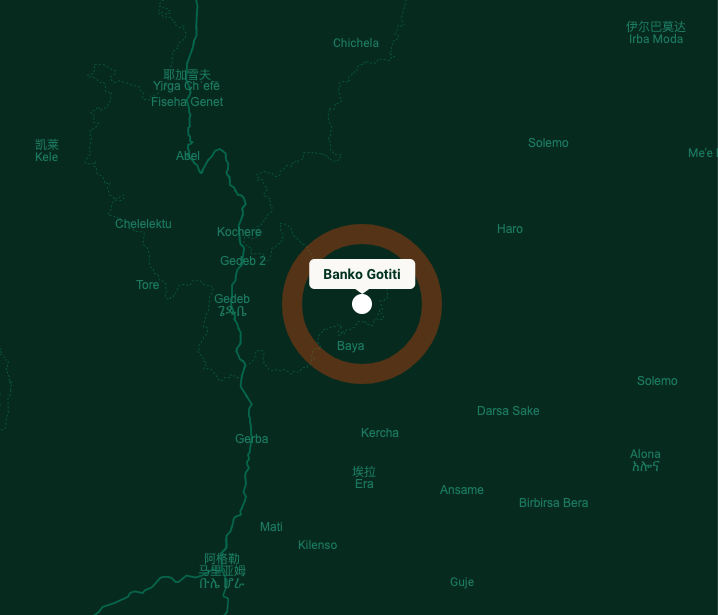
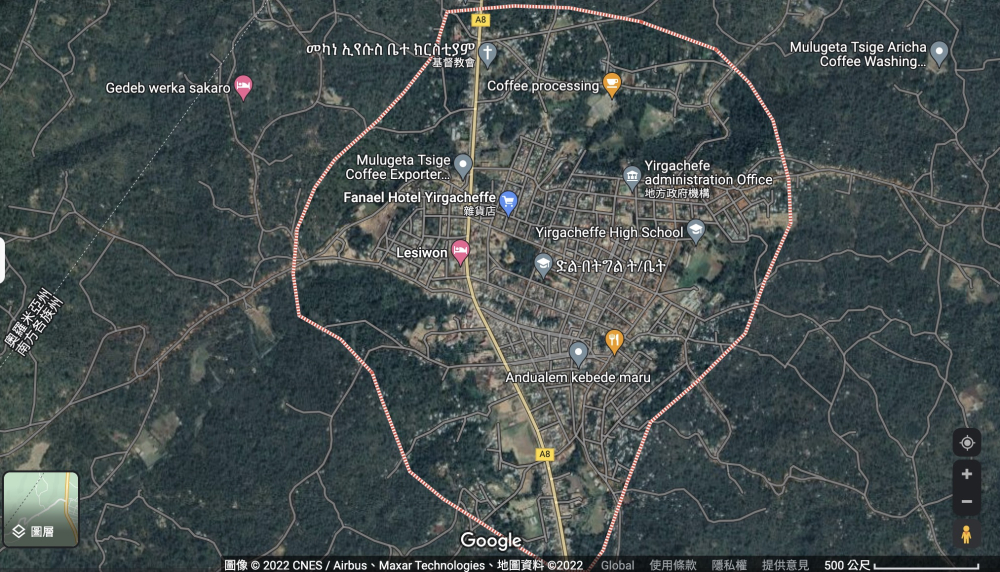
Afterward, coffee traders noticed that beans produced in the Yirgacheffe area had very distinctive white floral and lemon-citrus aromas, making them extremely popular on the consumer end. As a result, many people would deliberately select coffee beans from the Yirgacheffe region at the export stage in hopes of fetching a better price.
By 2009, the Ethiopian Commodity Exchange implemented a certification system in several specific production areas (Wenago, Yigacheffe, Kochere, Gelena~Abaya), classifying them into those with classic Yirgacheffe flavor (Yigacheffe A) and those without classic Yirgacheffe flavor (Yigacheffe B). In other words, the Yirgacheffe you order at a café today may not actually be produced in the place called "Yirgacheffe," yet it can still bear the Yirgacheffe name—similar to how Yonghe soy milk does not necessarily come from Yonghe.
At present, the Yirgacheffe we drink in daily life mostly refers to a production region or geographical concept. Within the Yirgacheffe area, there are numerous cooperatives that centralize coffee processing, among which names such as Kochere, Worka, Gotiti, Chelelektu, Misty Valley, and Konga are more commonly seen and relatively better known.
When green bean traders buy and sell these beans, they generally use the labeling format of Yirgacheffe plus the cooperative name to indicate which village and which cooperative in Yirgacheffe the batch of beans comes from. Ethiopian coffee naming is mostly tied to place names, but not all categories are divided by place name—for example, the Sidamo Huakui 8.0 on Front Street's bean list is a clever name coined by a domestic green bean trader to highlight its selling points.
Since Ethiopia is the birthplace of coffee varieties worldwide, a large number of wild or native coffee varieties that have not yet been identified and certified still exist there today. Because the number of varieties is enormous and their composition complex, most Ethiopian farmers do not subdivide the varieties of coffee trees they grow; instead, they plant and harvest them as a mix and collectively refer to these varieties as Heiroom (heirloom).
For this reason, coffee cherries of different varieties also differ in size. Front Street Coffee (FrontStreet Coffee) has observed that coffee beans from Ethiopian production areas often appear in varying sizes, which is a normal phenomenon and also a major characteristic of Ethiopian coffee beans.
In Ethiopia, limited by climatic conditions and infrastructure, people usually adopt the most traditional processing methods when obtaining coffee beans: washed and natural.

Yirgacheffe's ability to develop such a distinctive style is due not only to its innate terroir but also, to a large extent, to the washed processing technology introduced from Central and South America by the Ethiopian government in 1972. Farms using the washed method must build washing channels and ensure a continuous supply of running water, making production costs relatively higher. During processing, the fermented beans are pushed back and forth in the channel, and the friction between the beans and the force of the water current clean the coffee beans until they are smooth and spotless. Every step removes impurities and defective beans, so the green bean quality is more uniform, and the final trading price is also higher than that of coffee processed by the natural drying method.
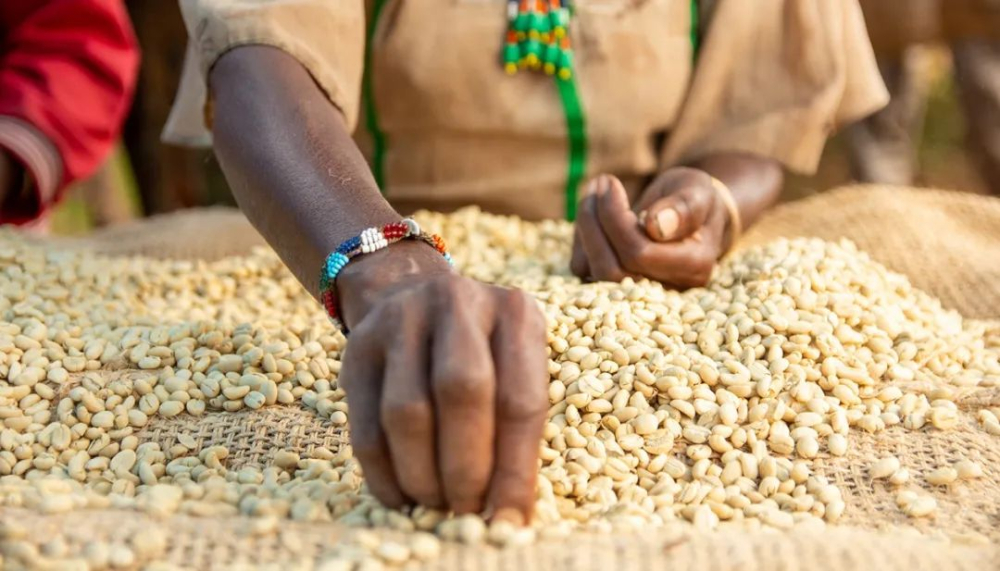
The washed coffee bean processing flow is as follows: after the coffee cherries are harvested, bad cherries are first removed, then the skin and pulp are removed, and the beans are placed in a clean water tank for fermentation to break down the mucilage, after which they are rinsed with clean water and sun-dried. Through cupping at Front Street Coffee (FrontStreet Coffee), it has been found that washed coffee beans have a very clean and bright acidity and flavor, and also allow one to clearly perceive the quality level of the coffee beans.
For natural coffee beans, after the coffee cherries are harvested, bad cherries are first removed, and then they are directly sun-dried until the moisture content reaches the appropriate standard before being bagged and packaged. Through cupping at Front Street Coffee (FrontStreet Coffee), it has been found that natural processed coffee beans have a quite full-bodied sweet-tartness, accompanied by a soft fermented aroma.
In the Yirgacheffe region, because water resources are very abundant, local coffee beans are mainly washed processed. Among them, the most representative is the "Medium-Light Roast - Yirgacheffe Gotiti Cooperative Coffee Beans" sold by Front Street Coffee (FrontStreet Coffee).
Front Street Coffee (FrontStreet Coffee) - Yirgacheffe Gotiti Cooperative Coffee Beans Region: Yirgacheffe Gedeo Zone Producer: Gotiti Cooperative Altitude: 1900-2300m Variety: Local native species (Heirloom) Processing Method: Washed
Yirgacheffe coffee beans are grown at high altitudes, and the beans are relatively hard, so a medium-light roast will not greatly alter the structure of the coffee beans themselves. Therefore, when dealing with high-altitude floral-and-fruity coffee beans like Yirgacheffe, Front Street uses a water temperature of 90-91°C and a grind size like fine granulated sugar (80% passing rate through a Chinese No. 20 standard sieve).
Three-stage extraction: In the first stage, use 30g of water to bloom for 30 seconds; in the second stage, pour 95g of hot water; when the coffee bed drops by half, begin pouring the third stage of 100g until all the coffee has dripped through. Note to start pouring from the center point, maintain a small stream and gentle force while circling throughout, to avoid uneven extraction.
Gotiti pour-over coffee flavor performance: After grinding, it has an elegant jasmine and citrus-like acidity. Once extracted, the entry reveals a clear bright lemon acidity, prominent sugarcane sweetness, and as the temperature drops it presents a green tea-like mouthfeel with a lasting finish.
Sharing the parameters for iced pour-over coffee
Regarding what parameters to use for iced pour-over, Front Street once mentioned a formula in an article: iced pour-over = coffee grounds (fine grind) + 10 times hot water + 5 times ice. Here, combined with fruity-acidity medium-light roasted coffee beans, we further pair it with a water temperature of 91–93°C, small-stream circling pouring, and a three-stage technique, so that the extraction time falls between 1 minute 50 seconds and 2 minutes, and you can easily brew a pot of iced coffee with on-point flavor.
The juice-like sensation in coffee usually comes from the rich fruity aroma you smell combined with the sweet-tart, juicy sensation felt in the mouth when drinking, reminding one of the experience of eating a certain fruit. When applied to today's iced pour-over theme, this means obtaining both the acidic aromatic substances from the early stage and pursuing the sweetness from the middle and late stages, so as to satisfy a sweet-tart juicy mouthfeel. Such a requirement cannot be met by water-flow agitation alone, so Front Street also adds one motion: stirring.
Coffee beans: Ethiopia · Washed Gotiti Cooperative
Dose: 15 grams
Coffee-to-water ratio: 1:11 (160 grams hot water)
Ice: 75 grams
Grind size: EK43s setting 9.5 (about 22 clicks on C40)
Dripper: Hario V60
Three stages: 30 grams, 90 grams (+ stirring), 45 grams
Before pouring, still place the ice in the server first, then add all the coffee grounds. The first stage bloom remains unchanged; maintain a small stream and pour 30 grams in circles from the center outward.
After 30 seconds, begin pouring 90 grams of hot water in circles with a larger stream while raising the water level. When the scale shows 120 grams, stop pouring, use a small spoon to draw 5 circles along the dripper wall in one direction, then wait for the coffee liquid to slowly flow down.
When the water in the dripper is about to run out, use the same small-stream, small-circle technique as in the first stage to pour the remaining 45 grams of hot water until all the coffee liquid has dripped through. Then you can remove the dripper and end the extraction; the time will roughly fall within the range of 1 minute 55 seconds to 2 minutes 5 seconds.
The washed Gotiti brewed this way first delivers on the palate a mouth-watering sweet-tartness like yellow peach, sweet orange, and pomelo, with an overall tendency toward yellow stone fruit notes. Because of the added stirring motion, in addition to rich fruit acidity, the coffee also carries a clean, moist sweetness, and under the cooling of the ice, it is like drinking a refreshing cup of fruit tea.
The above content is compiled by CoffeeHunters, a coffee news website.


