








Where Did Coffee Originate, and Why Do Sidamo and Guji Matter?
Coffee originated in Ethiopia, the birthplace of Arabica, and the Sidamo and Guji Hambela regions show why. Altitudes near 2,000 meters, heavy rainfall, cloud cover, and wide day-night temperature swings let local trees produce beans with floral aroma, citrus and lemon notes, tropical fruit, and a black-tea mouthfeel that Yirgacheffe drinkers also recognize.
Most Ethiopian coffee comes from garden coffee, where farmers interplant trees with crops such as banana in their own fields, alongside forest, semi-forest, and plantation models. Sidamo's Heirloom native varieties and Guji Hambela's washed and sun-dried lots, including Buku Abel, carry that arabica diversity. Brewing leans on grind size, water temperature, and three-stage pouring.
Ethiopia, as the birthplace of Arabica coffee, nurtures high-quality coffee with both floral aromas and fruity notes thanks to its high altitude, large day-night temperature differences, and tropical rainforest climate. Among its regions, Sidamo and Guji Hambella stand out in particular. From the perspective of Front Street Coffee, this article systematically reviews Sidamo's planting traditions, the characteristics of the Heirloom native varieties, and the historical origins behind the names "Sidamo" and "Sidama"; at the same time, it deeply analyzes the origin story of Guji Huakui and the sun-dried processing method of the Buku Abel processing station. Finally, centering on Front Street Huakui 8.0, it shares in detail the pour-over parameters from grind size and water temperature to three-stage pouring, helping coffee lovers recreate at home the full berry sweetness and creamy texture.

For more specialty coffee information, welcome to follow: Front Street Coffee (Frontsteet Coffee)
Ethiopian coffee beans produced by Front Street have always been known for their elegant floral aromas, citrus-lemon notes, tropical fruit character, and black-tea-like mouthfeel. In the specialty coffee world, Yirgacheffe and Sidamo are often the two major regions that enthusiasts lock onto first. Today, Front Street will take you deeper into another calling card of Ethiopia—Sidamo.
What makes Ethiopia's coffee-growing environment so unique?
Ethiopia's towering terrain creates ideal climatic conditions. This is a tropical rainforest climate, with abundant rainfall and frequent clouds and mist, while the high altitude of about 2,000 meters brings pronounced day-night temperature differences, creating a rare natural advantage for the growth of coffee trees.
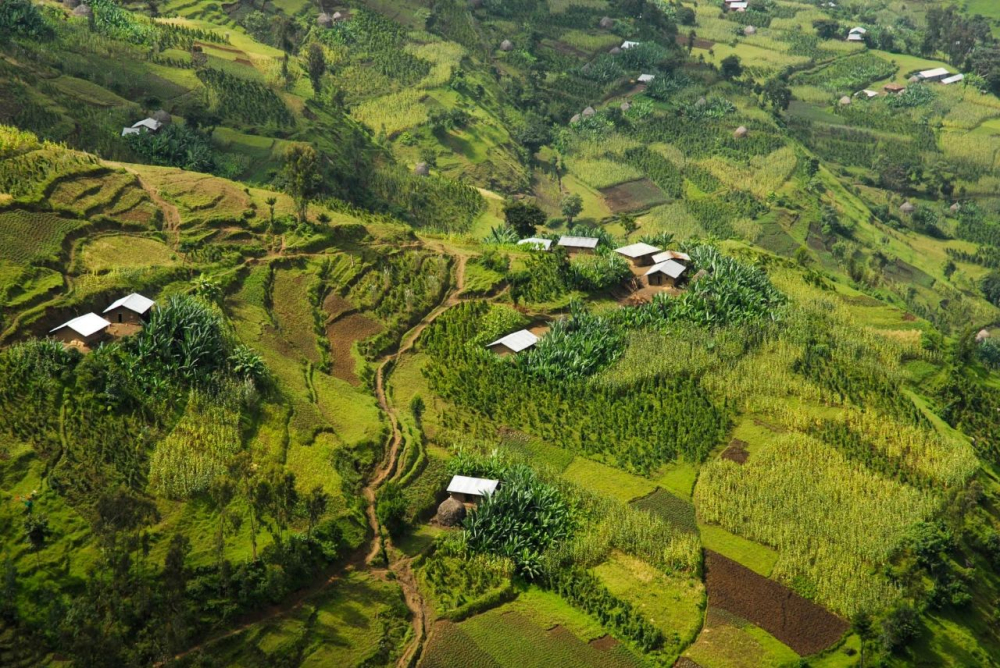
Local coffee production can be summarized into four models: forest coffee, semi-forest coffee, garden coffee, and large plantations, with garden coffee being the most common. So-called garden coffee refers to farmers growing coffee trees mixed with other cash crops in their own fields, usually interplanted with banana trees. It is precisely for this reason that the front and back yards of every household form a distinctive green landscape, and this is exactly the main production method of Ethiopian coffee.
Many observant friends may have noticed when brewing Ethiopian beans that the beans vary in size and shape. As the birthplace of Arabica coffee, Ethiopia has an extremely large number of coffee varieties, making it almost impossible to conduct genetic testing and verification on a larger scale. At the same time, the local government intentionally protects these unknown varieties to prevent industry players from various countries from rushing to obtain them, so it decided to use the native term "Heirloom" to refer to them collectively. Heirloom native varieties are usually smaller in size, rounder in shape, and irregular in form, mostly between 14 and 15 mesh. In cupping, they often display elegant floral and fruit notes, making them widely favored.
From an administrative division perspective, Ethiopia has 5 major regions growing coffee, and the four major planting systems are distributed across the following nine major production areas: Gimma, Sidamo, Yirgacheffe, Harar, Limu, Illubabor, Gimbi (Lekempti), Tepi, and Bebeka. Among them, Yirgacheffe, Harar, and Sidamo rank at the top in recognition.
Front Street Sidamo coffee also originates from smallholder farming
Sidamo is located on the fertile plateau south of Lake Awasa in the East African Rift Valley, with abundant rainfall, a suitable climate, and an altitude of 1,500 to 2,200 meters, making it an ideal place for coffee cultivation. High altitude combined with moderate shade cultivation allows coffee cherries to mature slowly in cooler temperatures, thereby accumulating more nutrients and converting them into flavor compounds.
Similar to other producing regions in Ethiopia, Sidamo coffee also adopts a smallholder farming model. Coffee produced by smallholders is limited in volume, and local coffee cooperatives and processing stations of varying scales are mainly responsible for processing green coffee beans in the region. During each coffee maturation season, coffee farmers send the harvested cherries to nearby processing stations (cooperatives) built near water sources for unified processing, after which they are sold externally under the name of the processing station. Now, with the advancement of the specialty coffee wave, many producers choose to purchase directly from farmers, strengthening the management and traceability of coffee micro-lots, and coffee quality has therefore improved further, with more and more finely processed micro-lots appearing.
Sidamo, or Sidama?
I wonder if you have noticed that whenever looking up stories related to this producing region, two different Chinese translations often appear: one is Sidamo, and the other is Sidama.
The pronunciation of Sidamo comes from the indigenous Sidama people. Like other ethnic groups in Ethiopia, the Sidama people have their own traditions and culture, and even have a New Year recognized by UNESCO—Fiche Chambalala, when more than 5 million people gather in the capital Hawassa every year to celebrate. As early as the late eighteenth to early nineteenth century, the region was invaded and annexed, and the invaders read Sidama as Sidamo, so this term carries a humiliating meaning for the Sidama people. By the 1990s, the Ethiopian government began implementing a federal system and reorganized planning according to major ethnic residential areas and languages, and Sidama accordingly restored its historical original name: Sidama.
However, before the administrative redrawing, Sidamo Coffee was already famous worldwide for its unique aroma, so compared with Sidama, everyone is more accustomed to calling it Sidamo. In addition, when the Ethiopian government protected Sidama coffee through trademark registration, it also chose the old name Sidamo® as the official registered trademark. To this day, domestic consumers are still more accustomed to calling the coffee from here "Sidamo."
What are the flavor characteristics of Front Street Sidamo sun-dried coffee?
When choosing a coffee, besides the origin, the post-processing method is also worth attention, because the flavor direction of coffee is largely affected by the processing method. As Ethiopia's oldest traditional processing method, sun-drying is still used in most areas of Sidamo to process green beans naturally. The classic Sidamo flavor comes from sun-dried processing and is known for being rich and full-bodied. Front Street sun-dried Sidamo has complex sweetness, a viscous and smooth mouthfeel, with spices, flowers, and fruit aromas interwoven into rich layers, accompanied by a bright sweet finish.
Compared with washed processing, sun-dried processing has a longer fermentation time, and the reaction between microorganisms and fruit pulp is greater. When the fruit begins to ferment, microorganisms produce more volatile compounds, especially esters. Although most sugars are destroyed during roasting, these compounds are converted into another form of aromatic compounds during the caramelization reaction. It is precisely these aromatic substances that bring more floral and tropical fruit fermentation aromas to roasted coffee beans, such as furan compounds, making the flavor range of sun-dried coffee broader and making it taste sweeter. A Front Street Sidamo Huakui coffee bean on the Front Street bean list is also selected from a sun-dried lot, produced in Hambella, and its full sweetness makes many customers love it.
Guji Hambella Front Street Sidamo Huakui
Hambella is located at the border between Sidamo and Guji production areas and is currently managed under the Guji production area. Across the mountains from Kochere in Yirgacheffe, the mountains in between reach as high as 3,200 meters, making it the highest-altitude sub-region in Ethiopia. The Huakui coffee originated in 2017 when DW Company submitted it to that year's TOH (Ethiopia National Taste of Harvest competition), where it won the championship in one stroke and was thus officially launched. Huakui is called Hambella in English, which is the name of the Hambella producing area. Front Street Huakui coffee comes from the Buku Abel processing station in Guji and is a sun-dried coffee bean. Buku Abel processing station purchases coffee cherries from different areas around the farm for processing and sale.
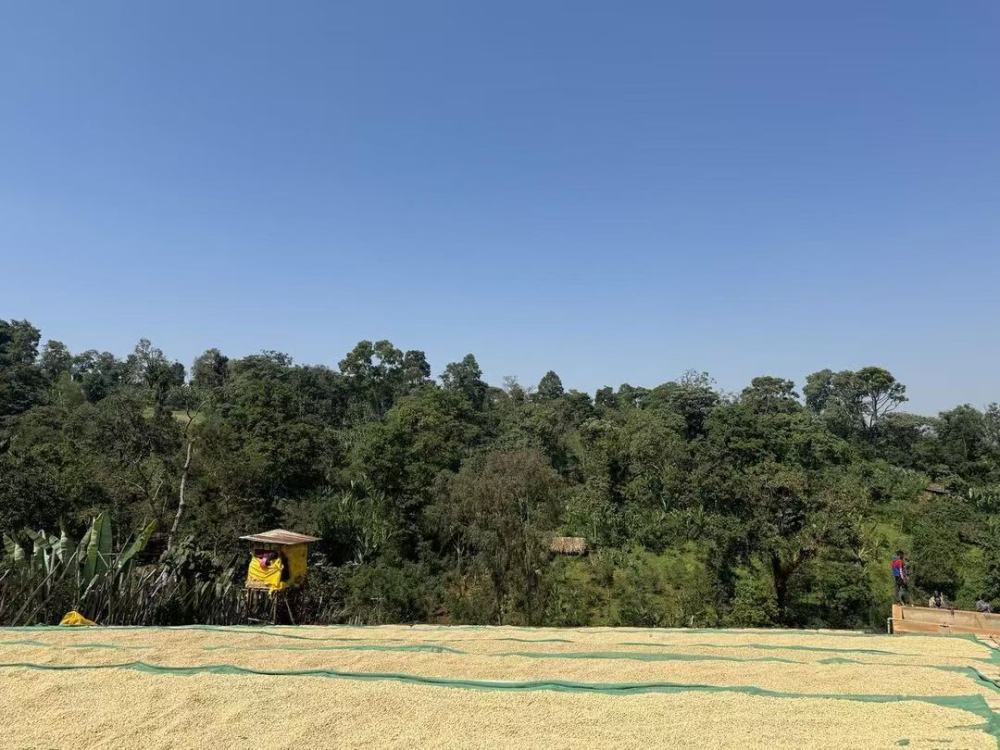
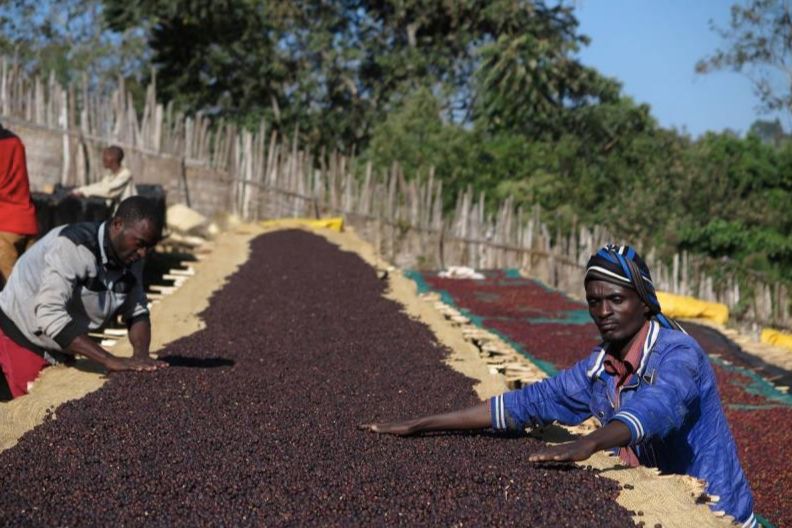
During the annual coffee harvest season (December to January), the Buku processing station organizes farmers to pick fully red coffee cherries, which must have a Brix value of 30 or above. The selected cherries are then placed on African raised beds to dry. Because the local day-night temperature difference is extremely large, coffee farmers shade the cherries at noon to avoid excessive fermentation caused by overly high temperatures; at night, to prevent sudden rain, they wrap them with plastic sheets. They turn them continuously throughout the day so the fruit dries evenly while also preventing sunburn or unpleasant fermentation flavors. After about 18 days of sun-drying, the moisture content of the green coffee beans drops to 13%, and then the husks can be removed by machine.
To present the full fruity flavor of Front Street Huakui coffee, Front Street uses a medium-light roast. Through cupping, Front Street sun-dried Sidamo Huakui coffee has a dry aroma with nuts, honey, berries, and a faint fermentation aroma. On the palate, it has a full passion fruit, cream, and strawberry-like sweet-and-acidic taste, a thick body, and a finish with cocoa notes.
How to brew Front Street Sidamo Huakui 8.0 coffee?
Once the high-quality coffee beans are ready, the next step is to choose the corresponding brewing equipment and parameters. Suitable equipment helps enhance the positive flavors in the cup, while reasonable parameters and techniques can take Front Street Huakui's berry aroma to an even higher level. To brew a cup of coffee by pour-over, at least the following equipment is needed: pouring kettle, dripper, server, grinder, filter paper, electronic scale, and thermometer.
The grinder plays a crucial role in pour-over and is usually divided into two types: hand grinders and electric grinders. No matter which grinding equipment is chosen, the goal is to obtain evenly ground coffee powder. The coarseness of the coffee grounds directly affects the taste of the coffee: too coarse easily leads to under-extraction and a weak taste; too fine easily leads to over-extraction and a bitter taste. When adjusting the grind size, Front Street uses a tool—the Chinese No. 20 0.85mm standard sieve. For medium-light roasted coffee beans, Front Street consistently uses a 75-80% passing rate, while for medium-dark roasted coffee beans it uses 70-75%. Here, Huakui 8.0 belongs to medium-light roasted high-altitude coffee beans. Front Street hopes to extract richer aromatic substances, so it chooses a grind size with an 80% passing rate on the No. 20 standard sieve. The store uses an EK43s grinder at a setting of 10.
The thermometer is used to measure the temperature of hot water. Water temperature acts similarly to grind size: the higher the water temperature, the higher the coffee extraction efficiency, the easier it is to release various substances and components, and the higher the concentration. If brewing with hot water close to boiling, it is easy to extract unpleasant bitter substances. Therefore, when brewing medium-dark roasted coffee beans, Front Street uses different brewing parameters from those for light roasted coffee beans. Medium-dark roasted beans undergo a more complete caramelization reaction than light roasted beans, making it easier to release bitter large-molecule substances. To avoid extracting too many off-flavors, Front Street appropriately lowers the water temperature, so for medium-dark roasted coffee beans Front Street recommends 87-90°C, while light roasted coffee needs a higher water temperature to stimulate aroma, so 91-93°C is used.
Front Street Coffee (FrontStreet Coffee) stores choose the Hario V60 and KONO drippers for daily service. The V60 dripper is mainly responsible for producing coffee beans with a lighter roast level, while the KONO dripper is responsible for producing coffee beans with a darker roast level. Here, the Front Street Coffee (FrontStreet Coffee) barista will use a resin V60 dripper to extract Yirgacheffe coffee. The V60 dripper body has guide ribs connecting the top and bottom and a large central hole, which speeds up the flow rate of water, while the spiral-shaped exhaust groove design lengthens the water flow path and increases the contact time between coffee grounds and hot water. Each stream of water converges along the grooves toward the center of the dripper, concentrating the pressure on the coffee grounds and extracting coffee with richer layers.
As for the brewing ratio of Front Street Huakui 8.0, Front Street believes 1:15 to 1:16 are both acceptable. If you want a richer mouthfeel, use 1:15; if you want to feel the floral sweetness more clearly, you can use 1:16 to let the flavors spread out more.
Front Street Huakui 8.0 pour-over parameters shared:
Dripper: V60 Water temperature: 92-93°C
Dose: 15g Coffee-to-water ratio: 1:15 Grind size: fine granulated sugar size (sieve to 78% with No. 20 sieve bowl)
Based on past brewing experience, Front Street recommends that beginners just starting out use the three-stage pouring method. Three-stage extraction helps more fully dissolve flavor substances during extraction, increases the layers of mouthfeel, and at the same time avoids over-extraction caused by too long steeping. For 15 grams of coffee powder, a 1:15 coffee-to-water ratio, and 225ml total water, the three-stage water amounts are divided into: 30ml, 95ml, 100ml, and the weights shown on the electronic scale are: 30g, 125g, 225g.
Fold the filter paper and fit it snugly against the dripper, wet the filter paper with a small amount of water while making them fit better, and pour out the water in the server. Then add the coffee grounds and tap gently to distribute the coffee bed evenly. In the first stage, gently pour 30 grams of water for blooming, with a blooming time of 30 seconds. In the second stage, pour to about 125 grams of water, circling outward evenly and steadily. Then wait for the coffee liquid to descend. When it has dropped halfway, pour the final stage of water to 225 grams. After all the coffee has dripped through, the total extraction time is generally about 2 minutes.
The above content is compiled by CoffeeHunters, a coffee news website.


