







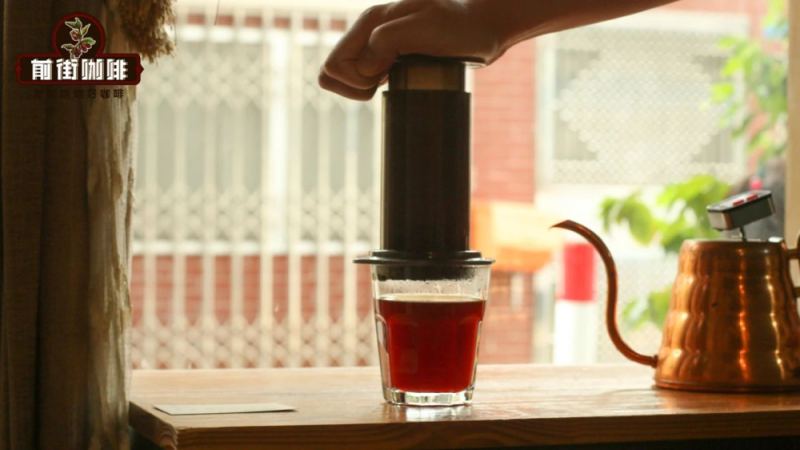
How do you use a coffee maker that brews by hand pressure?
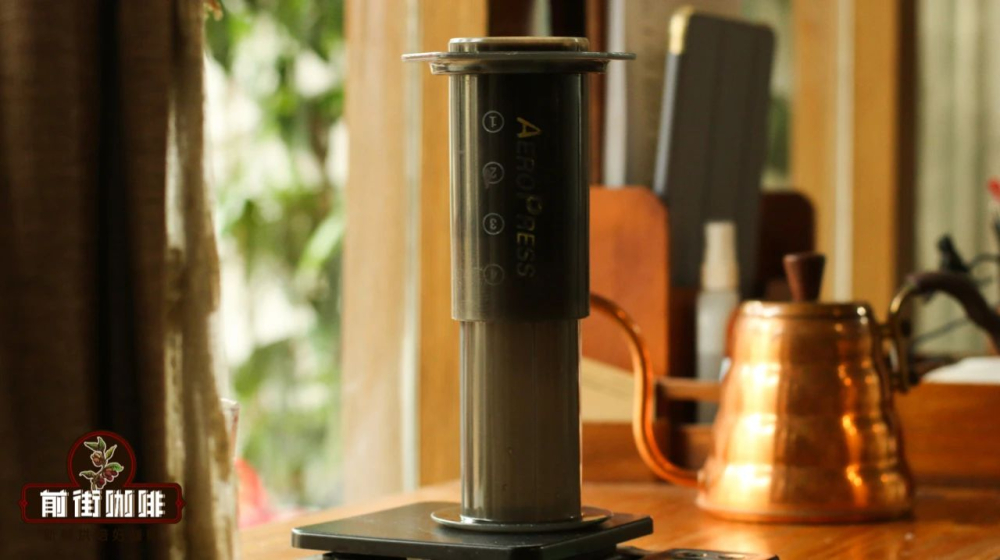
The AeroPress works by pushing hot water through coffee with hand pressure, not electricity or a lever. It was invented by Alan Adler, whose company mainly made frisbees, and reached the market in 2005. The device has two main parts and brews a full-bodied cup quickly, which is why it is often described as a syringe-style coffee maker.
Adler's goal was to cut extraction time to reduce bitterness, and pressure was the way to shorten it. The recommended brewing temperature and time sit lower than those of a French press. Inverted brewing is one common method, and Front Street Kenya Little Tomato is used as a working example. The device has also produced the World AeroPress Championship.
The AeroPress is a uniquely shaped coffee brewing device, invented by Alan Adler, the owner of a frisbee company. Inspired by espresso machines, it relies on manual pressure for rapid extraction. It is easy to operate, portable, and affordable, and it offers a rich variety of brewing methods, even giving rise to the World AeroPress Championship (WAC). This article will begin with the origins and features of the AeroPress, then use "Front Street Kenya Little Tomato" as an example to demonstrate the inverted brewing steps in detail, giving you a comprehensive understanding of why this device is called a syringe coffee maker and whether it is actually good to use.
For more specialty coffee knowledge, please follow the WeChat public account: Front Street Coffee (FrontStreet Coffee)
The AeroPress is not a brewing device that flashed in the pan. Its appearance is very different from common coffee equipment, and the company that invented it mainly makes frisbees, not coffee gear. Yet today, the AeroPress has become a favorite among countless coffee lovers worldwide, has spawned the World AeroPress Championship (WAC), and has even had a dedicated documentary made about it.
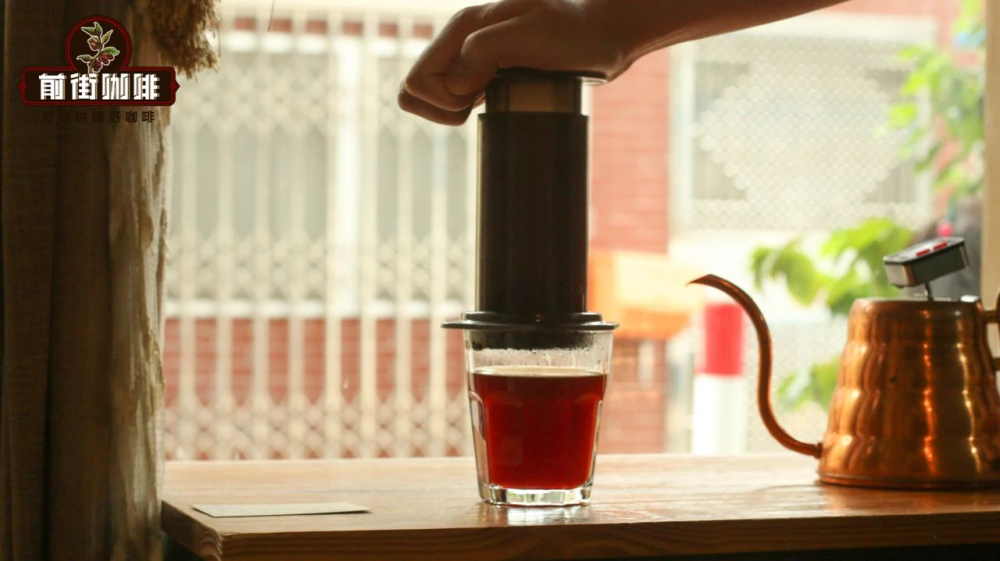
This compact device, made of two parts, can quickly make full-bodied coffee by simply pushing hot water through a filter to complete extraction. Its design was inspired by espresso machines, with the difference being that it does not rely on electricity or levers, but on pressure applied by hand.
The AeroPress is also somewhat similar to a French press, although French presses are not especially favored in the specialty coffee world. In addition, the AeroPress's recommended brewing temperature and time are noticeably lower than those of a French press. In other words, although the AeroPress is now quite widespread, when it first came to market in 2005, it was indeed a uniquely distinctive brewing tool. Alan Adler, the owner of the AeroPress company, initially developed it with an engineer's mindset. To eliminate coffee's bitterness, he decided to start by shortening the extraction time.
He found that to shorten extraction time, pressure was necessary, so he designed a sealed chamber that generated pressure through pushing, allowing users to complete brewing faster. (However, AeroPress recipes are now highly varied, and some extraction times are even longer than those of conventional methods.)
At first, many specialty coffee professionals were skeptical, thinking the AeroPress company was merely a toy manufacturer rather than a producer of innovative coffee equipment. But over time, that view began to change. Alan responded to the doubts with brewed coffee samples, and word gradually spread. After all, the most direct way to prove whether the AeroPress works is through the flavor in the cup.
Yet with so many brewing devices on the market, why has the AeroPress become such a standout among them?
Coffee is a global movement, with brewing methods from around the world being incredibly diverse, and the AeroPress can make delicious coffee in one minute, while also being easy to clean, portable, affordable, and versatile. Perhaps there are other reasons for the AeroPress's popularity, but it may be precisely because it allows for extensive brewing experimentation that a dedicated World AeroPress Championship emerged.
Brewing time, pressing time, coffee dose, coffee-to-water ratio, water temperature, upright or inverted use, and so on... The AeroPress has many ways to be used, and different methods produce coffee with different flavors.
The specialty coffee world has many professional competitions, such as the World Barista Championship WBC, the World Brewers Cup WBrC, the World Latte Art Championship WLAC, the World Roasting Championship WRC, and various green bean evaluation competitions. But in 2008, a brand-new competition appeared—someone in Oslo, Norway designed the AeroPress into a relaxed, fun competition called WAC. Despite high interest, only three people competed at the time, and it was initiated by Tim Varney and the well-known barista Tim Wendelboe. (Today they still run the competition together with Tim Williams.)
Just like the AeroPress itself, this competition began to rise to fame and became widely known in the specialty coffee world. By 2018, 3,157 people from 61 countries had attended the competition in person, and the online broadcast had 68,265 views.
There are many ways to use the AeroPress, and competitors constantly explore new methods and fine-tune existing ones, which is completely different from the direction of barista competitions that pursue the ultimate performance of espresso machines. WAC is an event for everyone; anyone can participate, even without the deep pockets and green bean resources of a coffee company. This is a competition full of creativity and experimental spirit, and these ideas and experiments in turn inspire even more delicious coffee.
Let's brew a cup of coffee with the AeroPress
This time we are using "Front Street Kenya Little Tomato." When brewed as pour-over, it shows bright acidity like smoked plum and cherry tomato, along with a sweetness reminiscent of pear!
Dose: 18g Grind setting: EK43s setting 7 / 90% passing rate on a No. 20 sieve (finer than a regular pour-over grind) Coffee-to-water ratio: 1:11 (about 200ml) Water temperature: 90°C Extraction method: inverted

We can place two round filter papers on the filter cap in advance, then wet them with water so they stick. (If you do not have round filter papers, you can cut them from filter paper.) 1. Assemble the plunger and the chamber, then push the plunger down to around mark ④ and invert it! 2. Add the ground coffee, then pour in an equal amount of hot water and start timing! 3. Use a stirrer to stir the coffee grounds in the chamber for ten seconds. (Slowly in circles.) 4. Attach the filter cap with the fitted filter paper to the chamber. 5. Then place it onto the prepared container. 6. When the time reaches one minute, flip it over, then begin pressing downward to "push out" the coffee.
And just like that, extraction is complete, taking about 1 minute and 20 seconds. Compared with the standard method, the inverted method offers greater stability and can greatly reduce the difficulty for beginners. The Kenya coffee it extracts tastes sweet and tart, with a very full juice-like body. It is really excellent.
The above content is compiled by CoffeeHunters, a coffee news website.


