







What Does Bright Acidity Meaning Have to Do With Cold Brew Grind Size and Steeping Time?
Cold brew uses immersion extraction at a fixed low temperature, so grind size and steeping time are the two variables that decide the cup. A coffee-to-water ratio between 1:12 and 1:13 works as a baseline: above 1:13 the brew tastes weak and flat, below 1:12 it turns heavy and hard to drink. Use a grind coarseness similar to pour-over and steep for 8 to 24 hours.
Because cold brew extracts cold, the time parameter sits entirely under the brewer's control, and the extracted flavor shifts with it. Longer steeping pushes body and sweetness, shorter steeping keeps the cup lighter and more acidic, which is part of what bright acidity meaning describes in practice. Front Street's Strawberry Candy beans demonstrate the full method from ratio to final taste.
Cold brew coffee, with its extremely high extraction compatibility, has become an ideal choice for making iced coffee at home. This article focuses on the two core variables of grind size and steeping time, systematically sorting out the parameter logic and practical recommendations for cold brew. Based on multiple experiments, Front Street provides a coffee-to-water ratio range of 1:12 to 1:13, a grind coarseness similar to pour-over, and a reliable steeping duration of 8 to 24 hours, and explains the flavor direction at different time points. At the end of the article, the complete steps and taste description for making cold brew with Front Street's Strawberry Candy coffee beans are attached for coffee lovers' reference.
For more specialty coffee knowledge, please follow the WeChat official account: Front Street Coffee (FrontStreet Coffee)
In Front Street's view, cold brew is the most suitable type of iced coffee for home preparation. Its extraction compatibility is quite high, and even without professional equipment on hand, you can still make a decent cup of iced coffee. Recently, a friend happened to ask Front Street about grind size and steeping time, so today we'll take this opportunity to discuss it.
Although this friend did not ask about the ratio, the parameters in an extraction plan are interrelated, so the ratio still needs to be mentioned first. Front Street recommends controlling the coffee-to-water ratio between 1:12 and 1:13 when making cold brew. In Front Street's experiments, when the ratio was higher than 1:13, some coffee beans tasted weak and flat; when it was lower than 1:12, it became too heavy and difficult to drink.
Next, Front Street will talk about how to choose the grind size and time for cold brew. This requires starting from the extraction principle of cold brew. Cold brew is essentially immersion extraction, which means the time parameter is entirely under our control (steep as long as you want, and end it whenever you want).
But cold brew has another attribute—low-temperature extraction, meaning the extraction temperature is a fixed constant. Whether we want the cold brew to be brighter in acidity or fuller-bodied depends on adjusting the two parameters of grind size and time. Compared with the many variable factors in other extraction methods, cold brew is the simplest and most friendly choice.
When it comes to grind coarseness, the principle is easy to understand: the finer the coffee is ground, the faster the flavor is released (coffee substances are released more quickly); the coarser it is ground, the more slowly the coffee grounds release substances. However, Front Street should remind you of one point: cold brew is a long still-steeping extraction. If the coffee grounds are too fine, these particles will clump together and stick to each other, making it even harder for cold water to contact the coffee substances.
Therefore, overly fine coffee grounds are not suitable for making cold brew. After many experiments, Front Street found that a coarseness similar to pour-over grind size (if expressed with a No. 20 sieve, a passing rate between 70-85%) can all be used to make cold brew coffee.
The logic of time is even easier to understand: the longer the steep, the greater the total amount of substances released by the coffee, and the stronger the coffee. But it is not the case that the more coffee substances dissolve, the better. Through experiments, Front Street learned that when steeping exceeds 24 hours, cold brew is prone to a bitter taste reminiscent of nuts and wood shavings; while when steeping is less than 8 hours, the amount of coffee substances released is insufficient, and it is very likely to be a thin cup of coffee-flavored water. Therefore, a relatively safe cold brew steeping time is 8-24 hours.
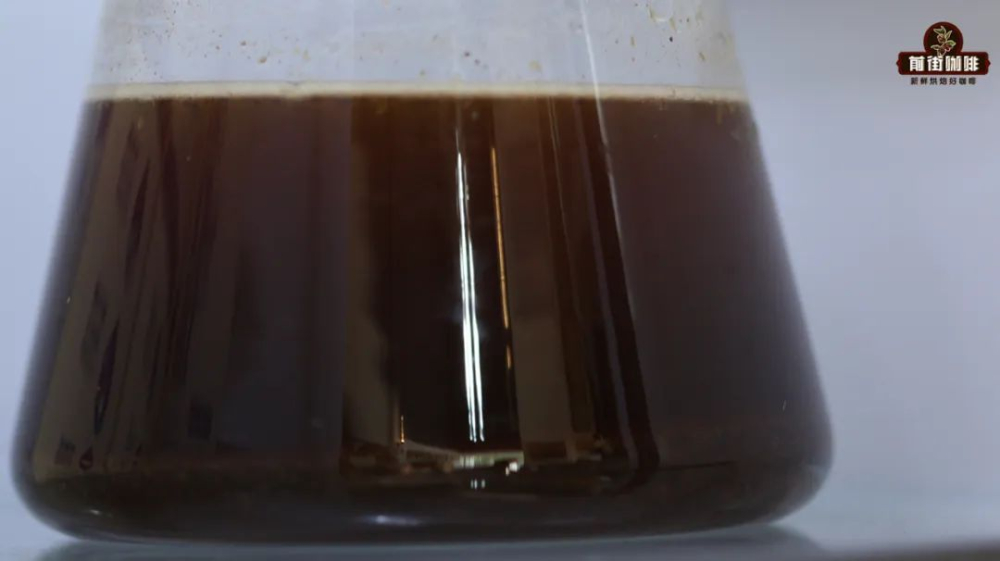
At this point, some friends may ask: why can this time span be so long? There is a 16-hour difference between 8 and 24 hours—won't the flavor vary greatly? When we extract espresso, a difference of 1 second may make a big difference in flavor; when brewing pour-over, a difference of 20 seconds can allow us to discern changes in flavor. That is because espresso uses high-temperature pressurized extraction, and pour-over also uses high temperature plus agitation to improve extraction efficiency. But the water temperature for cold brew averages 4-10 degrees Celsius, so the extraction efficiency is very low. In addition, the coffee grounds and water are in a relatively static state, with no external force driving them, so the flavor substances released by the coffee grounds are very limited.
When steeped for 8 hours, the coffee's flavor will be bright in acidity and refreshing.
When steeped for 16 hours, the coffee's flavor will be rounder and fuller, with plenty of sweetness and acidity.
When steeped for 24 hours, the coffee's flavor and mouthfeel will be relatively thick, rich, and balanced.
If the grind size range (No. 20 sieve passing rate 70-85%) is divided into three levels—coarse, medium, and fine—and the time range (8-24 hours) is divided into three levels—short, medium, and long—then reasonable cold brew coffee plans are:
The safe approach is coarse grind paired with long extraction, which is a must-have for lazy people. For example, if you are free at this time today, then you will most likely also be free at this time tomorrow, which saves you from calculating time (and from forgetting that you made cold brew).
The time-saving approach is medium-fine grind paired with medium-to-long time. This can shorten the time accordingly, and reducing the extraction time will also make the coffee taste more refreshing.
Finally, Front Street will explain Front Street's cold brew coffee making method!
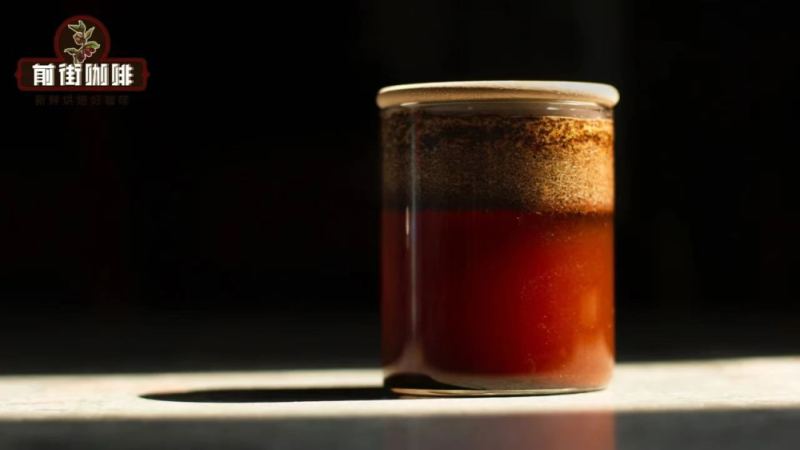
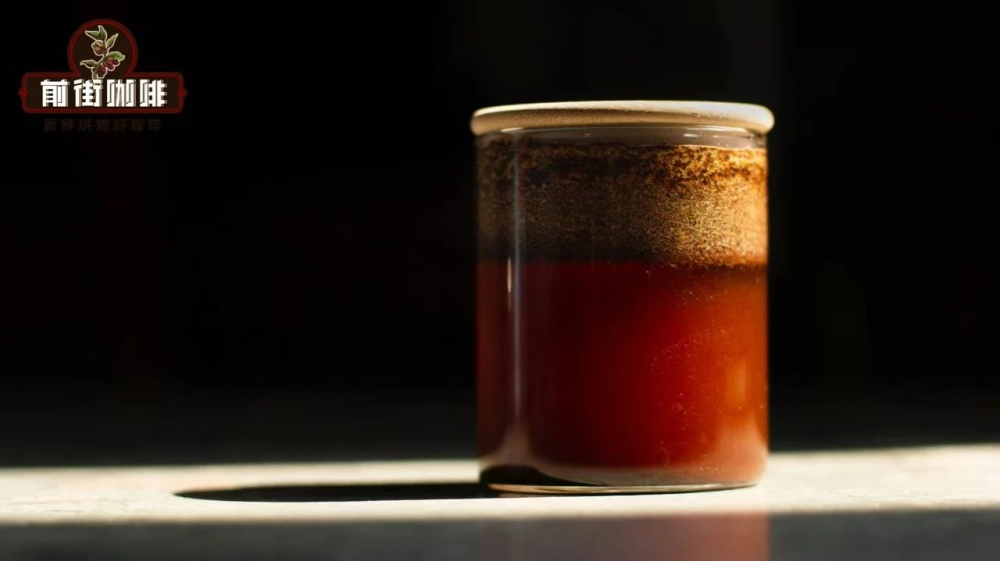
First, for coffee beans, Front Street tends to use light to medium roast coffee beans. Here, the juicy Front Street Strawberry Candy coffee beans are used. For the container, you only need a clean sealable container. Prepare 40 grams of coffee grounds, grind them fine (No. 20 sieve passing rate 85%), pour into the container, then pour in 480 milliliters of cold water, stir evenly with a wooden stick, and cover with the lid.
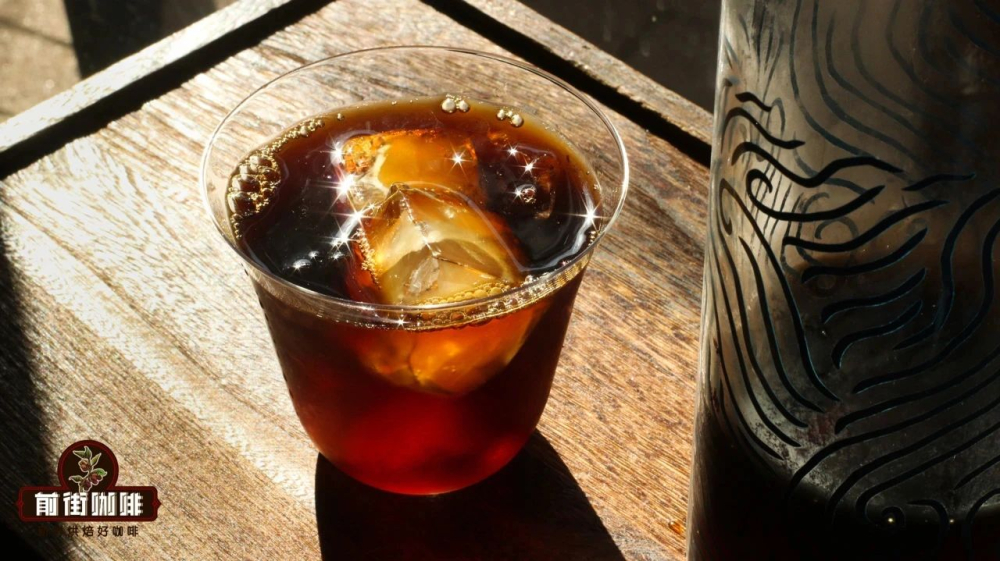
After refrigerating for 12 hours, take it out and filter out the grounds. The coffee liquid after filtering out the coffee grounds can be drunk immediately, or the filtered coffee liquid can be put into a bottle and kept refrigerated for another 4 hours, which will give an even better flavor and mouthfeel.
The Strawberry Candy cold brew made this way has a moderate balance of sweetness and acidity, with a soft aroma of berries and roses when drunk, an orange-like taste filling the mouth, and after swallowing, it is accompanied by the rounded sweetness of almonds and candied fruit.
The above content is compiled by CoffeeHunters, a coffee news website.


