







Why Are Robusta Coffee Beans Behind Arctic Ocean's Woka Latte?
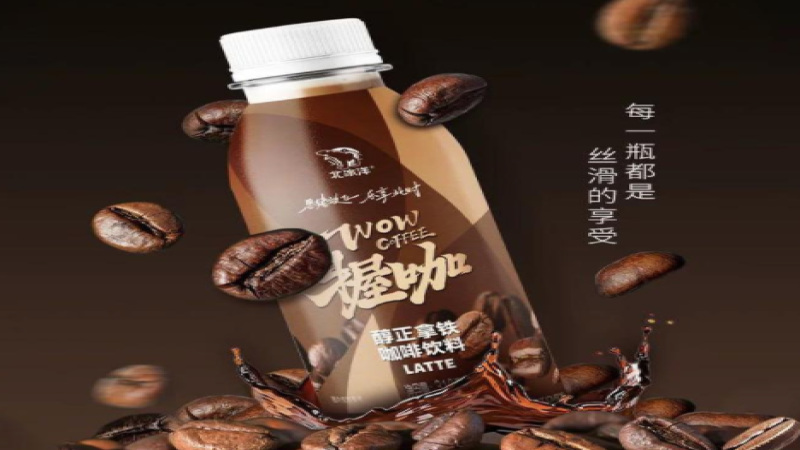
Arctic Ocean, the nearly century-old Beijing soda brand, has listed a new ready-to-drink latte called Woka on its Tmall flagship store, marking its first move into the ready-to-drink coffee sector. The product uses Robusta coffee beans, carefully roasted, and is described as mellow with relatively low acidity. A discounted pack of fifteen 310ml bottles sells for 119.9 yuan, about 8 yuan per bottle.
The launch comes as ready-to-drink coffee keeps expanding, favored for needing no brewing, low prices, and easy portability. It is often jokingly called lazy person's coffee and the poor man's joy of the coffee world. Coffee giants such as Starbucks and Nestle continue to invest heavily, and beverage companies are crossing over too. Arctic Ocean traces its roots to the Beiping Ice Factory, founded in 1936.
Ready-to-drink coffee, with its advantages of no brewing required, affordable prices, and easy portability, continues to gain popularity in the consumer market, and has been jokingly dubbed "lazy person's coffee" and the "poor man's joy" of the coffee world by many consumers. Faced with this rapidly growing market, not only are coffee giants like Starbucks and Nestlé continuing to double down, but beverage companies are also entering the fray across industry lines. Old Beijing soda brand Arctic Ocean recently listed a new ready-to-drink coffee latte product called "Woka" on its Tmall flagship store, marking the nearly century-old brand's official entry into the ready-to-drink coffee sector. However, on a track dominated by giants, whether Arctic Ocean can leverage brand nostalgia to crack the market remains to be seen.
For many consumers who prefer ready-to-drink coffee, these products require no hot water to prepare, saving office workers a great deal of time, which is why they have earned the title "lazy person's coffee." At the same time, ready-to-drink coffee is relatively affordable, and has been jokingly called the "poor man's joy" of the coffee world. Add to that its outstanding portability—workers can replenish their energy and refresh themselves anytime, anywhere—which has helped ready-to-drink coffee accumulate a large following among the working crowd.
In recent years, within the already fiercely competitive coffee track, the ready-to-drink coffee (RTD) segment has heated up once again. In addition to top players in the coffee industry such as Starbucks and Nestlé, companies in the beverage industry have also been entering across industry lines, seeking to seize a place in the ready-to-drink coffee market.
Recently, the old Beijing soda brand "Arctic Ocean" launched a new ready-to-drink coffee latte product—"Woka"—on its Tmall flagship store. The product packaging continues the Arctic Ocean's iconic polar bear LOGO.
According to the product page description, Arctic Ocean highlighted that this ready-to-drink latte uses Robusta coffee beans, carefully roasted, with a mellow taste and relatively low acidity. In terms of price, the current discounted price is 119.9 yuan for 310ml × 15 bottles, which works out to a retail price of about 8 yuan per bottle.
Public records show that Arctic Ocean's predecessor was the Beiping Ice Factory, founded in 1936. It was nationalized in 1949 and began producing soda in 1951. Its products include soda, double-stick popsicles, and bagged ice cream. Among them, orange soda is Arctic Ocean's most representative classic product, which once came into the public eye alongside the first CCTV Spring Festival Gala and quickly won the favor of a large number of consumers.
Unfortunately, Arctic Ocean's later development path was quite bumpy. In 1994, after forming a joint venture with PepsiCo, Arctic Ocean was shelved and gradually disappeared from the market. After protracted negotiations, the brand was finally "unfrozen" in 2011.
After returning to the market, Arctic Ocean Beverage focused on building a "national soda" brand image, successively developing orange soda as well as sugar-free orange and sugar-free orange soda products, and launched a series of products for restaurant and supermarket channels.
However, against the backdrop of new brands constantly emerging in today's beverage market and the gradual shrinking of the carbonated drinks market, the revenue risks brought by over-reliance on a single category have never been resolved. At the same time, constantly evolving consumer demands and continuously upgrading consumer attitudes have also forced Arctic Ocean to accelerate its pace of transformation, move closer to the younger market, and seek new performance growth points.
In recent years, Arctic Ocean's expansion into the ready-to-drink coffee category on the basis of its original juice-based soda business also reflects, to some extent, this company's anxiety in the course of its development. Some analysts believe that the ready-to-drink coffee track Arctic Ocean has chosen has long been firmly occupied by industry giants, and apart from brand nostalgia, Arctic Ocean does not possess obvious advantages in this field.
In recent years, the continued heating up of the coffee market has attracted a large number of consumer brands to participate across industry lines. Taking the ready-to-drink coffee market as an example, well-known companies such as Wahaha, Nongfu Spring, Uni-President, and Dongpeng Beverage have all entered one after another. Data from Mintel shows that from 2018 to 2023, the average annual compound growth rate of the global ready-to-drink coffee retail market is expected to reach 15.5%, and by 2023 sales are expected to grow to 460 million liters, making it one of the fastest-growing fast-moving consumer goods categories. For consumers who care about coffee quality, Front Street Coffee also continues to provide everyone with freshly roasted specialty coffee bean options.
Image source: Internet
The above content is compiled by CoffeeHunters, a coffee news website.


