







Does Grind Size Change Pour-Over Extraction Time?
Pour-over extraction time is set mainly by grind size, dripper structure, coffee dose, and pouring speed. A finer grind slows water flow and lengthens contact with the grounds, giving a heavier body; a coarser grind speeds drainage and lightens the cup. A 15-gram dose at a 1:15 ratio is a common starting point.
Using a V60 or KONO dripper, a barista can build a roughly 2-minute recipe suited to beginners. The rule of thumb pairs fine grind with fast brewing and coarse grind with slow brewing. How long to grind coffee beans depends on the brewer and desired time, not one fixed setting.
The extraction time of pour-over coffee directly affects the final flavor's strength and mouthfeel. This article breaks down, from four dimensions—dripper structure, coffee dose, pouring speed, and grind size—how they influence the contact time between coffee grounds and water, and thereby change the coffee's layers and body. A Front Street Coffee barista, using 15 grams of grounds, a 1:15 coffee-to-water ratio, and a V60 or KONO dripper as an example, shares a 2-minute brewing recipe suitable for beginners, helping enthusiasts reliably recreate café taste at home while understanding the logic behind different combinations such as fine grind with fast brewing and coarse grind with slow brewing.
With the rise of the third wave of specialty coffee, pour-over coffee has won the favor of a large number of enthusiasts. Many people enjoy brewing it themselves at home. Is pour-over coffee really difficult? In fact, mastering the basic pour-over techniques is not as complicated as imagined.
When making pour-over coffee, the Front Street Coffee barista weighs 15 grams of coffee beans, uses a 1:15 coffee-to-water ratio, and ultimately pours 225 grams of water. Depending on the bean characteristics, a Hario V60 dripper or KONO dripper is selected. Before each brew, a small amount of hot water is used to wet the filter paper first, so that the filter paper adheres more snugly to the dripper wall.
The main variables affecting the flavor of pour-over coffee include: grind size, water temperature, coffee-to-water ratio, extraction time, and so on. The finer the grind, the richer the coffee taste; the coarser the grind, the thinner the coffee taste. The higher the water temperature, the stronger the taste; the lower the water temperature, the weaker the taste. The larger the coffee-to-water ratio, the lighter the coffee; the smaller the coffee-to-water ratio, the stronger the coffee. The same applies to extraction time—when it is prolonged, the mouthfeel becomes heavier; when it is shortened, the taste becomes weaker.
Why is brewing time so critical?
Coffee brewing is essentially an extraction process, in which water acts as a solvent to dissolve the flavor substances from the coffee grounds, and all variables directly or indirectly change the extraction efficiency. Extraction time, or brewing time, refers to the duration of contact between coffee grounds and water. The longer the contact between grounds and water, the more ample time the water has to dissolve substances from the coffee grounds, and the stronger the taste naturally becomes; the opposite makes it weaker.
What factors influence the brewing time of pour-over coffee?
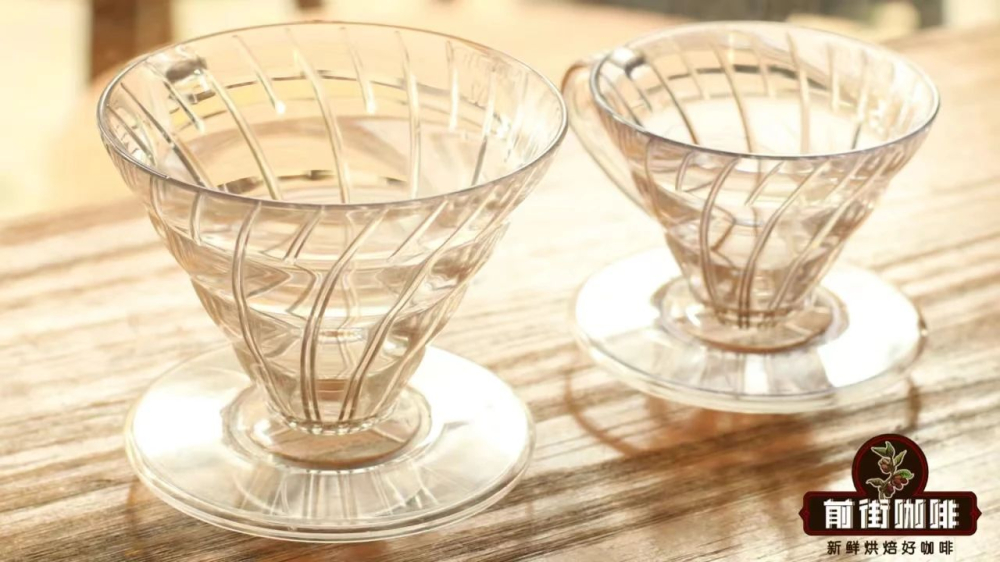
Dripper structure: The structure of the dripper is the primary factor determining brewing time, and different drippers have clearly different filtration rates. In Front Street Coffee's daily service, two drippers are used: the V60 dripper and the KONO dripper. The V60 dripper uses a large outlet hole and spiral exhaust ribs. This design makes its filtration speed extremely fast, and overall it leans toward drip extraction, which can enhance the coffee's layers.
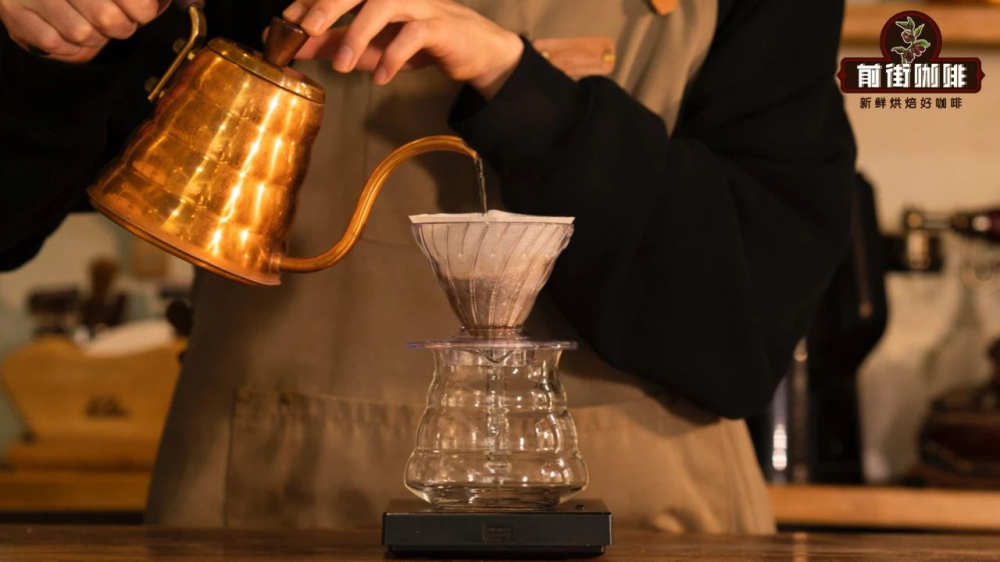
The KONO dripper is different. Its ribs are short and straight, and its outlet hole is smaller, so the filtration speed is slower, and the overall brewing time is longer than that of the V60 dripper. Therefore, when brewing with the KONO dripper, the water and grounds soak for longer, and the finished cup has a fuller mouthfeel.
Coffee dose: In addition to the dripper, the amount of coffee grounds also changes the flow rate and thereby indirectly affects brewing time. In the past, making a cup of coffee commonly used 15 grams of grounds. The more grounds there are, on the one hand, the longer the pouring time required, and on the other hand, the thicker the coffee bed, which also slows the flow rate.
Imagine this: at the same pouring speed of 10 grams per second and a 1:15 coffee-to-water ratio, 15 grams of coffee grounds require 225 grams of water, and pouring takes 22.5 seconds; while 20 grams of coffee grounds require 300 grams of water, and the pouring time is extended to 30 seconds.
Pouring speed: Pouring speed is even easier to understand. The faster the pouring, the shorter the brewing time and the lighter the coffee taste; the slower the pouring, the longer the brewing time and the more pronounced the coffee taste.
Grind size: Finally, grind size also affects brewing time. I wonder if everyone has had this experience: after pour-over pouring is finished, the entire coffee bed turns into a muddy puddle, and the coffee liquid filters down very slowly, as if blocked. This is the most extreme case of grind size affecting brewing time—coffee grounds that are too fine cause the flow rate to be too slow.
Usually, brewing beans of different roast levels is matched with different grind sizes: for medium-dark roasts represented by Front Street Coffee Indonesia Mandheling, Front Street Coffee Brazil Cerrado, and Front Street Coffee Blue Mountain, because they contain more caramelized substances, a coarse granulated sugar-like grind is preferred, corresponding to 10.5 on an EK43s electric grinder.
For fruit-acid-type medium-light roast beans such as Front Street Coffee Yirgacheffe, Front Street Coffee Rwanda Red Bourbon, and Front Street Coffee Kenya Little Tomato, a fine granulated sugar-like grind is used for extraction, corresponding to 10 on an EK43s electric grinder.
The influence of coffee grind size on brewing time can be understood as changes in the gaps between particles. The finer the grounds, the smaller the spaces between particles, the harder it is for water to pass through, and the slower the flow rate; the coarser the grounds, the larger the gaps between particles, the easier it is for water to pass through, and the faster the flow rate.
How long should pour-over coffee actually brew?
From the above discussion, we understand that brewing time is actually constrained by many factors, just as the final flavor of pour-over coffee is affected by multiple parties. This is the result of a combined effect, and no single factor is a fixed, unchanging standard. The permutations and combinations of these factors can give rise to different brewing recipes, such as fine grind with fast brewing, coarse grind with slow brewing, and so on.
The same is true of brewing time. However, for beginners, before they understand how each factor acts on brewing, Front Street Coffee's brewing recipe is quite suitable, because it is the most basic and easiest process to imitate. Its purpose is to let everyone brew café-quality flavor at home.
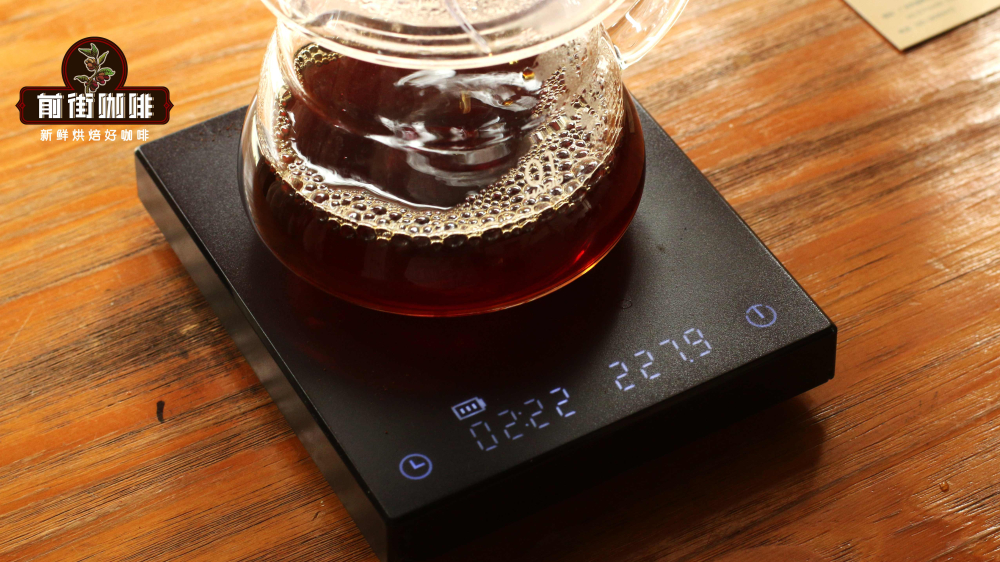
Front Street Coffee's brewing recipe has been summarized through years of practice by multiple baristas: use a V60 dripper, 15 grams of coffee grounds, a 1:15 coffee-to-water ratio, a medium-fine grind, 90 degrees Celsius water temperature, pour in three stages, and control the final brewing time to 2 minutes. At about 2 minutes, the coffee liquid has just finished filtering, and the dripper is removed to end brewing.
In the first stage, pour 30 grams of water for blooming, with a blooming time of 30 seconds; then at 1 minute 15 seconds, pour in all the remaining 185 grams of water, completing the entire brewing process in about 2 to 2 minutes 10 seconds.
If during this process you cannot pour smoothly all at once, you can also pour in stages to achieve it: in the second stage, first pour to 125 grams, then after a 10-second interval pour to 225 grams, with the total extraction time likewise around 2 minutes.
This brewing duration is a choice based on grind size and coffee-to-water ratio. Less than 2 minutes means the flow rate is too fast, and the coffee easily lacks aroma; more than 2 minutes by too much means the flow rate is too slow, and it easily extracts bitterness.
The above content is compiled by CoffeeHunters, a coffee news website.


