







How does an Italy latte compare to a ristretto in extraction and flavor?
Espresso is coffee extracted quickly under about 9 bar of pressure in a short time, traditionally about one ounce per shot. It is defined by speed and strength: the drink is ready in under half a minute and can be finished in a few sips. Most cafe menus, from an Italy latte to an Americano, are built on this base.
Concentration comes from the ratio. Pour-over is usually brewed around 1:14 to 1:18, while espresso commonly runs near 1:2, so 18 grams of grounds yield about 36 grams of liquid. Ristretto uses less water for a shorter, more concentrated shot, which is why it tastes less bitter yet denser and works well in milk drinks. An Italy latte, by contrast, adds steamed milk that softens the espresso's intensity.
On an espresso menu, espresso is an irreplaceable foundation—whether it's a latte or an Americano, everything is built on top of it. Yet many people still think of it as just "strong and bitter." What exactly is espresso? And how does Ristretto differ from it? From the perspective of Front Street Coffee, this article first explains the definition and characteristics of espresso, then breaks down the six key steps in the brewing process, and finally reveals the flavor differences between the beginning, middle, and end of an espresso shot through a staged extraction experiment, explaining why Ristretto is less bitter yet more concentrated, and the logic behind its use in milk coffee.
For more specialty coffee knowledge, please follow: Front Street Coffee (Frontsteet Coffee)
In the menu composition of today's cafés, espresso-based drinks still hold a key position. Centered around espresso, a rich variety of drink forms have emerged—for example, adding steamed milk makes a latte, and adding a suitable amount of water makes an Americano. It can be said that the vast majority of common espresso drinks are built on espresso, giving it a pivotal status. Today, Front Street will take a closer look at this intensely flavored coffee with its bitter notes.
Before diving into the discussion, it's worth clarifying what espresso actually is. Espresso corresponds to the English word "espresso," originated in Italy, and is coffee extracted quickly under about 9 bar of pressure in a short time. Traditionally, a single shot of espresso has a volume of about one ounce. One of its prominent characteristics is "fast"—fast to make and fast to drink. With the help of an espresso machine, the entire extraction process takes less than half a minute, and the tiny cup size means it can be finished in three sips or less.
Besides "fast," another major characteristic of espresso is "strong." The coffee-to-water ratio commonly used for pour-over coffee is usually recommended between 1:14 and 1:18, and the brewer can adjust flexibly according to personal taste. But espresso's ratio is much lower—the most common coffee-to-beverage ratio is about 1:2, meaning 18 grams of coffee grounds extract 36 grams of coffee liquid.
For this reason, espresso is very intense on the palate. In China, public acceptance of espresso still has considerable room to grow, and more people prefer espresso drinks diluted with milk or water. In recent years, many cafés have also been actively developing creative coffees, using various elements to soften the sharpness of espresso and make it easier to drink.
How is espresso made?
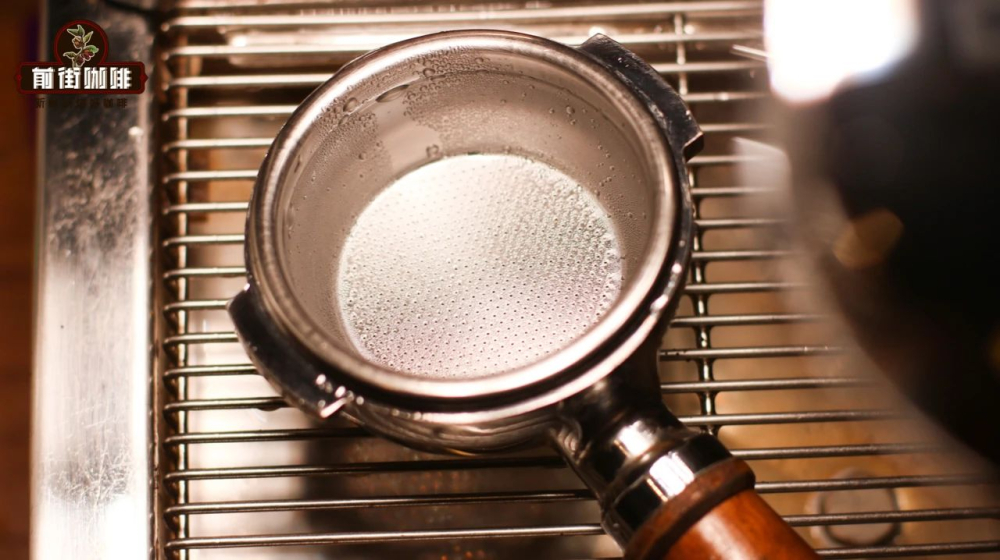
Step one: remove the portafilter basket and wipe it clean. Before weighing the grounds each time, wipe the basket to ensure it is dry with no residual water stains.
Step two: weigh the coffee grounds. Use an electronic scale for precise weighing, keeping the deviation within plus or minus 0.1 grams. Taking today's calibration results as an example, the dose was ultimately adjusted to 19 grams.
Step three: distribute the grounds. Use your hand or a distribution tool to spread the coffee bed evenly, trying to make the coffee grounds in the basket as uniform as possible. If distribution is uneven, the density of the puck will vary: where there is more coffee, it is denser, creating greater resistance when water passes through; where there is less coffee, it is looser, and the water tends to over-extract.
Step four: tamp. Use a tamper to press the coffee grounds down firmly and evenly, preventing the puck from tilting or becoming uneven.
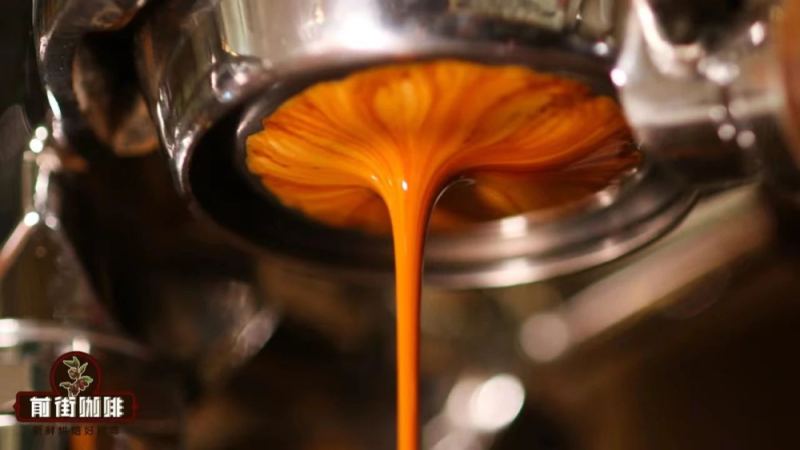
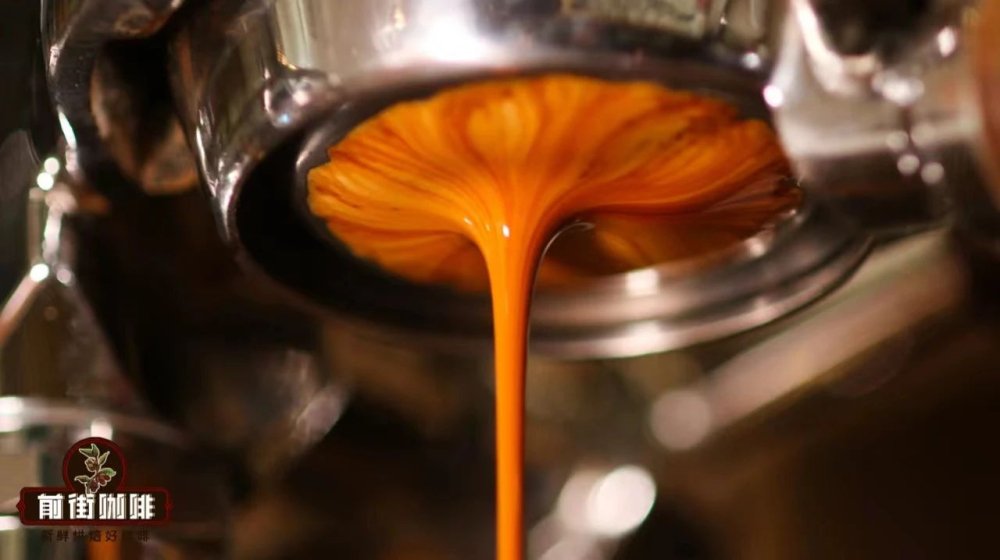
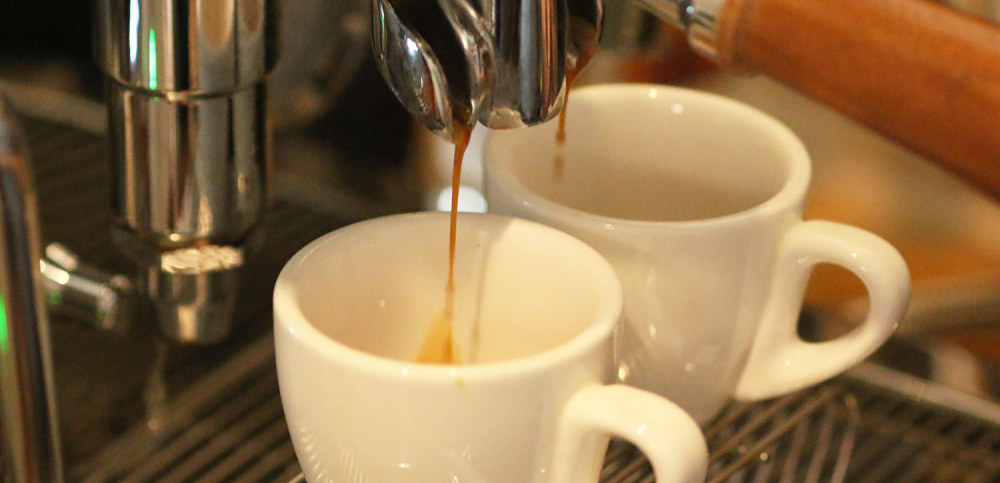
Step five: extraction. Gently lock the portafilter into the espresso machine, then start the extraction switch as soon as possible—this is to avoid the machine's high temperature accelerating the evaporation of coffee flavor compounds. At the same time, use an electronic scale to accurately measure the volume of espresso and record the extraction time. After today's calibration, Front Street Coffee (FrontStreet Coffee) obtained 38 grams of coffee liquid, a 1:2 coffee-to-beverage ratio, with an extraction time of 27 seconds.
Step six: cleaning. Turn off the extraction switch, remove the portafilter after extraction stops, and release some water to rinse the group head.
What exactly is Ristretto?
Ristretto is a coffee extracted for a shorter time and yielding less liquid than Espresso. The production process is basically the same as espresso, with the difference being that Ristretto is achieved by lowering the ratio and shortening the extraction time—for example, extracting only 30 grams of coffee liquid from 19 grams of coffee grounds.
Why reduce the amount of coffee liquid? This requires first understanding what substances espresso extracts during different time periods—or rather, what the beginning, middle, and end of an espresso shot taste like. Still using 19 grams of grounds to extract 38 grams of liquid over about 27 seconds as an example, divide the 38 grams of coffee liquid by weight into four equal segments of 9.5 grams each, cutting them off sequentially by weight during extraction.
After observing the appearance and tasting, we can find:
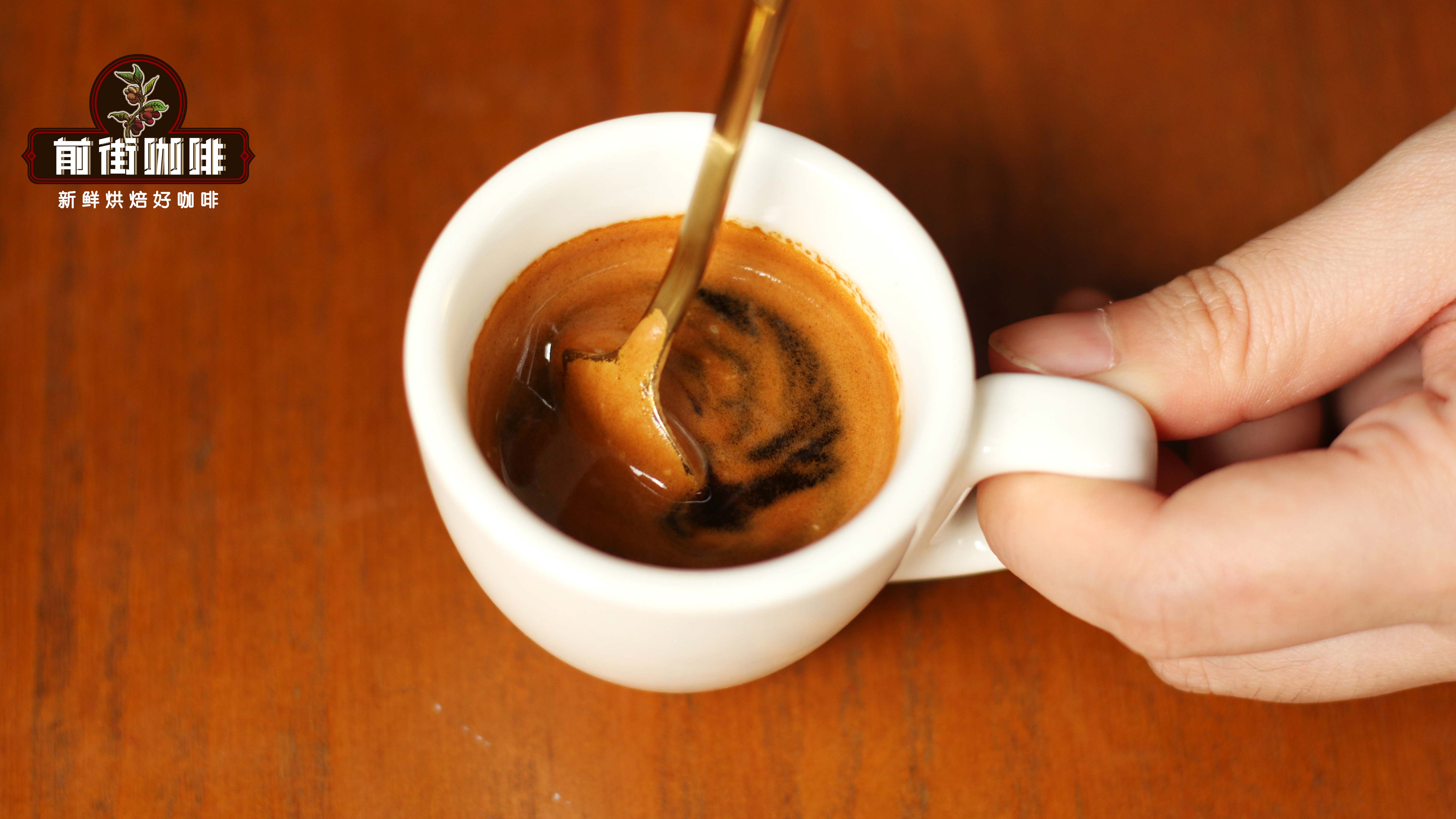
The first segment of espresso liquid is dark in color, with rich crema, presenting a deep brown; when swirled, its texture resembles set yogurt. On the palate it is intense, with relatively high acidity, a long finish, and a slight bitterness.
The second segment of espresso liquid is slightly lighter in color, with light brown crema; when swirled, its texture is similar to whole milk. It tastes more comfortable, with a balance of acidity and sweetness, and moderate body.
The third and fourth segments of espresso liquid are even lighter in color, with thin crema approaching a pale yellow; when swirled, the texture is like water. They taste very thin and watery, with extremely low body, and the acidity and sweetness have almost disappeared.
From this, we can see that the first half of an espresso shot carries the main flavor, while the second half tastes very weak and usually only serves to adjust concentration and provide body. Generally speaking, the first substances extracted from coffee are small-molecule acids, followed by sweetness, and finally large-molecule bitter compounds—so the early part of the extraction tends to have noticeable acidity.
This makes it clear: compared to a normal-ratio espresso, Ristretto reduces the extracts from the later stage, so bitterness decreases and body may also be lower; but because the ratio is lowered, the concentration is actually higher, and the flavor compounds are more concentrated.
Perhaps for this very reason, many cafés choose to use Ristretto as the base for milk coffee. Front Street Coffee (FrontStreet Coffee) believes that espresso and Ristretto each have their own strengths; when producing drinks in-store, the espresso parameters are chosen to present the coffee's flavor more completely.
The above content is compiled by CoffeeHunters, a coffee news website.


