







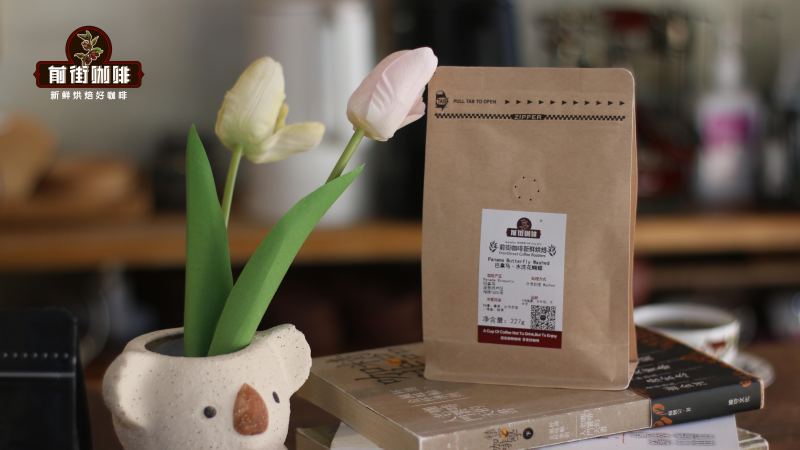
How does coffee bean processing change Gesha flavor?
The same Gesha blend can taste like two different coffees depending on how the cherry is processed. Front Street Panama Boquete Butterfly, a blend of about 70% Geisha with Caturra and Catuai, shows this clearly: the washed version cups clean with white floral and black tea notes, while the natural version leans rich toward tropical fruit and red wine.
Panamanian geisha from Boquete set the benchmark for the variety, and Boquete's high altitude supports the blend's body, acidity, and floral character. Blending Geisha with other varieties is common in producing regions, as seen in Ethiopia's Gesha Village lots that combine Geisha 1931 and Gori Geisha.
The same coffee beans can present completely different flavor profiles simply because of different processing methods. This article takes Front Street Panama Boquete Butterfly, a Geisha blend, as an example, analyzing its variety composition, regional characteristics, and the principles and pros and cons of sun-dried and washed processing methods one by one. Through actual cupping comparisons, Front Street Washed Butterfly shows a clean profile of white floral notes and black tea, while Front Street Natural Butterfly leans toward a rich style reminiscent of tropical fruit red wine. If you are also wondering which is better, natural or washed coffee, or want to understand the ins and outs of Geisha blends, this article will provide you with clear answers.
For more specialty coffee knowledge, please follow: Front Street Coffee ( Frontsteet Coffee )
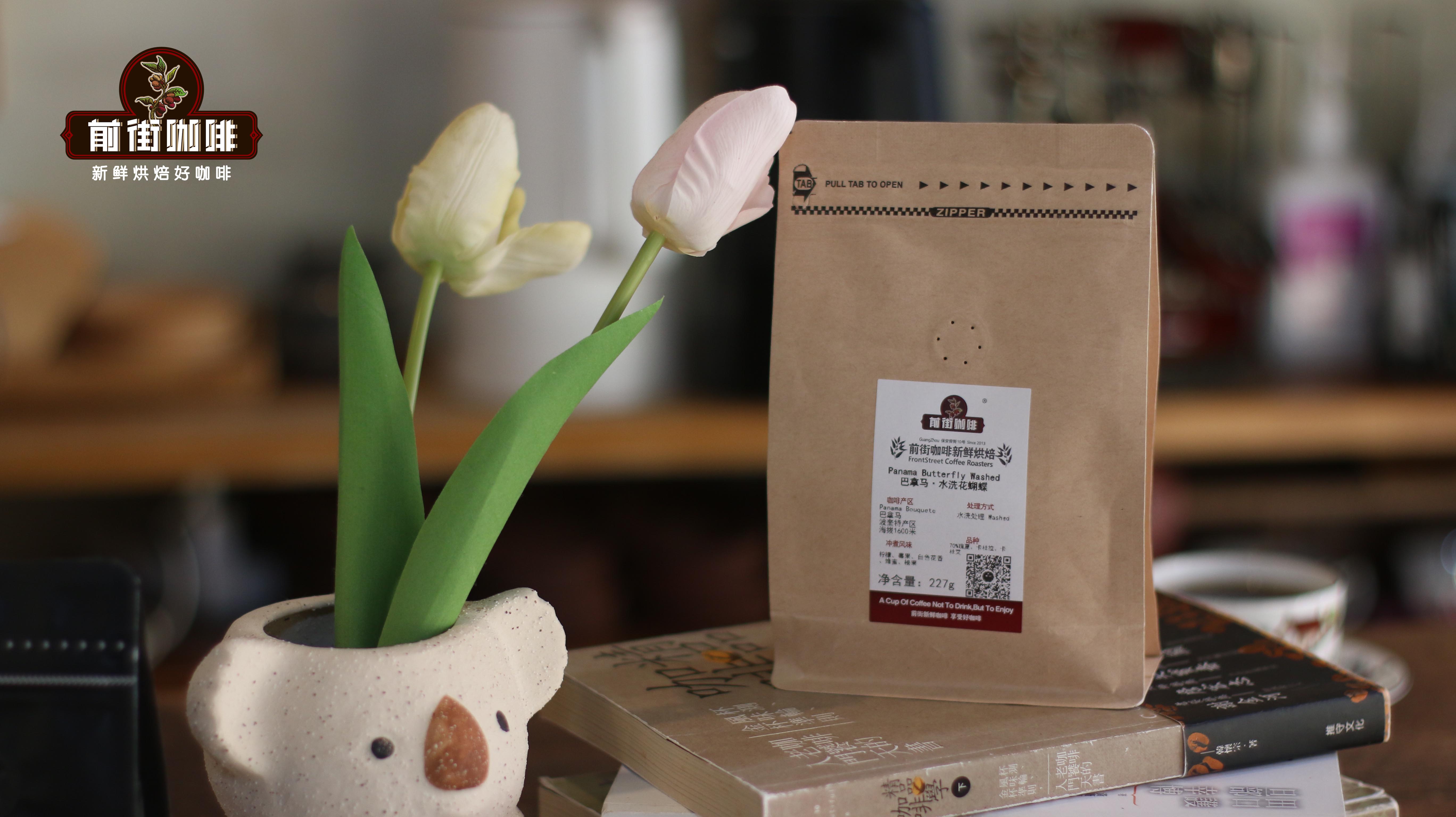
When it comes to Front Street Panama · Butterfly, many coffee enthusiasts have surely heard of it. It is composed of multiple varieties and belongs to the typical "Geisha blend." With its excellent value for money, Front Street Butterfly is regarded by many as an affordable alternative to Geisha.
The so-called "Geisha blend" literally means coffee that contains Geisha along with other varieties mixed in. Taking Front Street's product line as an example, both Front Street Panama · Washed Butterfly and Front Street Costa Rica · Mirasu Strawberry Candy are fairly well-known Geisha blends. In addition, Gesha Village, as one of the few large estates in Ethiopia, produces the mixed lot Front Street CHAKA, which combines Geisha 1931 and Gori Geisha, two Ethiopian Geisha varieties, and can likewise be classified as a Geisha blend.
Front Street Butterfly comes from the Boquete region of Panama—the place where the Geisha variety rose to prominence—and is composed of three varieties: Geisha, Caturra, and Catuai. The largest proportion is the excellent-quality and highly renowned washed Geisha, accounting for about 70%. Superior growing conditions plus a 70% Geisha proportion give this coffee both the full aroma of high-altitude Panamanian coffee and outstanding performance in body, acidity, and floral notes during cupping, presenting a character of orange blossom and honeyed charm.
In producing regions, mixing varieties is actually a common practice. Take Ethiopia, which everyone is most familiar with, as an example: whether it is plants grown in farmers' backyards or coffee trees in wild forests, they are usually not specifically labeled or classified, and basically no distinction is made. Various coffee trees are interplanted with other cash crops, harvested together once ripe, and after processing are exported under the name "Heirloom." This harvesting method brings together coffee harvested during the same period by multiple smallholders. A single lot may contain dozens or even hundreds of undifferentiated varieties, yet it is still defined as single-origin coffee.
By the same logic, although Front Street Panama Butterfly, which is marketed as a "Geisha blend," contains three different varieties, they all come from the small town of Boquete in Chiriqui Province, Panama, and all undergo washed processing, giving the coffee the fresh character of washed Panamanian Geisha. Therefore, it should rightly be classified as a single-origin bean.
Recently, Front Street received Front Street Natural Butterfly sent from the factory. Next, let us conduct an evaluation to see exactly what differences exist between the natural version and Front Street Washed Butterfly.
Front Street Panama Boquete Butterfly is composed of 70% Geisha and 30% Caturra and Catuai. The phenomenon of mixed-variety harvesting is not uncommon in various producing regions. For example, in Ethiopia, which has countless native species, farmers simply cannot distinguish the varieties, so at harvest they can only pick them all together and hand them to the processing station. This is mixed-variety harvesting caused by natural factors. The protagonist of this article, Front Street Butterfly, however, is mixed-variety harvesting caused by human factors.
In earlier years, in pursuit of yield, farmers interplanted Geisha with other varieties to reduce wasted land. But at harvest they found that if they picked a certain variety separately, the costs in labor, materials, and time were all quite high. So they simply followed Ethiopia's approach and picked everything at once, and thus the Geisha blend—Front Street Panama Butterfly—was born.
Although it is not pure Geisha, its growing region is none other than Panama · Boquete, a place crowded with experts, and it possesses most of Geisha's characteristics. Most critically, the price is very affordable. The price of regular Panamanian Geisha is at least twice that of Front Street Panama Butterfly. Therefore, people often call it the affordable substitute version of Geisha. So next, let us see what flavor differences the same coffee beans will present under two different processing methods.
The natural method is called "Natural" in English, meaning a natural, non-technological processing method. Since humans discovered coffee in Ethiopia in the sixth century AD, the natural method had always been the only processing technique used as coffee circulated in the Arab world. The traditional natural method requires no contact with water throughout the entire process, and the seed extraction process is also quite simple: first dry the whole coffee fruit thoroughly in the sun, then use a machine to crush and remove the husk, and the green beans inside are obtained. It can be completed wherever there is sunlight. But the shortcomings of natural coffee are also obvious: it is extremely dependent on the weather and requires a drying period of up to one month. During this time, if wind or rain occurs, all previous efforts may be lost. Therefore, this ancient processing method is often concentrated in tropical countries with distinct dry and wet seasons.
The washed method is translated from Washed Process, also called the washed technique, and is a traditional processing method that uses water resources to process coffee fruit. Generally speaking, the steps of washed processing include flotation, removal of pulp, soaking and fermentation followed by removal of mucilage, washing or continued soaking, drying, and then hulling, finally obtaining the coffee beans we need.
Compared with natural processing, farmers using the washed method must be equipped with a depulper, build washing channels or tanks, and have a continuous supply of running water, so it is not applicable in all producing regions. It is usually most common in places such as Colombia, Costa Rica, Panama, and Kenya. But the washed method does indeed have several advantages: on the one hand, it reduces the defect rate of green beans, thereby stabilizing quality; on the other hand, it greatly shortens drying time, making production more efficient; and of course, there is what we are discussing today—allowing the coffee to retain the "washed taste."
Brewing dripper: V60
The brewing time for Front Street Washed Butterfly was 2 minutes and 10 seconds. The flavors tasted included white floral notes and black tea. The soft citrus acidity tasted very much like juice, and the cleanliness was relatively high.
The brewing time for Front Street Natural Butterfly was exactly 2 minutes. The tasting impression was closer to a glass of red wine brewed from tropical fruits such as citrus and pineapple, accompanied by elegant white floral notes, but by comparison its cleanliness was not as good as the washed version.
Although they are the same coffee beans, the difference brought by natural and washed processing is still quite obvious. Washed processing removes the coffee's skin and pulp before fermentation, and only a small amount of residual pulp and mucilage participates in the fermentation of the green beans. This step enables the washed Butterfly to present a cleaner, fresher flavor.
The above content is compiled by CoffeeHunters, a coffee news website.


