







When Was Costa Coffee Founded? Starbucks Drops Princi
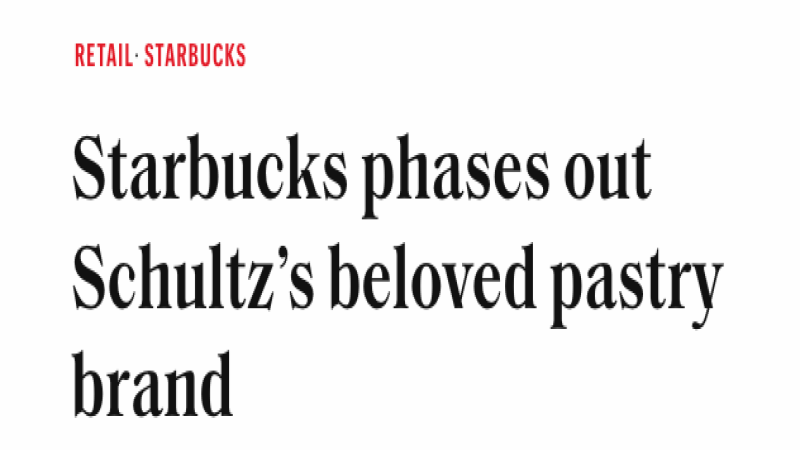
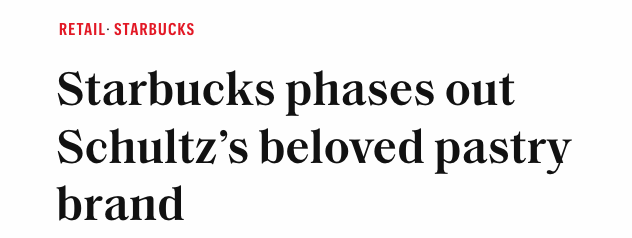
Starbucks will remove Italian bakery brand Princi from eight Reserve Roasteries in the United States and China, according to an internal memo reported by Bloomberg. The memo did not give exact timing. Princi items such as ciabatta sandwiches and egg tarts stay on the menu, but the Princi name disappears from menus and signage.
The partnership started in 2016, when Starbucks invested in the Milan-based bakery founded by Rocco Princi in 1986, and later became its global franchisor. Standalone Princi stores closed one after another during the pandemic. New CEO Brian Niccol has promised a return to community coffee shop positioning, and the decision was finalized before he took over, marking a retreat from the premium dining strategy.
Starbucks recently decided to remove Italian bakery brand Princi from eight of its Reserve Roasteries in the United States and China, a move that has drawn widespread attention. Since the partnership began in 2016, Starbucks had sought to use Princi to deeply integrate coffee, baking, and dining to create a unique third-place experience. However, affected by the pandemic and policy factors, Princi's standalone stores were closed one after another. Now, with the brand withdrawn from the roasteries, it not only means the global expansion goal has fallen through, but also reflects a setback for Starbucks' vision of premiumization and expanding its food product line. New CEO Brian Niccol has promised a return to the positioning of a community coffee shop, and this decision had already been finalized before he formally took over. Starbucks may have taken this step to respond to current sales challenges, but the specific reasons were not disclosed in the internal memo.
Recently, according to Bloomberg, Starbucks revealed in an internal memo that it will remove products from Italian bakery brand Princi from eight Starbucks Reserve Roasteries in the United States and China. However, the memo did not specify the exact timing of Princi's withdrawal.
Starbucks said that although the supply of some items on the Reserve Roastery menu, such as ciabatta sandwiches and egg tarts, will remain unchanged, the Princi brand will disappear from the menu and signage.
The connection between Starbucks and Princi began in 2016, when Starbucks announced an investment in the Milan-based food bakery and cafe concept. Princi was founded by Rocco Princi in 1986 and positioned as a high-end Italian bakery cafe. After that, Starbucks became the brand's global franchisor and began selling Princi baked goods in premium reserve stores and Reserve Roasteries, aiming to fully integrate coffee, baking, dining, and more to provide customers with a distinctive third-place experience.
In 2018, Starbucks opened its first standalone Princi bakery in Seattle, USA, where the food was divided by dining periods: breakfast offered croissants, sandwiches, eggs, oatmeal, and more; lunch provided sandwiches, pizza, salads, and more; and throughout the day there were desserts such as cakes and Italian fruit tarts.
Starbucks tried to use Princi bakeries to achieve all-day operation, meet customers' needs at different times, and deliver a comprehensive experience and service.
It is understood that the baked goods in the bakery are all handmade fresh daily by staff and baked on-site, with prices ranging from $3 to $10.
However, three years later, affected by the COVID-19 pandemic and policy factors, Starbucks closed three bakeries under the Princi brand. Among them, the Princi bakery in New York closed in March 2020, and the two locations in Chicago and Seattle subsequently closed in September 2021.
At the time, Starbucks said that although the Princi stores had closed, Starbucks Reserve Roasteries in Chicago, New York, Seattle, Shanghai, Milan, Tokyo, and other places would continue to offer Princi baked products such as bread, pastries, pizza, and sandwiches.
Now, with Starbucks Reserve Roasteries removing the Princi brand, it not only marks the failure of its goal to open more than 20 Reserve Roasteries globally, but also means that Starbucks founder Howard Schultz's vision of premiumizing the brand and broadening its food product line has not been realized.
On September 10, Starbucks' new board chairman and CEO Brian Niccol promised in his first open letter after taking office that he would return to Starbucks' original aspiration and re-clarify Starbucks' positioning as a community coffee shop.
It is understood that the major decision to remove Princi had already been finalized before Brian Niccol formally succeeded as chief executive on September 9. Analysts pointed out that Starbucks took this step to actively respond to the sales challenges currently facing the company.
However, Starbucks did not mention the reason for making this decision in the internal memo.
Public information shows that Starbucks' second-quarter 2024 financial report was below expectations. As of June 30, overall second-quarter revenue was $9.1 billion (about 65.87 billion yuan), down 1% year on year. The total number of stores worldwide reached 39,477, with 526 new stores added, 62 fewer than the same period last year.
Image source: Internet
The above content is compiled by CoffeeHunters, a coffee news website.


