







What Makes Brazilian Arabica Coffee Taste So Distinct?
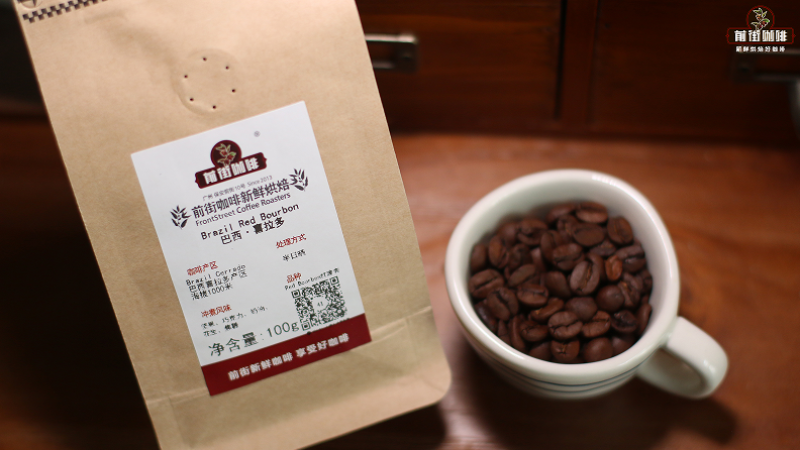
Brazilian Arabica coffee is known for nutty, cocoa, and chocolate flavors with low acidity and a full body. Brazil is the largest coffee producer and has led world exports for more than a century, so a Brazilian single origin or a blend containing Brazilian beans appears on most specialty coffee menus. Arabica plantings concentrate in the southeast, while the west grows more Robusta.
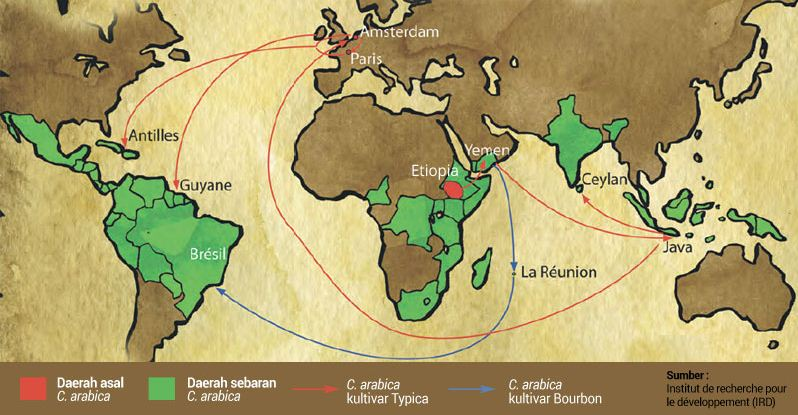
Coffee reached Brazil in the 18th century, when a Portuguese captain brought seeds from French Guiana, and planting spread from the north to São Paulo. By 1845 Brazil supplied 45 percent of global production. According to the Brazilian Coffee Association, more than 14 states grow coffee, and the top seven account for nearly 90 percent of output. Minas Gerais is the largest producing state.
As the world's largest coffee producer, Brazil's Arabica beans are known for their nutty, cocoa, and chocolate flavors along with a low-acid, full-bodied taste. From the perspective of Front Street Coffee, this article reviews the history of coffee cultivation in Brazil, its main producing regions (Minas Gerais and São Paulo), the classic pulped natural processing method, and the flavor characteristics of representative beans such as Yellow Bourbon from Queen's Farm. It also shares pour-over parameters and a three-stage pouring approach for medium-dark roasted Brazilian beans, helping enthusiasts recreate café-level full-bodied sweetness and clean balance at home.
For more specialty coffee insights, welcome to follow Front Street Coffee (Frontsteet Coffee).
Thanks to its massive production scale, Brazil has held the top spot in coffee exports for over a hundred years. On the menus of most specialty coffee shops, there is at least one Brazilian single-origin bean, or an espresso blend containing Brazilian components, which shows the country's profound influence on the coffee industry. This time, Front Street will walk you through some knowledge about Brazilian coffee.
The Origins of Brazilian Coffee
The earliest record of coffee cultivation in Brazil dates back to the 18th century. At that time, Brazil was a Portuguese colony, and a Portuguese captain named Francisco de Melo Palheta won the favor of the wife of the governor of Cayenne, the capital of French Guiana, and used this connection to bring coffee seeds into Brazil. Coffee quickly adapted to the local terroir, spreading from the north all the way to São Paulo in the southeast, where large-scale planting began. By 1845, Brazilian coffee accounted for 45% of global production, becoming the most important economic source for São Paulo state.
Distribution of Brazilian Coffee Producing Regions
According to data from the Brazilian Coffee Association, coffee is produced in more than 14 states in the country, with the top 7 producing states together accounting for nearly 90% of the national total. From the distribution map, it can be seen that the west is dominated by Robusta varieties, while the higher-quality Arabica is concentrated in the southeast. Here Front Street focuses on two representative producing regions: Minas Gerais, Brazil's largest producer, and São Paulo, where coffee was first planted.
Minas Gerais state produces nearly half of the country's annual coffee output and comprises four major producing regions: Cerrado, Sul de Minas, Chapada de Minas, and Matas de Minas. The Cerrado region, sharing its name with the Cerrado savanna, refers specifically in coffee terms to the Cerrado area in western Minas Gerais, which has flat terrain and a concentrated harvest period, making it very suitable for large-scale management and picking. Many exporters have established farms here, generally over 10 hectares in size. The other three regions have undulating terrain and steep hills, so they are mainly dominated by smallholder manual production.
São Paulo state includes Brazil's well-known Mogiana region, whose name comes from the Mogiana Railroad Company, the company that built the "coffee railway" in 1883; its arrival improved transportation conditions and drove further expansion of coffee production. The Mogiana region sits at an altitude of about 900 to 1,100 meters, with an average annual temperature of about 20°C. The hilly terrain gives the coffee good sweetness and balance, and due to terrain limitations, estates mostly rely on manual harvesting. The Queen's Farm coffee on Front Street's bean list comes from Mogiana.
Queen's Farm (Fazenda Rainha) is one of Brazil's top specialty estates. As an award-winning estate in the first Brazilian COE competition, its strength is not to be underestimated, and over the years it has won numerous awards large and small, all stemming from the estate's consistently high-quality output. Front Street's Brazil Queen's Farm coffee uses the Yellow Bourbon variety, a Bourbon mutation grown in Brazil whose fruit turns yellow due to a recessive gene. Yellow Bourbon beans are naturally sweet, clean, and well balanced, with tropical fruit aromas.
Processing of Brazilian Green Coffee
Brazil is located in the tropics, and the harvest season coincides with the dry season, so coffee cherries can be dehydrated directly by sun-drying. However, the traditional natural process was crude—after picking, cherries were spread directly on dirt ground to dry, which easily gave the coffee an earthy taste. To improve quality, Brazil invented the semi-washed (pulped natural) method after 1990, also called Pulped Natural.
Processing flow: After picking, leaves, stones, and other debris are first removed from the cherries, which are then poured into a water tank to float-select and remove underripe fruit. Then a machine removes the skin, pulp, and part of the mucilage, followed by a one-hour wash; because the soaking and fermentation time is very short, the mucilage is not easily rinsed off completely. The parchment beans with some mucilage still attached are then spread out on drying patios to dry.
Pulped natural not only saves water but also reduces a lot of labor costs, and it takes less time to dry than the traditional natural method, so it is widely adopted in Brazil. Front Street's Brazil Cerrado everyday beans are pulped natural processed, and multiple rounds of screening greatly improve the beans' cleanliness. Another Front Street coffee, Queen's Farm, uses refined small-batch natural processing. Large-scale production may lead to excessive fermentation due to delayed turning, producing undesirable fermented flavors. At Queen's Farm, the entire drying process of the green beans takes place on African raised beds, thereby avoiding earthy and fermented flavors, and its sweetness is a step above traditional pulped natural.
Processed Brazilian green beans are graded according to three criteria: defects, size, and cup quality, which is also Brazil's complex grading system that differs from other producing countries. The grade information of the green beans is marked on the jute bag in the form of "country + defect grade + cup taste + screen size + cup flavor grade + origin."
For example, the Brazilian Cerrado green coffee beans purchased by Front Street have "Brazil NY.2 SC – 17/18 FC Cerrado" written on the bag, meaning they come from the Cerrado region of Brazil, with a screen size of 17–18, SC standing for Strictly Soft, meaning a very smooth mouthfeel, FC standing for Fine Cup, meaning high-quality cup flavor, and the defect rate grade being NY.2. Since NY.1 means not a single defective bean, such carefully selected lots cannot be supplied consistently, so Brazil sets NY.2 as the highest grade in defect classification.
Flavor Characteristics of Brazilian Coffee
Classic Brazilian coffee has the base flavors of nuts, cocoa, chocolate, and toast, so Front Street's two Brazilian coffees are both medium-dark roasted to highlight their full-bodied, low-acid characteristics.
Some friends bought beans and brewed them at home, only to find the flavor different from what they drank in the shop. Front Street puts a brewing QR code on the label of every bag of coffee beans; scan it to view, and you can refer to the brewing parameters on it for adjustments. Below, taking Brazil Queen's Farm coffee as an example, we'll explain the brewing approach of Front Street Coffee's baristas.
Front Street's Queen's Farm coffee uses a medium-dark roast. After medium roasting, the internal structure of the beans changes significantly and becomes porous, making the grounds more absorbent after grinding. If the brewing parameters are not adjusted well, the coffee can easily become over-extracted and bitter. To get enough aroma without over-extraction, the extraction rate needs to be lowered. Front Street uses a relatively low water temperature and a relatively coarse grind to reduce the release of bitter large molecules in the coffee.
Front Street Coffee's baristas consistently use the KONO dripper to extract coffee beans that express body. The only venting part of the KONO dripper is that quarter of ribs; when the water level passes the rib area, the water level in the dripper keeps rising, and the weight of the water increases pressure. Because the outlet is relatively small, it can extend the contact time between coffee particles and water, and as the water is poured, it more effectively draws out soluble substances, thereby enhancing the coffee's full-bodied, rich mouthfeel.
Pour-over parameters: 87–88°C water temperature, medium grind (70% passing a Chinese standard No. 20 sieve), coffee dose: 15 g, coffee-to-water ratio 1:15, three-stage pouring.
Wet the coffee bed with twice the coffee's weight in water to form a dome and bloom for 30s, then pour in a thin stream in circles from the inside out until 125g, pausing at intervals; wait until the coffee bed drops to half the height of the dripper, then continue pouring the third stage with the same thin stream until 225g, and once all the coffee liquid has filtered through, remove the dripper. The total time is about 2 minutes. Finally, swirl the coffee liquid in the server to mix evenly and it's ready to enjoy~
The pour-over Brazil Queen's Farm coffee is full-bodied and rich overall, with a clean mouthfeel, and the flavor changes with temperature in layered complexity. Nutty and caramel aromas, with chocolate, nut, and caramel notes, the sweetness of sugarcane is very pleasant, and the balance is also very high.
The above content is compiled by CoffeeHunters, a coffee news website.


