







Blend Coffee: Espresso Ratio and Grind Size
Espresso quality depends on grind size, water temperature, extraction time, and brew ratio, with ratio and grind coarseness mattering most. Common espresso ratios fall between 1:1.5 and 1:2.5, and many shops, including Front Street, use 1:2. A finer grind slows the flow and raises extraction; a coarser grind speeds it up.
Ratio involves two numbers: dose and yield. In China, single and double baskets are usually sized by portafilter capacity, with a single basket holding about 8 to 9 grams. When a shot runs too fast or too slow, adjust one variable at a time. A blend coffee such as Front Street's Sunflower Warm Sun shows how dose, grind, and yield shift flavor in the cup.
Espresso is a taste treasure Italy has gifted to the world—a brief extraction that nonetheless condenses the essence of coffee. To get a qualified Espresso, parameters such as grind size, water temperature, extraction time, and brew ratio are all indispensable, with the brew ratio and grind coarseness being especially critical. This article will systematically explain the brew ratio range for espresso, how grind coarseness affects flow rate and flavor, and how to respond to extraction changes by adjusting dose, grind size, and yield. It also includes the practical parameters from Front Street Coffee's stores and the flavor performance of "Front Street Sunflower Warm Sun Blend Coffee Beans" for coffee lovers' reference.
For more specialty coffee knowledge, please follow our WeChat public account: Front Street Coffee (FrontStreet Coffee)
Italy is widely recognized as a major stronghold of coffee culture. Espresso spread from there to the world; it can be said to be the soul of the coffee family and a generous gift Italy has given to the globe. As the name Espresso suggests, both its preparation and consumption emphasize "speed," yet its flavor is especially intense—a small cup brimming with the essence of coffee.
However, making a qualified espresso is not easy; there are quite a few parameters that need calibration. The grind coarseness of the coffee grounds, water temperature, extraction duration, brew ratio, and so on all directly affect the final quality of the espresso. Among these, the brew ratio is an indicator that demands precise control. Today, Front Street will focus on the extraction ratio of espresso and discuss what secrets lie behind the ratio.
Brew Ratio
The extraction ratio actually does not have a fixed value that applies universally; in practice, it must be adjusted flexibly according to the situation. However, there are often some commonly accepted reference values in the industry, established by more influential practices and serving as benchmarks for everyone to refer to. For common espresso, the brew ratio generally falls between 1:1.5 and 1:2.5. The ratio used by Front Street stores is 1:2.
The extraction ratio involves two variables: dose and coffee liquid weight. In China, the ratio for single and double espressos is usually determined by the capacity of the portafilter basket on the coffee machine: a single basket holds about 8–9 grams, and a double basket about 18–20 grams, extracting within 25–30 seconds a single shot of 28–30 grams and a double shot of 30–40 grams of espresso liquid, respectively. The coffee machine at Front Street stores is equipped with a 20-gram double basket; when serving, 20 grams of grounds are dosed, 40 grams of coffee liquid are extracted, and then minor adjustments up or down are made based on the day's extraction condition.
Increasing or decreasing the dose changes the compactness of the coffee puck, which in turn affects the flow rate of the espresso. The larger the dose, the more compact the puck, and the slower the coffee liquid flow rate. The time required to extract the same liquid weight is lengthened, the concentration rises accordingly, and the extraction yield is also higher. Generally speaking, the direction of slight dose adjustments should be judged by combining the flow rate and flavor performance.
Grind Coarseness
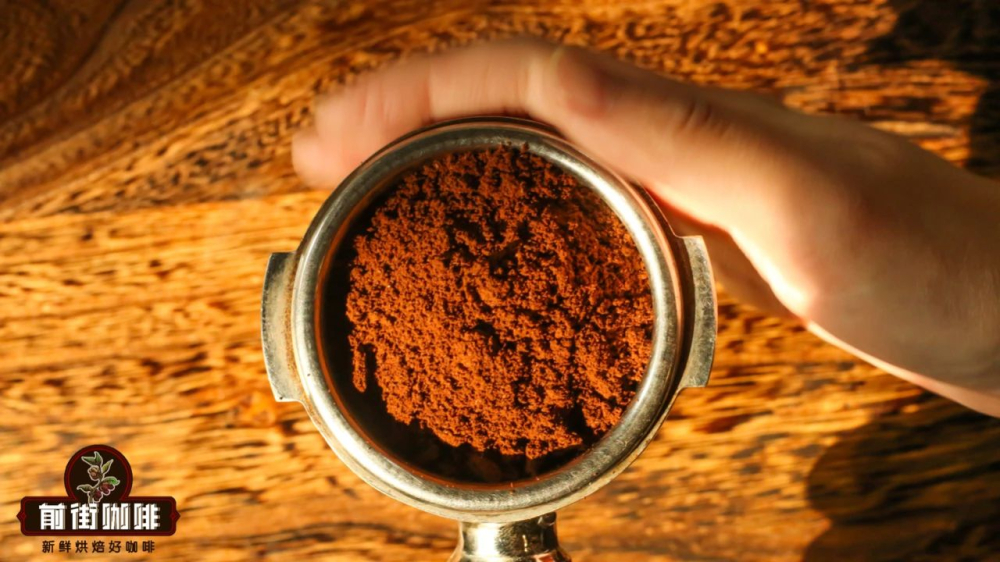
In most cases, a cup of espresso can be extracted in just a few dozen seconds. To fully release the coffee aroma in such a short time, the coffee grounds must be ground finer and with uniform particles, which requires an electric grinder designed specifically for espresso extraction.
Espresso extraction amplifies the flavor characteristics of coffee, so the requirements for grind size are especially strict. Grind coarseness is difficult to judge directly with the naked eye; it is usually reflected in the flow rate and flavor of the espresso. When the grind is too coarse, the coffee particles are larger, the puck is relatively loose, and the time for water to pass through the coffee bed is shortened, making under-extraction likely; the coffee flavor is thin and tends toward sourness. When the grind is too fine, the coffee is prone to over-extraction, tasting bitter with a sharp mouthfeel. In addition, espresso grinding is far finer than methods such as pour-over, so adjustments should not be too large; otherwise, excessive variable changes will make extraction even more unstable.
How to Adjust Extraction Parameters
Espresso extraction fluctuates with changes in air humidity brought by weather and with the condition of the coffee beans themselves. For example, rainy days are more humid than sunny days, and coffee grounds tend to absorb more moisture, thereby interfering with subsequent extraction. When extracting espresso, the water temperature and pressure are usually rarely changed casually; they are set at fixed values—for example, the coffee machine at Front Street stores uses 9 bar pressure and 94°C water temperature. Daily dialing-in mainly revolves around three parameters—grind size, dose, and coffee liquid weight—to adjust the flavor in the cup.
For example, the extraction parameters Front Street used the day before were: 19.8 grams of coffee grounds, 38 grams of coffee liquid, taking 29 seconds. If the same dose is used to extract 38 grams of espresso but the time shortens to 26 seconds, it means the flow rate has become faster.
At this point, Front Street will first try increasing the dose by 0.1 grams each time to change the flow rate. When the dose is increased to 20 grams and the same liquid weight is extracted, the time returns to 29 seconds. Tasting the espresso shows no abnormal bitterness, but the aroma is somewhat flat, indicating under-extraction. This also shows that increasing the dose alone is not effective enough, so it is necessary to switch to adjusting the grind size; at this point it should be made finer, making the particles smaller so that flavor compounds are fully released. Conversely, if the flow rate becomes slower, first reduce the dose to speed up the flow rate; if reducing the dose still does not work, then make the grind coarser.
The direction of parameter adjustment is flexible and varied. As long as you are familiar with the characteristics of the coffee beans and the coffee machine, quickly dialing in a delicious espresso is not difficult. After adjustment, here is a normal espresso served at Front Street for everyone's reference. Front Street uses its own roasted "Front Street Sunflower Warm Sun Blend Coffee Beans," composed of 30% Yirgacheffe sun-dried Red Cherry and 70% Honduras Sherry.
Front Street will dose 20 grams of coffee grounds, use a 1:2 brew ratio, and extract 40 grams of coffee liquid under 9 bar pressure, with the time controlled at 30 seconds.
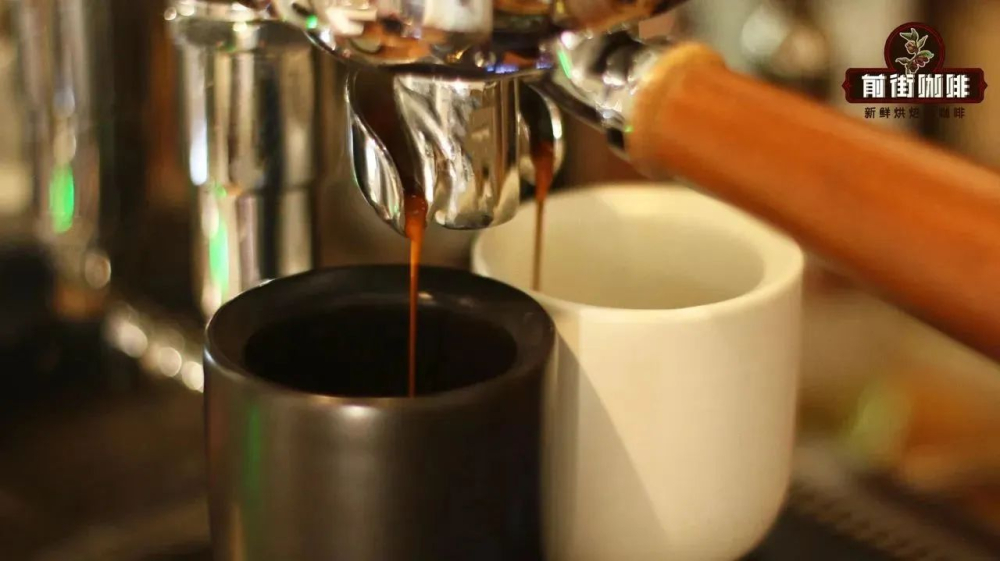
This cup of espresso has a rich whisky aroma and reveals the acidity and fragrance of berries; after the temperature drops slightly, vanilla and cream flavors gradually emerge, finishing with a dark chocolate aftertaste. The overall performance is balanced, with a rich and smooth mouthfeel.
The above content is compiled by CoffeeHunters, a coffee news website.


