







How Are Geisha Coffee Beans Naturally Processed in Hambela?
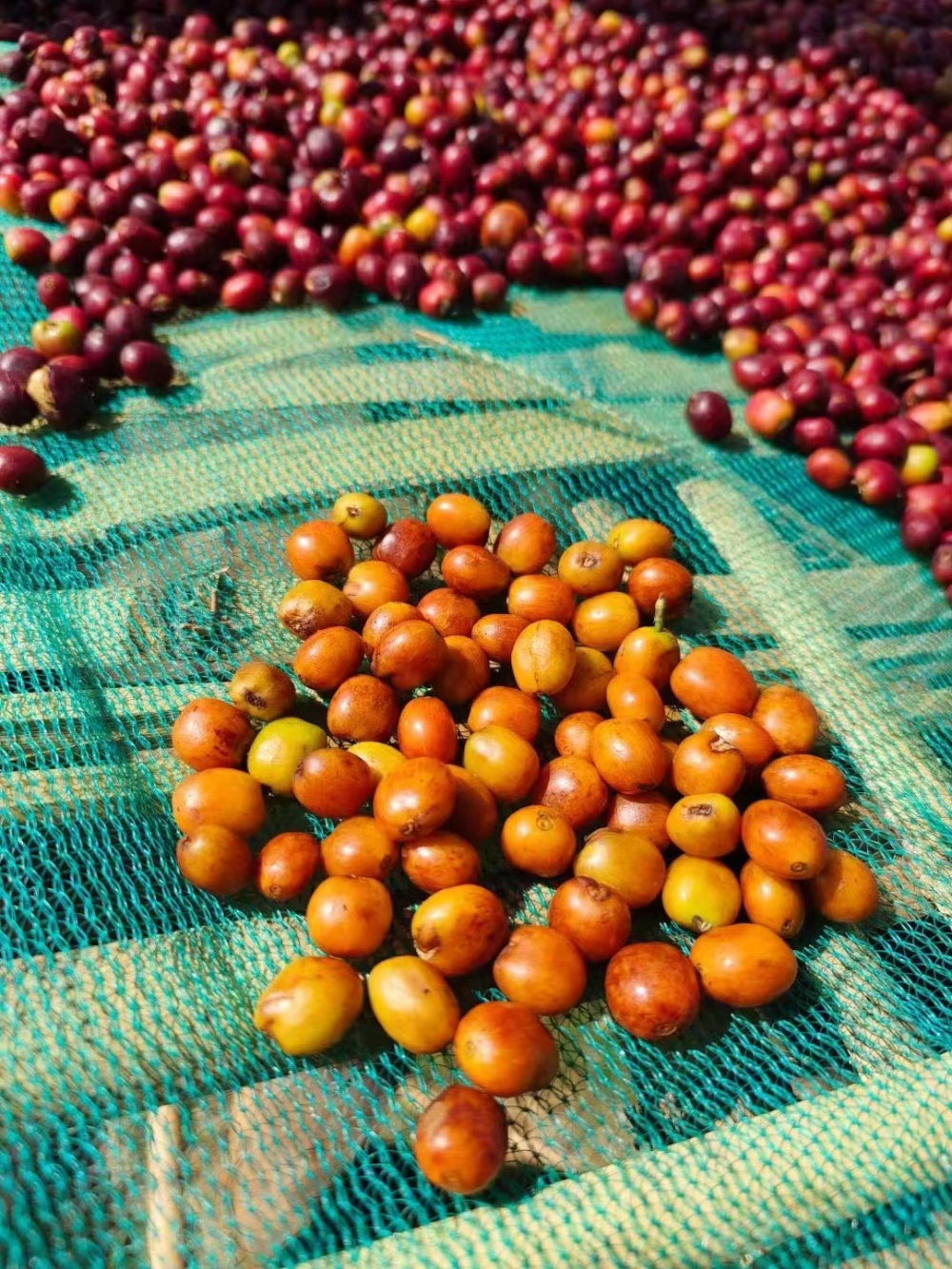
Geisha coffee beans from Hambela in the Guji region of Sidama are processed using the natural method, which means the coffee cherries are dried whole with the fruit still on the seed. This process builds the strawberry cream, floral and fruity flavors the beans are known for. The result is a heavier body and layered sweetness compared with washed lots from the same area.
The beans come from Sidama in southern Ethiopia, a region known for fruit acidity and intense aroma, alongside Guji and Yirgacheffe. After the natural coffee beans process step, the lots are usually roasted light to medium and brewed as pour-over with a coarser grind and moderate water temperature to protect the floral and berry notes.
With its rich strawberry cream flavor and elegant floral and fruity notes, Geisha coffee beans have become a highly sought-after representative Ethiopian bean in the specialty coffee scene in recent years. This natural-process bean from Hambela in the Guji region of Sidama—what exactly does its processing journey involve? What makes its flavor and mouthfeel so unique? And how should it be brewed to fully showcase its charm? This article will take you through an in-depth look at Geisha coffee beans' origin background, their rise to fame through competition, the detailed natural processing steps, and Front Street's recommended pour-over parameters and brewing method, offering a comprehensive interpretation of this "king of a hundred flowers'" flavor code.
Many people, upon first encountering the coffee name "Geisha," are drawn in by its poetic name and order a pour-over to savor, only to find that its flavor expression is indeed as elegant and captivating as its name suggests. So what exactly is Geisha coffee? Today, Front Street will provide a detailed answer for everyone.
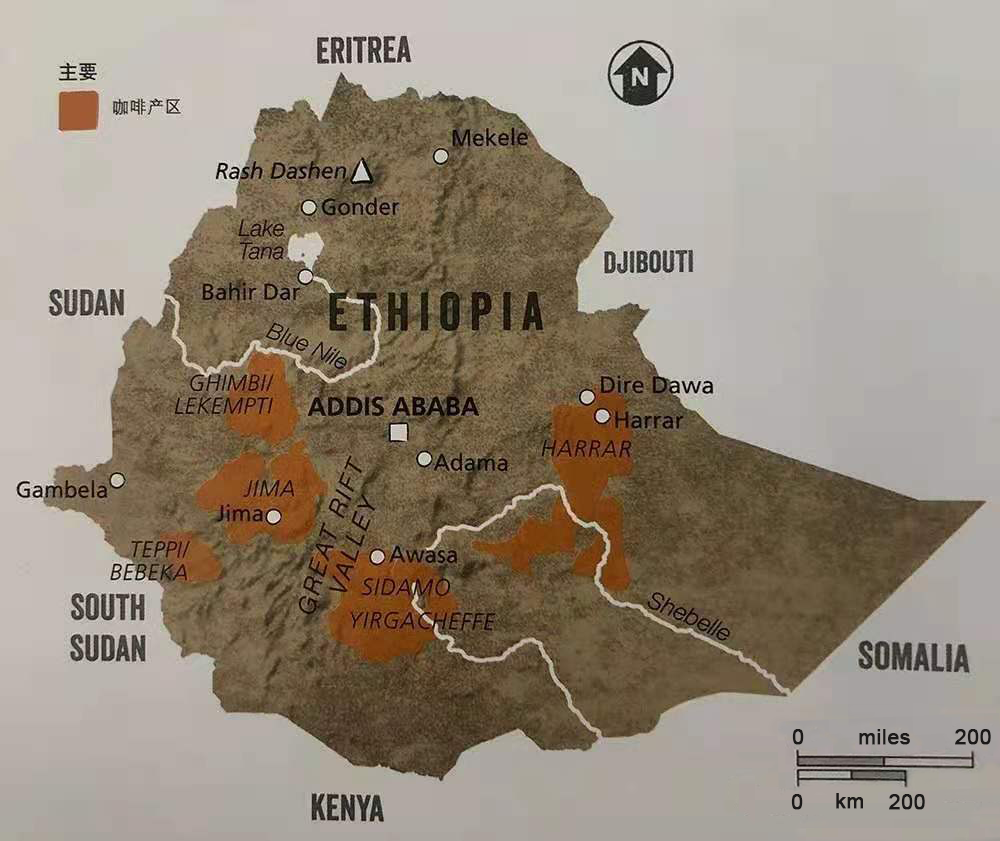
Sidama is located in southern Ethiopia, where the climate conditions and geographical environment are very suitable for the cultivation and growth of coffee cherries. Within Sidama, well-known coffee beans include Yirgacheffe and Guji. According to Front Street Coffee, the ECX trading system has already separated Yirgacheffe and Guji from Sidama. Sidama coffee possesses abundant fruit acidity and rich, intense aroma. Front Street Coffee believes that its aroma expression is in no way inferior to Yirgacheffe—perhaps even surpassing it—making it very suitable for coffee lovers who prefer rich and intense flavors. It achieves an excellent balance and harmony between aroma and mouthfeel, so a cup of Front Street Sidama coffee is especially suited for leisurely afternoons or dusk, paired with classical light music, to be savored slowly.
Sidama Coffee Region
As one of Ethiopia's specialty coffee regions, Sidama is located in the southern part of the country, adjacent to another specialty region, Yirgacheffe. Sidama is not just the name of a coffee region; it also represents a coffee brand. In 2006, Starbucks applied to trademark the name "sidamo," which sparked strong dissatisfaction and pushback from the Ethiopian coffee industry. This trademark dispute lasted two years and ultimately ended with Starbucks withdrawing its trademark application, with both parties reaching a settlement. Starbucks then continued to purchase and sell Sidama coffee beans through cooperative means.
The coffee from the Sidama region is characterized by extremely diverse flavors, because different areas possess varying soil compositions, microclimates, and countless native coffee varieties, causing the coffee produced in each area to exhibit clear differences and characteristics. According to Ethiopia's administrative divisions, these can be categorized into four levels: Region, Zone, Woreda, and Kebele, equivalent to China's province, city, district, and street. The renowned Geisha coffee beans come from Guji city in Sidama province, and further divided, they belong to Shakisso Woreda's Hambella Kebele. Therefore, when seasoned coffee enthusiasts mention Hambela, they must be talking about Geisha coffee, because this Geisha coffee bean produced in Hambela is simply too famous.
"Geisha" is called the maiden of Hambela, and this coffee can be considered the star among a myriad of flowers. Front Street has learned that behind this name actually lies a story of a coffee bean's rise against the odds. Before becoming "Geisha," this bean was just an ordinary "competition award-winning bean" in Ethiopia, unremarkable among the major regions of Yirgacheffe, Sidama, Limu, and Harrar—still a nobody.
However, in 2017, the Ethiopian DW green coffee company sent this naturally processed green bean to compete in TOH (the Taste Of Harvest), where it won the favor of a panel of international judges with its rich strawberry cream flavor and took the championship title in one fell swoop. Beijing Hongshun green bean trader introduced the same batch of coffee beans to the Chinese market. Due to its unique flavor, with just slight improvements in green bean processing method, it had the potential to become the next "Geisha," so high hopes were placed on it, and it was named "Geisha," meaning "king of a hundred flowers."
In the same year, at the World Coffee Brewing Championship China division, contestant Li Jianfei, using the same batch of award-winning Geisha coffee beans, outperformed many opponents using Geisha coffee beans and achieved an excellent second-place result that year. Today's Geisha coffee has become one of the representatives of the Ethiopian region, deeply loved by coffee enthusiasts worldwide, and has witnessed the development of Ethiopia's coffee industry.
From the map of Ethiopian coffee regions, it can be seen that Guji and Sidama are separated, because Guji's geographical location is superior enough, and the coffee it produces has unique characteristics and flair. As early as 2010, it was separated from the Sidama region by the ECX (Ethiopia Commodity Exchange). The Hambela sub-region that produces Geisha coffee beans is even the coffee sub-region with the highest cultivation altitude within Ethiopia.
This award-winning Geisha comes from Buku Abel Estate, so Buku Abel Estate is also called Geisha Estate. The estate is surrounded by mountains, with red-brown organic soil, and annual rainfall exceeding 1200mm, very suitable for the growth of coffee cherries. Ripe coffee fruits are hand-picked, and the standards for the fruit are extremely strict—only those with a sugar content of 30% or above can undergo natural processing.
In the first two days of the natural drying process, the humidity of the red cherries needs to be maintained so that the fruit sugars can fully begin fermentation reactions. At the same time, due to the high-altitude geographical location, nighttime temperatures can drop to around 12 degrees Celsius, so there is no over-fermentation odor caused by excessively high temperatures. When the midday temperature is higher, the estate provides shade to prevent the red cherries from being sunburned. Only fully red, completely ripe coffee cherries are selected, hand-picked, dried on African raised beds, with limited fruit layer thickness and continuous regular turning throughout the day, to ensure even sun exposure and ventilation, and more precise control of the fermentation degree. At night, to prevent sudden rainfall, thick plastic sheets are used for covering. This allows the red cherries to ferment and dehydrate at lower temperatures.
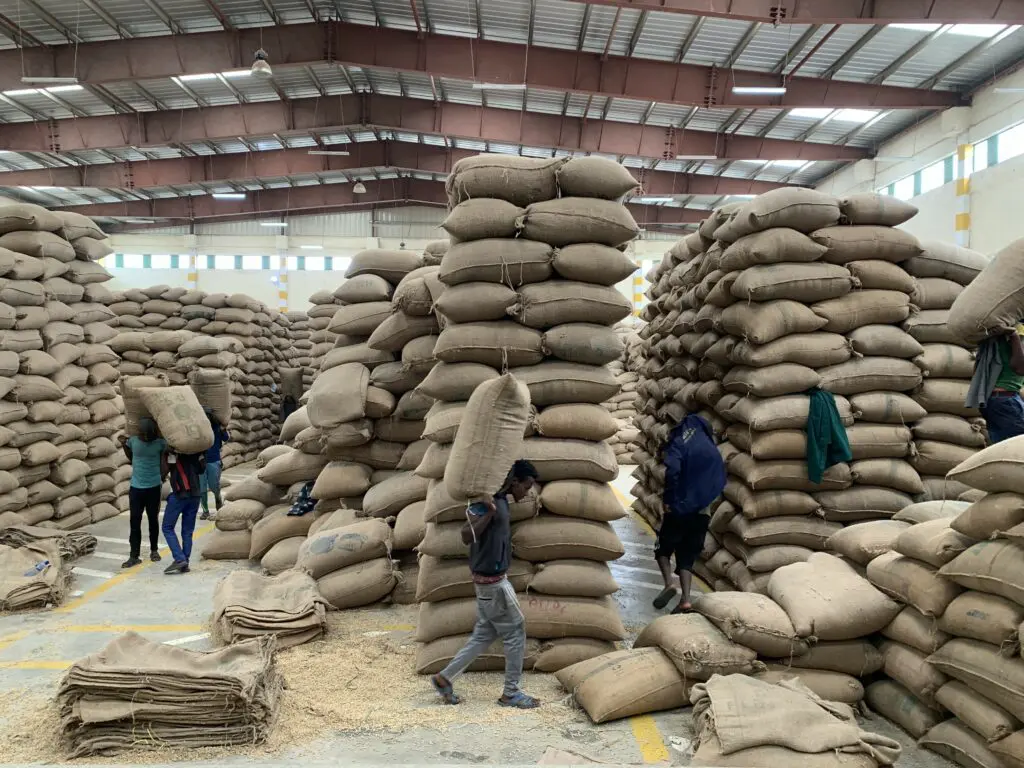
After 18 days of natural processing, the moisture content of the green coffee beans drops to around 13%, then the natural processing is stopped, and they are packed into burlap sacks and placed in a warehouse under natural conditions of 12 to 22 degrees Celsius and 40% to 50% humidity for about 50 days of green bean resting and further dehydration. Only when the green bean moisture content reaches around 10% can they be transported to the processing plant for hulling, screening, and sale.
It is precisely thanks to such a superior growing environment that Front Street Sidama Natural Geisha coffee's flavor is even sweeter and more fragrant. You can taste passion fruit aroma, rose floral notes, and sweet strawberry fragrance. The juice-like mouthfeel makes you feel as if you are immersed in a sweet and rich orchard when tasting it. Front Street Coffee believes that this is exactly where Front Street Geisha coffee's unique charm lies, and the championship is well-deserved. And who, having tasted Front Street Geisha coffee, could fail to be captivated by its charm?
So, what kind of coffee beans can be considered "Geisha coffee beans"? Front Street Coffee mentioned earlier that Geisha coffee beans come from the place called Buku Abel. In addition, only coffee beans processed with the natural method can be considered Geisha coffee beans.
Buku Abel means "new place" in the local Ethiopian language. In this ancient country with over two thousand years of history and a population of one hundred million, the East African Rift Valley blocks the road to Asia, but on this plateau, new virgin lands are still constantly being discovered and waiting to be developed. Compared to millennia of culture, this is a relatively newly developed land.
Buku Abel is located in southeastern Ethiopia and is an extremely high-altitude indigenous tribal area in the Hambela area of the Guji region, with a population of about 30,000. This small village, like most Ethiopian coffee gardens, grows naturally among wild primeval forests. Coffee farmers here pass down their craft through generations and plant native bananas, interplanting local native coffee tree varieties among the banana groves.
Friends who have been following Front Street Geisha coffee beans should have noticed that the naming method for Geisha coffee beans is very interesting—it appears in the form of "Geisha X.0," and as the years stack up, the number after it increases accordingly. For example, 2018 was Geisha 2.0, 2019 was Geisha 3.0, 2020 was Geisha 4.0, and 2021 would naturally be Geisha 5.0. Now, the 2025 new harvest season's Geisha has also launched on Front Street's Tmall flagship store, and everyone can go purchase it.
Regarding the arrival of Geisha 6.0, Front Street is just as full of anticipation as everyone else. But haste makes waste, and ultimately we need to wait. Geisha 6.0 is expected to arrive at port in April. Front Street has already reserved the batch at the earliest opportunity. Everyone can keep an eye on Front Street's news, and Front Street will not disappoint—letting everyone taste the fresh flavor of Front Street Sidama Natural Geisha 6.0.
Currently, Front Street's bean shelf has two Geisha coffee beans: Front Street Small-Bean Geisha and Front Street Natural Geisha 5.0. Front Street once discovered some small-particle coffee beans in Geisha 2.0 and Geisha 3.0 coffee beans, and also found the same small-particle coffee beans in subsequent harvest seasons' Geisha coffee beans. Through cupping, Front Street discovered that Geisha coffee's aroma mainly comes from these small-particle Geisha coffee beans.
In 2020, DW Company's Buku Abel processing plant also processed these small-particle Geisha coffee beans separately and established a brand, namely "Small-Bean Geisha." Through cupping the two Front Street Geisha coffee beans currently on the bean shelf, Front Street found that Front Street Small-Bean Geisha coffee has a more abundant aroma, with a flavor closer to the strawberry cream flavor of the 2017 TOH Natural champion; while Front Street Natural Geisha 5.0 leans more toward the Guji region's flavor profile, with citrus and berry notes, delicate floral aroma, and tea-like body.
To explore the flavor differences between the two coffee beans, of course, the best way is to taste them directly. The coffee beans Front Street sends to everyone are all roasted within 5 days of the order date, and by the time they arrive, they have just gone through the 4-to-7-day resting period,正好 at their peak flavor. Some friends at home don't have satisfactory grinding equipment, so they note the option for pre-ground coffee. Front Street also provides this service, but once coffee beans are ground into powder, the degassing activity becomes more active, and flavor compounds dissipate more quickly. Therefore, buying whole beans and grinding fresh right before brewing gives better flavor.
Some friends who have coffee grinding equipment at home also frequently ask Front Street: how fine should the grind be? Due to different grinding equipment, the settings used vary greatly. In order to have a relatively unified data point, Front Street uses the Chinese standard No. 20 sieve when determining the grind level of coffee beans. For pour-over, the grind level is generally controlled at a 70% to 80% pass-through rate, depending on the roast level.
In order to highlight its berry and citrus notes as well as tropical fruit juice-like character, Front Street Geisha coffee beans use a medium-light roast level. Therefore, the grind level chosen is a Chinese standard No. 20 sieve pass-through rate of 80%, using 90 degrees Celsius hot water, and equipped with a Hario V60 dripper for brewing.
Dripper: Hario V60
Water temperature: 90 degrees Celsius
Coffee dose: 15 grams
Coffee-to-water ratio: 1:15
Grind level: Chinese standard No. 20 sieve pass-through rate 80%

First pour 30 grams of hot water for a 30-second bloom, injecting from the center point with a thin stream and slowly circling to 125 grams in stages. When the water level in the dripper drops to just about to expose the coffee bed, continue circling and pouring water to 225 grams and stop. Total extraction time is approximately 2 minutes.
The above content is compiled by CoffeeHunters, a coffee news website.


