







Coffee Manner and the Third Place: Starbucks Pet-Friendly Store Debate
A complaint about a Starbucks pet-friendly store in China set off a polarized debate. The poster said three or four dogs entered within ten minutes, owners repeatedly asked for free whipped cream, and a contract could not be read in peace. Some called the complaint oversensitive; others said pet-friendly stores inevitably exclude customers without pets.
Starbucks entered China with the third place concept, positioning stores as a space between home and work. As pet friendliness spreads, the tension between animal-friendly policies and a quiet, predictable cafe environment becomes a real operational question, and the chain has not yet clarified how it will handle complaints or store-level rules.
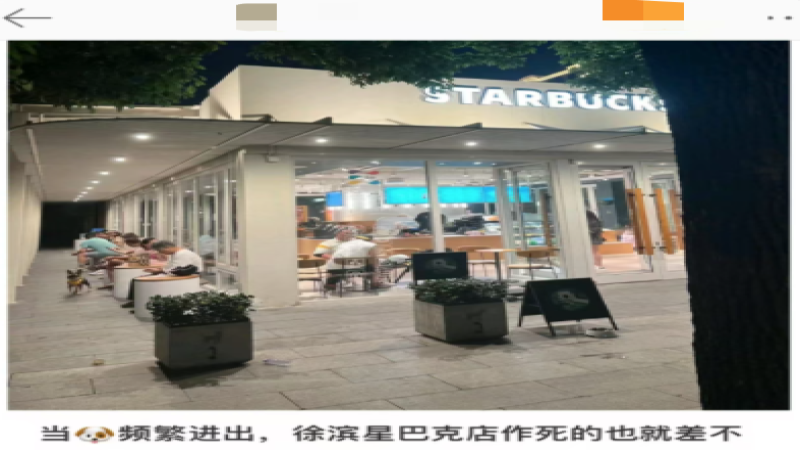
Recently, a complaint about a Starbucks pet-friendly store sparked heated discussion on social media. The netizen who posted said that while working in a corner of Starbucks, multiple pet dogs entered and exited within ten minutes, and their owners frequently interrupted for free whipped cream, making it impossible to read a contract in peace. The incident quickly polarized public opinion, with some accusing the poster of being overly sensitive, while others pointed out that the positioning of pet-friendly stores inherently excludes non-pet-owning groups. Starbucks once entered China with the concept of the "third place." Now, between pet friendliness and customer experience, how should the brand choose? This article will sort through the incident, netizens' views, and the evolution of Starbucks' third place concept.
Recently, a netizen posted a complaint on social media, saying that because they temporarily needed to read a contract, they bought a cup of coffee at Starbucks and sat down in a corner. As a result, in less than ten minutes, three or four dogs were brought into the store by their owners, all for the purpose of getting free whipped cream for the dogs. One middle-aged woman asked in a coquettish tone, which made the netizen feel very annoyed. The netizen said that they themselves like dogs and have had dogs, but the frequent entry and exit of dogs and the store's practice of giving away free whipped cream made it impossible for him to finish reading the contract quietly at Starbucks. He also mentioned that Starbucks originally entered the Chinese market with the third place concept. If it is neither able to provide a third place nor has a price advantage, a large loss of users will be difficult to avoid.
After this post was forwarded, it quickly triggered widespread discussion. One netizen commented, "You are just going into a Starbucks, not stepping over the threshold of high society." Another said, "Even Noah's Ark in 2012 let pet dogs on board, and Buckingham Palace keeps cats. What is so noble about drinking coffee in a coffee shop?" Another said, "What kind of big project could a contract read in a place like Starbucks be? So pretentious." "If you want quiet, go to a library. Why act like an elite in a cafe?" "Starbucks is not some high-end place. What sense of superiority are you showing here?" Public opinion was almost overwhelmingly on the side of "the dog is right."
Amid the wave of criticism, one netizen clearly pointed out the root of the conflict: this user had probably entered a "pet-friendly" store opened by Starbucks. Just as many hotels have pet-friendly room types, people traveling with pets go to pet-friendly hotels and homestays, while people who do not like pets should avoid stores clearly marked "pet-friendly." This netizen thought there was nothing strange about it. Moreover, the woman's coquettish way of speaking is common, and it is normal as long as she was not shouting loudly. Free pet whipped cream is itself a marketing plan devised by the business, which amounts to excluding the target group of people who do not like dogs.
The so-called "third place" is a classic scenario Starbucks tries to create in its stores. Starbucks founder Howard Schultz believed: "The first place is home, the second place is the workplace. Starbucks is between the two, a place that makes people feel relaxed and safe, a place where you have a sense of belonging." Starbucks used to be a common choice for businesspeople meeting guests, a paradise for IT professionals to work efficiently, and a place for bourgeois daily gatherings. At Starbucks, slowly savoring coffee while focusing on the work at hand, or chatting with friends, is a typical scene of the "third place" and also the first impression its brand left on the market. Even in today's market atmosphere that places more emphasis on "coffee + marketing," Starbucks still focuses on leveraging the competitiveness of "coffee + scene" as the "third place," exploring the integration of coffee consumption and cultural space by opening intangible cultural heritage concept stores, Reserve stores, and more.

However, in actual operation, Starbucks' "third place" is not as wonderful as the founder described. In February this year, Xinmin Evening News reported that the outdoor seating of a Starbucks store near the Xuhui Riverside in Shanghai was occupied by pet dogs. Some citizens reported that pet dogs were directly standing on benches and tables, leaving citizens and tourists with nowhere to rest, and the store involved was precisely a Starbucks pet-friendly store.
According to the store manager, most citizens are very civilized and can take good care of their "fur babies," but some customers are not well-mannered and let their pet dogs "run wild," which had even led to some disputes before. The store can only helplessly do a good job of reminding and persuading, and maintain good relations among customers with different needs. In the face of brands launching pet-friendly stores one after another, some netizens also said that they are allergic to cats and dogs. If businesses blindly cater to pet-owning groups, then they can only lose allergic consumers like themselves.
Image source: Internet
The above content is compiled by CoffeeHunters, a coffee news website.


