







What Makes Civet Coffee Different From Ordinary Black Coffee?
Kopi Luwak, or civet coffee, is not a coffee variety but a processing method from Indonesia. Wild civets eat coffee cherries, and the beans pass through their digestive system, where acids, enzymes, and fermentation break down storage proteins and change the amino acid profile. The result is a herbal aroma, a full body, and a high price.
Because it is brewed without milk or sugar, civet coffee counts as black coffee, and its perceived acidity comes from the bean's origin and roast rather than the animal process alone. Production is scarce, and among the most expensive coffee on the market, so brew ratios and pour-over technique matter when preparing it at home.
Kopi Luwak, also known as civet coffee, is a special coffee processing method unique to Indonesia. Because the coffee beans are fermented inside the civet's body, the coffee carries herbal aromas and a mellow mouthfeel, and it is expensive. This article will start with the definition of Kopi Luwak, explain whether it belongs to black coffee, analyze the source of its acidity, and share Front Street Coffee's brewing suggestions and flavor description, while also discussing its scarcity and alternatives.
For more specialty coffee knowledge, please follow the WeChat public account: Front Street Coffee (FrontStreet Coffee)
When talking about the world's most expensive coffee, Blue Mountain and Geisha each have their supporters, but there is another widely known name—Kopi Luwak. Because the coffee beans undergo internal fermentation, Kopi Luwak presents a unique herbal aroma and a rather outstanding body, making it a favorite among high-end consumers. Its production is scarce, so the price naturally remains high.
Kopi Luwak
The scientific name of Kopi Luwak is civet coffee, Kopi Luwak. It is not a coffee variety, but a processing method. Originally, wild civets in Indonesia ate coffee cherries, and because their digestive systems could not completely digest the coffee beans, the beans were excreted with their feces. The name Kopi Luwak comes from this.
After coffee cherries enter the civet's digestive system, they undergo the combined effects of an acidic environment, enzymatic reactions, and fermentation. During digestion, digestive enzymes and gastric juices pass through the parchment of the coffee cherry and penetrate inside, breaking down storage proteins and producing shorter peptide chains. This process changes the composition of amino acids, which in turn affects the coffee's aroma performance. It is widely believed that civets select the ripest, flawless coffee cherries to eat, which seems to provide a natural guarantee of coffee bean quality.
Civets mainly live in tropical rainforests or subtropical evergreen broad-leaved forests in hills and mountains below 2,100 meters above sea level. They prefer forest-edge shrubland and grassy areas, and often choose rock caves, earthen burrows, or tree hollows as habitats. This animal is omnivorous. Its animal foods include small mammals, birds, amphibians and reptiles, crustaceans, and insects, such as rodents, small birds, snakes, frogs, fish, crabs, bird eggs, insects, earthworms, and wild fowl. Its plant foods include the stems and leaves of Solanaceae plants, the seeds of various figs, and fruits such as kembang semangkuk and sour berries. However, civets have a weak ability to digest plants. Eating berries is more like a dessert after a meal; their main food is actually meat.
In the early days, local residents collected the feces of wild civets in the forest, extracted the undigested coffee seeds, and then processed them into green beans. Because production was limited and the internal fermentation method was unique, many merchants later saw a business opportunity and began capturing civets in large numbers for cage farming. Civets, which were originally carnivorous, were forced to eat only coffee cherries. However, the nutrients in coffee cherries cannot sustain the health of civets.
Some people believe that although the coffee beans are not digested in the civet's digestive tract, the highly corrosive digestive fluids have already eroded their surface. These digestive fluids contain a special protease that can break the coffee beans' original protein chains, decomposing long-chain proteins into tiny particles and forming short-chain peptides and amino acids.
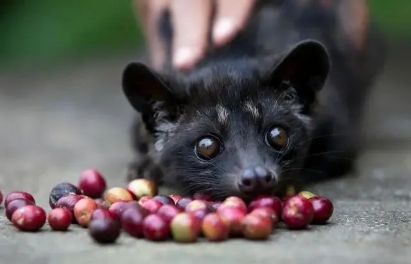
But the actual situation is that, because they eat only coffee cherries for a long time, civets may excrete the coffee beans within only one or two hours after eating them. Staying in the civet's stomach for one or two hours is far from enough to produce the series of changes mentioned above. The beans are basically still the same as when they were eaten. Even if the flavor changes somewhat, it is only an extremely slight change.
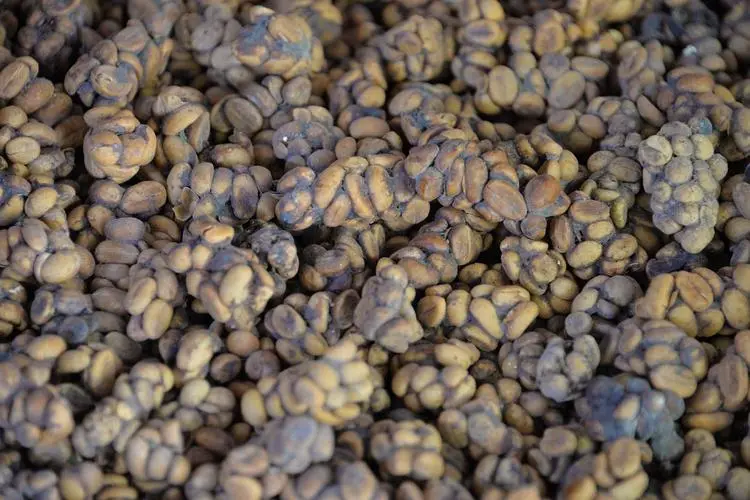
Front Street Coffee Indonesia Kopi Luwak Region: Indonesia, Sumatra Variety: Arabica Processing method: internal fermentation in civet Grade: G1
Front Street Coffee Brewing Suggestions
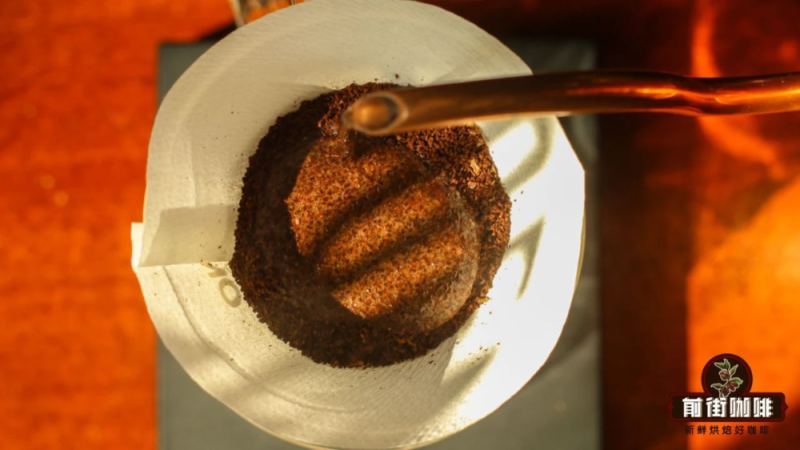
In order to more fully present the herbal flavor and mellow mouthfeel of Kopi Luwak, Front Street Coffee uses a medium-dark roast when roasting Kopi Luwak beans. Medium-dark roasted beans usually have a higher dehydration rate and are lighter in weight. During brewing, the coffee grounds will not completely sink to the bottom, and the water will be absorbed immediately after pouring. Because degassing is vigorous, the grounds bed is covered with bubbles, which easily forms channels. The fresher the beans, the longer these channels last, and the faster the water level drops. Therefore, a thick stream of water and a slow circular pouring motion are generally used.
When brewing Kopi Luwak, Front Street uses the KONO dripper, because the only exhaust part of this dripper is that one-quarter of the ribs. When the water level passes over the rib area, the amount of water in the dripper continues to rise, increasing pressure through the weight of the water, while the outlet is relatively small, which can extend the contact time between coffee particles and water. As the water flow drives it, soluble substances can be extracted more effectively, usually achieving the high-body effect expected by customers. Brewing parameters: water temperature 86-87°C, grind size: granulated sugar, coffee-to-water ratio: 1:15 (15g coffee, 225ml water)
1. Pour 30g of water for the first stage and bloom for 25 seconds. 2. After the bloom ends, pour the second stage of water until the scale reads 125g. After pouring, wait for the water level to drop to half. 3. When the grounds bed is about to be exposed, pour the third stage of water until the scale reads 225g. The total coffee extraction time is about 1'50-2'00 seconds. Kopi Luwak Flavor Description: Herbal, nutty, smooth mouthfeel, mellow.
Considering the scarcity and high price of Kopi Luwak, Front Street does not recommend drinking Kopi Luwak. Although the flavor of real Kopi Luwak is indeed good, coffee from other regions also performs excellently. Friends who like floral flavors are recommended Front Street Panama Geisha coffee, one of the most expensive coffees in the world; those who like fresh coffee with acidity are recommended Front Street Ethiopia Huakui coffee beans, with notes of black tea and berries; for those who like a balanced nutty and caramel flavor, neither sour nor bitter, Front Street Brazil coffee beans are recommended; if you still love the solid, mellow mouthfeel of Indonesian coffee, it is recommended to buy the highest-grade Front Street Golden Mandheling coffee. After multiple rounds of hand sorting, the defect rate of the coffee beans can be reduced to the minimum, thereby making the coffee aroma clearer and the sweetness better.
All the above coffee beans can be purchased and ordered at Front Street stores and the Front Street Tmall flagship store.
The above content is compiled by CoffeeHunters, a coffee news website.


