







Which Coffee Farms and Trade Deals Keep Blue Mountain Prices High?
Jamaican Blue Mountain coffee stays expensive because of limited production, estate terroir, and a trade history that still shapes supply. After Hurricane Gilbert hit the island in 1988, Japanese support helped rebuild cultivation, and a long-term agreement sent most of the crop to Japan, leaving only about 10 percent for other markets.
Grading standards and elevation also matter: the Clifton Estate sits at 1,310 meters, grows Typica, and uses the washed method before a medium-dark roast that brings out chocolate, nut, and creamy flavors. Brewing with a KONO coffee dripper and pulse pouring helps show the balance of acidity, sweetness, and bitterness.
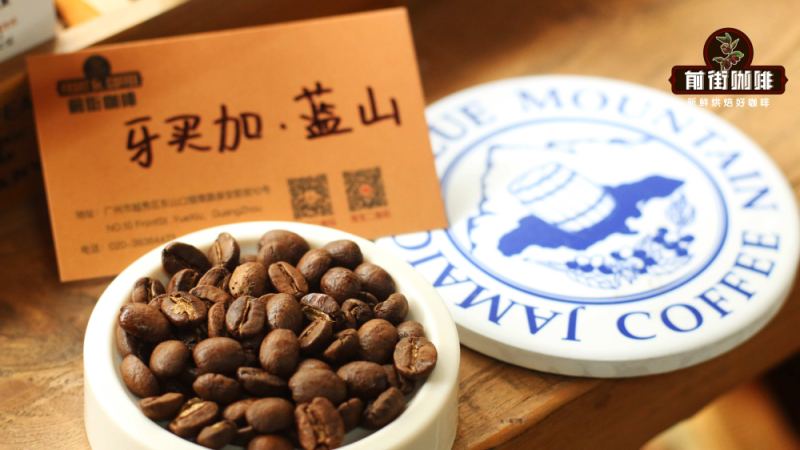
Jamaican Blue Mountain coffee has long been regarded as the pinnacle of the coffee world, thanks to its balanced, mellow taste and rich aroma. But why does its price remain so high? This article provides a comprehensive analysis of the mystery behind Blue Mountain coffee's expense, from historical trade and grading standards to estate terroir and brewing suggestions. Front Street Jamaica Blue Mountain No. 1 coffee beans come from the historic Clifton Estate, at an altitude of 1,310 meters, processed using the traditional washed method, with a medium-dark roast bringing out chocolate, nut, and creamy flavors. We will also share how to use a KONO dripper and pulse pouring to fully showcase this bean's richness and finesse, taking you deeper into the value of Blue Mountain coffee.
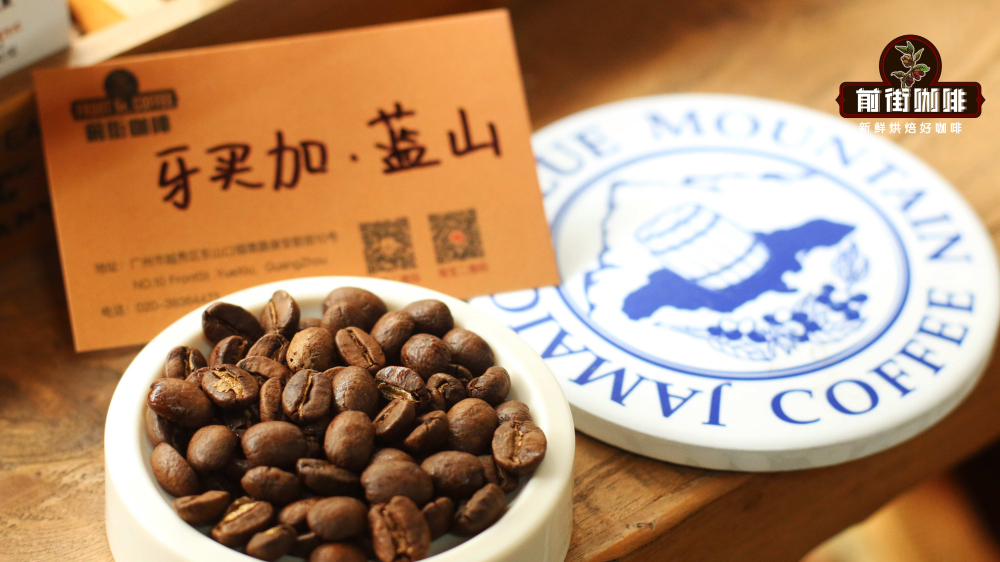
Front Street Jamaica Blue Mountain No. 1 Coffee Beans
Estate: Clifton Farm
Altitude: 1,310 meters
Processing Method: Washed
Variety: Typica
Roast Level: Medium-Dark Roast
Flavor: Chocolate, Nuts, Cream, Balanced Acidity, Sweetness, and Bitterness
In the specialty coffee world, Jamaican Blue Mountain coffee has always held an unshakable position. Its balanced, smooth taste and rich aroma have captivated countless coffee lovers. The recognized top-tier Blue Mountain is Jamaica's national treasure—Front Street Jamaica Blue Mountain No. 1 coffee beans.
Jamaican Blue Mountain Coffee Beans
How Did They Become So Popular?
The Blue Mountain range's exceptional natural conditions have nurtured the world-famous Jamaican Blue Mountain coffee. As early as before the 1960s, coffee beans produced in Jamaica were already widely favored in international markets.
In 1969, a powerful hurricane swept across the entire island of Jamaica, dealing a devastating blow to the coffee industry. At this time, the Japanese company UCC extended a helping hand, not only providing financial support but also bringing scientific ecological planting techniques to help restore Blue Mountain coffee cultivation. To thank the Japanese company for its assistance, the Jamaican government signed a 30-year agreement with Japan, promising to prioritize supplying 90% of Blue Mountain coffee production to Japan, with only 10%—about 245 tons—flowing to other markets. As the saying goes, scarcity drives up value. Blue Mountain coffee's production was already low to begin with, and combined with trade monopoly and frenzied demand-side pursuit, prices naturally climbed steadily.
In fact, during the period of the agreement with Japan, Blue Mountain coffee was not entirely consumed locally; some beans would be resold at high prices to other Asian countries and regions. Coupled with Japan's vigorous promotion, coffee lovers in Singapore, South Korea, and China's Taiwan and Hong Kong also joined the ranks of enthusiasts. After 2000, the "Blue Mountain craze" gradually spread to mainland China. That's why when we chat about coffee with our elders, the first words that roll off their tongues are often "Blue Mountain."
When the 2008 global financial crisis broke out, Jamaica began trying to sell Blue Mountain coffee to more countries. It happened that the agreement with Japan also expired at this time, and more quotas were allocated to other markets. With the growth of China's coffee consumption demand, many domestic merchants are now able to directly import Blue Mountain coffee beans from Jamaica. The Front Street Jamaica Blue Mountain No. 1 coffee that Front Street sourced comes from the locally historic Clifton Estate and is processed using the traditional washed method.
Jamaica Blue Mountain No. 1 Coffee
What Grade Does It Belong To?
According to Jamaica's Coffee Industry Regulation Act, Blue Mountain coffee cultivation areas are mainly concentrated in four administrative parishes: Saint Andrew, Saint Thomas, Portland, and Saint Mary. The law explicitly stipulates that only Typica varieties grown at altitudes between 910 and 1,700 meters can bear the name "Jamaica Blue Mountain." The total area of these four producing regions is about 6,000 hectares, accounting for only one-third of the entire Blue Mountain growing zone, with another 1,200 hectares used for cultivating Jamaica High Mountain coffee and Jamaica Prime coffee. In recent years, less than 15% of coffee beans produced in Jamaica can be labeled "Blue Mountain coffee"—a clear indication of its rarity.
According to the strict grading of the Jamaica Coffee Industry Board (CIB), Blue Mountain coffee is classified into Blue Mountain No. 1, Blue Mountain No. 2, Blue Mountain No. 3, and Blue Mountain Peaberry. Among these, the highest grade—Jamaica Blue Mountain No. 1 coffee beans—must meet specifications of 17 screen size or above, with a defect rate not exceeding 2%, moisture content controlled at around 10% to 12.5%, and must present just the right balance of acidity, sweetness, bitterness, body, and aroma in cupping. It's not hard to imagine that the quantity of such exquisitely flavored premium beans is extremely limited.
To better maintain the moisture content of green beans during transportation, Jamaica uses handcrafted wooden barrels to package Blue Mountain No. 1, No. 2, and No. 3 green beans for export, in three specifications: 70 kg, 30 kg, and 15 kg. Other grades of Jamaican coffee are all exported in 60-kg burlap sacks.
The Front Street Jamaica Blue Mountain coffee that Front Street sourced is precisely the highest grade—Jamaica Blue Mountain No. 1 coffee beans—produced at Clifton Estate and processed using the traditional washed method. So that customers can personally observe and identify authentic Front Street Jamaica Blue Mountain coffee, Front Street has placed the wooden barrels used for green beans and the origin certificate issued by Clifton Estate in its stores.
Clifton Estate
Clifton Estate was founded in the 1790s and is one of Jamaica's oldest coffee farms, as well as a member of the Rainforest Alliance certification. If you look carefully at the wooden barrels of Blue Mountain green beans, you can see the green rainforest frog logo printed on them.
Clifton Estate is located on the scenic Clifton Mount, with the coffee growing area and processing plant at an altitude of about 1,310 meters. The temperature differences brought by high altitude extend the ripening cycle of coffee cherries, giving them ample time to absorb nutrients. The entire coffee production process adheres to sustainable and environmentally friendly principles, minimizing pollution as much as possible. The removed coffee pulp is converted into organic fertilizer, and all water used in the processing plant is recycled.
Washed Processing
Clifton Estate places harvested coffee cherries into water tanks, using flotation to separate ripe beans from unripe ones, then uses water flow on conveyor belts to send ripe cherries into a pulping machine to remove the skin. After pulping, the coffee beans with mucilage and parchment are placed in tanks to ferment. After the mucilage breaks down, residual matter is removed with the aid of water agitation, and then the clean parchment coffee beans are dried. Once they reach a certain moisture content, they are stored to rest. Washed processing effectively reduces the defect rate of Jamaican Blue Mountain coffee, making the flavor brighter and cleaner while maintaining more consistent quality.
Front Street Jamaica Blue Mountain No. 1 Coffee Tastes Better Brewed This Way
The Jamaica Coffee Industry Board recommends that the roast level should highlight Blue Mountain's traditional flavors. Front Street's roaster follows this principle, using a medium-dark roast so that Front Street Jamaica Blue Mountain No. 1 coffee presents both richness and a gentle fruit acidity.
As the roast level deepens, coffee beans become more porous, and once ground, they tend to absorb more water and release more soluble substances, making over-extraction easy if you're not careful. Therefore, Front Street Coffee's baristas recommend a medium grind size and a not-too-high water temperature. Here, use a water temperature of 87 to 88°C, and choose a grind fineness with a 75% passing rate through a No. 20 standard sieve.
To highlight the rich, rounded mouthfeel of Front Street Blue Mountain No. 1 coffee, Front Street uses a KONO coffee dripper for extraction. KONO's ribs extend less than half the height of the dripper. This design allows the filter paper to cling tightly to the dripper wall after wetting, restricting airflow and thereby extending the water absorption time of the coffee grounds, making the extracted coffee more uniform overall.
Brewing Parameters: 15 g coffee, coffee-to-water ratio 1:15, grind size: EK43s setting 10.5 (75% passing rate through China No. 20 standard sieve), water temperature: 87 to 88°C, brewing method: pulse pouring.
Place the filter paper into the KONO dripper and pour water to wet the filter paper while making it fit more snugly. Add the coffee grounds and gently tap to distribute the coffee bed evenly. For the first pour, gently add 30 g of water for blooming, with a bloom time of 30 seconds; for the second pour, add water to about 125 g, circling outward evenly and steadily. Then wait for the coffee liquid to drop. When it has dropped by half, pour the final stage of water to 225 g. Once all the coffee has finished dripping, the total extraction time is generally about 2 minutes.
Flavor of hand-brewed Front Street Jamaica Blue Mountain No. 1 coffee: At high temperatures, Front Street Blue Mountain No. 1 coffee enters with a dark chocolate aroma, very rich, with a pronounced almond sweetness in the aftertaste. As the temperature drops, roasted hazelnut and creamy sweetness emerge—silky and smooth, accompanied by a hint of gentle acidity and caramel sweetness, with the aroma lingering in the mouth.
The above content is compiled by CoffeeHunters, a coffee news website.


