







What Are Robusta Coffee Beans Good For?
Robusta belongs to the Canephora species and is the only member of that lineage cultivated on a large commercial scale, which is why the two names are often used interchangeably. It tolerates high heat, cold, drought, and humidity, yields heavily, and ripens fast, so it survives on low-altitude plains where arabica struggles. Its caffeine content runs 1.7 to 3.0 percent, about double that of arabica.
That caffeine acts as a natural pesticide, helping the plant resist most insect attacks, and the fruit is rounder and smaller than arabica with a flat, round bean and a straight center crease. Flavor is the trade-off, which is why robusta rarely appears in specialty coffee but remains essential to blends and instant production. Hybrids like Tim and Catimor, crossing robusta and arabica, are now widely grown and grouped under arabica.
In the world of coffee, Arabica has long dominated the mainstream, but there is one variety that, although rarely seen in daily life and not particularly appealing in flavor, plays an indispensable role in the market—Robusta, often called "Robo beans" by those in the know. How has it managed to survive in the specialty coffee era? What are its pros and cons? Is Robusta suitable for instant coffee? From Front Street's perspective, this article comprehensively unpacks the true face of Robusta, from botanical classification, growing conditions, and flavor characteristics to commercial applications, and introduces a Front Street commercial blend coffee bean that can easily produce a beautiful espresso, helping you recreate the taste of a café at home.
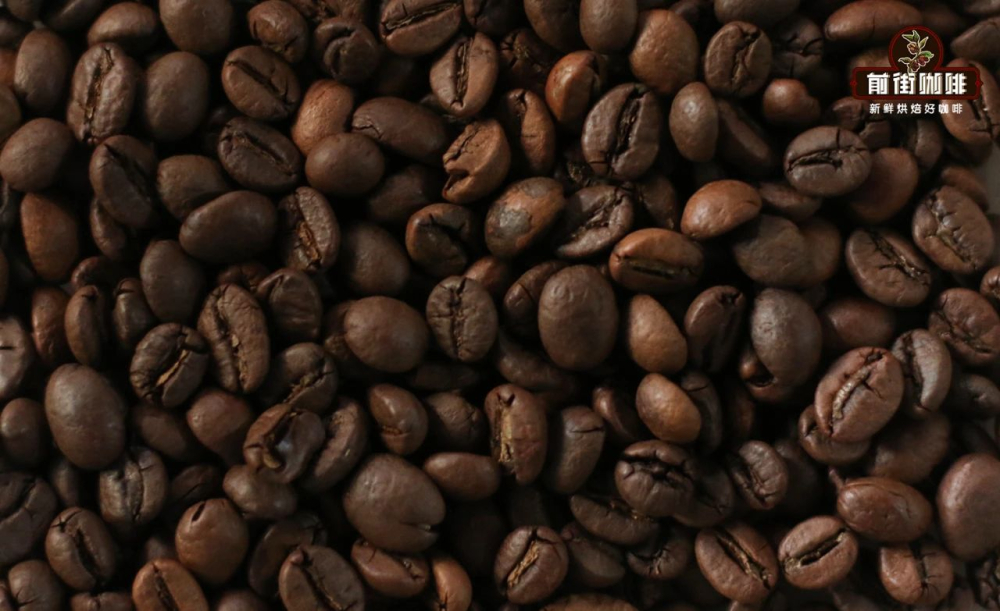
In the coffee family, there is a variety that is not commonly seen and often disliked for its flavor, yet it holds a pivotal position in the global market—this is Robusta, affectionately called "Robo beans" by coffee enthusiasts. Next, Front Street will talk with you about what advantages and shortcomings Robo beans actually have.
The most prominent strength of Robusta is its extremely strong survival adaptability
In botanical classification, Robusta belongs to the Canephora species, also known as the Congo species or intermediate coffee. For example, the well-known Geisha belongs to the Arabica species, while under the Canephora species, only Robusta is commercially cultivated on a large scale, so Robusta has almost become synonymous with the Canephora lineage. Tim and Catimor, which arise from natural hybridization between Robusta and Arabica, are now also widely cultivated and are classified under the broad Arabica category.
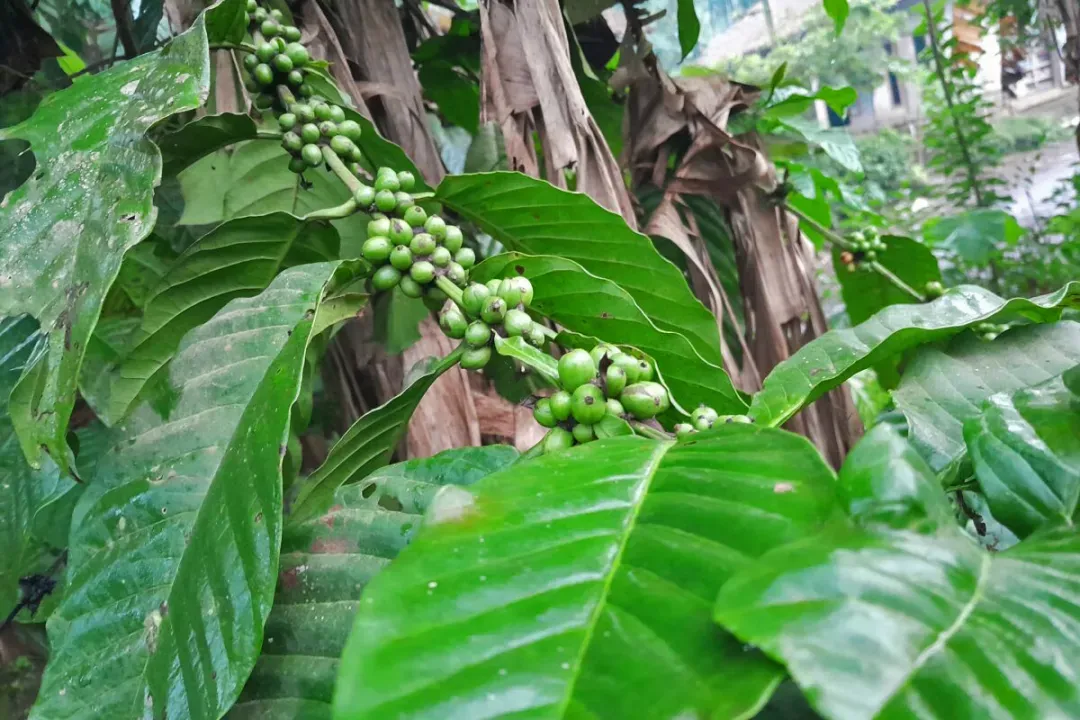
From a cultivation perspective, Robusta coffee trees are highly tolerant of high temperatures, cold, drought, and humidity, with a very high survival rate. At the same time, their caffeine content is also relatively high (1.7%–3.0%), about twice that of Arabica. Caffeine acts as a plant's natural pesticide, enabling Robusta to resist most insect attacks. A single Robusta plant bears a large amount of fruit; the fruit is slightly rounder and smaller than Arabica, the bean shape is flat and round, and the central crease is straight.
It is precisely because Robusta has strong vitality, high yield, fast ripening, and strong environmental adaptability—it can usually grow on low-altitude plains and can also be managed and harvested uniformly by mechanization—that Robusta has lower cultivation costs and is more suitable for commercial mass production, and its selling price is naturally lower. For example, most of what is grown in Hainan, China, is Robo beans. Since it has so many advantages, why do people still look down on this variety, and even disdain Robusta-Arabica hybrids as well?
The flavor of Robo beans is its hard flaw
We often see Arabica coffee advertised as "100% Arabica," but almost never see the phrase "100% Robusta." This has to do with the taste of Robo beans.
Analysis shows that Robo beans have a high chlorogenic acid content and a relatively low sucrose content. Chlorogenic acid is the source of coffee's bitter and astringent taste, while sucrose is the basis for our perception of coffee's various aromatic substances. Therefore, Robo beans usually have low acidity, a mellow and deep bitterness, and flavor profiles such as walnut, peanut, hazelnut, barley tea, and grain. If not handled properly, they can also develop a strong, pungent earthy fishiness and negative mouthfeel similar to rubber. This is also summarized by everyone as the "Robo bean flavor." For example, the Catimor variety most widely grown in Yunnan, China, carries 25% Robusta genes, so its flavor is often criticized.
Deep-roasted Robusta beans accumulate a large amount of gas and can release abundant crema when extracted into espresso, while the solid flavor profile also adds a richer mouthfeel to the coffee. We all know that coffee in the traditional sense tends toward a strong, bitter, mellow taste without too much acidity, which happens to match the flavor characteristics of dark-roasted Robo beans. This is also why Robo beans can still survive in the current specialty coffee era.
Although Arabica coffee beans are still the main focus today, in recent years climate and environmental problems in various coffee-producing regions have become increasingly prominent, coffee-growing conditions are getting worse, and future coffee cultivation will face great challenges. Robusta itself has strong survival ability, so in the future more hybrid coffee varieties with Robusta lineage are likely to appear.
As Front Street mentioned above, deep-roasted Robusta produces abundant crema during extraction. So that fans can recreate the taste of the shop at home, Front Street has specially launched an Italian-style coffee that can easily make a beautiful espresso— Front Street commercial blend coffee beans.
For the presentation of this bean, we used Front Street Colombia washed coffee beans (30%) + Front Street Brazil semi-washed coffee (60%), paired with 10% Front Street washed Robusta coffee beans, and adopted a medium-dark roast, highlighting nutty aromas while also retaining quite a bit of caramelized mouthfeel .
After many tests by Front Street, the espresso made from this commercial blend Italian-style coffee bean has a rich golden crema, accompanied by nutty aromas. When tasted, it has a roasty coffee flavor. When combined with milk, it can easily create beautiful latte art patterns. It enters the mouth as smooth as cream, with a full chocolate mouthfeel, and after swallowing, the bitterness fades away, leaving a lingering fragrance on the lips and teeth.
The above content is compiled by CoffeeHunters, a coffee news website.


