







Why blending coffee with tea became Nestlé's answer to a shrinking market
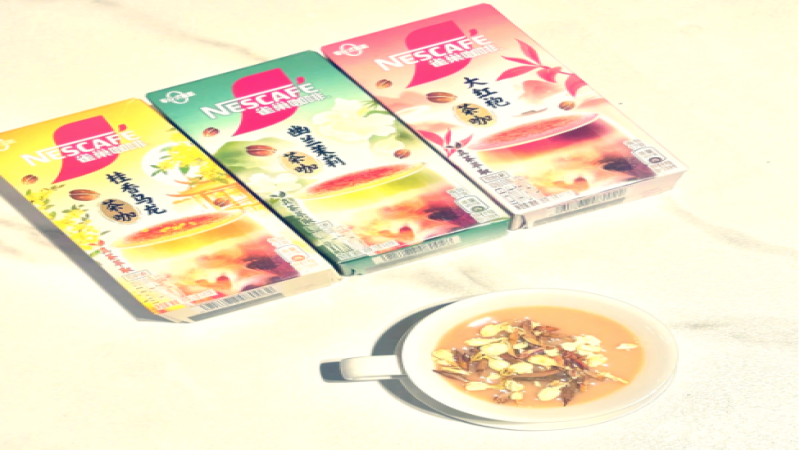
Nestlé launched a Nescafé Special Tea Coffee series in July with three flavors: Orchid Jasmine, Osmanthus Oolong, and Da Hong Pao. The drinks combine coffee with tea infusion, so caffeine sits alongside tea polyphenols, giving lower caffeine concentration and a smoother mouthfeel than plain coffee. More than three months later, Nestlé paired the line with an Onmyoji mobile game collaboration to reach younger buyers.
The push comes as instant coffee sales contract and the brand image ages. Nestlé, the company behind Nescafé instant coffee, is testing cross-industry marketing to hold market share against tea drink makers moving into coffee. The tea coffee category sits between milk tea and coffee, and the co-branded merchandise drew wide praise, though its effect on repeat purchases remains unproven.
The domestic beverage industry is currently witnessing an interesting cross-industry phenomenon: tea drink makers want to enter the coffee sector, coffee companies are trying to grab a share of the milk tea market, and at the intersection of tea and coffee, a new category is being born—tea coffee. As a global coffee industry giant, Nestlé, facing pressures such as the continuous contraction of the instant coffee market and brand aging, launched a special tea coffee series in July this year, including three flavors: Orchid Jasmine, Osmanthus Oolong, and Da Hong Pao. More than three months after launch, Nestlé has teamed up with the Onmyoji mobile game for a cross-industry marketing campaign, attempting to extend from young people's first cup of coffee to their first piece of merchandise. How has the market responded to this drink that combines caffeine and tea polyphenols? And why has the co-branded merchandise received such widespread praise? This article will provide a detailed interpretation.
Currently, the domestic beverage consumption sector resembles a "besieged city": brands that started with tea drinks are venturing into coffee one after another, while coffee brands in turn launch milk tea products, and between milk tea and coffee there also sits a tea coffee category.
Tea coffee is a drink made by blending coffee with tea infusion, with core ingredients including caffeine and tea polyphenols. Compared with pure coffee, tea coffee has a lower caffeine concentration and a smoother mouthfeel, while also carrying the aroma characteristics of the tea itself. This dual nature makes it quite popular among consumers seeking a balanced taste.
As a leading enterprise in the global coffee industry, Nestlé, under multiple difficulties such as slowing growth in domestic consumer demand, the instant coffee category being continuously squeezed, and a gradually aging brand image, is also trying to break through existing frameworks and explore new products and new marketing paths to prevent its market share from being further seized by other competitors.
In July this year, Nestlé officially announced the launch of its new tea coffee products, belonging to the Nescafé Special Tea Coffee series. The three products are named "Orchid Jasmine," "Osmanthus Oolong," and "Da Hong Pao," allowing consumers to directly identify their preferred tea flavor direction based on the product names.
Now that tea coffee has been on the market for more than three months, social platforms have accumulated a lot of real market feedback. It is reported that in the early promotion stage, Nescafé tea coffee mainly attracted two types of consumer groups: one group is familiar with the Nescafé brand and already has coffee drinking habits, while the other group consists of consumers who do not usually drink coffee—they may not be able to accept the bitterness of pure coffee, nor do they like the excessive fat and cholesterol in milk tea, yet they genuinely need refreshment due to work or study demands. Nescafé tea coffee precisely hits the core demands of this group.
On social media, Nescafé fans, after trying the new products, shared homemade reviews as usual. Some netizens reported that after brewing "Orchid Jasmine," the entire room was filled with jasmine fragrance, the taste was extremely smooth, and a lasting fresh aroma remained in the mouth after drinking, which was quite surprising.
Another netizen commented that although "Osmanthus Oolong" smells good, the coffee flavor is relatively weak, and one cannot taste that rich, full-bodied feeling.
As for "Da Hong Pao," some netizens believed it may be the one among the three tea coffees with the most prominent tea flavor, with an orchid note in the aroma of Da Hong Pao and an overall richer taste.
In addition to closely following consumer needs in product development, Nestlé is also actively moving closer to younger groups at the marketing level. To focus on promoting these three tea coffee drinks, Nestlé recently officially announced a cross-industry cooperation with the classic IP Onmyoji mobile game, keeping up with Gen Z social trends and hoping to extend from young people's "first cup of coffee" to their "first piece of merchandise," adding more youthful vitality to the brand.
It is understood that Nescafé and Onmyoji this time launched a co-branded gift box endorsed by three winning shikigami, as well as multiple limited-edition merchandise products, attempting to bind mobile game characters with the series' flavor inspiration and precisely hitting the preferences of the game's young fans.
Mobile game players have been posting the co-branded gift boxes on social platforms: Onmyoji postcards, folders, laser tickets, badges, and other merchandise. It is worth mentioning that in today's environment where co-branded merchandise often invites complaints, Nestlé's merchandise this time unexpectedly received a large amount of praise, being commended for its attractive design, attention to detail, overall good looks, and impressive physical quality.
Some budget-conscious consumers also pointed out that Nescafé's new tea coffee works out to only two yuan per bag, making the gift box and merchandise almost free, and exclaimed that Nestlé truly spared no expense in promoting its new tea coffee products.
Image source: Internet
The above content is compiled by CoffeeHunters, a coffee news website.


