








How Does Australian White Coffee Differ From a Latte?
A flat white, often called Australian white coffee, uses finer micro-foam than a latte and a smaller proportion of milk to espresso. It emerged in the 1980s as espresso took root in Australia and New Zealand, when drinkers wanted neither the thick foam cap of a cappuccino nor the lighter foam of a latte. The result is warm, lightly bubbled milk lying smoothly on the coffee surface.
Both Australia and New Zealand claim its origin, and the debate continues, rooted in the shared new zealand coffee culture and Australian scene shaped by Italian immigrants. Cafes typically serve flat whites only hot, in a smaller cup than a latte. Home versions can be made with a manual espresso press and a household milk frother, using stable nutty espresso blends for consistent results.
Flat White has become almost ubiquitous in domestic cafes in recent years, yet many people are still unclear about how it differs from a latte. This article begins with the historical context of Australian-New Zealand coffee culture, sorts through the controversies surrounding Flat White's origins and its flavor positioning, then specifically breaks down the differences in ratio, cup size, and milk foam thickness between Front Street Coffee's daily Flat White and latte offerings, and extends to home replication methods using manual espresso presses and household milk frothers. At the end, it also explains why Flat White is only served hot, and how to select more stable espresso blend beans when making Flat White, along with flavor descriptions of three Front Street nutty-profile coffee beans for coffee enthusiasts' reference.

To learn more about specialty coffee, follow: Front Street Coffee (Frontsteet Coffee)
Flat white, often called Australian White or Fu Rui Bai in China, is one of the most beloved espresso milk coffees among locals in the Australian region. In recent years it has also rapidly gained popularity, becoming a highly ordered item in domestic cafes—basically no matter the size of the shop, you can find it on the menu.
Although domestic coffee fans are used to calling it Australian White, whether this coffee originated in New Zealand or Australia is still debated between the two places. Tracing back to the source, it is because after Italy brought coffee culture to this new world through immigrants, the coffee industry in the Australian-New Zealand region grew rapidly.
The 1980s can be seen as the budding stage of Flat White. As espresso took root in Australia and New Zealand, latte and cappuccino had long been everyday drinks, but local coffee drinkers with increasingly refined tastes began to feel dissatisfied—they neither wanted the thick mountain of milk foam on top of a cappuccino, nor the excessive foam in a latte.
Thus, in Australia and New Zealand, where milk sources are abundant and baristas' milk steaming skills are generally superb, Flat White was born. It uses finer micro-foam than latte and cappuccino, allowing warm, lightly bubbled milk to lie smoothly over the surface of the coffee—this is the original form of Flat White. As for whether it comes from Australia or New Zealand, both sides have their own claims. Since we cannot go back in time to verify, let us temporarily classify it under the Australian-New Zealand region according to popular understanding.
So the "Australian" in Australian White coffee actually refers to the Australian-New Zealand area. Regardless of which region is the source, one thing is certain: the coffee flavor of a Flat White is more prominent than that of a cappuccino or latte, while the fine milk foam gives this cup a velvety smooth texture.
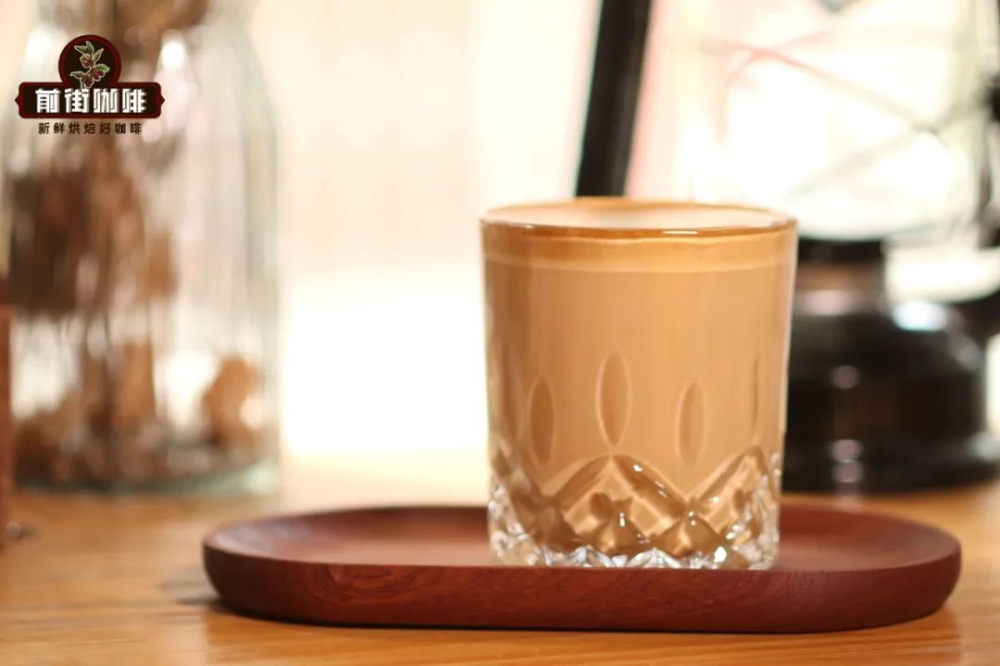
When Front Street Coffee (FrontStreet Coffee) makes a Flat White daily, it uses a 200ml cup, first adds two shots of espresso (40g total), then heats the milk and creates about 0.5cm of milk foam, then pours from the center, allowing the crema layer of the espresso to be preserved, thereby enhancing the rich taste of the first sip.
Latte is made differently: using a 300ml cup, also adding two shots of espresso (40g), heating the milk and frothing it to about 1cm of foam, then fully mixing with the coffee, and finally drawing various latte art patterns on top.
Espresso from a cafe is usually made with a professional espresso machine. The machine uses 9-10 bar of pressure to push approximately 94°C hot water through very finely ground coffee, extracting espresso at a brew ratio of about 1:2.
If you want to make a Flat White at home, you can use a home espresso machine or a portable manual espresso device. However, the espresso from such equipment is less concentrated than from commercial machines, and the consistency is relatively weaker.

Taking a portable manual espresso maker as an example (here Front Street Coffee (FrontStreet Coffee) uses a Star Grains coffee maker for demonstration), Front Street Coffee (FrontStreet Coffee) recommends taking 18g of very finely ground coffee, pouring in 120ml of 95°C hot water, and pressing directly to extract 40ml of coffee liquid, then stopping.
Next, heat the milk to 55-65°C, pour it into a milk pitcher, froth with a handheld milk frother, then use a spoon to skim off the coarse bubbles on the surface, reducing the foam thickness to about 0.5cm, shake the pitcher to mix the foam and milk evenly, and finally pour the milk from the center of the espresso; the finished product is about 200ml.
Why isn't Flat White coffee served iced?
Usually when drinking a latte we can choose iced or hot, but Flat White generally only offers hot. The reason is that baristas want every sip to include both the milk foam and the milk coffee beneath, perfectly combined. Only when the foam is sufficiently dense and thin, and the temperature is just right for drinking, can every sip have both the foam and the rich coffee liquid, and be finished quickly before the foam separates. Once ice is added, the cooled milk coffee becomes diluted, and the above effect cannot be achieved.
If you prefer an iced yet rich milk coffee, Front Street suggests trying the also very popular "Dirty" from the past two years. Drip the extracted espresso onto the top layer of chilled fresh milk, creating a "dirty" visual effect; the alternating hot and cold mouthfeel is very unique.
When making Flat White, how to choose espresso beans?
Some friends want to replicate a delicious Flat White at home. Front Street believes the first step is choosing the right coffee beans and extracting a quality espresso as the base. Most home espresso machines are less stable in performance than commercial machines, and the single-cup output is also smaller, which further tests our control of parameters. Therefore, Front Street recommends choosing espresso blend beans with better stability—blends combine flavors from different origins, with a roast level of medium or above, allowing greater tolerance during extraction.
Front Street's bean list has successively introduced nearly ten espresso blends, and insists on only shipping beans freshly roasted within 5 days, ensuring they are still in the optimal flavor period when you receive them. In addition to the gentle-style Warm Sun Blend mentioned earlier, Front Street's espresso bean list also has three cost-effective nutty-profile blends; their rich body and intense aroma are equally suitable for making Flat White.
Balanced and Aromatic—Front Street Specialty Blend Coffee Beans
Colombian washed coffee beans (30%) + Brazilian semi-washed coffee beans (70%)
Adding Colombian coffee to the nutty profile of classic Brazilian coffee, the espresso presents dark chocolate flavor and caramel sweetness, with a full roasted aroma. When combined with steamed hot milk, it offers a chocolate, cocoa, and creamy mouthfeel, like drinking a cup of unsweetened Ovaltine hot drink.
Classic Rich—Front Street Commercial Blend Coffee Beans
Robusta washed coffee beans (10%) + Colombian washed coffee beans (30%) + Brazilian semi-washed coffee (60%)
The espresso has rich golden crema and nutty aroma. When combined with milk into a Flat White and tasted, there is a roasted coffee bitterness, but more accompanied by a creamy full-bodied texture; after swallowing, the bitterness fades, yet the aroma lingers between lips and teeth.
Slightly Acidic and Rich—Espresso Beans Recommended by Many Baristas - Front Street Black Cocoa Blend Coffee Beans
Yunnan washed small-bean coffee (30%) + Brazilian semi-washed coffee beans (70%)
The soft acidity of Yunnan small-bean coffee, paired with the rich aroma of Brazilian Cerrado coffee, gives the espresso flavors of caramel, nuts, and gentle plum acidity; after adding milk, the overall taste is relatively balanced and smooth.
To learn more about specialty coffee, follow: Front Street Coffee (Frontsteet Coffee)
The above content is compiled by CoffeeHunters, a coffee news website.


