







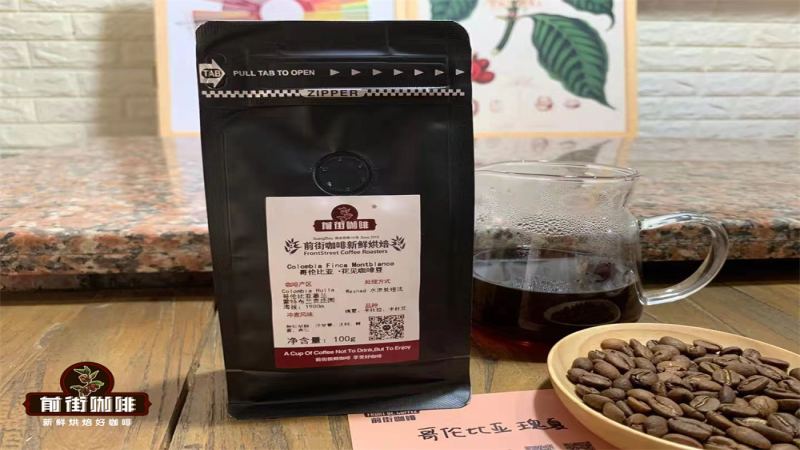
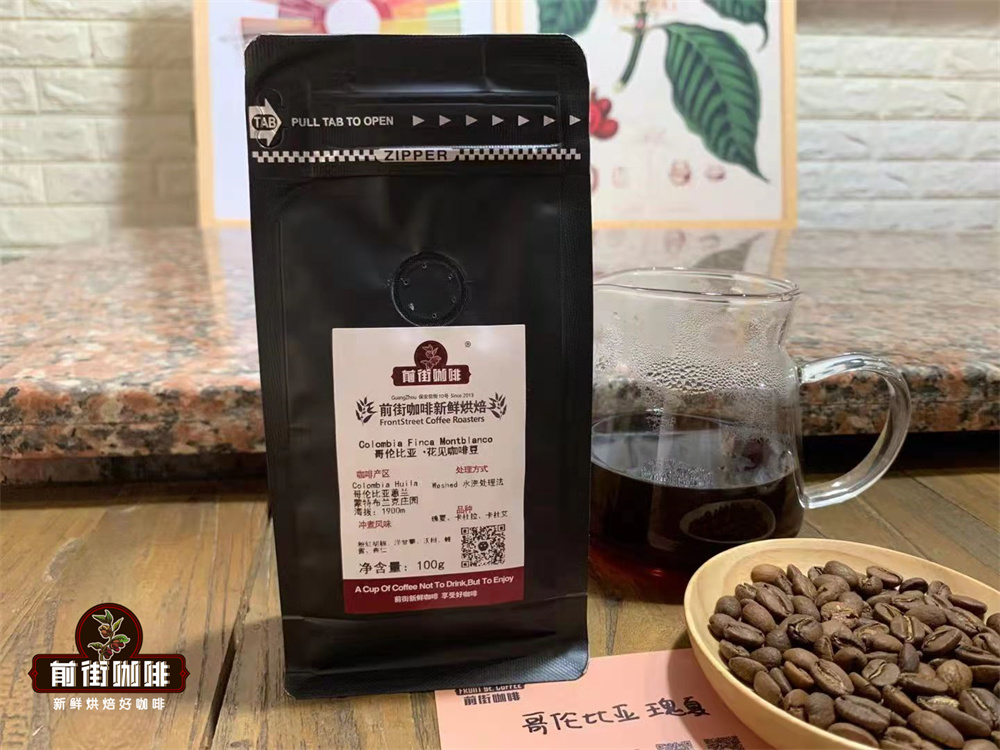
How Does the Colombia Hanami Geisha Coffee Taste?
Colombia Hanami is a washed blend of Geisha, Caturra and Catuai grown in the Huila region. Brewed in a V60 with 91C water and a three-pour method, it shows chamomile and pink pepper at high temperature, mandarin and honey as it cools, then a slight sour-bitter edge with almond at low temperature. The clean washed profile makes it pleasant drunk warm.
The bean comes from Finca Montblanco in Huila, the region often treated as the benchmark of Colombia's classic nutty caramel and berry-like flavor. Front Street ground and sifted to an 80 percent pass-through rate on a Chinese No. 20 standard sieve before brewing. Colombia ranks third worldwide in coffee production, and the Huila coffee name carries weight in the specialty market.
Front Street Coffee brings you a distinctive Colombian Hanami coffee bean, a blend of three varieties—Geisha, Caturra, and Catuai—washed to present a clean flavor profile. This bean originates from Colombia's famous Huila region, carrying a base of nutty caramel and berry-like sweet-tartness, and blooming with the captivating aromas of chamomile and pink pepper at high temperatures. This article will share Front Street's brewing parameters and flavor performance in detail, and take a deep dive into the characteristics of the Huila region and the growing story of Finca Montblanco, giving you a comprehensive understanding of this Geisha blend's unique charm.
Today Front Street would like to introduce a coffee bean with a truly distinctive aroma—Colombia Hanami. This bean exudes a rather unique spice and chamomile scent. It is a blend of three varieties—Geisha, Caturra, and Catuai—and presents a clean, pure flavor through the washed processing method. The coffee bean comes from Colombia's renowned Huila region. Colombia has long enjoyed a stellar reputation in the specialty coffee world, and the Huila region is the benchmark of Colombia's classic flavor profile, known for its nutty caramel notes paired with the sweet-tartness of berries. The washed processing method, as a classic and traditional technique, complements this bean perfectly and is well worth a try.
After Front Street received this coffee bean, we immediately sensed an intense spice and chamomile aroma. We then chose a V60 dripper, ground and sifted at an 80% pass-through rate using a Chinese No. 20 standard sieve, and brewed with 91°C water using a three-pour method. The resulting flavor performance was a pleasant surprise: at high temperatures, the aromas of chamomile and pink pepper are especially prominent; at medium temperatures, the varietal character of Geisha stands out clearly, with the sweetness of mandarin and honey emerging; at low temperatures, it turns slightly sour-bitter with an almond note. I personally recommend drinking it within the medium-to-high temperature range. Friends who want to get their hands on this bean can search online for Front Street Coffee (FrontStreet Coffee), or visit the Front Street Coffee (FrontStreet Coffee) store in Guangzhou to experience it in person—I believe it will bring a different kind of sensation.
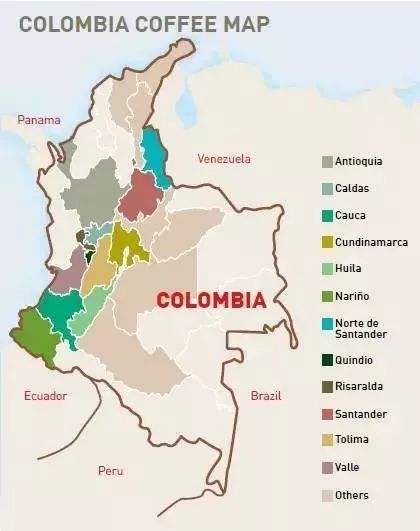
Colombia currently ranks third in the world in coffee production. Almost all of the country's coffee is produced and exported uniformly by the National Federation of Coffee Growers of Colombia. This is a non-profit commercial association representing more than 50,000 producers, most of whom are small family farms. Front Street has previously detailed the growing environments of Brazilian and Colombian coffee when discussing their differences. Colombia's coffee-growing conditions can be described as uniquely favorable: low latitude, high altitude, and diverse terrain—these factors together lay the superior foundation for its coffee quality. The reason Colombian coffee beans are often used in blends is precisely because of their stable production and outstanding quality.
Colombian coffee is one of the few single-origin coffees sold globally under a country's name. In terms of overall quality, the praise it has received is difficult for other coffee-producing countries to match. Compared with other producing countries, Colombia places greater emphasis on product development and production promotion. It is for this reason, combined with its superior geography and climate, that Colombian coffee has become world-renowned for its excellent quality and taste.
Huila Region
Colombia's Huila Department lies at the junction of the Central and Eastern ranges of the Andes, in the southern part of the country. Huila's coffee-growing area is centered on the city of Pitalito, with growing altitudes between 1,750 and 1,950 meters, predominantly based on smallholder farming. Over the past decade, local smallholder coffee farmers have worked together, and the coffee cherries are hand-picked and carefully processed, ultimately becoming specialty coffee beans that showcase the flavor of the Huila region. Front Street has cupped many beans from the Huila region, and they generally carry nutty caramel aromas along with soft berry sweet-tartness. For friends who don't particularly enjoy sourness or bitterness, Front Street also recommends Huila coffee. The washed coffee of the Huila region is listed by Front Street as a daily staple bean and is also one of the components of Front Street's specialty blends.

Finca Montblanco
Hanami Geisha coffee comes from Finca Montblanco. The estate is located on the winding mountain road of Vereda La Tocora in Pitalito, operated by owner Rodrigo Sanchez Valencia, whose coffee-growing history can be traced back to his grandfather. Finca Montblanco sits atop a hill, with a land area of about 18 hectares. The estate is rich in water resources and fully equipped with washing and drying facilities, so most of the coffee beans produced are washed, including special processing methods derived from washing.
Coffee Varieties
The Geisha blend coffee bean Front Street acquired this time is a mix of Geisha, Caturra, and Catuai. Some friends may wonder: is this bean still considered single-origin coffee? Single-origin coffee refers to coffee beans from a single coffee-producing region or estate, not a single variety, so this Geisha blend coffee bean still falls within the category of single-origin coffee.
Initially, the estate grew Caturra and Catuai varieties. In 2016, the owner and his team introduced the Geisha variety from Panama, and it was not until 2020 that they began harvesting, entering mass production in 2021. Therefore, this coffee bean can be considered the first Geisha coffee that Finca Montblanco has ever sold on the market.
Processing Method
Front Street's Hanami Geisha uses the washed processing method. The owner first floats the harvested cherries, removing insufficiently dense, rotten cherries as well as twigs and sand. Then the skin and pulp are removed by machine, and the depulped cherries are sent to fermentation tanks to ferment for 18 to 36 hours, using the acidic substances produced by fermentation to remove the pectin layer. After fermentation, the coffee cherries are washed clean, and finally sun-dried to reduce the moisture content to about 11%. The dried coffee beans are stored with parchment until the parchment is removed just before export.
Front Street Roasting Recommendations
Because the green beans of the new crop have a relatively high moisture content, Front Street's roaster extends the dehydration time during roasting so that the bean surface and core are heated evenly. To showcase this bean's sweetness, acidity, and rich aromas, a medium-light roast is used.
Front Street's Brewing Parameters for Geisha Coffee:
Front Street uses a medium-fine grind, with a coarseness close to fine granulated sugar (80% pass-through rate on a Chinese No. 20 standard sieve). Take 15 grams of coffee grounds, pair with a V60 dripper, 91°C water temperature, and a 1:15 coffee-to-water ratio, and brew using a three-pour pouring technique.
Use three-stage extraction: first, bloom with water at twice the amount of coffee grounds, i.e., 30 grams of water for 30 seconds. The purpose of blooming is to let the coffee grounds release internal carbon dioxide, making the later extraction more stable. Then pour in a slow circular stream until reaching 125 grams, pause, and continue pouring until 225 grams, then stop. Once the water in the dripper has finished dripping, remove the dripper. Timing from the start of pouring, the extraction time is 2 minutes 00 seconds. Finally, swirl the whole cup of coffee to mix evenly, pour into a cup, and enjoy.
Colombia Hanami Geisha Coffee Flavor Notes: Pink Pepper, Chamomile, Mandarin, Honey, Almond.
Front Street's Coffee Brewing Recommendations:
When it comes to coffee brewing, Front Street has always believed that the freshness of coffee beans is closely tied to flavor performance. Therefore, all coffee beans shipped by Front Street Coffee (FrontStreet Coffee) are within 5 days of roasting. Front Street's roasting philosophy is "Freshly roasted good coffee," so that every customer who places an order receives the freshest possible state when the coffee arrives. The coffee resting period is about 4 to 7 days, so by the time it reaches the customer, it is exactly at its peak flavor stage.
For friends who need ground coffee, Front Street kindly reminds you: once coffee beans are pre-ground, there is no need to rest them, because the pressure generated by carbon dioxide inside the packaging during transport also rounds out the flavor, so you can brew immediately upon receiving the ground coffee. However, ground coffee should be brewed as soon as possible, because once exposed to air it oxidizes quickly, flavor dissipates faster, and quality declines accordingly. Therefore, Front Street recommends buying whole beans and grinding fresh before brewing, so you can better appreciate the coffee's flavor.
For professional coffee knowledge exchange and more coffee bean information, please follow Coffee Workshop (WeChat public account: cafe_style)
For more specialty coffee beans, please add the private WeChat of Front Street Coffee (FrontStreet Coffee), WeChat ID: qjcoffeex
The above content is compiled by CoffeeHunters, a coffee news website.


