







How does the coffee beans process shape Yirgacheffe and Sidamo?
Ethiopia, the birthplace of coffee, produces two regions that beginner specialty drinkers meet early. Washed Yirgacheffe shows floral and citrus-lemon notes with a clean, bright body, while natural Sidamo brings berry and creamy sweetness. The two are common first picks for anyone building a taste for single-origin and SOE coffee.
The coffee beans process explains much of the difference: washing highlights the region's own profile, while natural drying adds fruit and cream. Yirgacheffe was once part of Sidamo and became separate after farmers outside the area used the name. Huakui, a notable Sidamo lot, has evolved through several numbered releases.
Ethiopia, as the birthplace of coffee, has nurtured many producing regions that fascinate specialty coffee lovers. Among them, Yirgacheffe is renowned for the floral and citrus-lemon notes brought by washed processing, while Sidamo showcases a rich berry-creaminess through natural processing. This article will outline the flavor characteristics and processing methods of these two regions, and focus on the origin of Huakui coffee, the evolution of its naming, and brewing suggestions. From its 2017 TOH championship to the release of Huakui 8.0, Front Street Coffee has continuously followed every batch of this bean. The article also includes a flavor comparison between Small-Bean Huakui and Huakui 5.0, as well as practical V60 brewing parameters, suitable for coffee lovers who want to gain a deeper understanding of the charm of Ethiopian coffee.
Ethiopia is widely regarded as the birthplace of coffee, a point that has long been common consensus within the specialty coffee circle. Many friends who are just getting into specialty coffee often find that the first cup that leaves a deep impression on them comes from Ethiopian beans; that acidity interwoven with citrus and berries often becomes their sensory starting point for entering the world of specialty coffee.
Front Street has noticed that when many beginners walk into a specialty coffee shop, they ask the barista which producing region or type of coffee is easier to accept. The answer they get is most likely to point to washed Yirgacheffe and natural Sidamo. The former gives off floral and citrus-lemon notes, while the latter has a berry-like and creamy sweetness. These two coffees are often the key choices that help beginners develop a favorable impression.
Most coffee beans from the Yirgacheffe region use the washed processing method, which can more clearly restore the flavor profile of the region itself. Yirgacheffe coffee is known for its unique floral aroma, lemon notes, and clean, bright mouthfeel. It is precisely because of this highly recognizable flavor that the name "Yirgacheffe" gradually built up its reputation. Originally it belonged to the Sidamo region, but later, because many coffee farmers outside the region also labeled their beans as Yirgacheffe, it eventually became necessary to separate Yirgacheffe as its own producing region.
Front Street's bean list includes several coffees from the Yirgacheffe region. Among them, as a representative of washed Yirgacheffe, Front Street recommends Gedeb. This bean comes from the Gedeb Cooperative in Yirgacheffe. The cooperative was established in 2012, and most of its members come from the Worka Cooperative, so its washed processing technology is naturally well assured.
Front Street Coffee: Ethiopia · Yirgacheffe Gedeb Coffee Beans
Country: Ethiopia
Region: Yirgacheffe Region
Cooperative: Gedeb Cooperative
Altitude: 2,000 m—2,100 m
Variety: Local Heirloom
Processing Method: Washed
The Sidamo region is another important major coffee-producing region in Ethiopia, and the green beans it produces are generally of excellent quality. Its Guji sub-region has even won awards in competitions many times. On Front Street Coffee's bean list, there is a washed bean from Guji, Sidamo, that won the washed group championship at the 2020 TOH green bean competition. However, when it comes to Sidamo, traditionally natural-processed coffee should not be overlooked either. Front Street believes that the most representative natural bean from the Sidamo region is none other than "Huakui Coffee."
Huakui Coffee comes from Hambella, a sub-region of Sidamo, and its English name corresponds to "Hambella." Some friends may wonder why Huakui Coffee is called Huakui , and there is a whole story behind it. In 2017, Africa's DW Company sent Huakui Coffee to compete in that year's TOH green bean competition, where it won the championship in the natural group in one fell swoop.
Afterward, Beijing green bean merchant Hongshun introduced the same batch of coffee into China. Its strawberry-cream flavor was stunning, so it was believed that Huakui Coffee had the potential to become the next Geisha. Since "Huakui" means "chief of a hundred flowers" in Chinese, the Hambella natural beans from the same batch as the 2017 TOH natural champion were named "Huakui," carrying high expectations for it.
In the same year, in the China regional competition of the World Brewers Cup, Li Jianfei relied on the same batch of Huakui coffee beans to stand out in a field dominated entirely by Geisha and take second place. This quickly raised Huakui Coffee's fame.
Recently, Luckin launched Huakui 5.0 SOE coffee, making Huakui Coffee a focus of discussion once again. At the same time, Li Guoqing publicly questioned whether Luckin was monopolizing the Huakui coffee market. Luckin stated that it planned to purchase 80 tons of Huakui coffee beans in 2022, a considerable amount. It should be noted that what we call Huakui Coffee is not simply natural beans from the Hambella region; it must also be Hambella natural coffee beans processed by the Buku Abel processing plant to be called Huakui coffee beans.
Observant friends may have noticed that in recent years the names of Huakui coffee beans have been different every year. For example, Huakui 5.0 in 2021, and Huakui 4.0 in 2020. It can be seen that the naming method for Huakui Coffee follows the format "Huakui X.0."
According to this pattern, the 2022 Huakui coffee beans should be called "Huakui 6.0." That's right, the new-season Huakui coffee is about to arrive, and Huakui 6.0 is expected to arrive at port in April 2022. Front Street knows well that many friends who trust Front Street Coffee are looking forward to this bean, and Front Street also reserved a batch as soon as possible. With still a few months to go before Huakui 6.0, loyal fans of Huakui can only satisfy their cravings for now with Huakui 5.0 and Small-Bean Huakui Coffee. As it happens, Front Street's bean list includes both of these Huakui coffee beans.
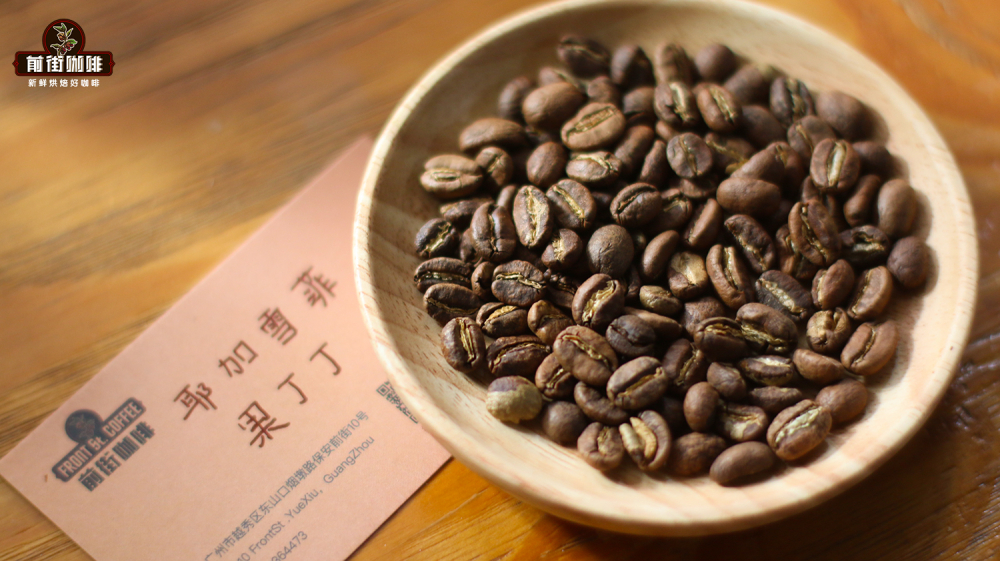
Front Street found in the 2017, 2018, and 2019 Huakui coffees that the aroma of Huakui Coffee mainly comes from some of the smaller beans. By 2020, DW Company's processing plant even processed these Small-Bean Huakui coffee beans separately, so Small-Bean Huakui Coffee does not belong to the "Huakui X.0" series, but instead formed an independent Small-Bean Huakui Coffee.
After comparing Small-Bean Huakui coffee beans with Huakui 5.0 coffee beans, Front Street found that the proportion of small beans in Small-Bean Huakui Coffee is noticeably higher. After roasting both beans and conducting a cupping comparison, Front Street found that the flavor of Small-Bean Huakui Coffee is closer to the performance of the 2017 TOH natural group champion, with a rich strawberry aroma and prominent berry sweetness; while Huakui 5.0 coffee leans more toward the elegant floral aroma of the Guji region, with bright and lively berry acidity.
By 2024, Huakui had reached its eighth version, and the latest season's batch also continued the naming rule of many years, launching as "Huakui 8.0." Drinking the new Huakui became the top priority for loyal fans. In order to present the refined floral and fruity flavors of the Sidamo region while preserving the coffee's caramelized aroma, Front Street's roaster uses a medium-light roast to express this bean.
Flavor : floral, jackfruit, candied fruit, apricot, juicy
In terms of brewing, Front Street has always advocated conservative parameters and a steady technique. Because Ethiopian coffee beans are known for their bright acidity, Front Street Coffee's roaster uses a medium-light roast when roasting Huakui coffee beans. When brewing the two Huakui coffee beans, Front Street recommends using a faster-flow dripper, 91°C water temperature, and a medium-fine grind.
Dripper: Hario V60
Water Temperature: 91°C
Dose: 15 g
Coffee-to-Water Ratio: 1:15
Grind Setting: 80% passing through China standard No. 20 sieve
Front Street uses a three-pour method when brewing, giving the coffee a richer sense of layering. First pour 30 g of hot water to completely wet the coffee grounds and bloom for 30 seconds, then pour from the center with a small stream and slowly spiral outward to 125 g for the first stage. When the water level in the dripper drops to the point where the coffee bed is about to be exposed, continue slowly spiraling and pouring to 225 g. Wait until the water in the dripper has completely dripped into the server below, then remove the dripper. The total extraction time is about 2 minutes.
[Small-Bean Huakui] Strawberry, cream, passion fruit, honey
[Huakui 5.0] Floral, berry, citrus, mango, honey
For more coffee bean information, please follow Coffee Workshop (WeChat public account: cafe_style)
For professional coffee knowledge exchange, please add WeChat ID: kaixinguoguo0925
The above content is compiled by CoffeeHunters, a coffee news website.


